|

|
|
AGENDA
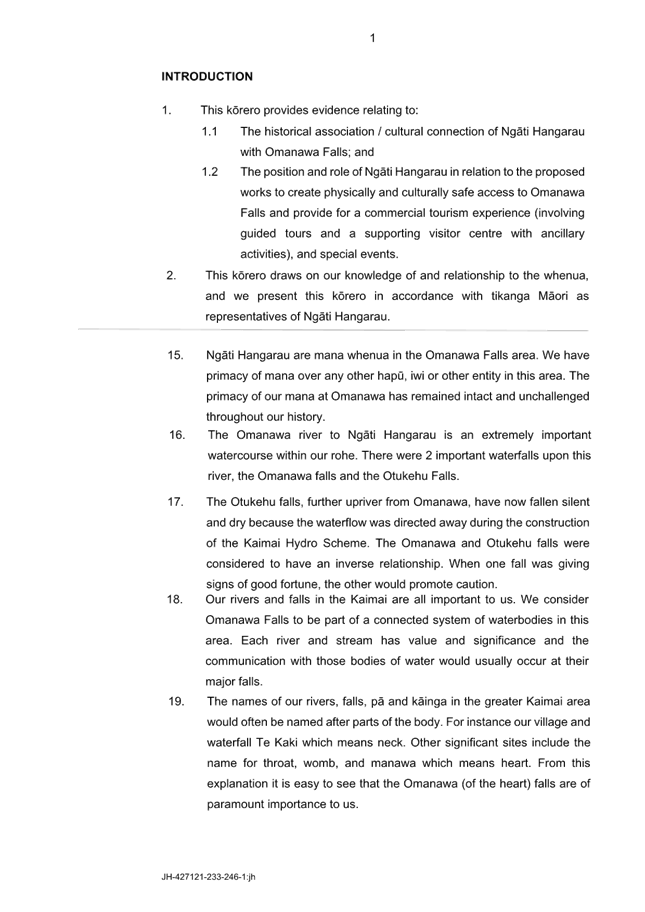
Ordinary Council meeting
Tuesday, 7 October 2025
|
|
I hereby give notice that an Ordinary meeting of
Council will be held on:
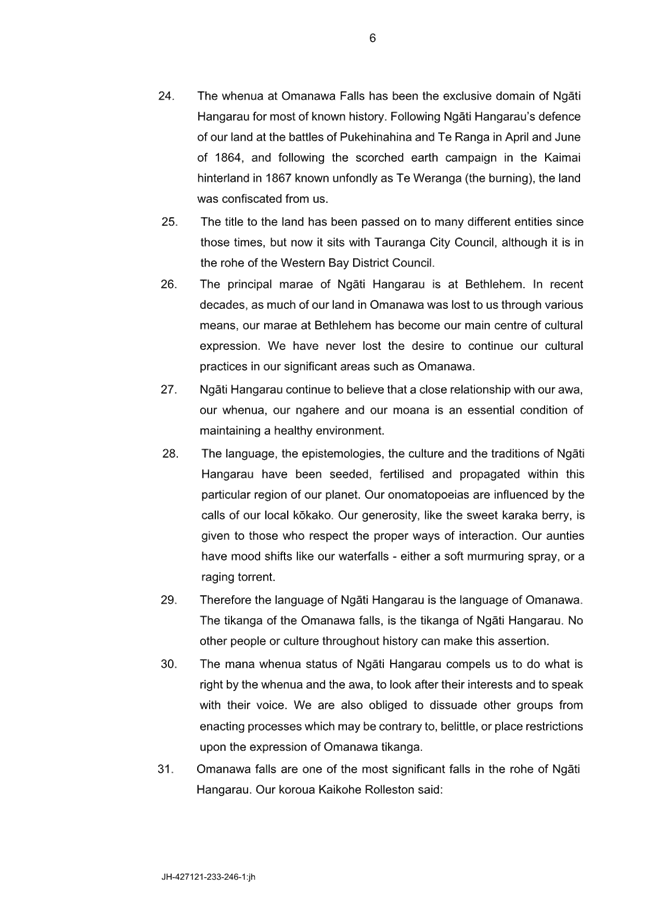
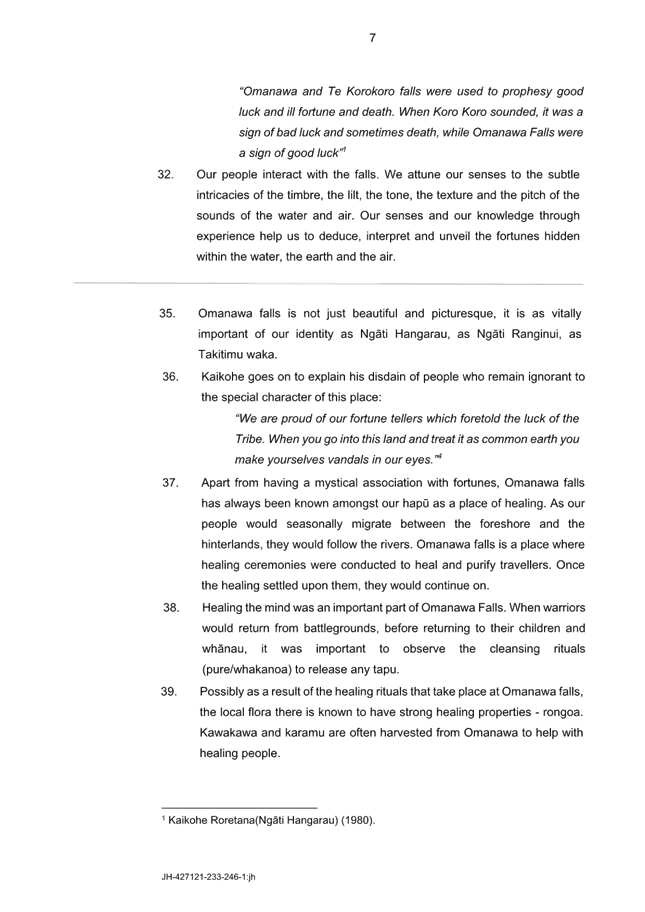
|
|
Date:
|
Tuesday, 7 October 2025
|
|
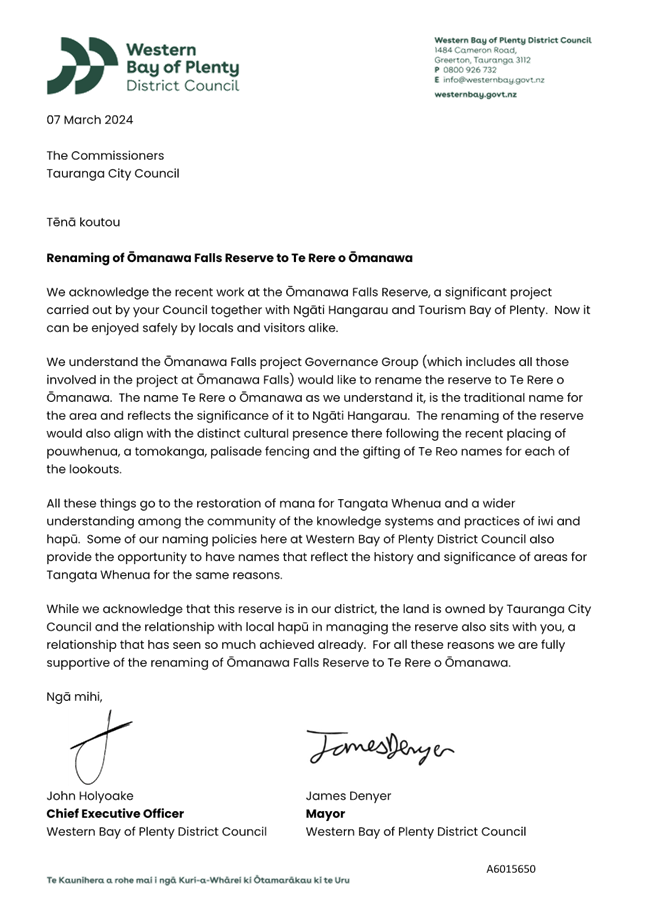
Time:
|
9.30am
|
|
Location:
|
Tauranga City Council Chambers Mareanui
Level 1 - 90 Devonport Road
Tauranga
|
|
Please note that this
meeting will be livestreamed and the recording will be publicly available on
Tauranga City Council's website: www.tauranga.govt.nz.
|
|
Marty Grenfell
Chief Executive
|
Terms of reference – Council
Membership
|
Chair
|
Mayor
Mahé Drysdale
|
|
Deputy Chair
|
|
|
Members
|
|
|
Quorum
|
Half of the members
present, where the number of members (including vacancies) is even;
and a majority of the members present, where the number of members
(including vacancies) is odd.
|
|
Meeting frequency
|
Three weekly or as required
|
Role
·
To ensure the effective and efficient governance
of the City.
·
To enable leadership of the City including
advocacy and facilitation on behalf of the community.
·
To review and monitor the performance of the
Chief Executive.
Scope
·
Oversee the work of all committees and
subcommittees.
·
Exercise all non-delegable and non-delegated
functions and powers of the Council.
·
The powers Council is legally prohibited from
delegating include:
○
Power to make a rate.
○
Power to make a bylaw.
○
Power to borrow money, or purchase or dispose of
assets, other than in accordance with the long-term plan.
○
Power to adopt a long-term plan, annual plan, or
annual report
○
Power to appoint a chief executive.
○
Power to adopt policies required to be adopted
and consulted on under the Local Government Act 2002 in association with the
long-term plan or developed for the purpose of the local governance statement.
○
All final decisions required to be made by
resolution of the territorial authority/Council pursuant to relevant
legislation (for example: the approval of the City Plan or City Plan changes as
per section 34A Resource Management Act 1991).
·
Council has chosen not to delegate the
following:
○
Power to compulsorily acquire land under the
Public Works Act 1981.
·
Make those decisions which are required by
legislation to be made by resolution of the local authority.
·
Authorise all expenditure not delegated to
officers, Committees or other subordinate decision‑making bodies of
Council.
·
Make appointments of members to the council-controlled
organisation Boards of Directors/Trustees and representatives of Council to
external organisations.
·
Undertake statutory duties in regard to
Council-controlled organisations, including reviewing statements of intent,
with the exception of the Local Government Funding Agency where such roles are
delegated to the City Delivery Committee. (Note that monitoring of all
Council-controlled organisations’ performance is undertaken by the City
Delivery Committee. This also includes Priority One reporting.)
·
Consider all matters related to Local Water Done
Well.
·
Consider any matters referred from any of the
Standing or Special Committees, Joint Committees, Chief Executive or General
Managers.
·
Review and monitor the Chief Executive’s
performance.
·
Develop Long Term Plans and Annual Plans
including hearings, deliberations and adoption.
Procedural matters
·
Delegation of Council powers to Council’s
committees and other subordinate decision-making bodies.
·
Adoption of Standing Orders.
·
Receipt of Joint Committee minutes.
·
Approval of Special Orders.
·
Employment of Chief Executive.
·
Other Delegations of Council’s powers,
duties and responsibilities.
Regulatory matters
Administration,
monitoring and enforcement of all regulatory matters that have not otherwise
been delegated or that are referred to Council for determination (by a
committee, subordinate decision‑making body, Chief Executive or relevant
General Manager).
1 Opening
karakia
2 Apologies
|
Ordinary Council meeting Agenda
|
7 October 2025
|
3 Public
forum
3.1 Graham
Wilkinson on behalf of Generus Living
Attachments
Nil
|
Ordinary Council meeting Agenda
|
7 October 2025
|
7 Confirmation
of minutes
7.1 Minutes
of the Extraordinary Council meeting held on 15 August 2025
File
Number: A18843566
Author: Caroline
Irvin, Governance Advisor
Authoriser: Jeremy
Boase, Head of Strategy, Governance & Climate Resilience
|
Recommendations
That the Minutes of the
Extraordinary Council meeting held on 15 August 2025 be confirmed as a true
and correct record.
|
Attachments
1. Minutes
of the Extraordinary Council meeting held on 15 August 2025
|
 Extraordinary
Council meeting minutes Extraordinary
Council meeting minutes
|
15 August 2025
|
|

|
|
MINUTES
Extraordinary Council meeting
Friday, 15 August 2025
|
Order of
Business
1 Opening karaka. 3
2 Apologies. 3
3 Public forum.. 4
3.1 Cr John Grant Thames Coromandel District Council 4
4 Declaration of conflicts of interest 4
5 Business. 5
5.1 Local Waters Done Well - Update Report 5
6 Closing karakia. 9
MINUTES OF Tauranga City Council
Extraordinary Council meeting
HELD AT THE Tauranga City
Council Chambers, L1, 90 Devonport Road, Tauranga
ON Friday, 15 August 2025 AT
8:03 AM
PRESENT: Mayor Mahé Drysdale (Chair), Deputy Mayor Jen Scoular (online
via audio link for parts of the meeting), Cr Hautapu Baker, Cr Glen Crowther,
Cr Rick Curach, Cr Steve Morris, Cr Marten Rozeboom, Cr Kevin Schuler, Cr Rod
Taylor, Cr Hēmi Rolleston
IN ATTENDANCE: Marty Grenfell (Chief Executive), Christine Jones (General Manager:
Strategy, Growth & Governance), Gareth Wallis (General Manager: City
Development & Partnerships), Kathryn Sharplin, (Manager:
Finance), Stephen Burton (Transformation Lead: Water Services), Fiona Nalder
(Principal Strategic Advisor), Cathy Davidson (Manager: Directorate Services),
Charles Lane (Team Leader: Commercial Legal), Stacey Mareroa-Roberts (Manager:
Strategic Māori Engagement), Wally Potts (Head of City Waters), Clare
Sullivan (Senior Governance Advisor), Caroline Irvin (Governance Advisor),
EXTERNAL: Ian Morton (Thames Coromandel District Council)
Jaron Shaw and Cameron Walker (Department of
Internal Affairs)
Timestamps are included beside each of the items and relate
to the recording of the meeting held on 15 August 2025 at TCC Website
online attendance
Due to online
connection difficulties, Deputy Mayor Scoular was present for the vote on
resolution (b) (i) but not present for any of the remaining votes
(resolutions - parts 1 to 6) that made up the substantive motion.
1 Opening
karaka
Cr Rolleston opened the meeting with a
karakia
2 Apologies
Nil
At 8.06am the meeting adjourned.
At 8.09am the meeting reconvened.
3 Public
forum
Timestamp: 15:53 minutes
|
3.1 Cr
John Grant - Thames Coromandel District Council
|
|
·
Cr Grant noted that elected members and staff
from Thames Coromandel District Council (TCDC) had undertaken robust
financial analysis on four options for a water services model.
Consultation showed that 51% supported the lower cost model which would be a
joint water services delivery plan.
·
Financial analysis had shown that a Tauranga
City Council (TCC)/Western Bay Of Plenty District Council (WBOPDC)/Thames
Coromandel District Council Water Services model was in the best interests of
their communities.
·
TCDC had spent considerable time working
through a proposed partnership with TCC and WBOPDC.
·
Cr Grant, on behalf of TCDC, felt that the
best solution for the three Councils was a joint Water Services
Organisation.
|
4 Declaration
of conflicts of interest
Nil
recognition
·
The Mayor recognised the following staff who
were leaving their employment at Tauranga City Council and thanked them for
their contribution to the city during their employment: Ceilidh Dunphy, Coral
Hair, Dan Smith and Paul Davidson. He acknowledged that Paul Davison had
completed 20 years of service with Council.
·
The Mayor also noted that Mr Nigel Tutt, Chief
Executive of Priority One, was leaving to take up another position elsewhere.
5 Business
Timestamp: 30.16 minutes
|
5.1 Local
Waters Done Well - Update Report
|
|
Staff Christine Jones, General Manager Strategy,
Growth & Governance
Kathryn
Sharplin, Manager; Finance
Charles
Lane, Team Leader, Commercial Legal
External Jaron Shaw and Cameron Walker, Department
of Internal Affairs
Ian
Morton, Thames Coromandel District Council, Project Director
|
|
recommendations
That the Council:
(a) Receives the report "Local Waters
Done Well - Update Report".
(b) After taking into consideration the
information contained in this ‘Local Waters Done Well – Update
Report’:
Either
i) Reconfirms
the resolution of 5 August 2025 that the Water Service Delivery Plan will be
prepared for the duration to deliver through an in-house model.
Or
ii) Other …
|
|
A MOTION WAS PROPOSED
Moved:
Cr Rolleston
Seconded:
Cr Crowther:
That the Council:
(b) After taking into consideration the
information contained in this ‘Local Waters Done Well – Update
Report’:
i) Reconfirms
the resolution of 5 August 2025 that the Water Service Delivery Plan will be
prepared for the duration to deliver through an in-house model.
For: Deputy Mayor Jen
Scoular, Cr Hautapu Baker, Cr Glen Crowther, Cr Rick Curach and Cr Hēmi Rolleston
Against: Mayor
Mahé Drysdale, Cr Steve Morris, Cr Marten Rozeboom, Cr Kevin Schuler
and Cr Rod Taylor
equal
5/5
The
vote was declared a tie. Pursuant to Standing Order 19.3, the Mayor used his
casting vote and voted against the motion.
LOST
A FURTHER MOTION WAS PROPOSED
Moved: Cr Steve
Morris
Seconded: Cr Marten Rozeboom
That the Council:
(a) Receives the
report "Local Waters Done Well - Update Report".
(b) After taking
into consideration the information contained in this ‘Local Waters Done
Well – Update Report’:
ii)
Notes that the establishment of a multi-council water
organisation will be subject to the partner councils being satisfied with the
results of the due diligence process, and in particular that Western Bay of
Plenty District Council is satisfied that the concerns expressed by iwi
within the WBOPDC (WBOPDC) rohe area have been appropriately considered.
iii)
Receives the letter from Mayor James Denyer of 6 August 2025,
outlining his view that WBOPDC is "not in a position to be able to
submit a Water Services Delivery Plan by the 3 September deadline" and
his request that Council considers a "multi-council CCO with WBOPDC with
a stand-up date of 1 July 2027.
iv)
Receives the letter from Mayor Len Salt and members of the
Thames-Coromandel District Council (TCDC) Local Waters Done Well (LWDW)
working group of 13 August 2025, outlining their view that a TCDC in-house
delivery model "is not in the best long-term interest for our
community."
v)
Notes that on 12 August, Mayor Denyer requested a Crown
facilitator be appointed to WBOPDC and that members of the TCDC LWDW working
group requested TCDC form part of the facilitator’s remit.
vi)
Requests staff prepare a Water Services Delivery Plan (WSDP) on
the basis that services will be delivered through status quo arrangements
until:
- 30 June 2027
vii)
And thereafter through a three-waters multi-council CCO with
a.
Western Bay of Plenty District Council
AND
b.
Thames-Coromandel District Council
viii)
Notes that the WSDP
includes stormwater, and that due to a combination of practical constraints
and the statutory deadline for submission of the WSDP that
a. further work will be done to consider other aspects of
stormwater management including assets, ownership, charging and following further
information Council may, at a later date, decide to retain stormwater
in-house.
ix)
Confirms the due
diligence process will include detailed comparative analysis of
in-house and CCO options.
x)
Requests a project plan on the implementation of these
resolutions through until September 2028 for Council approval and that staff
report quarterly to Council on engagement, progress against the project plan,
what has been completed in the last quarter and what is proposed in the
following. Reports will include tracking to budget and highlighting any
risks.
xi)
Considers holding joint
council meetings with partnering councils and meetings with iwi
partners on decisions relating to subregional waters in the
future.
The motion was taken in parts in the
following order:
|
|
Resolution
CO/25/0/1
Part 1
Moved: Cr
Steve Morris
Seconded: Cr Marten Rozeboom
That the Council
(b)
viii)
Notes that the WSDP
includes stormwater, and that due to a combination of practical constraints
and the statutory deadline for submission of the WSDP that
a. further work will be done to consider other aspects of
stormwater management including assets, ownership, charging and following further
information Council may, at a later date, decide to retain stormwater
in-house.
For:
Mayor Mahé Drysdale, Cr
Steve Morris, Cr Marten Rozeboom, Cr Kevin Schuler and
Cr Rod Taylor
Against: Cr Hautapu Baker, Cr Glen Crowther, Cr Rick Curach and Cr
Hēmi Rolleston
Carried
|
|
Resolution
CO/25/0/2
Part 2
Moved: Cr
Steve Morris
Seconded: Cr Marten Rozeboom
That the Council:
(a) Receives the
report "Local Waters Done Well - Update Report".
(b) After taking
into consideration the information contained in this ‘Local Waters Done
Well – Update Report’:
ii) Notes
that the establishment of a multi-council water organisation will be subject
to the partner
councils being satisfied with the results of the due diligence process, and
in particular that
Western Bay of Plenty District Council is satisfied that the concerns expressed
by iwi within the Western Bay of Plenty District Council rohe area have been
appropriately considered.
iii) Receives
the letter from Mayor James Denyer of 6 August 2025, outlining his view that WBOPDC
is "not in a position to be able to submit a Water Services Delivery
Plan by the
3 September deadline" and his request that Council considers a
"multi-council CCO with
WBOPDC with a stand-up date of 1 July 2027.
iv)
Receives the letter from Mayor
Len Salt and members of the Thames-Coromandel District Council (TCDC) Local
Waters Done Well (LWDW) working group of 13 August 2025, outlining their view
that a TCDC in-house delivery model "is not in the best long-term
interest for our community."
v)
Notes that on 12 August, Mayor Denyer requested a Crown
facilitator be appointed to WBOPDC and that members of the TCDC LWDW working
group requested TCDC form part of the facilitator’s remit.
Carried
|
|
Resolution
CO/25/0/3
Part 3
Moved: Cr
Steve Morris
Seconded: Cr Marten Rozeboom
That the Council:
(b)
vi)
Requests staff prepare a Water Services Delivery Plan (WSDP) on
the basis that services will be delivered through status quo arrangements
until:
- 30 June 2027
Carried
|
|
Resolution
CO/25/0/4
Part 4
Moved: Cr
Steve Morris
Seconded: Cr Marten Rozeboom
That the Council:
(b)
vii)
And thereafter through a
three-waters multi-council CCO with
c.
Western Bay of Plenty District Council
For:
Mayor Mahé Drysdale, Cr
Hautapu Baker, Cr Rick Curach, Cr Steve Morris, Cr Marten
Rozeboom, Cr Kevin Schuler and Cr Rod Taylor
Against: Cr Glen Crowther, and Cr Hēmi Rolleston
Carried
|
|
Resolution
CO/25/0/5
Part 5
Moved: Cr
Steve Morris
Seconded: Cr Marten Rozeboom
That the Council:
(b)
vii)
AND
d.
Thames-Coromandel District Council
For:
Mayor Mahé Drysdale, Cr
Steve Morris, Cr Marten Rozeboom, Cr Kevin Schuler and
Cr Rod Taylor
Against: Cr Hautapu Baker, Cr Glen Crowther, Cr Rick Curach and Cr
Hēmi Rolleston
Carried
|
|
Resolution CO/25/0/6
Part 6
Moved: Cr
Steve Morris
Seconded: Cr Marten Rozeboom
That the Council:
(b)
ix)
Confirms the due
diligence process will include detailed comparative analysis of in-house and
CCO options.
x)
Requests a project plan on the implementation of these
resolutions through until September 2028 for Council approval and that staff
report quarterly to Council on engagement, progress against the project plan,
what has been completed in the last quarter and what is proposed in the
following. Reports will include tracking to budget and highlighting any
risks.
xi)
Considers holding joint
council meetings with partnering councils and meetings with iwi
partners on decisions relating to subregional waters in the
future.
Carried
|
6 Closing
karakia
Cr Rolleston closed the meeting with a
karakia.
The meeting closed at 11.38 am.
The minutes of this meeting were
confirmed at the Ordinary meeting of the Tauranga City Council held on 7
October 2025.
...................................................
Mayor
Mahé Drysdale
CHAIR
|
Ordinary
Council meeting Agenda
|
7
October 2025
|
7.2 Minutes of
the Council meeting held on 16 September 2025
File
Number: A18922824
Author: Clare
Sullivan, Senior Governance Advisor
Authoriser: Jeremy
Boase, Head of Strategy, Governance & Climate Resilience
|
Recommendations
That the Minutes of the
Council meeting held on 16 September 2025 be confirmed as a true and correct
record.
|
Attachments
1. Minutes
of the Council meeting held on 16 September 2025
|
 Ordinary Council
meeting minutes Ordinary Council
meeting minutes
|
16 September 2025
|
|

|
|
MINUTES
Ordinary Council meeting
Tuesday, 16 September 2025
|
Order of
Business
1 Opening karakia. 3
2 Apologies. 4
3 Public forum.. 4
4 Acceptance of late items. 4
5 Confidential business to be transferred into the open. 4
6 Change to the order of business. 4
7 Confirmation of minutes. 4
7.1 Minutes of the Council meeting held on 26 August 2025. 4
8 Declaration of conflicts of interest 5
9 Deputations, presentations, petitions. 5
Nil
10 Recommendations from other committees. 5
Nil
11 Business. 5
11.1 Te Maunga Site - Council Activities and Ngā Pōtiki
Relationship. 5
11.2 Memorial Park Aquatic Centre Update. 6
11.3 Mount Parking Management Plan - Consultation Summary and Options. 8
11.4 City Centre Parking - Short Term Incentive Options. 10
11.5 Transport Resolutions Report No.57. 11
11.6 Tauranga Eastern Link Tolling Submission. 12
11.7 Fees and Charges Review: Confirmation of scope. 12
11.8 Status update on actions from prior Council meetings. 13
12 Discussion of late items. 13
13 Public excluded session. 13
13.1 Asset Realisation Reserve - Disposal of Surplus Properties. 14
Confidential Attachment 2 11.8 - Status update on actions from prior Council meetings........ ........ 14
14 Closing karakia. 14
MINUTES OF Tauranga City
Council
Ordinary Council meeting
HELD AT THE Tauranga City
Council Chambers, mareanui, Level 1 - 90 Devonport Road, Tauranga
ON Tuesday, 16 September 2025
AT 9.30am
|
MEMBERS
PRESENT:
|
Mayor
Mahé Drysdale, Deputy Mayor Jen Scoular, Cr Hautapu Baker, Cr Glen
Crowther, Cr Steve Morris, Cr Marten Rozeboom, Cr Kevin Schuler, Cr Rod
Taylor, Cr Hēmi Rolleston
|
|
IN
ATTENDANCE:
|
Marty Grenfell
(Chief Executive), Barbara Dempsey (Acting General Manager: Operations &
Infrastructure (City Ops & Spaces and Places), Nic Johansson (Acting
General Manager: Operations & Infrastructure (Waters & Transport)),
Christine Jones (General Manager: Strategy, Partnerships & Growth),
Kathryn Sharplin (Acting COFO (Chief Financial Officer)), Andrew Mead (Head
of City Planning & Growth), Cashy Ball (Principal Advisor to the
Executive), Mike Naude ( Portfolio Manager: Civic Development), Alison Law
(Head of Spaces & Places), Ross Hudson ( Manager: Strategic Planning
& Partnerships), Cayley McLean (Principal Strategic Waste Planner), Wally
Potts (Director of City Waters), Keren Paekau (Acting Head of Strategic
Māori Engagement), Cynthia Hamel (Acting Team Leader), Ange Webster
(Māori Engagement – City Waters), Anahera Sadler (Pou Matauranga),
Shawn Geard (Manager: Transport Systems Operations), Mike Seabourne (Head of
Transport), Holly Riddell (Corporate Planner), Clare Sullivan (Senior
Governance Advisor), Anahera Dinsdale (Governance Advisor).
|
|
EXTERNAL:
|
Kaumatua Des
Tata, Wi Piahana, Puhirake Ihaka and Ms Kura Martin, Spencer Webster (CEO
– Ngā Pōtiki), Sam Toulin (Apollo).
|
Timestamps are included beside each of the
items and relate to the recording of the meeting held on 16 September on the Council
website
The Mayor opened the meeting and
acknowledged that it was the 50th anniversary of Te Wiki o te Reo
Māori
1 Opening
karakia
Deputy Mayor Jen Scoular opened the meeting
with a karakia.
2 Apologies
|
Apology
|
|
Resolution CO/25/24/1
Moved: Deputy
Mayor Jen Scoular
Seconded: Cr Steve Morris
That the apology for absence received
from Cr Curach be accepted.
Carried
|
3 Public
forum
Timestamp: 4 minutes
Naming of Building – Mareanui
·
Cr Rolleston welcomed kaumatua of Ngai
Tamarāwaho and Ngati Tapu and members of the Otamataha Trust.
·
Kaumatua Wi Piahana and Des Tata gifted the name
Mareanui to the building at 90 Devonport Road. The name was the name of a
pa site in this area. The name reflects the many mara (gardens) that were in
the area and fed the ‘multitudes of people’ that occupied this
space.
4 Acceptance
of late items
Nil
5 Confidential
business to be transferred into the open
Nil
6 Change
to the order of business
The Mayor advised that lunch would be taken
at approximately 12.15pm.
7 Confirmation
of minutes
Timestamp: 21 minutes
8 Declaration
of conflicts of interest
Nil
9 Deputations,
presentations, petitions
Nil
10 Recommendations
from other committees
Nil
11 Business
Timestamp: 23 minutes
|
11.1 Te
Maunga Site - Council Activities and Ngā Pōtiki Relationship
|
Staff Christine Jones, General Manager: Strategy, Partnerships &
Growth
External Spencer Webster, CEO – Ngā Pōtiki
|
|
Resolution
CO/25/24/3
Moved: Mayor
Mahé Drysdale
Seconded: Cr Steve Morris
That the Council:
(a) Receives the report "Te Maunga Site - Council Activities and
Ngā Pōtiki Relationship".
(b) Acknowledges the cultural and environmental concerns raised by
Ngā Pōtiki regarding Council activities on the Te Maunga Site.
(c) Recognises the relationship that Ngā Pōtiki has with its
culture and traditions with respect to their ancestral lands and cultural
landscapes and seascapes, and notes that this includes the Te Maunga site and
Te Tāhuna o Rangataua.
(d) Agrees to progress discussions with Ngā Pōtiki, with the
view of developing a Memorandum of Understanding for the Te Maunga site and
incorporating co-design principles for environmental and cultural
restoration, site management, and community interface, where appropriate and
practical. Technical design and operation of core infrastructure (e.g.
wastewater treatment) will continue to be led by Council.
(e) Notes that while many existing activities at Te Maunga cannot be
practically or feasibly relocated due to significant prior investment,
operational dependencies and regulatory or contractual constraints, some solid
waste facilities are nearing end of life and could be
relocated as part of the future approach to the solid waste network
(currently under review).
(f) Endorses staff to:
(i) Progress and report back a Solid Waste Programme Business Case in
the assessment of options with final decisions on preferred approaches to be
made by Council.
(ii) Explore and progress opportunities for land acquisition and
alternative sites to enable the transition of “offensive” solid
waste activities from Te Maunga.
(g) Notes that:
(i) The
definition of “offensive” solid waste activities will be informed
by engagement with Ngā Pōtiki.
(ii) Indicative
timeframes for relocation of facilities and activity decisions will be
incorporated into the Solid Waste Programme Business Case, which is expected
to be presented to Council for consideration and approval in early 2026; with
transition anticipated over 8-12 years.
(iii) This
applies only to solid waste facilities deemed appropriate to
be relocated and does not include the closed landfill, wastewater or
stormwater activities or Bay Venues activities on the Te Maunga site.
For: Mayor Mahé Drysdale, Deputy Mayor
Jen Scoular, Cr Hautapu Baker, Cr Glen Crowther,
Cr Steve Morris, Cr Hēmi Rolleston, Cr Kevin Schuler and Cr Rod Taylor
Against: Cr Marten Rozeboom
Carried
|
At 10.40AM the meeting adjourned.
At 10.47AM the meeting reconvened.
Timestamp: 1 hr 18 minutes
|
11.2 Memorial
Park Aquatic Centre Update
|
|
Staff Alison Law, Head of Spaces & Places
Mike
Naude, Portfolio Manager: Civic Development
External Sam Toulin, Apollo
Action
·
That the Chief Executive review and report
back on the previous report and discussion at the Council meetings on 24
October 2024 and 12 November 2024 and any outstanding invoices for MPAC.
Key Points
Staff clarified the following points:
·
Options 1 & 2 analysis outlining the key
advantages and disadvantages for the location of the centre were from a
previous report and not relevant to the Geotech report for the alternative
location. The Geotech results for the alternative location over the
existing pool were no worse than the current site.
·
The Geotech report for the new site had
similar findings as the Memorial Hall/QR2 site.
·
There were advantages for traffic and parking
with the new site with an entrance/exit off Devonport Road.
·
The spend of $4.7 million included invoices
received after the report presented in October 2024 and was made up of $1.64M
Opex and $3.1M Capex.
|
|
Resolution CO/25/24/4
Moved: Cr
Rod Taylor
Seconded: Mayor Mahé
Drysdale
That the Council:
(a) Receives the
report "Memorial Park Aquatic Centre update" with the corrections
noted.
(b) Receives the
preliminary geotechnical report: Memorial Pool Aquatic Centre –
Alternative Site Feasibility Study prepared by Apollo Projects dated 29
August 2025; and
(c) Agrees to
advance the Memorial Park Aquatics Centre project to concept stage with an
in-principle decision that the Centre would be constructed over the current
Memorial Pool. Noting the intention for construction to start in 2027/28 on a
re-designed, value for money indoor and outdoor facility that can provide for
lane swimming, aquatic sports, learn-to-swim, hydrotherapy and play.
(d) Endorses the
next steps being:
(i) Establish
a Memorial Pool Aquatic Centre Project Steering Group including Elected
Members (to be advised), to develop scope from the ground up and develop the
engagement process.
(ii) Progression
of the design, based on concept principles developed by the Steering group,
through concept stage at a design fee of $50,000 excl. GST.
(e) Confirms the
engagement of Apollo Projects to complete the Concept Design and Concept
Estimate Stage of the Project.
(f) Notes
that in making an in-principle decision that the site of the existing
Memorial Park pool is the preferred location for the Memorial Park Aquatic
Centre, Council confirms its intention to retain the existing Queen Elizabeth
Youth Centre and Memorial Hall facility, and instructs Bay Venues to identify
the lowest investment required (capital and operational expenditure) to keep
that facility operating until earthquake strengthening upgrades are required
(currently 2041).
Carried
|
Timestamp: 2 hrs 2 minutes
|
11.3 Mount
Parking Management Plan - Consultation Summary and Options
|
|
Staff Shawn Geard, Manager: Transport Systems Operations
Mike
Seabourne, Head of Transport
Actions
·
Staff to contact staff from Bay of Plenty
Regional Council raising the idea of a hop-on-hop-off bus in the Mount
Maunganui area for who it might be considered by discussed at the Joint
Transport Committee.
·
Staff to find and circulate feedback from the
community from an engagement completed in 2020 on the Mount Maunganui plan.
Consideration
on this item was paused to welcome and acknowledge Mr Mikaere Sydney at
12:08pm.
At 12.26pm the meeting adjourned.
At 1.14 pm the meeting reconvened.
The recommendations were taken in
parts:
|
|
Resolution
CO/25/24/5
Part 1
Moved: Cr
Marten Rozeboom
Seconded: Cr Rod Taylor
That the Council:
(a) Receives the
report "Mount Parking Management Plan - Consultation Summary and Options".
(b) Requests
staff to proceed with development of a detailed plan for implementation of:
(i) Sailsbury
Avenue/ The Mall bylaw changes to support cruise ship tour operator traffic
management
(ii) Additional
time restrictions for Victoria Road, Marine Parade, and The Mall, and
development of an increased enforcement programme
(iii) Fixed
License Plate Recognition enforcement along Mount Maunganui main street
(c) Directs
staff to proceed to community engagement on the Miro Street one-way with
additional parking plan
Carried
|
|
Resolution CO/25/24/6
Part 2
Moved: Cr
Marten Rozeboom
Seconded: Cr Rod Taylor
That
the Council
(d) Requests
staff to develop a Mount Maunganui Parking Management Plan to support future
investment decisions including, but not limited to, options for:
(i) Angled
parking on The Mall
(ii) Paid
parking at TCC owned offstreet carparks
(iii) A new
offstreet carpark in the vicinity of Coronation Park
For:
Mayor Mahé Drysdale, Cr Hautapu Baker, Cr Glen Crowther, Cr
Hēmi Rolleston Cr Steve
Morris, Cr Marten Rozeboom, Cr Kevin Schuler and Cr Rod Taylor
Against: Deputy Mayor Jen
Scoular
Carried
|
|
Resolution CO/25/24/7
Part 3
Moved: Cr
Marten Rozeboom
Seconded: Cr Rod Taylor
That
the Council
(d) Requests
staff to develop a Mount Maunganui Parking Management Plan to support future
investment decisions including, but not limited to, options for:
(iv) Development
of a business plan supporting financially sustainable parking in Mount
Maunganui
For:
Mayor Mahé Drysdale, Cr Hautapu Baker, Cr Glen Crowther, Cr
Hēmi Rolleston Cr
Marten Rozeboom, Cr Kevin Schuler and Cr Rod Taylor
Against: Deputy Mayor Jen
Scoular and Cr Steve Morris
Carried
|
Timestamp: 4 hrs, 7 minutes
|
11.4 City
Centre Parking - Short Term Incentive Options
|
|
Staff Shawn Geard, Manager: Transport Systems Operations
Mike
Seabourne, Head of Transport
|
|
Recommendations
That the Council:
(a) Receives the report
"City Centre Parking - Short Term Incentive Options".
(b) Requests Staff to proceed
with:
(i) Status quo
(recommended)
Or
Alternatives
(individually or a mix of):
(ii) Further assessment of
financial impacts associated with 60 minutes free and paid thereafter
(iii) User engagement on price
changes associated with Free after 3pm (off-street parking only)
(iv) Development a Dynamic pricing
programme
(v) Implementation of an initial
30-minute free period through changing the provided no-payment grace
time
(vi) Installation of additional
‘P5’ loading bays and mobility spaces, including business
engagement on appropriate locations
|
|
A MOTION WAS PROPOSED:
Moved: Mayor Mahé Drysdale
Seconded: Cr
Rod Taylor
That the Council:
(a) Receives the
report "City Centre Parking - Short Term Incentive Options".
(b) Requests
Staff to proceed with:
(v) Implementation
of an initial 20-minute free period through changing the provided no-payment
grace time
(vi) Installation of
additional ‘P5’ loading bays and mobility spaces, including
business and accessibility sector engagement on appropriate locations
(vii) Report back on options for
parking validation including potential models, costs, and benefits.
AN AMENDMENT
WAS MOVED:
Moved: Cr
Glen Crowther
Seconded: Cr Steve Morris
That the
Council:
(i)
Change the pricing in the City Fringe zone to
$1 per hour for the first 7 hours, with a daily maximum charge of $7.
For:
Cr
Glen Crowther, Cr Steve Morris
Against:
Mayor Mahé Drysdale, Cr Hautapu Baker, Cr Glen Crowther, Cr Hēmi
Rolleston Cr
Marten Rozeboom, Cr Kevin Schuler and Cr Rod Taylor
Abstain Deputy Mayor Jen Scoular
LOST
The
substantive motion was put to the meeting:
|
|
Resolution CO/25/24/8
Moved: Mayor
Mahé Drysdale
Seconded: Cr Rod Taylor
That the Council:
(a) Receives the
report "City Centre Parking - Short Term Incentive Options".
(b) Requests
Staff to proceed with:
(v) Implementation
of an initial 20-minute free period through changing
the provided no-payment grace time
(vi) Installation of
additional ‘P5’ loading bays and mobility spaces, including
business and accessibility sector engagement on appropriate locations
(vii) Report back on options for
parking validation including potential models, costs, and benefits.
Carried
|
Timestamp: 5 hours:23 minutes
|
11.5 Transport
Resolutions Report No.57
|
|
Staff Shawn Geard, Manager: Transport Systems Operations
Mike
Seabourne, Head of Transport
|
|
Resolution CO/25/24/9
Moved: Cr
Hautapu Baker
Seconded: Cr Glen Crowther
That the Council:
(a) Receives the
report "Transport Resolutions Report No.57".
(b) Resolves to
adopt the proposed traffic and parking controls associated with general
safety, operational or amenity purposes as outlined in Appendix A,
Attachments 7.1 7.2, 7.7, 7.9 ,7.11, 7.16 and 7.23. The changes are to
become effective on or after the 16 September 2025 subject to installation of
appropriate signs and road markings, where appropriate.
Carried
|
At 2.59pm the meeting adjourned.
At 3.05pm the meeting reconvened.
Timestamp: 5 hours: 36 minutes
|
11.6 Tauranga
Eastern Link Tolling Submission
|
|
Staff Andrew Mead, Head of City Planning & Growth
Christine Jones, General Manager, Strategy, Partnerships &
Growth
|
|
Resolution CO/25/24/10
Moved: Cr
Marten Rozeboom
Seconded: Cr Hautapu Baker
That the Council:
(a) Receives the
report "Tauranga Eastern Link Tolling Submission".
(b) Retrospectively
approves Tauranga City Council’s ‘Tauranga Eastern Link
Tolling’ submission.
For:
Mayor Mahé Drysdale,
Deputy Mayor Jen Scoular, Cr
Hautapu Baker, Cr Glen Crowther,
Cr Hēmi Rolleston Cr Marten Rozeboom, Cr Kevin
Schuler and Cr Rod Taylor
Against: Cr Steve Morris
Carried
|
Timestamp 5 hours:45 minutes
|
11.7 Fees
and Charges Review: Confirmation of scope
|
|
Staff Holly Riddell, Corporate Planner
Christine
Jones, General Manager, Strategy, Partnerships & Growth
Action
·
That staff provide Councillors with
information on the review of certain fees and charges that will be a focus
for the financial year 2026/27, for the purposes of discussing with
constituents.
|
|
Resolution
CO/25/24/11
Moved: Cr
Kevin Schuler
Seconded: Cr Marten Rozeboom
That the Council:
(a) Receives the
report "Fees and Charges Review: Confirmation of scope".
(b) Confirms the
review of the following user fees and charges will be a focus for the 2026/27
financial year:
· Parks and Recreation
· Use of Council Land
· Cemetery and Crematorium
· Libraries
· Baycourt
· Animal Services
· Alcohol Licensing
· Trade Waste
· Building Services.
· Cost recovery for illegal dumping
· Boat ramp parking
· Overweight vehicle permits
· Section 224 sign-off inspections
Carried
|
Timestamp: 5 hours 53 minutes
|
11.8 Status
update on actions from prior Council meetings
|
|
Staff Christine Jones, General Manager, Strategy, Partnerships &
Growth
|
|
Resolution CO/25/24/12
Moved: Cr
Rod Taylor
Seconded: Cr Kevin Schuler
That the Council:
(a) Receives the
report "Status update on actions from prior Council meetings".
(b) Attachment 2
can be transferred into the open when the report that generated the action is
no longer confidential.
Carried
|
12 Discussion of
late items
Nil
13 Public
excluded session
Resolution to exclude the public
|
Resolution
CO/25/24/13
Moved: Deputy
Mayor Jen Scoular
Seconded: Cr Rod Taylor
That the public be excluded from the
following parts of the proceedings of this meeting at 3.25 pm.
The general subject matter of each matter
to be considered while the public is excluded, the reason for passing this
resolution in relation to each matter, and the specific grounds under section
48 of the Local Government Official Information and Meetings Act 1987 for the
passing of this resolution are as follows:
|
General
subject of each matter to be considered
|
Reason
for passing this resolution in relation to each matter
|
Ground(s)
under section 48 for the passing of this resolution
|
|
13.1
- Asset Realisation Reserve - Disposal of Surplus Properties
|
s7(2)(h) - The
withholding of the information is necessary to enable Council to carry out,
without prejudice or disadvantage, commercial activities
s7(2)(i) - The
withholding of the information is necessary to enable Council to carry on,
without prejudice or disadvantage, negotiations (including commercial and
industrial negotiations)
|
s48(1)(a) -
the public conduct of the relevant part of the proceedings of the meeting
would be likely to result in the disclosure of information for which good
reason for withholding would exist under section 6 or section 7
|
|
Confidential
Attachment 2 - 11.8 - Status update on actions from prior Council meetings
|
s7(2)(h) - The
withholding of the information is necessary to enable Council to carry out,
without prejudice or disadvantage, commercial activities
|
s48(1)(a) the
public conduct of the relevant part of the proceedings of the meeting would
be likely to result in the disclosure of information for which good reason
for withholding would exist under section 6 or section 7
|
Carried
|
The meeting resumed in open from 3.56 pm.
14 Closing
karakia
Deputy Mayor Scoular led the Council in a
karakia to close the meeting.
The meeting closed at 3.58pm.
The minutes of this meeting were
confirmed as a true and correct record at the Ordinary Council meeting held on
7 October 2025.
...........................................................
Mayor Mahé
Drysdale
CHAIR
|
Ordinary Council meeting Agenda
|
7 October 2025
|
11 Business
11.1 Omanawa
Falls Reserve name change
File
Number: A15393616
Author: Ana
Hancock, Team Leader: Design
Authoriser: Barbara
Dempsey, Acting General Manager Infrastructure and Operations
Purpose of the Report
1. To request approval
to rename Omanawa Falls Reserve to Te Rere o Ōmanawa in accordance with
Council’s Naming Policy 2020.
|
Recommendations
That the Council:
(a) Receives the report
"Omanawa Falls Reserve name change".
(b) Approves
changing the name “Omanawa Falls Reserve” to “Te Rere o
Ōmanawa”.
|
Background
2. The
Ōmanawa Falls Reserve is owned and managed by Tauranga City Council (“Council”)
and lies within Western Bay of Plenty District, and within the
rohe of Ngāti Hangarau.
3. Ōmanawa Falls
Reserve is managed as a Heritage Reserve under the Tauranga Reserves Management
Plan (TRMP), although is not formally classified as a reserve under the
Reserves Act.
4. Council has been
working closely with Ngāti Hangarau on the Ōmanawa Falls Safe Access
project since 2019. The three streams of this project included providing
physically and culturally safe public access to the falls, supporting the
development of a cultural tourism experience and working towards co-management
and/or co-governance. All three streams are guided by the Ōmanawa
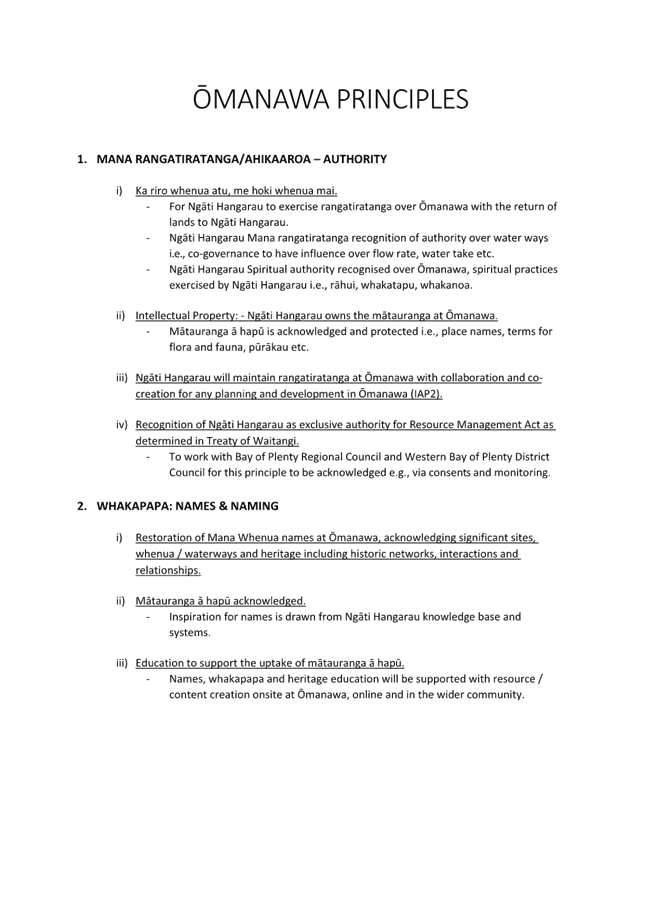
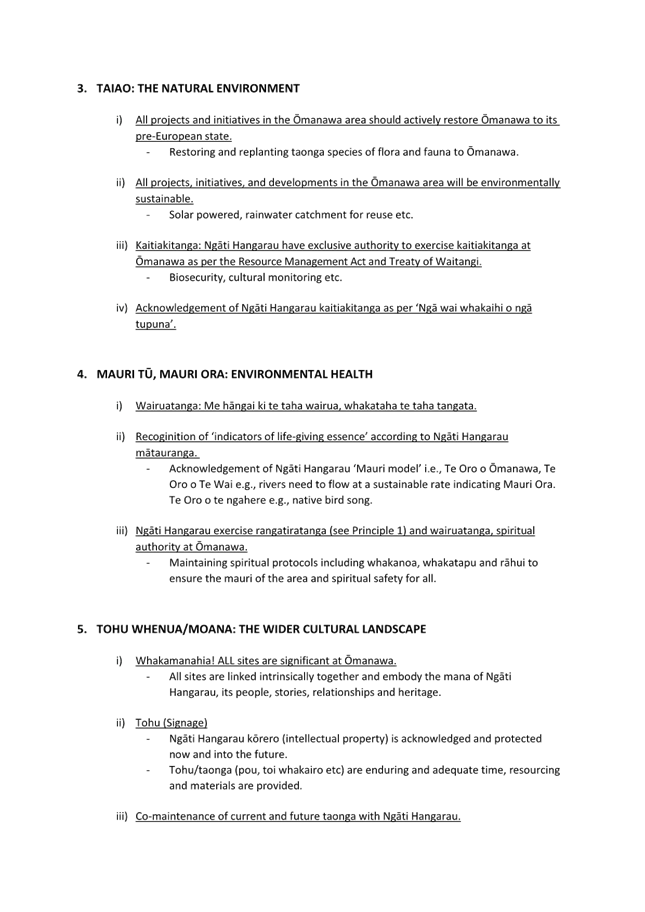
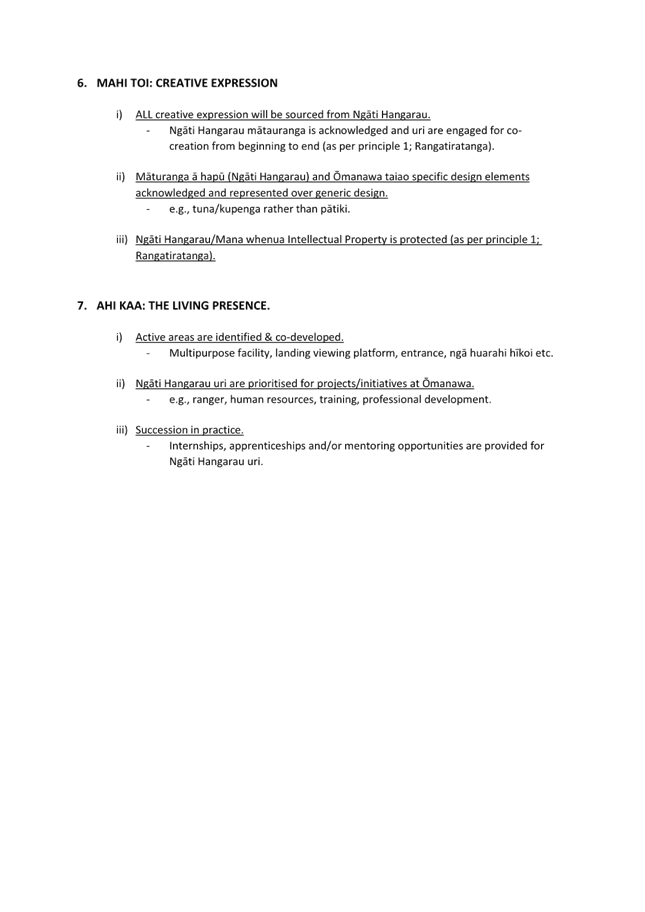
Principles (provided in Attachment 1). The Ōmanawa Principles were
developed by Ngāti Hangarau in 2020 with support from Council’s Pou
Takawaenga team and first shared with Council at the 27 October meeting in
2020.
5. The Ōmanawa
Falls Governance Group, made up of Ngāti Hangarau, Tourism Bay of Plenty
and Council recommend that Ōmanawa Falls Reserve is renamed as Te Rere o
Ōmanawa which is supported by the Ōmanawa Principles.
‘Ōmanawa’ translates into English as ‘of the
heart’, and the full name means ‘the waterfall of the heart’.
Strategic / Statutory Context
6. Council adopted a
revised Naming Policy in May 2020. The policy encourages locally significant
Māori names for streets, reserves, community facilities and other public
places in Tauranga and to enable greater visibility of mana whenua connections
to Tauranga. Since adoption of the policy, Council staff have placed greater
emphasis on identifying and promoting historically and culturally significant
names in our public places.
7. Council’s
Naming Policy allows for the renaming of existing reserves where a new name
would better meet the objectives of the policy to promote local identity and
mana whenua connections. Council is responsible for all decisions to approve or
decline requests to rename or dual name existing streets, reserves, community
facilities and other public places.
8. Appropriately
recognising known cultural values is included in the mission statement of the
Tauranga Reserve Management Plan which has management statements for
Ōmanawa Falls Reserve.
DISCUSSION
Significance of Ōmanawa Falls to Ngāti
Hangarau
9. The name for the
falls existed before European arrival, the development of the hydro power
station and the creation of the reserve.
10. The Ōmanawa Falls are of
particular importance to Ngāti Hangarau as explained in
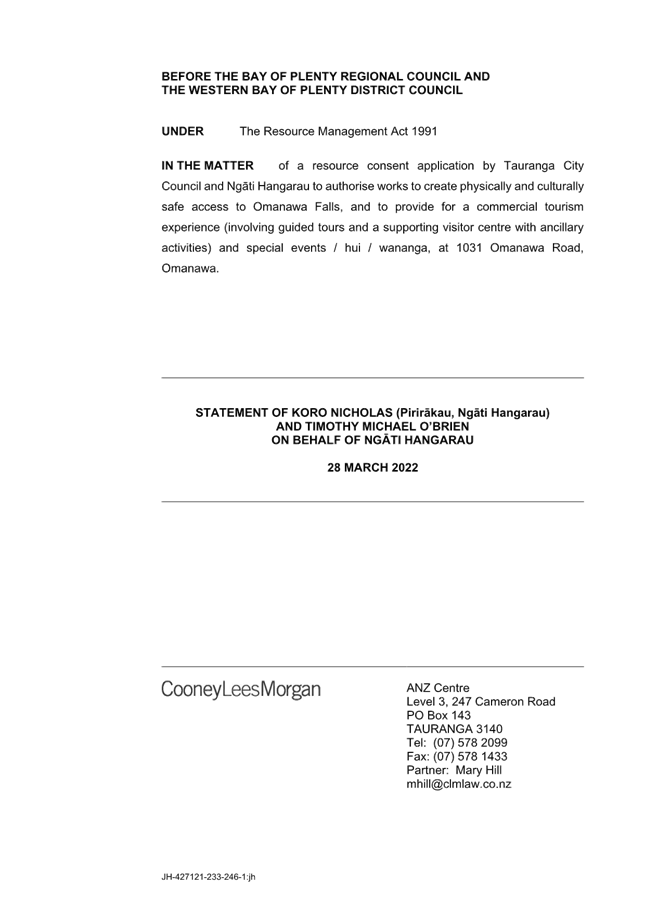
‘Significance of Ōmanawa Falls - Excerpts from a statement prepared
by Ngāti Hangarau offered as evidence for the resource consent hearing for
the Ōmanawa Falls project’ (Attachment 2). In summary, Ōmanawa
means of the heart. Unlike some of the other waterfalls in the rohe,
Ōmanawa Falls were a sign of good luck and were a place for fortune
telling and for healing, as such the waterfall and the pool of water below are
recognised by Ngāti Hangarau as wāhi tapu.
11. Ngāti Hangarau have
provided the name Te Rere o Ōmanawa for use on the site signage (as well
as te reo names for viewing platforms and the like). Renaming the Ōmanawa
Falls Reserve to Te Rere o Ōmanawa, and the use of other Mana Whenua names
is supported by the Ōmanawa Principles (Section 2):
2.
WHAKAPAPA: NAMES & NAMING
i)
Restoration of Mana Whenua names at Ōmanawa, acknowledging significant
sites, whenua/waterways and heritage including historic networks, interactions
and relationships.
ii)
Mātauranga ā hapū acknowledged. - Inspiration for names is drawn
from Ngāti Hangarau knowledge base and systems.
iii)
Education to support the uptake of mātauranga ā hapū. - Names,
whakapapa and heritage education will be supported with resource/content
creation onsite at Ōmanawa, online and in the wider community.
Why
renaming is proposed instead of dual naming
12. Renaming the reserve is
proposed for the following reasons:
(a) Ōmanawa Falls was
originally a te reo name which was then anglicised. Renaming Ōmanawa Falls
to Te Rere o Ōmanawa reverts to the original name however will continue to
be recognisable to the local community as the Ōmanawa name is retained in
both versions.
(b) The Ōmanawa Falls Safe
Access Project has created a space with a strong cultural presence, with
pouwhenua, a tomokanga and palisade fencing. The signage also has a distinctive
cultural presence, with te reo names for each of the three lookouts. Renaming
the reserve to Te Rere o Ōmanawa is in keeping with the look and feel of
the site.
(c) Te Rere o Ōmanawa has
already been in use on site signage, the council webpage and in media releases.
Officially changing the name will formalise this existing use.
(d) The reserve has not had a
long-standing relationship with the community. Up until about 2011 the reserve
and the Falls themselves were not well known with the exception of the
immediate Ōmanawa community and adventurous tourists. The reserve was closed
in January 2016 and reopened on 1 December 2023.
(e) Under the naming policy
(section 5.3.3) dual naming may be preferable in some circumstances to maintain
local identity. In this case it is considered that the local identity for the
reserve as a reserve is not high, as outlined above.
13. The Ōmanawa Falls
Governance Group considers that renaming the reserve supports Mana Whenua
connections and does not diminish local identity.
14. It is noted that the Naming
Policy specifies that the naming of heritage reserves will reflect the
historical significance of the area. Renaming Ōmanawa Falls Reserve to Te
Rere o Ōmanawa is considered to enhance those historic values.
15. Ngāti Hangarau has advised
that they intend to apply to the New Zealand Geographic Board to also rename
the actual waterfall. The Governance Group will provide a letter of
support to Ngāti Hangarau as part of their application and provide any
other assistance as required. The Council may also wish to lend their
support to Ngāti Hangarau in seeking this name change.
significance / Engagement
16. Ngāti Hangarau and Tourism
Bay of Plenty have been engaged in the renaming proposal for Te Rere o
Ōmanawa and provide their full support.
17. Western Bay Council have also
provided a letter of support for the name change which is included in
Attachment 3.
18. Councils Naming Policy was
adopted on 5 May 2020 following a public and stakeholder engagement process.
19. Further consultation and
engagement with the wider public is not required as per clause 5.1.2 of the
Naming Policy:
“In
order to recognise the significance of names provided by mana whenua, Council
does not consult on names proposed by mana whenua for the purposes of obtaining
wider community approval.”
20. Renaming Ōmanawa Falls to
Te Rere o Ōmanawa does not meet the test of significance in the
Significance and Engagement Policy requiring consultation. While it is of
medium significance, due to the reasons outlined in paragraph 12 above,
officers are of the opinion that no further engagement is required prior to
Council making a decision.
Next Steps
21. If approved, the name Te Rere o
Ōmanawa will be formally recognised on supporting documents and records.
22. The Ōmanawa Falls
Governance Group and potentially Council will support Ngāti Hangarau with
their planned application to the New Zealand Geographic Board to officially
rename the waterfall to Te Rere o Ōmanawa.
Attachments
1. Omanawa
Principles - A15459791 ⇩ 
2. Significance
of Omanawa Falls - Excerpts from Ngati Hangarau Statement - A15459792 ⇩ 
3. Letter of Support
for name change from Western Bay - A18767046 ⇩
|
Ordinary
Council meeting Agenda
|
7
October 2025
|
|
Ordinary
Council meeting Agenda
|
7
October 2025
|

|
Ordinary
Council meeting Agenda
|
7
October 2025
|
|
Ordinary
Council meeting Agenda
|
7
October 2025
|
11.2 Elected Members' Code
of Conduct
File
Number: A14299755
Author: Clare
Sullivan, Senior Governance Advisor
Jeremy Boase, Head
of Strategy, Governance & Climate Resilience
Authoriser: Christine
Jones, General Manager: Strategy, Partnerships & Growth
Purpose of the Report
1. The purpose of the
report is to consider and approve an updated Code of Conduct for elected
members and for those appointed to Council committees or sub-committees.
|
Recommendations
That the Council:
(a) Receives the report
"Elected Members' Code of Conduct".
and
EITHER
(b) Adopts the updated Code of
Conduct (Attachment 1 of this report); and
(c) Agrees that the Independent
Investigator’s recommendations are
EITHER
(i) Binding on the Council
OR
(ii) Non-binding
on the Council
(d) Provides
for a committee to consider and decide on complaints of breaches under the
Code of Conduct and
EITHER
(i) establishes a committee
as soon as possible to consider and decide on complaints of breaches under
the Code of Conduct (either binding or non-binding on the Council)
OR
(ii) defers establishing a
committee to consider and decide on complaints of breaches under the Code of
Conduct (either binding or non-binding on the Council).
OR
(e) Reconfirms the existing Code
of Conduct included (Attachment 3 of this report).
|
Executive Summary
2. The Council is
required to have a Code of Conduct under Clause 15, Schedule 7 of the Local
Government Act 2002 (LGA 2002). The existing Code of Conduct was adopted
in July 2020 and remains in operation unless and until replaced.
3. A Code of Conduct
provides a framework where governance is undertaken with the highest degree of
integrity, standards of behaviour are agreed, and where good debate and free
expression of all views is carried out in a civil and respectful way. It also
provides a framework for resolving situations that cannot be resolved in an
informal and amicable way.
4. An updated Code of
Conduct is recommended to be adopted based on the Local Government New Zealand
(LGNZ) template incorporating best practice and recommendations from the Local
Government Commission and includes recent legislative changes, including the Local
Government (Pecuniary Interests Register) Amendment Act 2022.
5. Information sessions
have been held with elected members regarding the Code of Conduct on 13 March
2025 and 4 September 2025. Elected members’ feedback includes
emphasis on informal resolution, team cohesion and respectful conduct.
6. It is recommended
that the draft Code of Conduct be adopted, with or without amendments, as this:
· aligns
with sector best practice and recent legislation
· clarifies
unacceptable behaviour
· strengthens
governance through clearer processes and independent complaint handling
· distinguishes
between trivial and serious breaches of the Code and avoids spending time and
resources on hearing complaints on inconsequential matters
· enhances
transparency via updated interest and gift registers
· prepares
Council for transition to a national Code of Conduct if that occurs.
7. Failure to adopt an
updated Code of Conduct may undermine public trust, and deferring adoption
prolongs reliance on an outdated framework. Material breaches may impact on
Council’s reputation if not managed transparently and the updated Code
continues with the independent investigator approach.
8. The Council has
decisions to make including:
· Binding
recommendations: Does the Council opt to be bound by an independent
investigator’s findings?
· Committee
establishment: Does the Council opt to set up an independent
committee now or provide for the ability to set up a committee at a later
date? Does the Council opt to be bound by an independent
committee’s recommendations?
· Council
makes decisions on breaches of the Code of Conduct: Does the Council opt to
retain decision making on recommendations from an independent investigator
and/or independent committee?
9. The previous elected
Council established a Code of Conduct Committee comprising of independent
members to decide on complaints referred to it.
10. Next steps include:
· publishing
the adopted Code of conduct on council’s website and distribute to
members
· monitoring
the release of any national Code of Conduct by the Secretary of Local
Government
· depending
on the Council’s decision to establish an independent Committee,
determining the terms of reference and call for expressions of interest for
membership
· the
Chief Executive compiling a list of independent investigators to be agreed in
consultation with the elected members.
11. The Local Government (System
Improvements) Amendment Bill, if enacted as currently drafted, provides the
opportunity for the Secretary of Local Government to issue a standardised Code
of Conduct. If the Secretary issues such a Code of Conduct, all councils
will be required to adopt it. The Local Government Commission has been
tasked with preparing a draft standardised Code of Conduct and has recently
consulted on its draft. The latest information we have is that the Bill
is likely to be enacted before the end of 2025 and that the Local Government
Commission will report to the Minister on their draft standardised Code of
Conduct on a similar timeframe.
12. An alternative recommendation
(recommended resolution (d)) has been provided to reaffirm the existing Code of
Conduct if Council believes this approach is sufficient in light of a potential
standardised Code of Conduct being mandated in 2026.
Background
13. A Code of Conduct is designed
to promote effective working relationships between elected members, the Chief
Executive and staff, and the community and contributes to:
· good
governance of the city
· effective
decision-making and community engagement
· building
community confidence in our systems and processes and increasing the
credibility and accountability of the Council with its communities
· building
a culture of mutual trust and respect between elected members and with the
Chief Executive and the Executive Team.
14. The Code of Conduct is not a
means of preventing members from expressing their views provided they are
clearly signalled as personal views. Rather the Code of Conduct is designed to
promote good debate and free expression of all views by providing a framework
to ensure the means of debate is carried out in a civil and respectful
way. It works alongside other mechanisms, like Standing Orders, that
provide rules for the conduct of meetings, while a Code of Conduct governs the
day to day and less formal relationships.
15. The Code of Conduct sets
boundaries on standards of behaviour and is based on elected members committing
to developing meaningful relationships, working well together and working as a
team.
16. The TCC Code of Conduct was
adopted in July 2020 and remains in force until it is replaced. The Code
is outdated as there have been legislative changes that are not reflected in
it, and also an updated template issued by LGNZ which includes some best
practice matters. It is timely to review and update the Code of Conduct.
17. TCC’s current Code of
Conduct distinguishes between trivial and serious breaches of the code and the
draft Code provides more clarity around this.
18. It also provides a framework
for situations when resolution cannot be reached between parties. A complaint
regarding a breach of the Code can only be made by members themselves, or the
Chief Executive, who can make a complaint on behalf of their staff.
Strategic / Statutory Context
19. Clause
15 of Schedule 7 of the Local Government Act 2002 states that a council
must adopt a Code of Conduct for members and that it may be amended or replaced
at any time but may not be revoked without replacement and requires a vote of
at least 75 percent of members present at the meeting. An elected member
must comply with the Code of Conduct.
20. If
Council chooses not to adopt an amended Code of Conduct, the current Code of
Conduct will remain in place. Recommended resolution (d) has been
provided to formalise this as a positive action, though such a resolution is
not strictly necessary as the effect of passing no resolution will be the same
(i.e. the existing code continues).
21. The Local Government (System
Improvements) Amendment Bill (“the Bill”) published on 14 July 2025
is due to be enacted before the end of 2025. Under the Bill a national
Code of Conduct may be issued by the Secretary of Local Government (Chief
Executive of the Department of Internal Affairs) under Schedule 7 of the LGA
2002 and, if issued, this Code of Conduct will be required to be adopted by all
councils. There is no definite timeframe for the Secretary to do this and each
council’s Code of Conduct will continue to have effect after the Bill is
enacted until the Secretary approves and issues a national Code of Conduct.
The Bill states that this is to strengthen council transparency and
accountability. Currently each council adopts their own Code, mostly
based on templates developed for the sector, and these reflect each
council’s decisions and preferences.
STRATEGIC
ALIGNMENT
22. This contributes to the
promotion or achievement of the following strategic community outcome(s):
|
Contributes
|
|
We are an inclusive city
|
ü
|
|
We value, protect and enhance the environment
|
☐
|
|
We are a well-planned city
|
☐
|
|
We can move around our city easily
|
☐
|
|
We are a city that supports business and education
|
☐
|
Code of conduct
LGNZ Template
23. LGNZ
issued a new
template in 2022 which includes best practice and recommendations
identified in the 2021 Local
Government Commission’s report to the Minister of Local
Government on Local Government Codes of Conduct. The Office of the
Auditor General had reported
on Codes of Conduct in 2006 and had noted there were a number of issues
with managing Code of Conduct breaches but found that overall councils’
compliance was high and councils see value in having a Code of Conduct.
24. A
significant change in the LGNZ 2022 template is the emphasis on managing
specific types of behaviours, such as bullying and harassment, regardless of
where the member is engaging, such as social media, in meetings, or other types
of interactions between members. The following has been included in the
template:
· An
explicit description of unacceptable behaviours.
· An
acknowledgement of Te Tiriti o Waitangi as the foundational document for
Aotearoa New Zealand and a description of Te Tiriti principles and how they
apply to councils
· An
acknowledgement of the principles of good governance[2]
· An
amended approach to investigating and assessing alleged breaches designed to
ensure the process is independent and focused on serious rather than minor or
trivial complaints.
25. The
LGNZ template recommends adopting a policy for dealing with alleged breaches of
the Code of Conduct with a choice of doing this at the same time as adopting
the Code of Conduct or separately. The draft Code of Conduct includes a
policy in section 9.
26. The
Local Government Commission in their report stated that “codes should
provide for the proactive release of investigation outcomes in a timely manner
and consistent fashion, in line with LGOIMA”. The draft Code of
Conduct clearly states that all reports from the Chief Executive, including the
full independent investigator’s report, will be received in a public
meeting, unless grounds exist for the exclusion of the public in section 48 of
the Local Government Official Information and Meetings Act 1987 (LGOIMA).
27. The
LGNZ template provides case studies for assessing potential breaches. The LGNZ
template will be made available on TCC’s website for members’ and
the public’s information and reference. The case studies have not
been included in the draft Code of Conduct.
Tauranga City
Council’s Code of Conduct
28. An elected
members briefing was held on 13 March 2025 to consider a new Code of Conduct
and the key changes to the LGNZ template to gauge whether these amendments
should be incorporated into the new Code of Conduct. A follow-up briefing was
held on 4 September 2025.
29. Elected
members’ feedback was that the focus should be on supporting members to
develop and strengthen positive and meaningful relationships and working well
together as a team. Any issues arising between parties should firstly be
facilitated in an informal, proactive and conciliatory way.
30. A Code of
Conduct also identifies a process to follow if a more serious breach of the
Code of Conduct occurs or where resolution between parties was not possible.
31. A clean
copy of the draft Code of Conduct is set out in Attachment 1 for ease of
reading. A tracked changed version of the current Code of Conduct in Attachment
2 sets out the changes, additions and deletions recommended to be adopted.
For completeness, a clean copy of the existing Code of Conduct is included as Attachment
3. Commentary on each section in the draft Code of Conduct is set out
below.
Introduction - Section 1
32. The
Introduction section of the Code of Conduct includes wording from the LGNZ
template sections “Why a code of conduct?” and “Review and
amendment” and summarises the templates appendix on legal requirements
for a Code of Conduct without repeating the wording of the legislation.
It includes wording from the current Code of Conduct’s Scope (section 3)
and retains the declaration of office made by members from the current Code of
Conduct.
33. The draft
TCC Code of Conduct keeps the same format as the previous Code of Conduct and
does not follow the LGNZ template which has parts and appendices attached to
each part. The proposed format is considered easier to read.
Members’
commitment – Section 2
34. This is a
new section taken from the LGNZ template and sets out what members are
committing to when adopting the Code of Conduct.
Definitions –
Section 3
35. This is a
new section taken from the LGNZ template. The current section 3, Scope,
has been moved in part to the Introduction section of the draft Code of
Conduct. The Code of Conduct will apply to an elected or appointed member of
the Council or any committee or sub-committee. A section on definitions helps
to understand who the Code of Conduct applies to.
Te Tiriti o Waitangi
– Section 4
36. This
is a new section taken from the LGNZ template and sets out a commitment for the
Council to operate in a manner that recognises and respects the significance of
the principles of Te Tiriti o Waitangi.
37. This
section sets out the Council’s obligations in decision-making to provide
for Māori
participation in local authority decision-making, as set out in Principle 14(1)
(d) and section 81 of the LGA 2002.
38. The
Council has the option of alternative wording, for example referring to
TCC’s Our Direction, Te
Ao Māori approach.
“Tauranga City Council
will understand and apply key Māori concepts to enhance outcomes for our
communities, thereby bringing to life the principles of Te Tiriti o Waitangi.
These are set out in Our Direction, Te Ao Māori Approach. Te Ao
Māori is the Māori world, where the world is perceived
holistically, acknowledging the interconnectedness and interrelationships of
all living and non-living things. When in balance, this supports healthy
environments and healthy communities. These life giving principles are
acknowledged and underpin all aspects of Māori society:
· Manaakitanga
- ahurutanga/haumarutanga – a strong duty of care and safety
for our people
· Rangatiratanga
- mana motuhake – self determination; tikanga – best
practice; tāuutuutu – reciprocity
· Kaitiakitanga -
stewardship of the natural environment
· Whanaungatanga
- relationships and network support systems
· Wairuatanga
- mana atua & whakapono - a well-grounded belief system
that supports instinct and intuition in line with whāia te tika –
the pursuit of the right way forward
· Tūmanako
- the objectives and aspirations of the community whai
rawa/ōhanga – financial sustainability, economic health and business
strategy
· Te Reo
Māori - active commitment to protect and promote this
taonga, the Māori language, for future generations of all New
Zealanders”
Principles of good
governance – Section 5
39. This
section was previously called “Values” and the principles taken
from the LGNZ template are similar to the values. The track change
version highlights where the current values line up with the LGNZ principles
and where these have been moved to the Behaviours Section 6.
40. The
principle of free speech from the current Code of Conduct has been reworded to
“Free speech: members
will respect and foster the free exchange of information and the expression of
diverse opinions by other members.”
41. The wording of the Free Speech
principle aligns with the Bill that intends add two new governance principles:
· Fostering
the free exchange of information and expression of opinions by elected members;
and
· Fostering
the responsibility of a local authority’s elected members to work
collaboratively to set its agenda, determine its policy and make decision on
behalf of its communities.
Behaviours –
Section 6
42. The current
TCC Code of Conduct includes a section on roles and responsibilities.
This is not included in the LGNZ template and it is recommended that this
section be deleted. This information is held in other documents such as the Local
Governance Statement. The new section “Behaviours” sets out the
standards of conduct that members agree to whenever they are on Council
business and includes explicit descriptions of unacceptable behaviours. In
doing so the Code of Conduct sets boundaries on standards of behaviour.
43. These
behaviours are covered under the headings of:
- Respect
- Bullying,
harassment, and discrimination
- Sharing
information
- Expressing
personal views publicly
- Provide
equitable contribution
- Disrepute
- Use of
position for personal advantage
- Impartiality
- Maintaining
confidentiality
44. Social
media protocols in Appendix A are recommended to be included in the draft Code
of Conduct. The LGNZ template refers members to the LGNZ Good Governance Guide
for social media protocols, however the Guide does not specify social media
protocols. The Guide provides helpful information for members on using
social media and keeping safe.
Register of Interests
– Section 7
45. The
requirement for elected members to declare pecuniary (financial) interests has
tightened up since the current Code of Conduct was adopted, with new
legislation passed in 2022[3]
which supersedes this section of the Code of Conduct.
46. The new
legislation did not require members to declare the pecuniary interests of their
associates (defined as as a spouse or domestic
partner or any family members living with them) or require
declarations of non-pecuniary (non-financial) interests, both of which are
covered by the Local Authorities
(Members’ Interests) Act 1968 (“LAMIA”).
47. To meet
both laws we have developed a form for members to complete that includes two
sections, one section to cover the pecuniary interest requirements as set out
in the LGA 2002 and one section to cover the non-pecuniary interest
requirements as set out in LAMIA. TCC was previously providing a summary
of both pecuniary and non-pecuniary information to the public on the Council
website to promote transparency, and this has been continued. Appendix C
is no longer fit for purpose and will be deleted. Appendix B has details of the
new and existing legislation relating to declarations of interest.
48. It is
recommended that a section on Register of Interests is retained and updated to
refer to the new legislation rather than relying on members finding the
information in Appendix B.
Regulatory Register
49. TCC’s
current Code of Conduct includes a requirement to complete a Regulatory
Register (in section 9.2) where there is potential for elected members to be
seen to be influencing a regulatory and/or compliance outcome.
50. The inclusion of the Regulatory Register was designed to:
· promote greater transparency for the public and staff
working in the regulatory and compliance areas of Council.
· provide protection for elected members from perceived
conflicts of interest.
· provide protection for staff from perceived pressure and
interference in regulatory and compliance decisions.
51. This
register was rarely used, and it is recommended that the Regulatory Register
requirement be deleted from the Code of Conduct.
Gift Register –
Section 7.2
52. The Local Government (Pecuniary
Interests Register) Amendment Act 2002 also supersedes this section of the
Code of Conduct and requires a description of gifts of more than $500 to be
declared as well as travel outside of New Zealand that is not paid for by the
member or their family. It is recommended that this section be retained
and amended to refer to the new legislation rather than relying on members
finding the information in Appendix B
Dress Code
53. The LGNZ
template does not include any commentary on members’ dress code, and it
is recommended that the TCC Code of Conduct follow this lead and remain silent
on members’ dress code. It is recommended that this section be
deleted.
Undischarged Bankrupt
– Section 8
54. The Council
has a choice under Clause 5 of Schedule 15 of the Local Government Act 2022 to
include a requirement for a member to declare whether or not they are an
undischarged bankrupt. TCC’s current Code of Conduct includes this
requirement, and it is recommended that this section remains in the Code of
Conduct.
Policy on dealing with
alleged breaches of the Code – Section 9
55. The LGNZ
template states that to be effective a Code of Conduct needs to be
‘owned’ by elected members and that members must be comfortable
with the content and the processes for investigating breaches. The LGNZ
template has outlined a process for investing and assessing alleged breaches
that is independent and focused on serious rather than minor or trivial
complaints.
56. TCC’s
current Code of Conduct already distinguishes between minor or non-material and
serious or material breaches. The
definition of materiality was included in the TCC Code of Conduct to provide
for this distinction. This definition does not appear in the LGNZ
template, but the intent is similar. It is recommended that the definition of
materiality be retained.
57. Members at
the time the Code of Conduct was adopted in 2020 had experience of breaches
occurring and spent time on the breaches section to ensure it fitted with their
lived experience. New Appendix C sets out the steps when a complaint has been
received and there are minor changes proposed to the current appendix.
58. The
principles that will guide any investigation have been re-worded in the LGNZ
template but essentially stay the same.
Independent Investigator
– Section 9.4
59. The LGNZ
template gives two options, a single step or two step assessment process to be
followed after a complaint is received. Both are independent of the
Council.
60. A single step process, in
which the chief executive refers all complaints to an independent investigator
who determines whether the complaint is valid and, if so, recommends an
action(s) appropriate to the level of materiality or significance of the
breach.
61. A two-step process, in
which the chief executive refers all complaints to an initial assessor who
determines whether the complaint is valid and, if so, can refer the complaint
to a mayor/ chair or recommend that the parties undertake mediation. Where the
nature of a breach is significant and where mediation is not an option (or not
agreed to) then the initial assessor will refer the complaint to an independent
investigator, who may also re-assess the complaint.
62. It is
recommended that a single step process is included in the draft Code of Conduct
to avoid double handling.
Independent
Investigator’s Powers – section 9.4.2
63. The
LGNZ template gives options for the recommendations of the independent
investigator to be binding or non-binding on the Council, or the committee with
the delegated powers to make decisions. The LGNZ rationale for opting for the
recommendations to be binding are:
“A
key principle is that the process for investigating an alleged breach must be
politically independent and be seen to be so. The proposal for investigating
and making recommendations is designed to achieve that independence, however,
the perception of independence and objectivity may be lost if it is elected
members who decide the nature of the action to be taken when a complaint is
upheld, particularly in councils with small numbers of elected members.
One
solution is for a local authority to agree to be bound by an independent
investigator’s recommendations. A slight variation would be to
create an independent committee to consider an independent investigator’s
recommendations and either endorse or amend them. The local authority would
agree to be bound by that external committee’s recommendations.”
64. The draft
Code of Conduct provides for either/or wording depending on the decision of the
Council to be bound or not bound by the independent investigator’s
recommendations, and these are highlighted in yellow in both the track change
version and clean copy of the draft Code of Conduct.
Code of Conduct
Committee
65. The
Council can establish an independent committee to consider and decide on
complaints referred to it.
66. The
Office of the Auditor General (OAG) was critical of the failure to guard
against the risk of members with an interest in a complaint taking part in the
decision on whether or not to uphold a complaint. Those members who are
interested parties in the complaint should not take part in discussions on the
matter or decide or determine penalties.
67. To
avoid that situation and ensure processes are free of bias, especially when all
councillors might be seen to be interested parties, it was recommended by the
OAG that councils consider establishing an independent committee to consider
and decide on complaints of breaches of the code.
68. The
Code of Conduct Committee was established in September 2020 after calling for
expressions of interest. Six people were appointed, and the idea was that
a three-person committee would meet, based on their availability and
experience, to consider the outcome of any breach. The Committee did not meet.
Information on this Committee is available on the Council’s website.
69. The
terms of reference for the Code of Conduct Committee were:
(a) To consider and decide on
Code of Conduct complaints referred to the Committee, including the findings of
an independent investigator, and determine whether or not a penalty or action
should be imposed, and if so, the nature of that penalty or action;
(b) To refer the final Code of
Conduct Committee decisions to the Chief Executive for implementation;
(c) To consider any matters
relating to the Code of Conduct and/or the behaviour of elected members
referred to it by the Council for advice.
And that in fulfilling the terms of reference the Code of Conduct Committee
will:
(d) In considering a report from
the Chief Executive, ask, if necessary, the investigator to provide briefing on
their findings and invite the complainant and respondent to speak to any
written submissions that might have been made;
(e) Conduct its business in open
meeting, except where the alleged breach concerns matters that justify the
exclusion of the public, in which case it will be a closed meeting;
(f) Ensure that penalties
or actions recommended in response to a serious breach of the Code are
proportionate to the breach and consistent with the actions set out in the
Code.
70. The
draft Code of Conduct refers to a committee with delegated responsibility to
consider the independent investigator’s recommendations relating to
complaints of breaches of the Code. This enables the Council to establish a
committee now or at a later stage, without having to change the Code of Conduct
to do so.
71. If
the Council does set up a committee with delegated responsibility the Council
will need to decide if the Council would agree to be bound by that
committee’s recommendations.
72. The
recommendations have an either/or choice to establish a committee as soon as
possible or defer establishing a committee.
Actions that may be
applied when a breach has been confirmed – section 19.6
73. Actions
that may be taken against a member found to be in breach are set out in section
19.6. and is taken from the LGNZ template. This section includes a set of
principles and a fuller list of actions than the current Code of Conduct and a
note on which actions would typically be reported to a public meeting.
Options Analysis
74. The Council has the following
options:
|
Option
|
Advantages/disadvantages
|
|
Option 1 – Adopt
the draft Code of Conduct (recommended)
|
The Code is based on a
best practice template. Aligns the Code with up-to-date legislation relating
to elected members.
Consistent with Codes
adopted by other councils.
|
|
Option 2 - Do not adopt
the draft Code of Conduct
|
Members may require
more time to consider the draft Code. This would result in a delay to
introducing a new Code and the continuation of the current out of date Code.
This may undermine public trust, and deferring adoption prolongs reliance on
an outdated framework.
|
|
Option 3 – Adopt
the draft Code of Conduct with amendments
|
Members can opt to make
changes to the draft Code.
|
Financial Considerations
75. Costs relating to complaints
will be met within the Governance budget where possible.
Legal Implications / Risks
76. The
current Code of Conduct continues in place until an amended Code of Conduct is
adopted by the Council. An elected member must comply with the Code of Conduct.
77. A
breach of the Code of Conduct does not constitute an offence under the Local
Government Act 2002.
78. If
a complaint is potentially a legislative breach, and outside the scope of the
Code of Conduct, the Chief Executive will refer the complaint to the relevant
agency. If a member is convicted of a criminal offence punishable by two or
more years imprisonment, or if they cease to be or lose their status as an
elector then an elected member is automatically disqualified from office.
Prosecution by the Audit Office for breaches of the Local Authorities
(Members’ Interests) Act 1968 which leads to conviction can also lead to
the member losing office.
79. Inviting
the Auditor-General to prepare a report on any financial loss or damage
suffered by a local authority as a result of a breach could potentially lead to
the member having to personally make good the loss or damage.
80. Material
breaches may impact on Council’s reputation if not managed transparently.
81. Codes
of Conduct are helpful in clarifying the requirements about members’
conduct in relation to staff and are considered to play an important role in
reducing legal risk for councils in the area of employment disputes with chief
executives and employment law risks.
TE
AO MĀORI APPROACH
82. The adoption of the Code of
Conduct aligns with all the principles of Te Ao Māori. The Code sets
out a commitment for the Council to operate in a manner that recognises and
respects the significance of the principles of Te Tiriti o Waitangi.
CLIMATE
IMPACT
83. The adoption of Code of Conduct
is an administrative requirement and does not impact on the climate.
Consultation / Engagement
84. There
is no requirement to consult or engage the community about the contents of the
Code of Conduct.
Significance
85. The Local Government Act 2002
requires an assessment of the significance of matters, issues, proposals and
decisions in this report against Council’s Significance and Engagement
Policy. Council acknowledges that in some instances a matter, issue,
proposal or decision may have a high degree of importance to individuals,
groups, or agencies affected by the report.
86. In making this assessment,
consideration has been given to the likely impact, and likely consequences for:
(a) the current
and future social, economic, environmental, or cultural well-being of the
district or region
(b) any persons who are likely to be
particularly affected by, or interested in, the matter.
(c) the capacity of the local authority to
perform its role, and the financial and other costs of doing so.
87. In accordance with the
considerations above, criteria and thresholds in the policy, it is considered
that the matter is of low significance.
ENGAGEMENT
88. Taking into consideration the
above assessment, that the decision is of low significance, officers are of the
opinion that no further engagement is required prior to Council making a
decision.
Next Steps
89. Next steps are:
· publish
the adopted Code of Conduct on TCC’s website and distribute to members
· monitor
the release of any national Code of Conduct by the Secretary of Local
Government
· depending
on the Council’s decision to establish an independent Committee,
determine the terms of reference and call for expressions of interest for
membership
· the
Chief Executive to compile a list of independent investigators to be agreed in
consultation with the elected members.
Attachments
1. Code
of Conduct 2025 - Draft without track changes - A18538213 (Separate Attachments
1)
2. Code
of Conduct 2025 - Draft with track changes - A18499588 (Separate Attachments 1)
3. Code of Conduct -
final adopted 14 July 2020 - A11610616 (Separate Attachments 1)
|
Ordinary
Council meeting Agenda
|
7
October 2025
|
11.3 Standing Orders
File Number: A17100981
Author: Clare
Sullivan, Senior Governance Advisor
Jeremy Boase, Head of Strategy, Governance & Climate
Resilience
Authoriser: Christine
Jones, General Manager: Strategy, Partnerships & Growth
Purpose of the Report
1. The
purpose of the report is to adopt an updated Standing Orders based on a plain
English version and decide on the Standing Orders which are discretionary.
Executive Summary
2. Council is asked to
adopt updated Standing Orders based on Local Government New Zealand’s
(LGNZ) plain English template, incorporating legislative updates and
discretionary provisions. The revised Standing Orders set out in Attachment
1 aim to improve clarity, accessibility, and alignment with current legal
requirements.
3. The updated
Standing Orders:
· align with best
practice and statutory obligations and ensures Council processes remain lawful
and consistent
· enhances
transparency and inclusivity for the public
· reinforces
behaviour standards and promotes governance integrity by reinstating Code of
Conduct references
· provides for
operational efficiency by including time limits for speakers
· facilitates modern
governance tools (e.g. electronic voting)
4. The current
Standing Orders were adopted on 22 February 2021. Standing Orders stay in place
until changed with a 75% majority of members present and voting. If members choose not to adopt these draft Standing Orders the
current ones will continue to apply. The updated version includes legislative
changes since the previous version was adopted and this legislation applies
even when the standing orders have not been updated but it is best practice to
adopt standing orders that are consistent with the current legislation.
5. The
Council is asked to make decisions on discretionary matters. These are set out
in more detail in the Options section of the report. Feedback from
elected members on these discretionary matters has been included in the updated
version. The main discretionary matters for the Council to decide on are:
· Right to attend by
audio or audio-visual link – recommend retain
· Quorum provisions
which enable members to be counted towards a quorum when attending meetings by
electronic link – recommend add
· Mayor/chair
casting vote – recommend retain
· Option
for speaking to and moving motions and amendments – recommend retain
Option C
· Time
limits for speaking to motions and amendments – recommend add 5 minutes
· Time
limits for public forum and deputations – recommend add 5 minutes
(excluding questions)
· Code
of Conduct provisions – recommend add these back in
· Electronic
voting provisions – recommend these be retained
· Criteria
for electronic petitions to determine how many signatories live in Tauranga
City – recommend add
· Formalising
what is included in minutes – recommend add
6. Minor changes
proposed to be included or retained in the updated Standing Orders are itemised
in the report and in the recommendations.
7. LGNZ also produced a Guide to Standing Orders (see Attachment 2)
which includes non-essential matters transferred from the previous Standing
Orders template. This Guide discusses individual clauses and is helpful to be
read alongside the Standing Orders. The Guide discusses the
discretional matters for councils to consider and provides commentary on
workshops/briefings which are included in Appendix 8. Staff intend that
this Guide be added to the Council’s Standing Orders website.
8. Next steps include
publishing the updated Standing Orders and Guide on Council’s website, distributing
these electronically to elected and appointed members and monitoring and
reviewing the electronic petition provisions after one year.
9. These
Standing Orders will continue to have effect until Council amends them or a
national set of Standing Orders are issued by the Secretary of Local Government
which will be required to be adopted by all councils. This change is proposed
in the Local Government (System Improvements) Amendment Bill that will likely
be enacted before the end of 2025. Standards New Zealand is currently
developing a set of standardised Standing Orders at the request of the
Minister. It is not clear when any new set of standardised Standing
Orders will be issued once the Bill has been enacted.
Background
10. Standing
Orders adopted on 22 February 2021 (see Attachment 3), continue to
apply to the meetings of the Council and its committees and stay in place until
changed with a 75% majority of members present and voting.
11. Standing
Orders contain rules for the conduct of the proceedings of local authorities,
committees and subcommittees. Their purpose is to enable local authorities to
exercise their decision-making responsibilities in a transparent, inclusive and
lawful manner which contributes to greater public confidence in the quality of
local governance. Standing Orders are also a means of recording the Council's
agreed principles of behaviour within meetings.
12. The Standing
Orders are structured in three parts:
· Part 1 deals with general
matters
· Part 2 deals with pre-meeting
procedures
· Part 3 deals with meeting
procedures
· Appendices
13. An updated
version of Standing Orders was released by Local Government New Zealand (LGNZ)
and this version is used as the basis for the draft Council’s Standing
Orders recommended for adoption. This puts standing orders into plain English
so that everyone can understand them. This version has been updated with new
legislation or legislation that was not previously included. The design
is more user friendly and makes it easier to navigate by shifting non-essential
matters to the Standing Orders Guide. There is no track change version from the
current Standing Orders as there are many changes however the standing orders
referred to in this report are highlighted in yellow for easy reference.
14. LGNZ also
produced a Guide to Standing Orders which includes non-essential matters
transferred from the previous template e.g. protocols for livestreaming of
meetings. This Guide discusses individual clauses and is helpful to be
read alongside the Standing Orders. The Guide discusses the
discretional matters for councils to consider and provides commentary on
workshops/briefings. It also discusses appointment of co-chairs.
The Guide looks at local government’s obligations under Te Tiriti o
Waitangi and gives examples of what could be included in standing orders e.g.
holding meetings on marae, inviting mana whenua organisations to appoint
representatives on council committees and working parties.
15. Three
sessions have been held with elected members relating to Standing Orders
including a training session on 27 August 2024, a workshop on minutes on 3
December 2024 and a briefing session on Standing Orders and Code of Conduct on
13 March 2025. Feedback from elected members has been included in
the draft Standing Orders.
Statutory Context
16. The Council
is required by Clause 7, Schedule 7 of the LGA 2002 to
adopt a set of Standing Orders that control the way the Council's meetings are
conducted. The Standing Orders must not contravene the Local Government
Act 2002 (LGA 2002), the Local Government Official Information and Meetings Act
1987 (LGOIMA) or any other Act. All members of a local authority must abide by
standing orders.
17. Amendments to Standing Orders
require a vote of not less than 75% of members present and voting.
Members must comply with Standing Orders.
18. Much
of what is covered in Standing Orders capture the statutory requirements around
meetings, and references are made at the end of each Standing Order to the
legislative provisions in both LGA 2002 and LGOIMA. However, there are
those standing orders which are not statutory requirements, and these could be
suspended at any given meeting.
19. If the Council decides to
suspend any of the non-statutory standing orders during a meeting, the reason
for the suspension must be stipulated and resolved by 75% of those present and
voting.
20. Clause
16, Schedule 7 of the LGA 2002 states that a member of a council must abide
by the standing orders.
21. The Mayor or Chair has the
power to decide on any matter that is raised in the meeting and for any matter
that is not specifically stated in the Standing Orders.
22. The
Local Government (System Improvements) Amendment Bill (the Bill) published on
14 July 2025 is due to be enacted before the end of 2025. Under this Bill
a national set of Standing Orders, and a national Code of Conduct, may be
issued by the Secretary of Local Government (Chief Executive of the Department
of Internal Affairs) under Schedule 7 of the LGA 2002 and, if so, these will be
required to be adopted by all councils. There
is no definite timeframe for the Secretary to do this and the council’s
set of Standing Orders continue to have effect after the Bill is enacted until
the Secretary approves and issues a national set. The Bill states that this
is to strengthen council transparency and accountability. Currently each
council adopts their own Standing Orders, mostly based on templates developed
for the sector, and these reflect each council’s decisions on discretionary
matters and preferences.
23. Standards New Zealand has been
requested by the Minister to develop draft standardised Standing Orders for
consideration once the Bill has been enacted. At this stage it is unclear
on what timeframe such standardised Standing Orders would be approved by the
Secretary and issued to the sector for implementation.
STRATEGIC ALIGNMENT
24. This contributes to the
promotion or achievement of the following strategic community outcome(s):
|
Contributes
|
|
We are
an inclusive city
|
ü
|
|
We
value, protect and enhance the environment
|
☐
|
|
We are a
well-planned city
|
☐
|
|
We can
move around our city easily
|
☐
|
|
We are a
city that supports business and education
|
☐
|
Options Analysis
25. Council needs to decide on
discretionary Standing Orders and these are set out below.
Resolution to continue a
meeting
26. Standing Order 4.2(b)
Meeting duration, currently requires a meeting to resolve to continue after
eight hours. The updated version recommends this is reduced to six hours.
Delegation to
Chief Executive during election interregnum period
27. Provision
has been included in Standing Order 6.6 since 2020 for the Chief Executive to
make decisions on urgent matters in the period when the election result has
been declared but the Mayor and Councillors have not been sworn in. Any
decision is made in consultation with the Mayor elect and reported to first
meeting of new council. This is a long-standing practice and is adopted
generally by local government. Including this provision stops the need
for a report to the Council at the end of each term to get this delegation and
for this reason is recommended to be included.
Leave of absence
28. Standing Order 13.3 sets out the provisions relating to members
leave of absence. The Council considered a report at its 28 April 2025
meeting on a leave of absence policy (as part of the Elected Members’
Expenses and Resources Policy) and left the report to lie on the table until
further discussions had been held.
29. A report including a recommended revised Elected Members’
Expenses and Resources Policy is elsewhere on this meeting’s
agenda. The revised policy on leave of absence does not require any
changes to the provisions in Standing Order 13.3.
Recording of
apologies
30. Standing Order 13.5 sets out the provisions relating to recording
apologies. It is recommended that the current provisions for members to
be recorded as absent on council business or if they request absent due to
sickness or other relevant reasons beyond the member’s control be
retained.
Right to attend by audio or
audio-visual link
31. Members’ and the public’s (for deputations and public
forum) right to attend by audio or audio-visual link (Standing Orders 13.7 to
13.16) is included in the current Standing Orders. It
is recommended that these provisions continue as they provide for meetings to
be held remotely and gives flexibility for all members to attend and vote
remotely at any time.
32. Since
1 October 2024, the legislation was changed permanently to enable members who
join by audio or audio-visual means to be counted as part of the quorum.
Previously emergency provisions during Covid and civil defence emergencies
applied but these were temporary. Standing Order 13.8 clarifies the
legislation. This provision is not discretionary if the Council agrees to
include Standing Orders 13.7 to 13.16.
33. If the
Council does not wish to have this provision Standing Order 13.7-13.16 must be
deleted before the Standing Orders are adopted.
Time limits
for public forum and deputations
34. Public
Forums are a defined period of time, usually at the start of a meeting, which,
at the discretion of a meeting, is put aside for the purpose of public input.
Public forums are designed to enable members of the public to bring matters,
not necessarily on the meeting’s agenda, to the attention of the council.
In the case of a committee or subcommittee, any issue, idea or matter raised in
a public forum must fall within the terms of reference of that committee.
35. A time of 30 minutes is provided for at the beginning of each
meeting to hear from the public. Individuals and
organisations have time limits and asking questions of speakers is
optional. It is recommended that the public forum continues and is set at
30 minutes.
36. Currently there is a time limit of five minutes for speakers
(including questions) with a limit of two speakers per organisation in Standing
Orders 15.1 and 16.1. The LGNZ version suggests a time limit of 5 minutes
(excluding questions). It is recommended that the LGNZ provision applies. The
Council has the option to decide on a different time limit.
37. The Mayor/Chair has discretion of extending or restricting speaking
times and to decline to hear a speaker or terminate a presentation. Mayor/Chair
discretion in Standing Orders 15.2 and 16.2 has been extended.
Criteria for
electronic petitions
38. The Council has been receiving the majority of petitions in
electronic formats and this trend is likely to continue. These petitions
do not provide information on whether signatories live within the Tauranga City
Council boundaries and the elected members have requested that this information
be provided.
39. The format of electronic petitions available online require only an
email address, not a physical address and generally this information is not
gathered using existing online petition formats.
40. It is recommended that Standing order 17.1 (b) be added so that
petitioners must indicate as best they can when presenting electronic petitions
how many signatories do live within the Tauranga City Council boundaries. It
will be up to the petitioner to create a petition that will ensure this
information is gathered or when presenting the petition, they have contacted each
signatory and asked them where they reside.
41. It is not a staff responsibility to check petitions to determine
this information. It is only statutory demands for polls under the Local
Electoral Act 2001 that require the Council to check the address of each
signatory and make sure they are on the electoral roll.
42. The Council has the option of including this provision and seeing
how this works in practice and reviewing it after a year.
Mayor/Chair
casting vote
43. Standing Order 19.3 allows for the Mayor/Chair to exercise a casting
vote where there is an equality of votes. A casting vote in a council’s
Standing Orders is optional under cl. 24 (2) Schedule 7, LGA 2002. The
casting vote option has been included to enable a meeting to conduct and
conclude important business without the risk that a vote might be tied and as a
result, a significant statutory timeframe might not be met. The Council
can decide whether the casting vote provision continues, is removed, or is
limited.
44. The limited provision option would enable a casting vote to be used
only for prescribed types of decisions. This option could specify, for example,
that a casting vote can only be used for the adoption of statutory plans, such
as the Annual Plan and Long-Term Plan.
45. If the Council decides not to have a casting vote, then Standing
Order 19.3 must be deleted before the Standing Orders are adopted.
Electronic
voting
46. The audio system installed in the new Council Chambers at 90
Devonport Road has the functionality to allow electronic voting, although it
has yet to be enabled or tested. To use the functionality the Standing
Orders must provide for that to occur.
47. The current Standing Orders 19.4 (c) provides for an electronic
system to be used (where a suitable system is available) instead of a show of
hands, vote by voices or division. The result must be publicly displayed
and notified to the chair who must declare the result.
48. If meetings are held off-site the electronic voting functionality
will most likely not be available.
49. It is recommended that Standing Order 19.4 (c) that enables a
suitable electronic voting system to be used is retained.
Method of
Voting – Divisions and electronic voting
50. Standing Order 19.4 (e) states that when a vote is not unanimous,
the names of the members voting for or against or abstaining are to be recorded
in the minutes.
51. The audio system installed in the new Council Chambers at 90
Devonport Road has the functionality to allow electronic voting – which
includes recording for, against and abstain.
52. It is recommended that this provision be retained.
Code of
Conduct
53. The references to the Code of Conduct in Standing Orders 20.2 and
20.3 were removed when the Commissioners were in office as they were not
elected members, and these did not apply. It is recommended that Standing
Orders 20.2 and 20.3 be added back in. These relate to behaviour at meetings
being consistent with the Code of Conduct and retractions and apologies where
comments have contravened the Council’s Code of Conduct.
Time limits for speaking to motions and amendments
54. Commissioners removed Standing Order 21.2 relating to time limits on
speaking to motions and amendments. Previously this was five
minutes. The Council has the option to include a time limit of five
minutes, or a different time limit.
55. It is recommended that a time limit is included to enable Council
and Committee meetings to be more efficient. Time limits can be extended by a
resolution of Council or at the chair’s discretion.
Option for speaking to and moving motions
and amendments
56. The LGNZ standing orders template offers councils a choice of three
frameworks, Options A, B or C, for speaking to and moving motions and
amendments.
(a) Option
A is more formal and restricts the number of times members can speak and move
amendments. For example, members who have moved and seconded a motion cannot
then move and second an amendment to the same motion, and only members who have
not spoken to the motion, or substituted motion, may move or second an
amendment to it.
(b) Option
B has less restrictions than Option A. While limiting the ability of
movers and seconders to move amendments, this option allows other members,
regardless of whether they have spoken to the motion or a substituted motion,
to move or second an amendment.
(c) Option
C (Standing Order 22.4) is more flexible than the other two options as it
removes the limitation on movers and seconders and is suitable for councils
with smaller numbers of decision makers. Option C is the option in the
current standing orders. For these reasons Option C is recommended.
Amendments to motions
57. A new Standing Order
23.5 has been added to the LGNZ template to enable the meeting
to amend a motion provided the mover and seconder of the original motion agree
to its amendment. It is recommended that this new Standing Order be included as
this is an efficient way of amending motions.
Amendments to be relevant and
not direct negatives
58. A statement has been added to
Standing Order 23.13 to clarify when “reasons for decisions” are to
be included in the minutes. This was agreed at the minutes workshop with
elected members.
“If a resolution is
different to the staff report and the “why” this decision was made
is unclear, the resolution can include “reasons for decision”.
59. Reasons for not
accepting an amendment have been added to Standing Order 23.6 in the LGNZ
template and it is recommended these be accepted as they provide clarity around
amendments.
Minutes
60. Following a workshop on
3 December 2024 it was agreed that the minutes of Council and Committee
meetings would record decisions only. Further matters to be included in
minutes were also subsequently agreed and these have been added to Standing
Order 28.2 (v) to (x).
(v) the
timestamp for each report on the livestream recording be included in the
minutes for ease of reference;
(w) discussion on concerns raised at
the meeting as requested by the chair at times are to be recorded in the
minutes;
(x) actions requested during
the meeting are recorded in the minutes and the chair states clearly what these
actions are during the meeting (note these are not resolutions).
61. There were business practices
that were agreed at the minutes workshop which have not been included in the
Standing Orders as they fall outside the scope. For example, it is now a
practice that a follow-up action list is attached to the agenda for those
actions requested in (x) above to show progress and completion and the
Executive Summary section in each report is now fuller to enable elected
members to rely on reading this to understand what they are being asked to
decide on.
62. The current minutes
have been following this format since December 2024 and the changes to the
Standing Orders will formalise this format.
Appendix 8 Workshops
63. The LGNZ template does not
include Appendix 8 relating to workshops. This information is included in the
Guide. It is recommended that Appendix 8 be retained and is supplemented
by additional information from the Guide. This helps provide clarity to
members and the public around workshops and is more conveniently located in
Standing Orders.
Non-discretionary Standing
Orders
64. Other additions to standing orders which are not discretionary are
listed in the table below:
|
Standing Order
|
Commentary
|
|
8.9-8.12 An urgent meeting may be called
|
Provisions for calling urgent meetings after an election are set
out in the legislation but not previously recorded in Standing Orders.
|
|
11.4 Quorum for Mayor as member of a joint committee
|
New standing order to clarify
when a Mayor is counted towards a quorum of a joint committee.
If the Mayor is a member
solely due to s 41A (5) of the Local Government Act 2002 (where the Mayor is
a member of each committee) the Mayor is not counted as a member of the
committee for determining a quorum. However, if the Mayor has been appointed
to a joint committee due to their role or experience that is named as a
council representative on the joint committee, then they will count as part
of the quorum. This is set out in Clause 6A of Schedule 7 LGA 2002.
|
Financial Considerations
65. There are no financial
considerations relating to the adoption of Standing Orders.
Legal Implications / Risks
66. The LGNZ template has been
developed in conjunction with members of Taituarā’s Democracy and
Participation Working Party and is based on the 2003 model standing orders
published by the Te Mana Tautikanga o Aotearoa Standards Authority and updated
every three years.
67. The new template includes
legislative changes since the previous version of Standing Orders. The legislation applies even when the standing orders have not been
updated. It is best practice to adopt standing orders that are consistent with
the legislative changes since the previous version was adopted.
TE AO MĀORI APPROACH
68. The adoption of Standing
Orders aligns with the principle of manaakitanga, a strong duty of care and
safety for people as it is considered best practice both from a Western and a
Te Ao Māori
perspective to have open, transparent and inclusive meetings.
CLIMATE IMPACT
69. The adoption of Standing
Orders is an administrative requirement and does not impact on the climate.
Consultation / Engagement
70. Elected members were engaged
on discretionary elements of the Standing Orders however there is no
requirement to consult or engage the public on changes to Standing Orders.
Significance
71. The Local Government Act 2002
requires an assessment of the significance of matters, issues, proposals and
decisions in this report against Council’s Significance and Engagement
Policy. Council acknowledges that in some instances a matter, issue,
proposal or decision may have a high degree of importance to individuals,
groups, or agencies affected by the report.
72. In making this assessment,
consideration has been given to the likely impact, and likely consequences for:
(a) the current and future
social, economic, environmental, or cultural well-being of the district or
region
(b) any
persons who are likely to be particularly affected by, or interested in, the
decision.
(c) the
capacity of the local authority to perform its role, and the financial and
other costs of doing so.
73. In accordance with the
considerations above, criteria and thresholds in the policy, it is considered
that the decision is of low significance.
ENGAGEMENT
74. Taking into consideration the
above assessment, that the decision is of low significance, officers are of the
opinion that no further engagement is required prior to Council making a
decision.
Next Steps
75. The updated Standing Orders
and the Guide to Standing Orders will be published on the Council’s
website and provided electronically to members and appointed members on
committees. Staff will monitor and review the electronic petition provisions
after one year.
76. Implement
the proposed national set of Standing Orders if they are issued by the
Secretary of Local Government.
Attachments
1. Standing
Orders Draft July 2025 - A17718219 (Separate Attachments 1) 
2. LGNZ
Guide to 2025 Standing Orders Template - A17718163 (Separate Attachments 1)
3. Standing
Orders Final adopted 22 February 2021 - A12465166 (Separate Attachments 1)
|
Ordinary
Council meeting Agenda
|
7
October 2025
|
11.4 Elected Members'
Expenses and Resources Policy - proposed leave of absence section
File Number: A18770216
Author: Jeremy
Boase, Head of Strategy, Governance & Climate Resilience
Jane Barnett, Policy Analyst
Authoriser: Christine
Jones, General Manager: Strategy, Partnerships & Growth
Purpose of the Report
1. To
present the revised Elected Members’ Expenses and Resources Policy 2025
for Council consideration and adoption.
|
Recommendations
That the Council:
(a) Receives the report
"Elected Members' Expenses and Resources Policy - proposed leave of
absence section".
(b) Adopts Tauranga City
Council’s Elected Members’ Expenses and Resources Policy 2025 (Attachment
1) to take effect immediately.
|
Executive Summary
2. Each electoral
term, Council is required to adopt an Elected Members’ Expenses and
Resources Policy (policy). This policy provides the rules for elected
members’ reimbursement for expenses incurred while on council business
and for the payment of allowances.
3. On 15 August 2024
Council adopted the Elected Members’ Expenses and Resources Policy 2024
and resolved to review it in February 2025. The review was postponed until
after Council’s information session on Standing Orders, Leave of Absence
and Code of Conduct (held on 13 March 2025).
4. When a draft
revised policy was presented to the Council meeting of 28 April 2025 it was
left to lie on the table. Since then, a second information session was
held with elected members on 4 September 2025.
5. A draft revised
policy (Attachment 1) is presented to Council for adoption. The revised
policy includes a proposed leave of absence section.
6. The proposed leave
of absence section sets out criteria to be considered by either the mayor or
Council when deciding on a leave of absence request and/or when considering
whether the period of leave of absence should be remunerated.
7. The draft revised
policy also updates some administrative delegations to staff to reflect changed
roles as a result of the recent organisational reset.
8. There are no
financial implications in adopting the revised Elected Members’ Expenses
and Resources Policy.
9. If Council decides
to adopt the revised policy, the policy will be placed on Council’s
website and will take effect immediately.
Background
10. When Council adopted the
policy on 15 August 2024 the following changes were made to the previous
policy:
|
Key change in 2024
|
Reason for change
|
|
Inclusion of
public transport travel section
|
To promote the
use of public transport.
|
|
Provision for
media subscription
|
To provide
access to news content and analysis.
|
|
Changes to fees
for hearings
|
To align with
the current Local Government Members Determination.
|
|
Changes to the
receipt of gifts
|
To align with
the pecuniary interest requirements in section 54F (1) (b) Local Government
Act 2002.
|
11. Standing Orders provide for
the concept of a ‘leave of absence’ for elected members, to be
determined by Council or the mayor under specifically delegated
authority. Council determined that it wished to include additional
guidance on decision-making regarding leaves of absence within the Elected
Members’ Expenses and Resources Policy. Following two
information-sharing sessions with Council on 13 March 2025 and 4 September
2025, those provisions have now been included in the attached draft or
consideration.
Statutory Context
12. The Remuneration Authority
requires Council to include all approved allowances for their elected members
in an expenses policy and publish this on its website.
Options Analysis
13. The revised policy includes
the following changes (shown in red in the revised policy).
|
Proposed Change
|
Reason for Change
|
|
Inclusion of
leave of absence section
|
To set out the
criteria for considering leave of absence and delegation for considering if
any leave of absence is paid or not paid.
|
|
Amendments to
staff delegations in sections 5.1.5, 6.1 and 6.2
|
As a result of
the organisational reset, relevant responsibilities of the Manager: Democracy
Services role have been assumed by the Head of Governance, Strategy &
Climate Resilience role.
|
14. The
table below sets out the advantages and disadvantages of adopting the revised
Elected Members’ Expenses and Resources Policy 2025.
|
Option
|
Advantages
|
Disadvantages
|
|
1
|
Adopt the
revised Elected Members’ Expenses and Resources Policy 2025.
Recommended
(Resolution (b))
|
· The
policy will provide guidance on making decisions on leave of absence.
|
· None
|
|
2
|
Do not adopt the
revised Elected Members’ Expenses and Resources Policy 2025.
|
· None
|
· The
policy will not incorporate leave of absence provisions.
|
Financial Considerations
15. The financial implications for
the proposed policy are covered within existing budgets.
Legal Implications / Risks
16. The expenditure that is
subject to this policy is sensitive expenditure. The policy needs to withstand
community scrutiny.
17. Each member’s expenses
are provided to the community on the council’s website and audited
annually by Audit New Zealand.
18. There are no identified legal
implications with the proposed changes to the policy.
TE AO MĀORI APPROACH
19. Decisions on elected
members’ expenses are not directly impacted by the Te Ao Māori
approach.
CLIMATE IMPACT
20. The current policy supports
the use of public transport including micro mobility vehicles (such as ebikes
and escooters). While there are cost efficiency reasons for this, it also
demonstrates climate impact awareness and aligns with Council’s
commitment to reduce emissions.
21. There are no direct or
specific climate change impacts resulting from adopting the revised Elected
Members’ Expenses and Resources Policy 2025.
Significance
22. The Local Government Act 2002
requires an assessment of the significance of matters, issues, proposals and
decisions in this report against Council’s Significance and Engagement
Policy. Council acknowledges that in some instances a matter, issue,
proposal or decision may have a high degree of importance to individuals,
groups, or agencies affected by the report.
23. In making this assessment,
consideration has been given to the likely impact, and likely consequences for:
(a) the current and future
social, economic, environmental, or cultural well-being of the district or
region
(b) any
persons who are likely to be particularly affected by, or interested in, the
decision.
(c) the
capacity of the local authority to perform its role, and the financial and
other costs of doing so.
24. In accordance with the
considerations above, criteria and thresholds in the policy, it is considered
that the decision is of low significance given it is an administrative matter.
ENGAGEMENT
25. Taking into consideration the
above assessment, that the decision is of low significance, officers are of the
opinion that no further engagement is required prior to Council making a
decision.
Next Steps
26. If Council decide to adopt the
revised Elected Members’ Expenses and Resources Policy, the policy will
be placed on Council’s website and take effect immediately.
27. A report will be brought to an
upcoming Council meeting relating to the Local Government Elected Members
(2025/26) Determination 2025, made by the Remuneration Authority. This will
include options relating to the inclusion of an allowance for elected members
for home security and the consequential impacts on the policy.
Attachments
1. Revised
Elected Members' Expenses and Resources Policy 2025 - A17789683 ⇩
|
Ordinary
Council meeting Agenda
|
7
October 2025
|

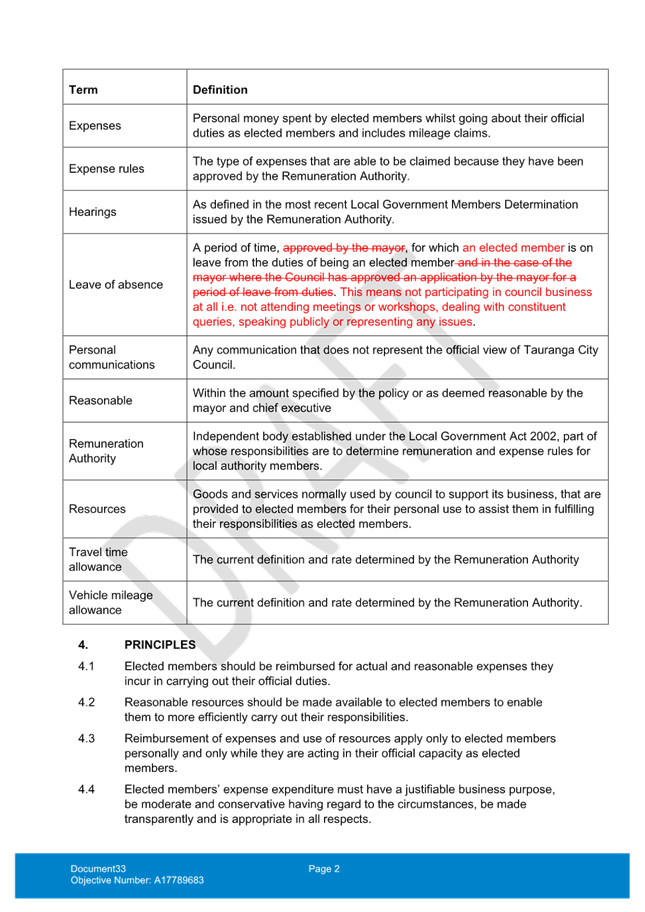
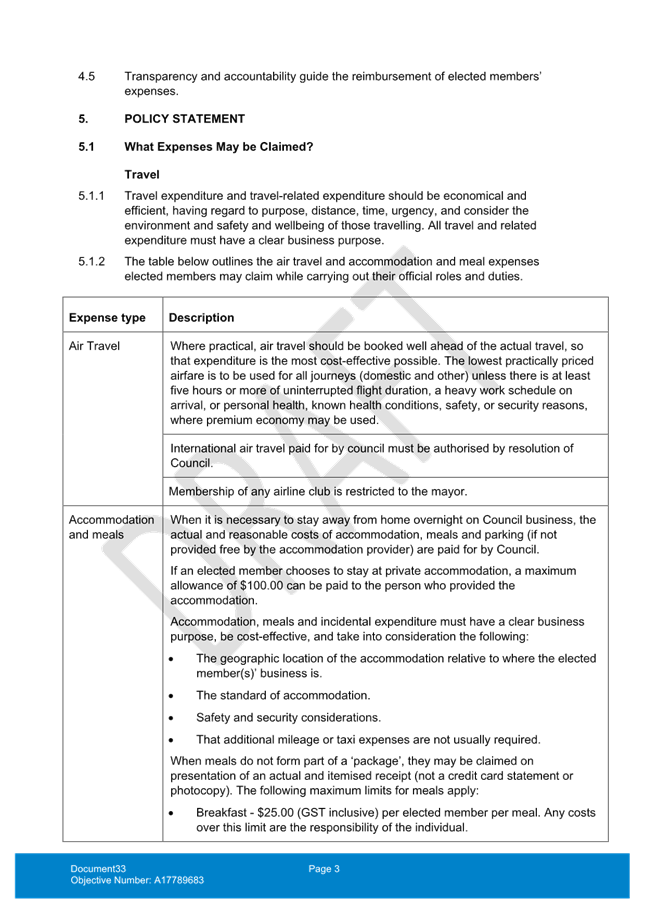
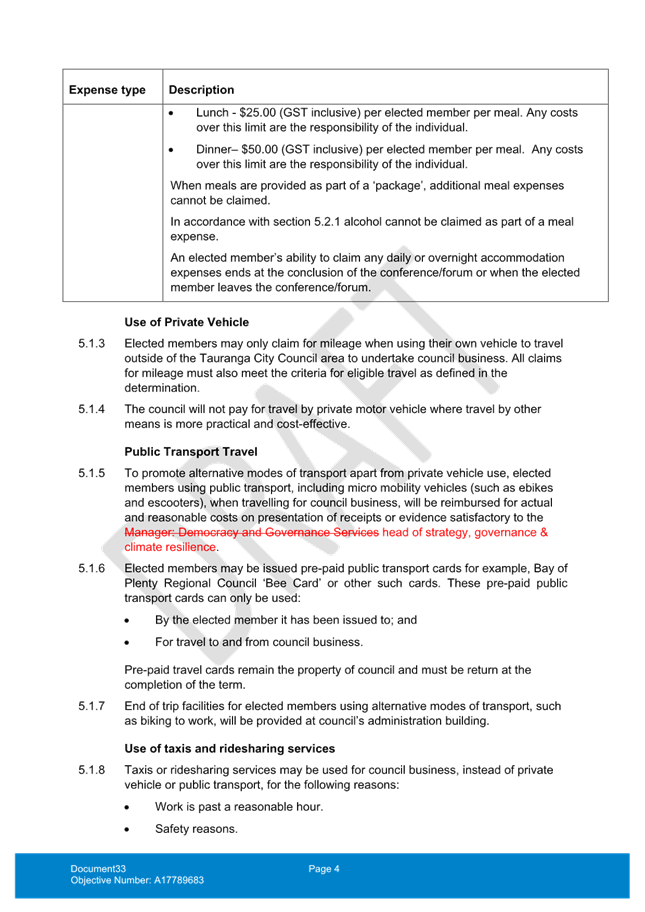
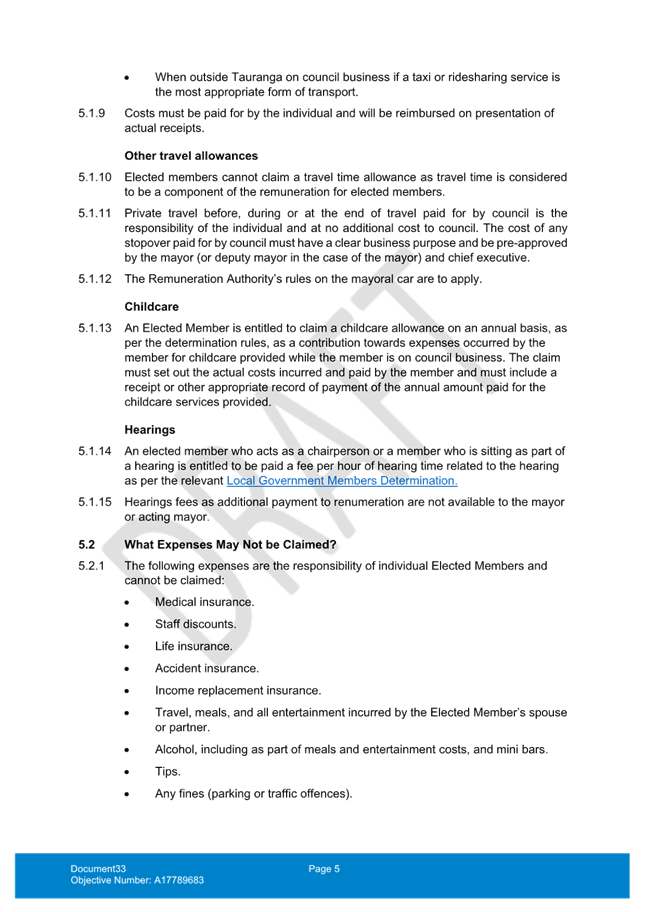
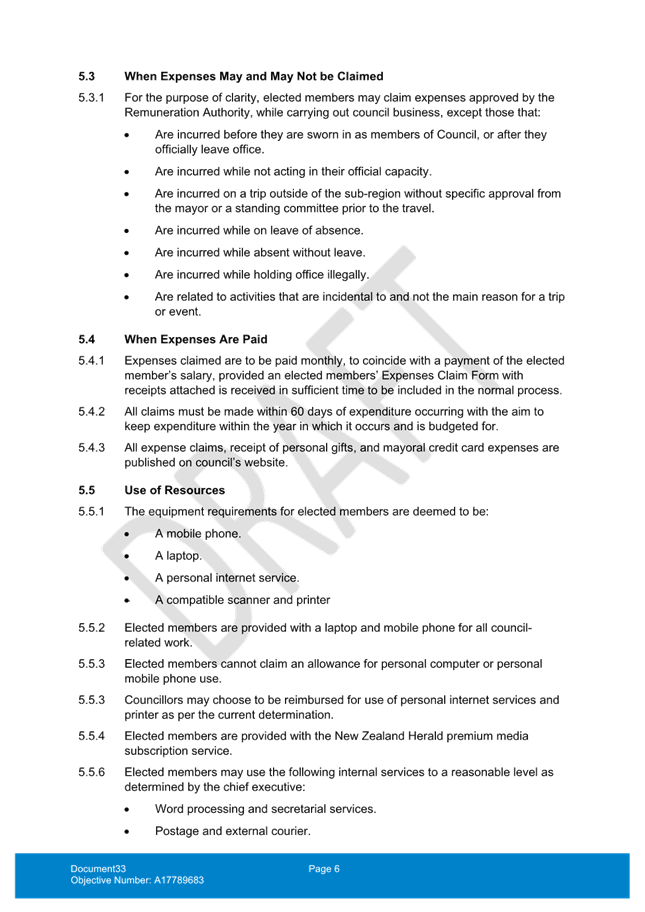
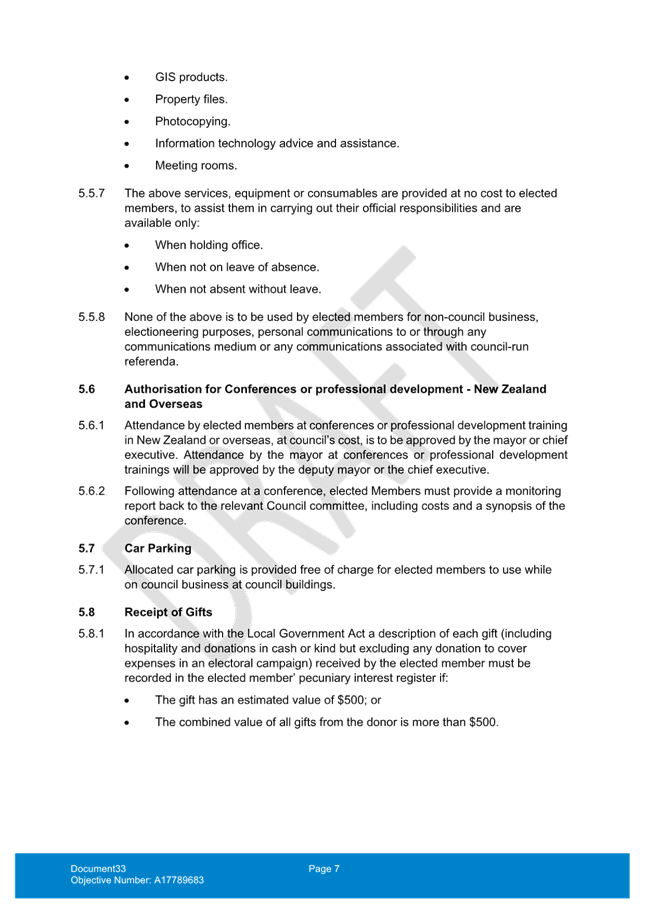
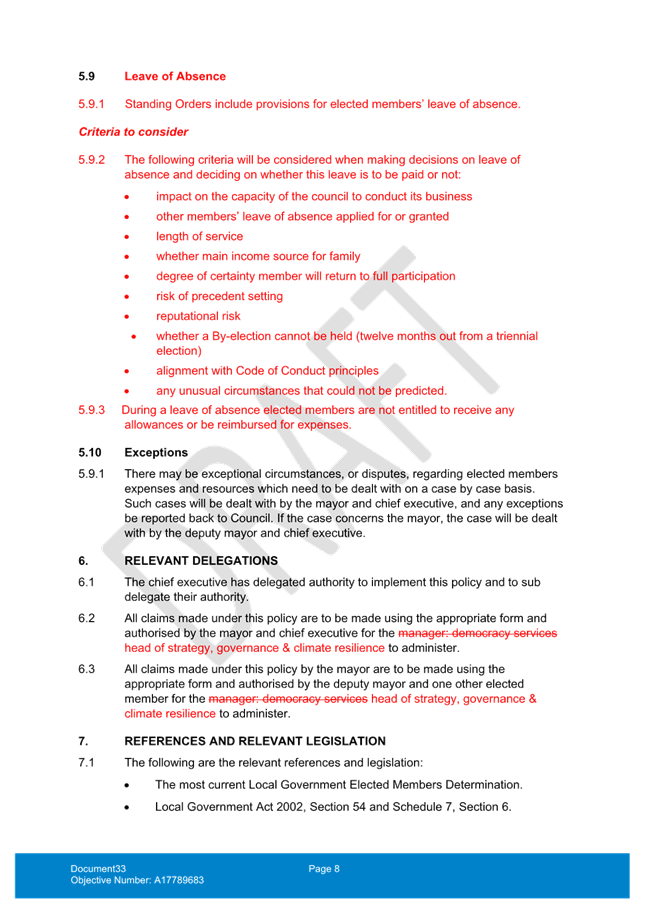

|
Ordinary
Council meeting Agenda
|
7
October 2025
|
11.5 Street Use and Public
Places Bylaw Review: Issues and Options
File Number: A18201153
Author: Jane
Barnett, Policy Analyst
Shawn Geard, Manager: Transport System Operations
Authoriser: Sarah
Omundsen, General Manager: Regulatory and Community Services
Purpose of
the Report
1. To
seek Council’s direction on the issues identified through the review of
the Street Use and Public Places Bylaw 2018.
|
Recommendations
That the Council:
(a) Receives the report
"Street Use and Public Places Bylaw Review: Issues and Options".
(b) Approves the following
options for the purpose of developing a draft bylaw:
|
No.
|
Issue
|
Option
|
|
1
|
Definition of
pedestrian way
|
Option 1B:
Amend the pedestrian way definition to 1.8 metres wide and located 1.5
metres from any shop front, unless otherwise specified by Council
resolution.
|
|
2
|
Definition of a
mobile shop
|
Option 2B:
Amend the definition of a mobile shop to include services – ‘a
vehicle from which goods or services are offered for sale.’
|
|
3
|
Approach to setting
rules for street dining
|
Option 3A:
Set allowance for street dining in non LTO areas and the ability for
Council to set additional LTO zones. (Status quo)
Or
Option 3B: Require all
businesses across the city to have an LTO for any street dining.
Or
Option 3C:
Allow businesses in non LTO zones to use a set area and
anything in addition would require an LTO.
Or
Option 3D: Allow
all businesses (including current LTO areas) to use a set
area and any additional area would require an LTO.
|
|
4
|
Approach to
setting rules for retail displays
|
Option 4A:
Current approach of allowing an area up to 1.5 square metres and not
extending more than 1.5 metres from the shop. (Status quo)
Or
Option 4B: In
addition to Option 4A, allow for Council resolutions to set areas
that require permits for retail display.
Or
Option 4C: Require a permit for retail display across the city.
Or
Option 4D:
Allow some area for retail display and require a permit/LTO for any
additional area.
|
|
5
|
Approach to set
rules for non-retail displays
|
Option 5A:
Require permission for anything to be displayed on council owned land. (Status
quo)
Or
Option 5B: Allow other types of displays and advertising activations to
be displayed in the area (up to 1.5 square metres and not extending
more than 1.5 metres from the shop) specified for retail displays.
Or
Option 5C: Option
5B, with the addition of allowing for Council to make
resolutions to set areas that require permits for non-retail displays.
Or
Option 5D: Require a permit for all non-retail displays across the city.
Or
Option 5E: Allow a set area for non-retail
display and require a permit/LTO for any additional area.
|
|
6
|
Approach to
setting rules for signs
|
Option 6A: Current approach with general
conditions and permission for set types of signs. (Status quo)
Note: As part of the review process the
general sign conditions in the bylaw will be clarified and updated.
|
|
7
|
Approach to
setting rules for real estate signs
|
Option 7B: Clarify the current rules by amending
the bylaw to include:
· a definition of a real estate
sign
· a maximum number of real estate
signs for each premises
· placement, number and duration
conditions for open homes and auctions signs
· conditions of an open home or
auction real estate sign
|
(c) Request that a draft bylaw be
prepared based on the direction provided and then presented to Council for
consideration prior to adoption for consultation.
|
Executive Summary
2. The Street Use and
Public Places Bylaw 2018 (bylaw) sets the rules for public spaces in Tauranga
to ensure public safety, accessibility and enjoyment for the community. It covers
a wide range of activities including signage, trading, street dining, skating
and scooter use, and busking.
3. On 24 March 2025,
Council directed staff to review the bylaw, with a focus on street dining and
broader footpath use. The initial review has identified several issues for
Council to consider, including the definitions of ‘pedestrian way’
and ‘mobile shop’, as well as how to set rules for street dining, retail
displays, other types of displays, and signage.
4. The report
recommends changing the definitions of ‘pedestrian way’ and
‘mobile shop’ to improve clarity, consistency and enforceability.
Options for street dining, displays and signs reflect two approaches to
regulation: either allowing the under set conditions outlined in the bylaw, or
requiring separate approval through a licence or permit application.
5. Allowing activities
under set conditions is easy to understand, cost effective to manage, and less
costly for businesses. However, it lacks flexibility and does not allow for
fees to be charged for the activity.
6. Requiring a permit
or licence provides greater flexibility, and the ability to set fees, but it
can be more complex and costly to administer.
7. Staff recommend
retaining the approach of allowing signs under set conditions. The
implementation costs of a permit approach for signage would outweigh any
benefits from being able to set fees for this use of council owned land.
8. No recommendations
are presented for street dining and displays (both retail and non-retail)
because both regulatory approaches result in the same safety outcome, and the
costs and benefits depend on the level of fees set for a licence or permit for
these activities.
9. The bylaw aligns
with Tauranga City Council’s strategic community outcomes and reflects
the principles of manaakitanga and kaitiakitanga by helping to ensure public
spaces are safe and accessible, and the environment and community assets are
protected.
10. There are no immediate
financial implications from Council deciding on the options presented in this
report. However, if the outcome of the review results in additional activities
requiring a licence or permit, there may be financial implications. These potential
costs are not yet known, as the associated fees have not been established.
Fees, if any, will be considered and set through the Council’s Annual
Plan process.
11. Initial engagement with Fire
Emergency NZ (FENZ), Police, Mount Mainstreet, Downtown Tauranga, Te
Rangapū’s policy subcommittee and the chair of Ngā Poutiriao
ō Mauao has been undertaken.
12. Council’s direction on
the issues will inform the development of a draft bylaw. A draft bylaw will be
presented to Council on 29 October 2025 for adoption for community
consultation.
Background
13. Tauranga has many public
places for our communities to connect, relax and enjoy the outdoors. These
spaces also support movement, whether walking, cycling or using mobility aids,
especially along footpaths and shared walkways. However, because these spaces
are shared, different uses can sometimes conflict, causing safety issues or
impacts on people’s enjoyment.
14. The bylaw aims to balance
these competing needs by setting rules to ensure footpaths and other public
places are safe, accessible and enjoyable. Some activities like hosting an
event or street dining need permission to ensure they are safe and do not conflict
with other uses. While other activities, such as retail display and signage,
are generally allowed by default under certain conditions.
Current bylaw rules
15. The bylaw’s primary
footpath rule is that the pedestrian way must always remain unobstructed. The
pedestrian way is the portion of the footpath intended exclusively for
pedestrian use. It is currently defined as 2.5 metres wide and positioned 1.5 metres
from any shop front, unless otherwise specified by Council resolution.
16. The bylaw allows for
businesses, in non-licence to occupy zones, to place a restricted number of
tables and chairs outside their premises
and allows Council to set areas (by resolution) where a licence to occupy (LTO)
is required for street dining. There are currently four LTO zones for street
dining across the city.
17. The bylaw allows for
businesses to display merchandise outside their shop. Businesses can use an
area up to 1.5 square metres and not extending more than 1.5 metres from the
shop.
18. Businesses can also have one
business sign (and additional magazine signs) with the placement and size set
out in the bylaw. Different types of signs such as real estate, garage sale,
election and community signs are also allowed across the city provided they
comply with the provisions in the bylaw. The provisions for election signs are
set out in the Local Elections Policy which is due for review in the first
quarter of next year.
19. Other types of displays and
fixtures (coin activated machines, planter boxes, temporary fences, and
advertising activations) are not permitted on Council owned land without
written permission from Tauranga City Council Staff.
20. The bylaw also covers building
identification, trading, mobile shops, fences and trees that may impact public
places and general nuisance, safety and damage to public places. A copy of the
bylaw is attached in Attachment 1 and a summary of the provisions is
provided for reference in Attachment 2.
21. Tauranga
Council staff use a mix of education, warnings and enforcement to help people
understand and comply with the bylaw. Staff engage with our customers in the
first instance to educate them and provide an opportunity to be voluntarily
compliant and only take the appropriate enforcement action if necessary.
Consideration of LTO fees
triggered a wider bylaw review
22. On 24 March 2025, Council
resolved to review the bylaw ‘Approves Option 2a: Staged rollout to
include charges for current areas this Annual Plan, followed by a review
of the Street Use and Public Places Bylaw during FY26 in time for a full city
implementation in the next Annual Plan’. In considering LTOs Council
also discussed the broader commercial use of council owned landed. As a result,
the review has focused on street dining, retail display, other types of
displays and signs.
23. The Local Government Act 2002 (LGA)
requires existing bylaws to be reviewed every 10 years. As the bylaw is due for
review in 2028, undertaking a full review now while looking at LTO provisions
is efficient and avoids duplication.
24. The review aims to determine
whether the bylaw is still needed, aligns with current legislation, community
needs and is effective and easy to understand. The review also provides an
opportunity to inform and consult with the community on the rules for our
public places.
Issues for consideration
25. This report presents issues
identified during the initial stages of the review. These issues have been
identified through the Council resolution from 24 March 2025, feedback from
staff across the organisation and pre-engagement with Fire Emergency New Zealand
(FENZ), the Police, Mount Main Street, Downtown Tauranga, Te Rangapū
policy subcommittee and the chair of Ngā Poutiriao ō Mauao.
26. The issues can be split into
two broad categories: Issues around clarifying the language and improving
structure of the bylaw, and issues focused on use of the road reserve, and
particularly the footpath, including:
· pedestrian way
· mobile shops
· street dining
· retail displays
· non-retail
displays
· general signage
· real estate signs.
27. Staff are seeking
Council’s direction on these issues.
28. As the clarity and structural
issues do not impact the bylaw’s content or intent, they will be
addressed during the drafting process of the bylaw. These proposed changes will
include clearer language, clarified definitions, and the addition of a contents
page and explanatory notes.
Statutory Context
29. The ability for Council to
make a bylaw comes from legislation that sets out the purpose for which the
bylaw can be made. This bylaw is made under the Local Government Act 2002
(LGA), the Health Act 1956 and the Litter Act 1979. Generally, bylaws are made
to:
· protect
the public from nuisance;
· protect,
promote and main public health and safety; and to
· minimise
the potential for offensive behaviour in public places.
30. The LGA sets out the process
and consultation requirements for making and reviewing a bylaw. Section 155
sets out that Council must determine whether a bylaw is the most appropriate
and proportionate way of addressing the perceived problem and does not give
rise to any implications under the New Zealand Bill of Rights Act 1990. This
analysis will be included when a draft bylaw is presented to Council for
adoption for community consultation.
31. The special consultative
procedure must be used when amending a bylaw unless the proposed changes are
minor or are correcting errors.
32. Staff are considering making
both the pedestrian way (refer to paragraph 40) and mobile shop (refer to
paragraph 42) provisions under the Land Transport Act 1998 (LTA) in addition to
the LGA. Any bylaw made under the LTA must be sent to the Minister, who may at
any time disallow the bylaw or any part of it. This requirement may mean the
bylaw may take longer to be adopted than if these provisions were only made
under the LGA.
STRATEGIC ALIGNMENT
33. This contributes to the
promotion or achievement of the following strategic community outcome(s):
|
Contributes
|
|
We are
an inclusive city
|
ü
|
|
We
value, protect and enhance the environment
|
ü
|
|
We are a
well-planned city
|
ü
|
|
We can
move around our city easily
|
ü
|
|
We are a
city that supports business and education
|
ü
|
34. The bylaw aligns with all five
community outcomes. It contributes to:
· an inclusive city
by ensuring public access and enjoyment of public spaces
· valuing,
protecting and enhancing the environment by setting rules around pollution and
damage of public places including trees and plants
· a well-planned
city by setting rules for furniture, signage and trading in public places
including mobile shops
· being able to move
around the city easily by protecting pedestrian access, regulating footpath
use, prohibiting the unsafe use of skateboards and scooters and ensuring
visibility and safety around intersections and crossings
· being a city that
supports business and education by allowing business signs, retail display and
street dining to support commercial activity.
35. Reviewing the bylaw provides
an opportunity to ensure the bylaw aligns with these strategic community
outcomes.
Options Analysis
36. The purpose of the bylaw is to
ensure the safety and enjoyment of everyone using our public spaces, as well as
to protect our community assets. There are two approaches to setting rules to
achieve this:
· setting
a general default rule/allowance, or
· requiring
approval in the form of a permit or licence.
37. Table
One summarises the advantages and disadvantages of each approach. The options
presented for regulating street dining, retail displays, and non-retail
displays include the two approaches, as well as a combination of both.
Table One: Comparison of general rules and requiring
approval.
|
Approach
|
Advantages
|
Disadvantages
|
|
General
allowance – no permission required as permission is provided for in the
bylaw
|
· Simple to
understand and communicate.
· Simpler to
monitor.
· Lower
administrative costs for businesses and Tauranga City Council.
|
· Less flexibility
to accommodate individual circumstances.
· Could be seen as
overly restrictive.
· No scope to
recover monitoring and enforcement costs through fees.
· No ability to
charge fees for the use of council land.
|
|
Require
approval in the form of permit or licence
|
· Allows for a case-by-case
assessment if required.
· Can include
conditions tailored to specific situations.
· Greater
flexibility for changing the permit or licence conditions compared with
changing the bylaw.
· Allows for fees
to be charged.
|
· More complex and
costly to administer.
· May discourage
some businesses from activating the street.
|
Issue One: Pedestrian way
38. A clear pedestrian way is
essential for creating safe, accessible and efficient public spaces. It ensures
people can more freely without obstacles, reducing the risk of accidents and
improving accessibility for all users, including those with mobility challenges.
Unobstructed pedestrian ways are also crucial for emergency access.
39. It is important to have a
pedestrian way that works for our city. The current bylaw’s definition
goes beyond what is necessary for safe pedestrian movement and is not practical
given the physical constraints of many of Tauranga’s footpaths. Staff
propose amending it in line with NZTA’s pedestrian network guidance.
40. Staff are also proposing to
make the provisions around keeping the pedestrian way clear under the Land
Transport Act 1998
in addition to the LGA. This would allow for infringement fines to be available
as an enforcement tool for any breaches.
Table Two: Pedestrian way definition options
|
Options
|
Advantages
|
Disadvantages
|
|
Option 1A:
Retain the current: 2.5 metres wide and located 1.5 metres from any shop
front, unless otherwise specified by Council.
(Status quo)
|
· No advantages
identified with this option.
|
· Does not reflect
the physical constraints of most footpaths in the city.
· Enforcement is
not possible in all locations across the city.
|
|
Option 1B:
Amend the pedestrian way definition to 1.8 metres wide and located 1.5
metres from any shop front, unless otherwise specified by Council resolution.
Recommended.
|
· Consistent with
NZTA’s pedestrian network guidance.
· Reflects the
physical constraints of most footpaths in the city.
· Easier for
people to comply with and be enforced.
|
· No disadvantages
identified with this option.
|
Issue Two: Mobile shops
41. Under the bylaw, mobile shops
are required to have a licence in Tauranga, and the licence conditions set out
the rules for operating a mobile shop in the city. These conditions include
areas where a mobile shop must not trade, as well as general conditions
prohibiting operating in locations that would obstruct or be likely to obstruct
traffic or views of other road users.
42. Over the past year, we have
received 85 customer communications directly related to mobile shops (see Attachment
3). Most of these are around mobiles shops obstructing pedestrian areas and
parking spaces, safety concerns and operating in prohibited locations or
without a licence.
43. Some mobile shops provide services
but do not have a licence to do so. The bylaw defines a ‘mobile
shops’ as ‘a vehicle from which merchandise can be
sold’. This creates both ambiguity for service based mobile shop
operators and enforcement challenges.
44. Staff recommend changing the
definition to include services. This proposed change aligns with the definition
of a mobile shop in the LTA which would allow any mobile shop provision to be
made under the LTA. This would mean that the infringement fees (under the LTA)
could be used as a tool to help improve compliance.
45. Changing the definition also
addresses concerns raised by Te Rangapū, that traditional Māori
healing practitioners are precluded from having a mobile shop licence under the
current definition.
46. Advantages and disadvantages
of expanding the definition of a mobile shop to include services are outlined
below.
Table Three:
Mobile shop definition options
|
Options
|
Advantages
|
Disadvantages
|
|
Option 2A:
Retain the current definition.
(Status quo)
|
· No advantages
identified with this option.
|
· Those wanting to
provide serves from a mobile shop are not able to apply for a mobile shop
licence.
· Does not allow
for infringement fees under the Land Transport Act to be applied to help
improve compliance.
|
|
Option 2B:
Amend the definition of a mobile shop to include services – ‘a
vehicle from which goods or services are offered for sale’
Recommended.
|
· Allows for
infringement fees under the Land Transport Act to be applied to help improve
compliance.
· Allows for the
mobile shop licence conditions to apply to mobile shops offering services.
· Responds to
feedback from Te Rangapū to consider the definition of a mobile shop.
· Provides a
consistent approach to mobile shops.
|
· No disadvantages
identified with this option.
|
Issues Three: Street dining
47. On the 24 March 2025, Council
directed staff to review the bylaw to consider a full city implementation of
street dining LTOs. This is presented as Option 3B in Table Four below.
48. Alternatives include retaining
the current rules, allowing businesses outside of LTO zones to use a set
area with the option to apply for an LTO if they wish to use additional area
and applying this approach to all businesses not just those outside the
current LTO zones.
49. Feedback from the Te Rangapū
policy subcommittee raised concern around street dining (and other commercial
activities) occurring on significant Māori sites. Requiring LTOs for
street dining allows for more flexibility to consider compared with
automatically allowing it under set conditions in the bylaw.
Table Four: Street dining options
|
Options
|
Advantages
|
Disadvantages
|
|
Option 3A:
Set allowance for street dining in non LTO areas and the ability for Council
to set additional LTO zones.
(Status quo)
|
· May be simpler
for businesses already operating street dining as there will be no change.
· No additional
cost or administration for businesses outside the current LTO areas –
as current street dining provisions will remain.
· Less
administration costs for businesses and Tauranga City Council.
· Allows Council
to set additional LTO zones in the future if required.
|
· Inconsistent
rules across the city may lead to confusion or perceived unfairness.
· Does not allow
for street dining fees to be charged in areas where LTOs are not required.
|
|
Option 3B:
Require all businesses across the city to have an LTO
for any street dining.
|
· Consistent
approach across the city.
· Potential for
Tauranga City Council to better manage public space – including
accessibility.
· Allows for consideration
of significant Māori areas and archaeological sites when assessing
applications.
· Allows option
for fees to be charged across the city.
· Consistent with
the approach used by other metro councils.
· Provides greater
flexibility to change rules via licence conditions if required.
|
· Increased
administrative costs for businesses and Tauranga City Council.
· Likely to be
more difficult to monitor.
· May discourage
small or new businesses from offering street dining.
|
|
Option 3C:
Allow businesses in non LTO zones to use a set area and
anything in addition would require an LTO.
|
· Allows for
street dining while maintaining the ability to set LTO conditions for larger
areas.
· Reduces costs
for businesses, in non LTO zones, wanting to use only the set area.
|
· Requires a new
implementation system.
· Inconsistencies
between LTO and non LTO areas.
· Could be
difficult to monitor and enforce the ‘set area’ and the LTO area.
· Additional costs
for those businesses in non LTO zones wanting to use additional space.
· Potential for
increased administrative costs for Tauranga City Council.
· Less scope to
consider significant Māori areas and archaeological sites in the set
areas.
|
|
Option 3D:
Allow all businesses (including current LTO areas) to use a set
area and any additional area would require an LTO.
|
· Sets a uniform
rule across the city.
· Simplifies the
process for businesses only wanting to use the set area for street dining.
· Potential lower
costs for businesses in current LTO zones that only want to use the set area.
|
· Requires new
implementation system.
· Transition
arrangements for businesses with current LTOs.
· Additional
administration costs.
· Additional costs
for those businesses in non LTO zones wanting to use additional space.
· Could be
difficult to monitor and enforce the ‘set area’ and the LTO area.
· Less scope to
consider significant Māori areas and archaeological sites in the set
areas.
|
50. No staff recommendation has
been made on the preferred approach to regulating street dining, as all options
achieve the same safety and accessibility outcomes.
Issue Four: Retail display
51. While considering LTO fees for
street dining at their 24 March 2025 meeting, Council noted their intention to
explore licences/permits for other uses of Council owned land. One such use is
retail display. The bylaw allows a specified area
outside a business to be used for retail display.
52. Table Five below sets outs the
different options for regulating retail display across the city. Option 4B
retains the current allowance but introduces the ability for Council to designate,
by resolution, areas where a permit is required. This approach aligns with the
existing framework for street dining. Alternative options include requiring a
permit for all retail display (Option 4C) or allowing a standard display area
for all businesses with the option to apply for a permit to use additional
space (Option 4D).
Table Five: Retail display options
|
Options
|
Advantages
|
Disadvantages
|
|
Option 4A:
Current approach of allowing an area up to 1.5 square metres and not
extending more than 1.5 metres from the shop.
(Status quo)
|
· Maintains
current expectations for businesses.
· No additional
administrative costs for businesses and Tauranga City Council.
· Provides a clear
allowance for footpath use.
|
· Does not account
for site specific constraints or high pedestrian areas.
· Does not allow
the option of fees for the use of council land.
· Inconsistent
with the current approach for street dining in LTO zones.
· Does not allow
for significant Māori areas and archaeological sites to be considered.
|
|
Option 4B: In
addition to Option 4A, allow for Council resolutions to set areas that
require permits for retail display.
|
· Provides a clear
allowance for footpath use.
· Allows
flexibility to adapt requirements based on local conditions.
· Consistent with
the current general framework for street dining – particularly if
permits were required in the same zones as the street dining LTOs.
· Allows the
option for some fees to be charged for use of council land if a permit system
is introduced in some areas.
|
· In areas where
set areas are provided for there would be no ability to set fees.
· Potential to be
seen to be unfair if some places in the city required a retail display permit
and others did not.
|
|
Option 4C:
Require a permit for retail display across the city.
|
· Potential for
greater control and oversight as assessments can be carried out based on
location, safety and amenity.
· Allow for
significant Māori areas and archaeological sites to be considered.
· Allows option of
fees to be charged for displays across the city.
· Consistent with
street dining LTOs.
· Provides greater
flexibility to change rules via the licence conditions if required.
|
· Increased
administrative costs.
· Potential
barrier for small businesses wanting to utilise the footpath.
· Likely to be
more difficult to monitor.
|
|
Option 4D:
Allow some area for retail display and require a permit/LTO for any
additional area.
|
· Supports small
scale display activities.
· Allows for
greater oversight based on scale and impact.
· Allows option
for fees to be charged for areas that extend beyond a set area.
|
· Increased
administrative costs.
· Likely to be
more difficult to monitor.
· Less coverage
for fees for using council land.
· Inconsistent
with the current approach for street dining in LTO zones.
|
53. Staff have not identified a
preferred option for retail display, as all approaches deliver the same safety
and accessibility outcomes.
Issue Five: Non-retail displays
54. Although the bylaw permits
retail displays under defined conditions, it does not explicitly address other
types of non-retail displays like coin activated trading machines and other
advertising activations. However, it includes a provision requiring written
approval for any material or object to be deposited or placed in a public area.
55. Many of these types of
displays across the city do not currently have written permission to be located
on council owned land.
56. Table Six sets out different
options for addressing other types of displays. Many of these options and their
associated advantages and disadvantages depend on the direction given for
retail display. For example, if Council decide to allow a set area for retail
display, then Option 5B (allowing non-retail displays to be placed in this set
area) applies. However, if Council decide on permits for retail display this
option is no longer valid.
Table Six: Options for non-retail displays and fixtures
|
Options
|
Advantages
|
Disadvantages
|
|
Option 5A:
Require permission for anything to be displayed on council owned land.
Note:
Redrafting of the bylaw would make it clearer that this provision includes
other types of displays and temporary fixtures, including trading devices and
advertising activations.
(Status
quo)
|
· Allows option
for some fees to be charged for use of council land.
· Allows for
consideration of the appropriateness of the display or advertising
activation.
· Allows for
significant Māori areas and archaeological sites to be considered.
|
· May be seen as
inconsistent if retail displays are allowed for.
· Potential costs
for businesses.
|
|
Option 5B:
Allow other types of displays and advertising activations to be displayed in
the area (up to 1.5 square metres and not extending more than 1.5
metres from the shop) specified for retail displays.
Note: This option is only valid if either
options 4A or 4B for retail display are aproved.
|
· Maintains
current expectations for businesses.
· No additional
administrative costs for businesses and Tauranga City Council.
· Provides a clear
allowance for footpath use.
|
· Does not account
for site specific constraints or high pedestrian areas.
· Does not allow
for the appropriateness of the display or advertising activation to be
considered.
· Does not allow
the option of fees for the use of council land.
· Inconsistent
with the current approach for street dining in LTO zones.
· Does not allow
for significant Māori areas and archaeological sites to be considered.
|
|
Option 5C: In
addition to Option 5B, allow for Council to make resolutions to set
areas that require permits for non-retail displays.
|
· Provides a clear
allowance for footpath use.
· Allows
flexibility to adapt requirements based on local conditions.
· Consistent with
the current general framework for street dining – particularly if
permits were required in the same zones as the street dining LTOs.
· Allows option
for some fees to be charged for use of council land if a permit system is
introduced in some areas.
|
· In areas where
set areas are provided for there would be no ability to set fees.
· Potential to be
seen to be unfair if some places in the city required a permit and others did
not.
|
|
Option 5D:
Require a permit for all non-retail displays across the city.
|
· Potential for
greater control and oversight as assessments can be carried out based on
location, safety and amenity.
· Allows for
significant Māori areas and archaeological sites to be considered.
· Allows option of
fees to be charged for displays across the city.
· Consistent with
street dining LTOs.
· Provides greater
flexibility to change rules via the licence conditions if required.
|
· Increased
administrative costs.
· Potential
barrier for small businesses wanting to utilise the footpath.
· Likely to be
more difficult to monitor.
|
|
Option 5E:
Allow a set area for non-retail display and require a permit/LTO for any
additional area.
|
· Supports small
scale display activities.
· Allows for
greater oversight based on scale and impact.
· Allows option
for fees to be charged for areas that extend beyond a set area.
|
· Increased
administrative costs.
· Likely to be
more difficult to monitor.
· Less coverage
for fees for using council land.
· Inconsistent
with the current approach for street dining in LTO zones.
|
57. Staff have not identified a
preferred option, as all approaches deliver the same safety and accessibility
outcomes.
Issue Six: Signs
58. Signs support businesses and
provide information to the community but can also impact safety, accessibility
and the enjoyment of public spaces.
59. There are many types of signs
across the city and the bylaw specifically mentions business signs, magazine
signs, real estate signs, garage sale signs, election signs
and community signs. Many signs do not comply with the bylaw provisions because
of where they are located.
60. We have received just under 90
customer communications around signage over the past year (see Attachment 3).
The concerns raised related to whether the signage had the required approvals,
interference with public spaces, including parking and pedestrian access and
visual amenity, and safety concerns.
61. Tauranga City Council staff
currently take a primarily reactive approach to sign breaches, starting with
education and progressing to the seizure of signs when compliance cannot be
achieved, or the owner cannot be identified.
62. Table Seven sets out the
advantages and disadvantages of the different options for signs. Option 6A is
recommended because the implementation costs of a permit approach are not
likely to be recovered by the potential fees that could be charged.
Table Seven:
Options for signs
|
Options
|
Advantages
|
Disadvantages
|
|
Option 6A:
Current approach with general conditions and permission for set types of
signs.
Recommended.
Note:
Under this option, staff propose to clarify and update the general sign
conditions in the bylaw including a provision on illumination, luminescence
and the movement of material that may cause distraction such as flashing or
revolving lights and lasers.
|
· Maintains
current expectations for businesses.
· Sets a
consistent rule for signs on council land across the city.
· Simpler to
monitor.
· Less
administrative costs.
|
· Does not allow scope
for fees to be charged for using council land for signage.
· Does not allow
for significant Māori areas and archaeological sites to be considered.
|
|
Option 6B: Option 6A with the addition of the
ability for Council to make resolutions to set areas that require
approval/permits for signs.
|
· Allows
flexibility to adapt requirements based on local conditions.
· Consistent with
the current general framework for street dining – particularly if
permits were required in the same zones as the street dining LTOs.
· Allows option
for some fees to be charged for use of council land if a permit system is
introduced in some areas.
|
· Potential to be
seen to be unfair if some places in the city required a permit for a sign and
others did not.
· Any approval or permit
approach would be costly for council and businesses.
· Any fees charged
for signs would be unlikely to cover the administration and implementation
costs of a permit system.
|
|
Option 6C: Require
approval/permits for all signs across the city.
|
· Allows for
greater oversight and flexibility based on location and impact.
· Allows option
for fees to be charged for signage on council land for all types of signs.
· Provides greater
flexibility to change rules via the licence conditions if required.
|
· Increased
administrative and monitoring costs.
· Potential permit
fees are unlikely to recover implementation costs.
· Increased costs
for businesses wanting to put signage on Council land.
· Difficult to
monitor.
|
|
Option 6D:
Combination of Option 6A and 6C where some signs are provided for in the
bylaw and other types require a permit.
|
· Sets a
consistent rule for some types of signs on council land across the city.
· Allows for
greater oversight of some types of signs.
· Allows for fees
to be charged for some types of signage on council land.
|
· May be difficult
to justify why particular types of signs require permission and others do
not.
· May be
inconsistent across different types of signs.
· Difficult to
monitor.
· Could be
confusing for businesses.
|
|
Option 6E: Other
- changing the type/number of signs permitted.
Note: Refer
to issue seven, real estate signs below.
|
|
|
Issue
Seven: Real estate signs
63. The bylaw allows real estate
signs to be placed outside the property being sold and be removed two weeks
after the property is sold. It also allows open home and auction signs to be
displayed 3 hours prior to and up to the end of the open home or auction.
64. Recently there has been an
increase in the number of non-compliant real estate signs, in particular
private viewing signs. The bylaw review provides an opportunity for Council to
consider and clarify the rules for real estate signs.
65. The options available will
depend on the direction given on the broader topic of signs in issue six above.
If Council opts for an approval-based approach for all signs, including real
estate signs, no decision is required on the options below.
Table
Eight: Options for real estate signs
|
Options
|
Advantages
|
Disadvantages
|
|
Option 7A: Retain
current approach for real estate signs.
Note: This
option is not applicable if option 6C has been selected for issue six on
signs above.
|
· Maintains
current expectations for real estate businesses.
· Less
administrative costs.
|
· Does not allow
scope for fees to be charged for using council land.
· Does not clarify
the current rules for real estate signs.
· Does not address
the increasing number of real estate signs being displayed on council land.
|
|
Option 7B: Clarify the current rules by amending
the bylaw to include:
· a definition of a real estate sign
· a maximum number of real estate
signs for each premises
· placement, number and duration
conditions for open homes and auctions signs
· Conditions of an open home or
auction real estate sign
Recommended
Note: If a permit approach is chosen for all
signs (option 6C) these clarifications could be included in the permit
conditions.
|
· Provides greater
clarity around the conditions for real estate signs.
· Ensures safety
and amenity value is maintained by setting a maximum number of signs.
· Allows more time
for open day and auction signs to be displayed.
|
· Changes may be
confusing for businesses.
· Could be viewed
as overly restrictive.
|
|
Option 7C: Require
approval for all real estate signs on Council land.
|
· Allows for
greater oversight and flexibility based on location and impact.
· Allows option
for fees to be charged for real estate signs on council land.
· Provides greater
flexibility to change rules via the licence conditions if required.
|
· New system
required to manage approval requests.
· Increased
implementation costs.
· Potential permit
fees are unlikely to recover implementation costs.
· Increased costs
for businesses/vendors wanting to put real estate signs on Council land.
· Difficult to
monitor.
|
|
Option 7D: No
real estate signs permitted on Council land but allow for permission to be
sought to place a sign on the closest possible council land location, if the
property has no street visibility.
|
· Reduces safety
risks of signs.
· Reduces negative
amenity impacts of signs.
· Supports
equitable marketing opportunities across different property types.
· Simple to
understand and monitor.
|
· Increased
administrative costs.
· Increased costs
for businesses/vendors wanting to place real estate signs on Council land.
· Could be viewed
as overly restrictive.
· Could be seen as
inconsistent if other types of business signs are permitted on Council owned
land.
|
Financial Considerations
66. The
cost of reviewing the bylaw will be funded from the existing policy and bylaws
budget.
67. There are no immediate
financial implications from Council deciding on the options presented in this
report. However, if the outcome of the review (the adopted bylaw) results in
additional activities requiring a licence or permit, there may be financial
implications. These potential costs are not yet known, as the associated fees
have not been established. Fees will be considered and set through the
Council’s Annual Plan process.
Legal Implications / Risks
68. There is a risk that some of
the options considered will be perceived negatively by businesses and the wider
community. This risk will be managed through effective engagement and
consultation.
TE AO MĀORI APPROACH
69. The review of the bylaw
reflects the principles of Manaakitanga by ensuring public spaces are safe,
accessible, and welcoming for all. It also aligns with the principle of Kaitiakitanga
through supporting the protection of the environment. The bylaw regulates
activities that may damage trees, distribute soil or contribute to pollution
while protecting the environment and community assets.
70. The proposed amendment to the
mobile shop definition enables traditional Māori healing practices such as
mirimiri
and romiromi
to be offered from mobile shops, responding to feedback from Te Rangapū
and supporting Māori-led enterprise.
71. The Te Rangapū policy
subcommittee raised the importance of ensuring the cultural appropriateness of
allowing activities like street dining on significant Māori and
archaeological areas. An approval-based approach has more scope for considering
this.
72. The bylaw review will also
consider amending the bylaw to support culture and Te Ao Māori values in
public spaces by clarifying that approval for waiata is not required on Mauao.
The bylaw currently requires written permission from council staff for
preaching, singing, performing music, lectures or busking in a public place.
CLIMATE IMPACT
73. There are no direct or
specific climate change impacts resulting from considering the options in the
bylaw review. However, the bylaw itself provides an important regulatory tool
to help protect environmental assets in public spaces, in particular trees and
vegetation, that help contribute to climate resilience.
Consultation / Engagement
74. Staff have engaged with Fire
Emergency New Zealand (FENZ), the Police, Mount Main Street, Downtown Tauranga,
Te Rangapū policy subcommittee and the chair of Ngā Poutiriao ō
Mauao.
75. Conversations with FENZ
focused on the building identification provisions in the bylaw and staff
engaged with Police on the areas where skateboards and roller skates are
prohibited.
76. Discussions with the chair of Ngā
Poutiriao ō Mauao focused on the bylaw’s application to Mauao to
ensure this remained appropriate. The bylaw was seen to still have value as a
tool to help protect Mauao especially the natural environment. Any requests for
activities on Mauao would be guided by the reserve management plan and
consultation with Ngā Poutiriao ō Mauao. The importance of waiata on
Mauao was highlighted and how the bylaw could recognise this. Staff will
incorporate this feedback into the draft bylaw.
77. Mount Mainstreet
expressed significant concern around Council considering additional fees for
businesses in the Mount given the current business environment and the increase
in rates and recent LTO fees. They note that ‘there has been a notable
increase in commercial vacancies on Mount Mainstreet, which traditionally has
very low store vacancies with 10 businesses either closing or relocating since
January 2025. Feedback from members indicates mounting pressure due to a
combination of declining consumer demand and rising operational costs.’
78. Downtown Tauranga
expressed their desire for any changes to be fair and equitable. They want the
same rules to apply to all businesses in Tauranga regardless of where they are
located. In considering displays they favour allowing a set area for this, provided
it is not less than the current set area for retail display, with the option on
applying for a permit for additional space. Downtown Tauranga supports the
current approach for signs but consideration for a permit to display extra
signs depending on the size of the shop.
79. As part of the development of
the Use of Council Land policy in 2020 almost 500 people were asked what they
thought businesses should pay for the ongoing commercial use of public space.
The survey used the example of tables and chairs outside a cafe/restaurant next
door to a reserve and found that most people (around 70%) would like council to
charge market value. A further 24% supported council charging a small fee.
80. Community
consultation on the Street Use policy, carried out in late 2023, asked whether
people supported phasing in street dining charges for businesses using public
streets and footpaths. Of the 317 submitters, views were mixed: 48 percent
disagreed or strongly disagreed, while 42 percent agreed or strongly agreed.
Those opposed to charging cited the need to support vibrant street dining and
struggling businesses. Supporters felt that commercial use of public space
should be charged, noting that street dining can inconvenience other users and
encroach too much on pedestrian areas.
Significance
81. The Local Government Act 2002
requires an assessment of the significance of matters, issues, proposals and
decisions in this report against Council’s Significance and Engagement
Policy. Council acknowledges that in some instances a matter, issue,
proposal or decision may have a high degree of importance to individuals,
groups, or agencies affected by the report.
82. In making this assessment,
consideration has been given to the likely impact, and likely consequences for:
(a) the current and future
social, economic, environmental, or cultural well-being of the district or
region
(b) any
persons who are likely to be particularly affected by, or interested in, the
issue.
(c) the
capacity of the local authority to perform its role, and the financial and
other costs of doing so.
83. In accordance with the
considerations above, criteria and thresholds in the policy, it is considered
that the issue of the bylaw is of medium significance, however direction on the
options presented in this report is of low significance.
ENGAGEMENT
84. In accordance with the legal
requirement in the LGA, community consultation will be carried out on the draft
bylaw, using the special consultative procedure.
85. The special consultative
procedure requires a Statement of Proposal, the opportunity for people to
present their views to Council, and a consultation period of no less than a
month.
Next Steps
86. Council’s direction on
the issues will be incorporated into the development of a draft bylaw. The
draft bylaw will be bought back to Council on 29 October 2025 for adoption
approval for community consultation.
87. If Council adopts the draft
bylaw for community consultation, this will to be carried out in
November/December 2025.
Attachments
1. Street
Use and Public Places Bylaw 2018 - A18778575 ⇩ 
2. Summary
of provisions in the Street Use and Public Places Bylaw - A18878570 ⇩ 
3. Summary
of customer communications - A18878608 ⇩
|
Ordinary
Council meeting Agenda
|
7
October 2025
|

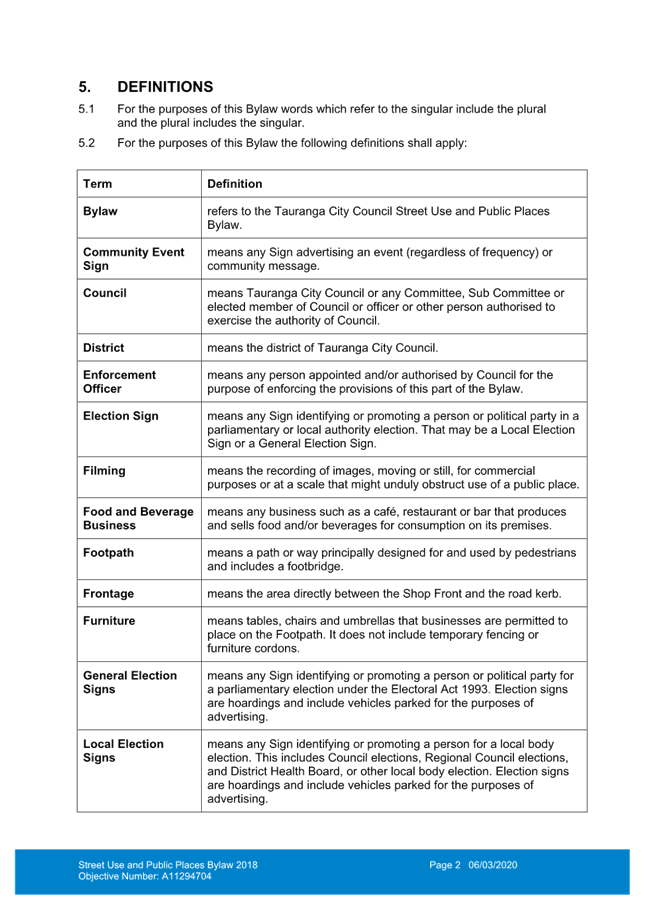
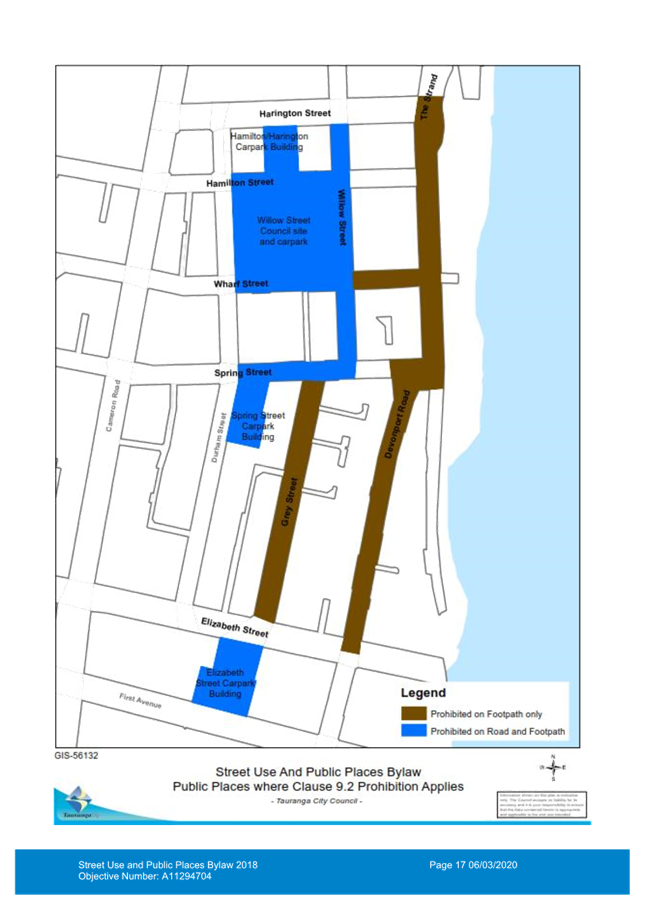
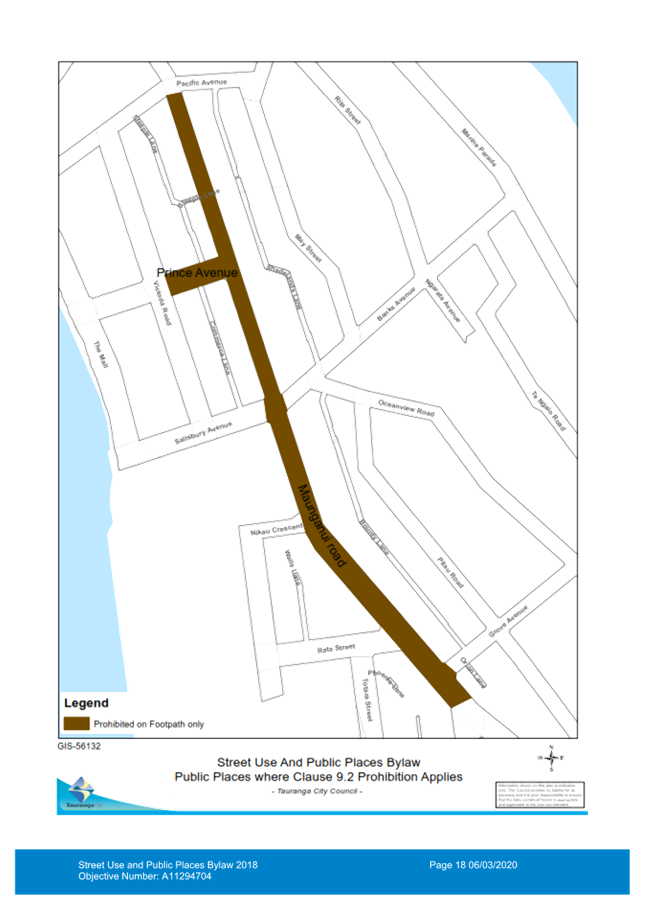
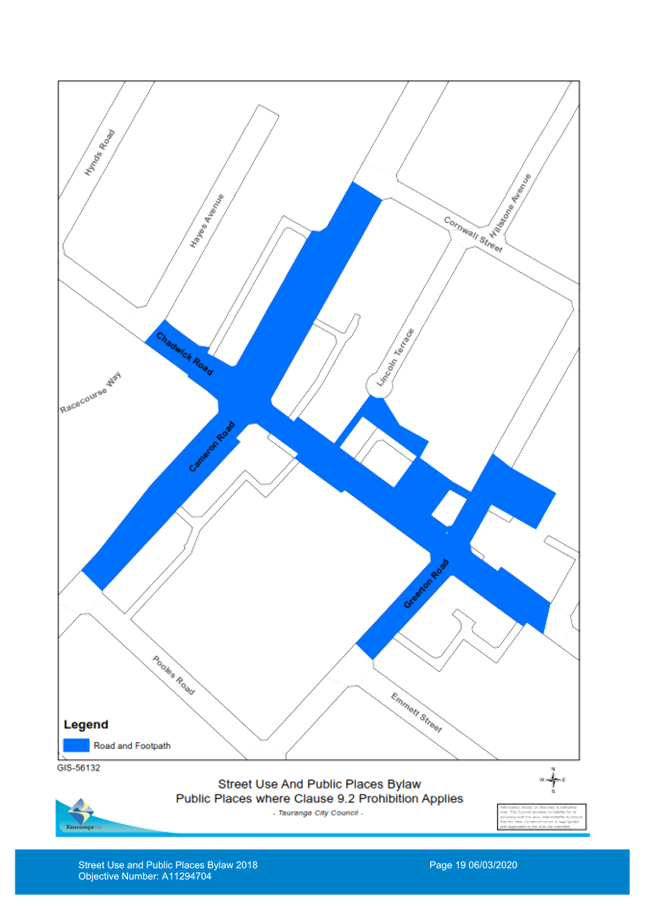
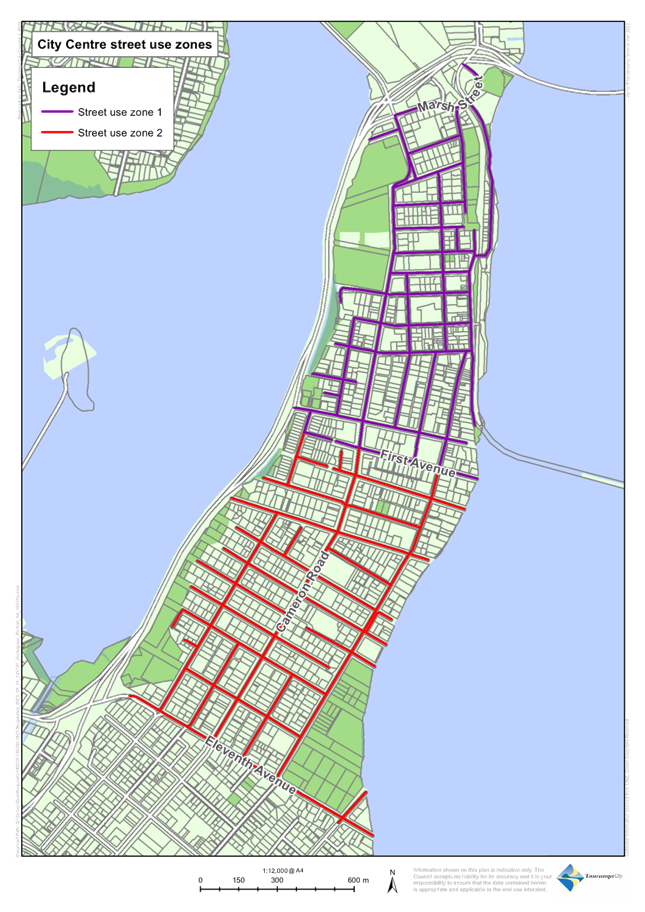
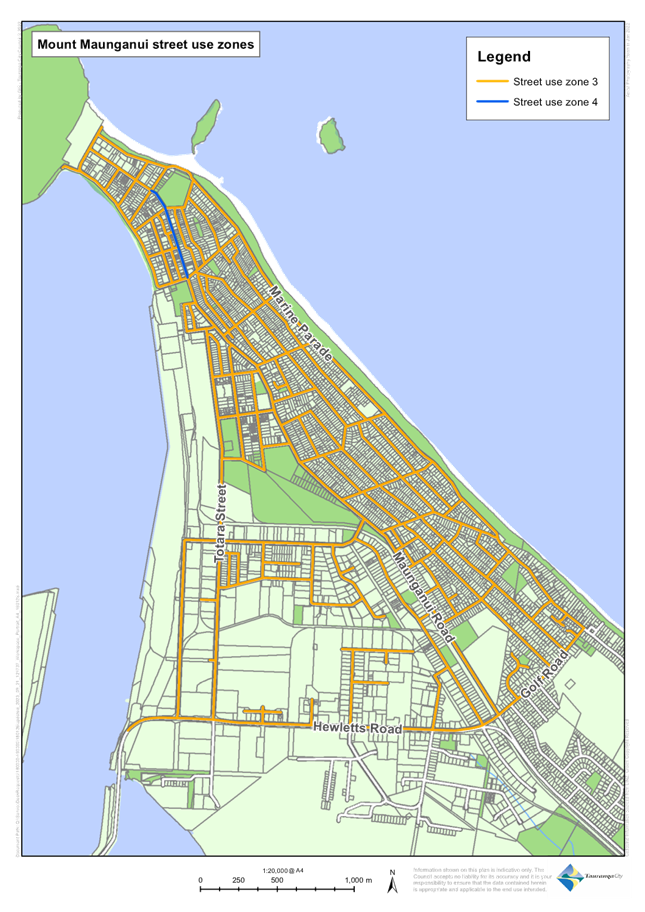
|
Ordinary
Council meeting Agenda
|
7
October 2025
|
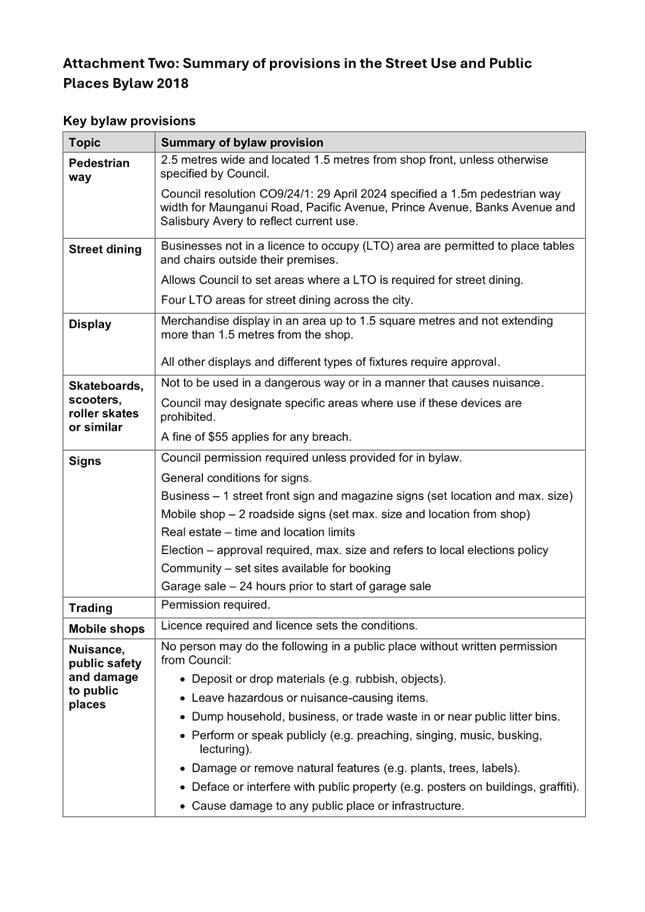
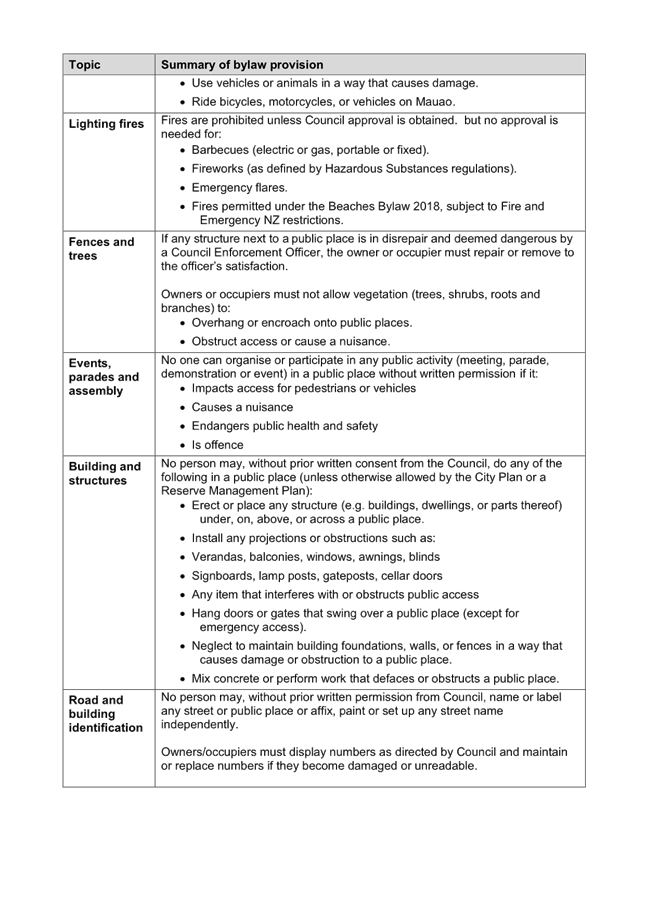
|
Ordinary
Council meeting Agenda
|
7
October 2025
|
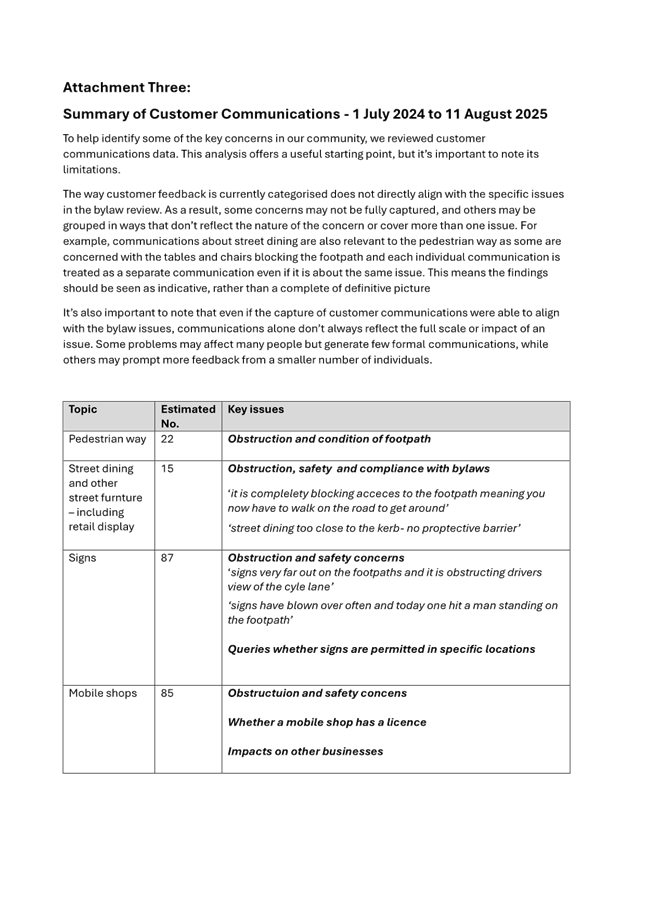
|
Ordinary
Council meeting Agenda
|
7
October 2025
|
11.6 Endorsement for New
Civil Defence Emergency Management Controllers & Recovery Managers
File Number: A18878039
Author: Daniel
Pearce, Team Leader - Emergency Management
Authoriser: Sarah
Omundsen, General Manager: Regulatory and Community Services
Please note that this report
contains confidential attachments.
|
Public Excluded Attachment
|
Reason why Public Excluded
|
|
Item 11.6 - Endorsement for New Civil Defence Emergency
Management Controllers & Recovery Managers - Attachment 2 - Controllers
Recovery endorsement letter - Sept 2025
|
s7(2)(a) - The withholding of the information is necessary
to protect the privacy of natural persons, including that of deceased natural
persons.
|
Purpose of the Report
1. To
seek endorsement from Council to appoint Local Controllers and Recovery
Managers for Tauranga City Council as required under the Civil Defence
Emergency Management Act 2002.
|
Recommendations
That the Council:
(a) Receives the report
"Endorsement for New Civil Defence Emergency Management Controllers
& Recovery Managers".
(b) Endorse the appointment of
the following Local Controllers for Tauranga City Council:
(i) Tom McEntyre –
City Operations Delivery Manager
(ii) Deidre Ewart - Head of
Regulatory Support & Compliance Services
(iii) Steve Pearce - Head of
Building Services
(iv) Gareth Wallis - Head of Community
Hubs, Arts, Heritage & Events
(c) Endorse the appointment of
the following Local Recovery Managers for Tauranga City Council:
(i) Nelita Byrne - Manager
of Venues and Events
(ii) Alana Rapson - Team Leader
– Community Development
(iii) Daniel
Pearce - Team Leader – Emergency Management
Attachment 2 is to stay in
public excluded to protect the privacy of natural persons.
|
Executive Summary
2. Tauranga City
Council are required to appoint Local Controllers and Local Recovery Managers
by the Civil Defence Emergency Management Act 2002 and the CDEM Amendment Act
2016.
3. This paper seeks
endorsement to appoint staff to these key roles to enable effective emergency
management during response and recovery activities.
4. The specific
functions and powers of Local Controllers and Local Recovery Managers are
delegated via the Bay of Plenty CDEM Group Joint Committee through the 5-yearly
Bay of Plenty CDEM Group Plan.
Background
5. Controller and
Recovery Manager appointments are required by and given effect through the
Civil Defence Emergency Management Act 2002 and the CDEM Amendment Act 2016.
They policy for appointments is provided in Attachment 1.
6. Tauranga City
Council currently has two appointed Local Controllers and two Local Recovery
Managers.
7. To increase our
capability and capacity to effectively plan for, respond to and deliver
emergency management activities, it is imperative that Council’s pool of
suitably qualified and trained Controllers and Recovery Managers is maintained
at an adequate level.
8. The Tauranga City
Council staff identified below have been identified as meeting the personal and
professional requirements to hold the position of either Local Controller or
Local Recovery Manager.
(a) Local Controller:
(i) Tom McEntyre –
City Operations Delivery Manager
(ii) Deidre Ewart - Head of
Regulatory Support & Compliance Services
(iii) Steve Pearce - Head of
Building Services
(iv) Gareth Wallis - Head of Community
Hubs, Arts, Heritage & Events
(b) Local Recovery Manager:
(i) Nelita Byrne - Manager
Venues and Events
(ii) Alana Rapson - Team Leader
Community Development
(iii) Daniel Pearce - Team Leader
Emergency Management
9. A brief summary of
relevant experience is provided in Attachment 2.
Statutory Context
10. Appointment of Controllers
& Recovery Managers is outlined within the Civil Defence Emergency
Management Act 2002.
STRATEGIC ALIGNMENT
11. This contributes to the
promotion or achievement of the following strategic community outcome(s):
|
Contributes
|
|
We are
an inclusive city
|
☐
|
|
We
value, protect and enhance the environment
|
☐
|
|
We are a
well-planned city
|
ü
|
|
We can
move around our city easily
|
☐
|
|
We are a
city that supports business and education
|
☐
|
12. Apart from being a legislative
requirement, having a robust and sustainable group of appointed Controllers and
Recovery Managers ensures that the city can successfully plan for, respond to
and manage the impacts of emergencies when they occur.
Financial Considerations
13. There are some externally
facilitated training courses that will be required for the appointed staff
however this will be managed within existing training and development budgets.
14. These roles also carry a level
of financial delegation and ability to make decisions during response and
recovery activities that may impact Council operational expenditure.
Legal Implications / Risks
15. There is an identified risk
that by not having an adequate number of appointed Local Controllers and/or
Recovery Managers that Council may not be able to meet the legislative
requirements to effectively manage emergency response and subsequent recovery activities.
Significance
16. The proposal is of low
significance.
ENGAGEMENT
17. The proposal is of low significance
and no further engagement is required prior to Council making a decision.
Next Steps
18. Once endorsement is received
from Council, the nominations will be forwarded to the Bay of Plenty Civil
Defence Emergency Management Group Joint Committee for statutory appointment.
Attachments
1. Bay
of Plenty CDEM Group - Policy for Recovery Managers and Controllers -
A18882562 ⇩ 
2. Controllers
Recovery endorsement letter - Sept 2025 - A18878115 - Public Excluded
|
Ordinary
Council meeting Agenda
|
7
October 2025
|
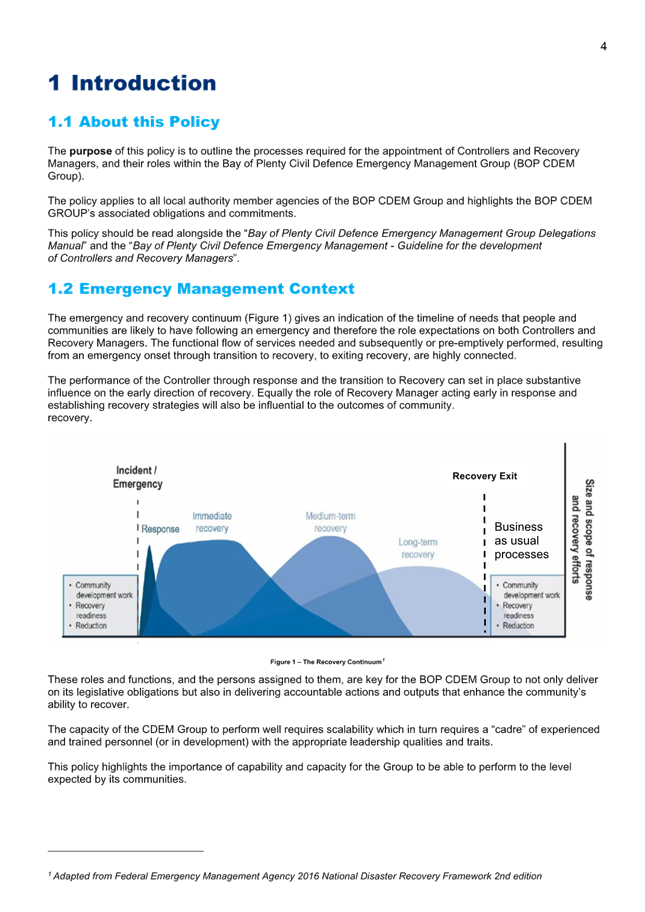
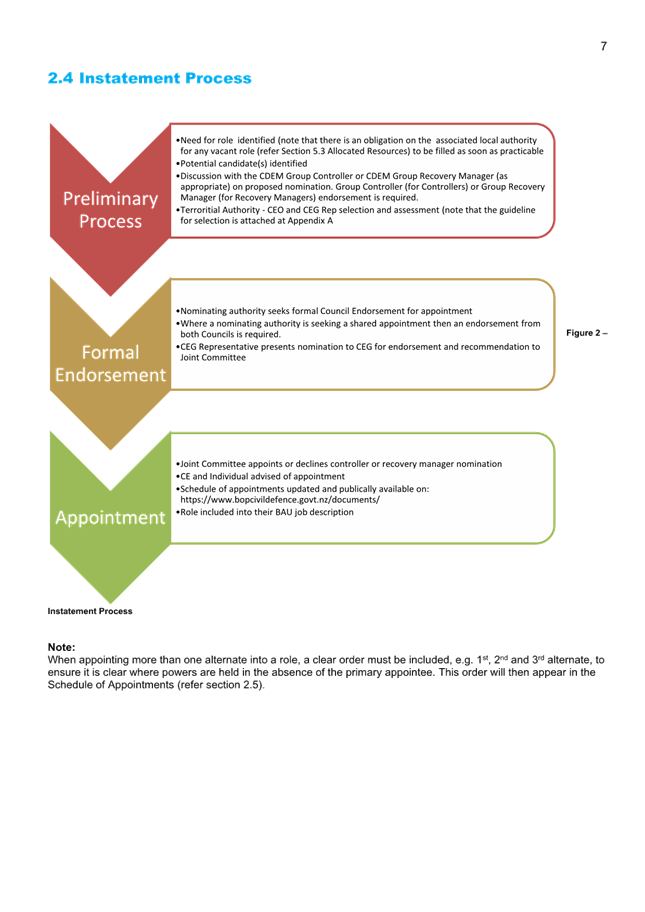
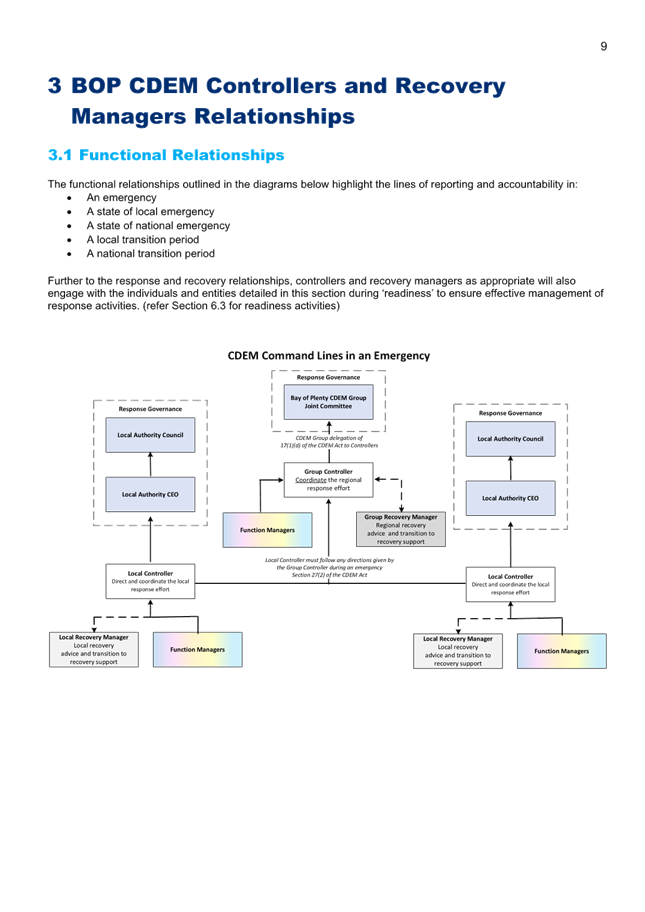
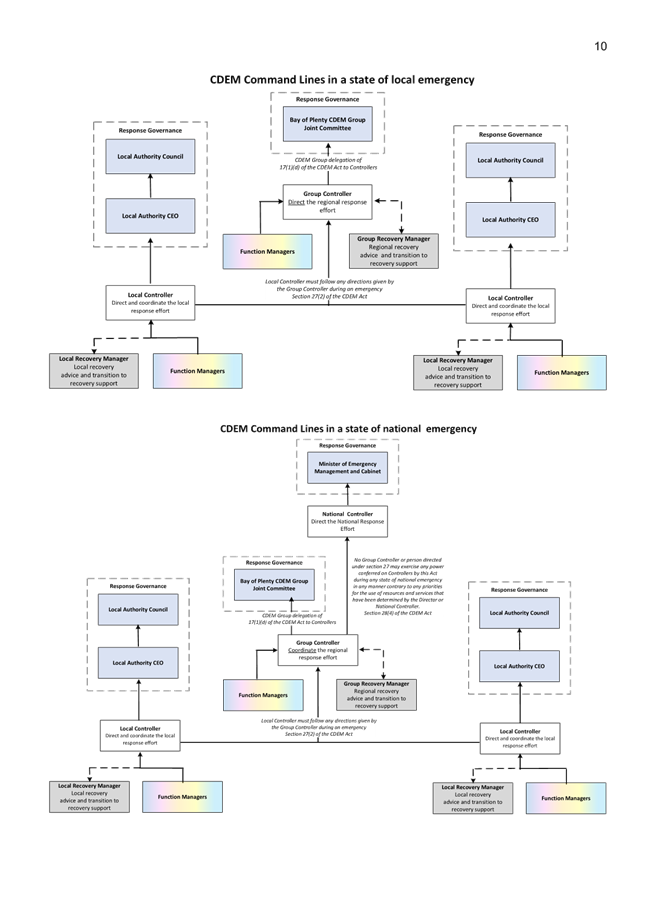
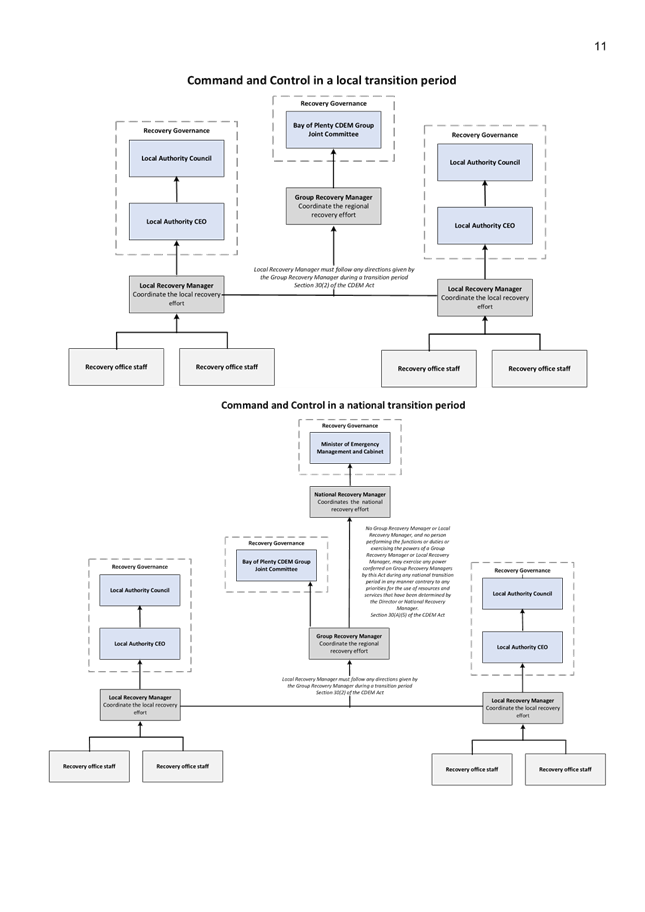

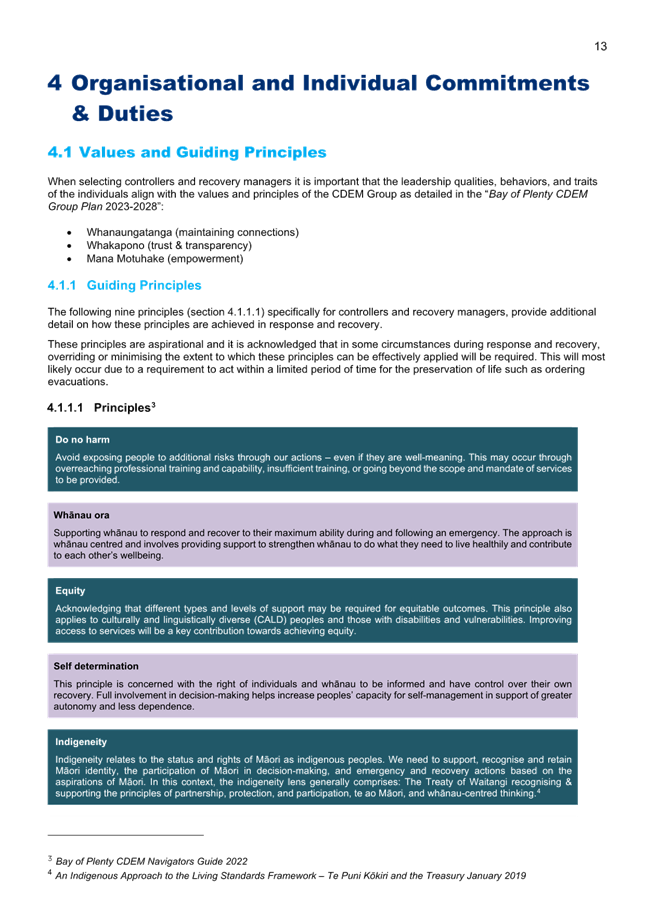
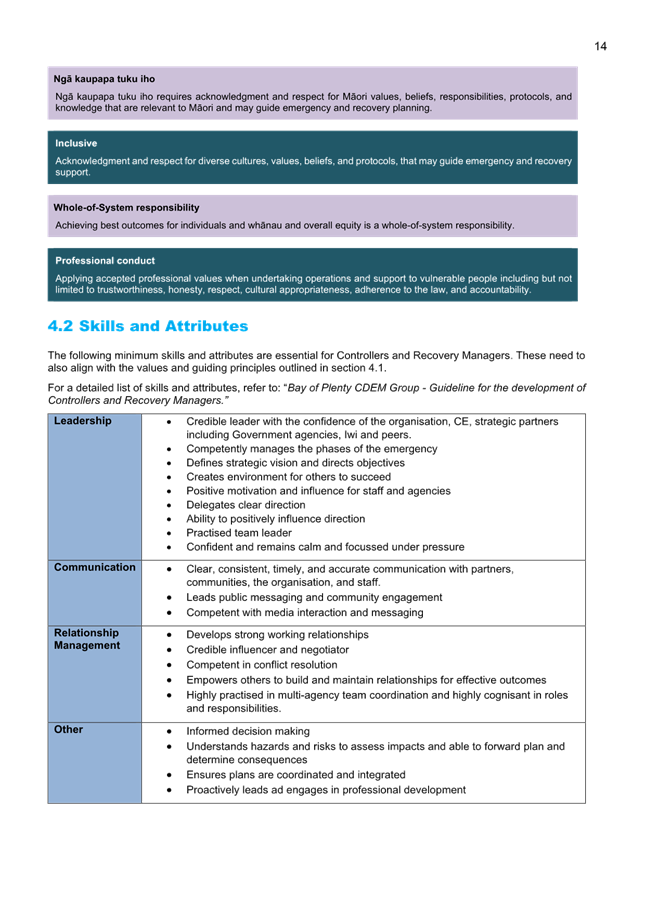
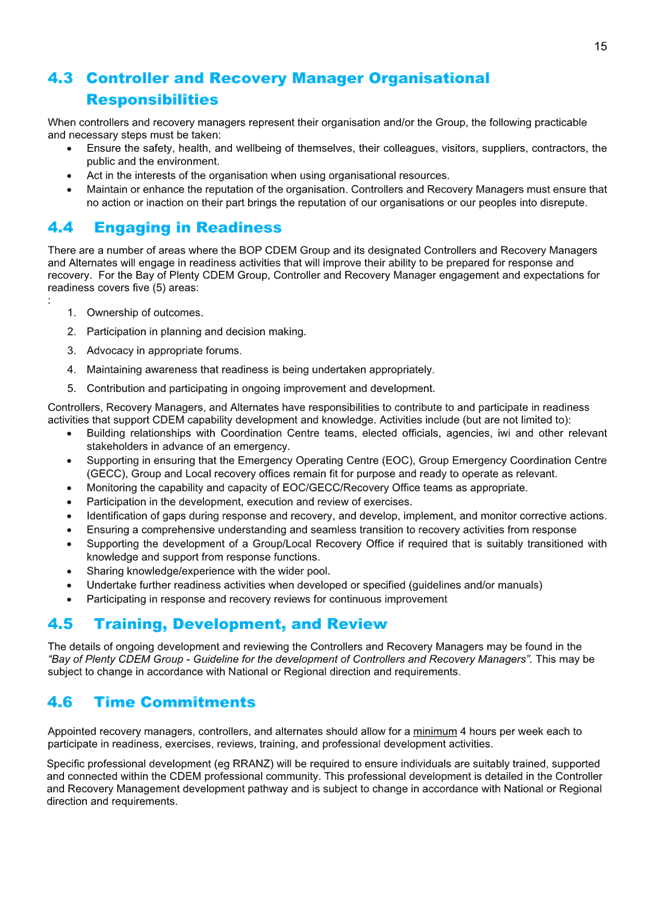


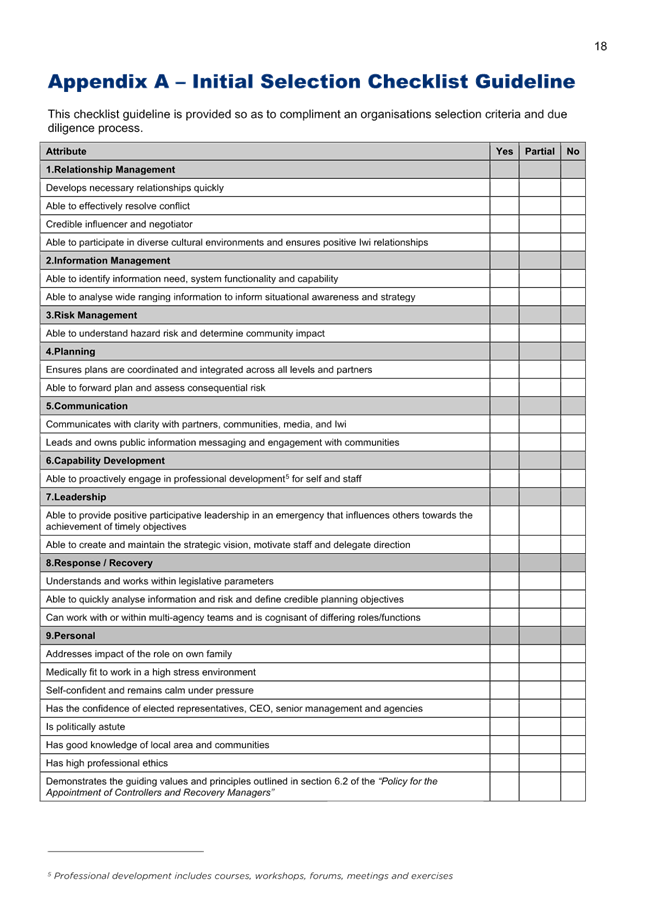

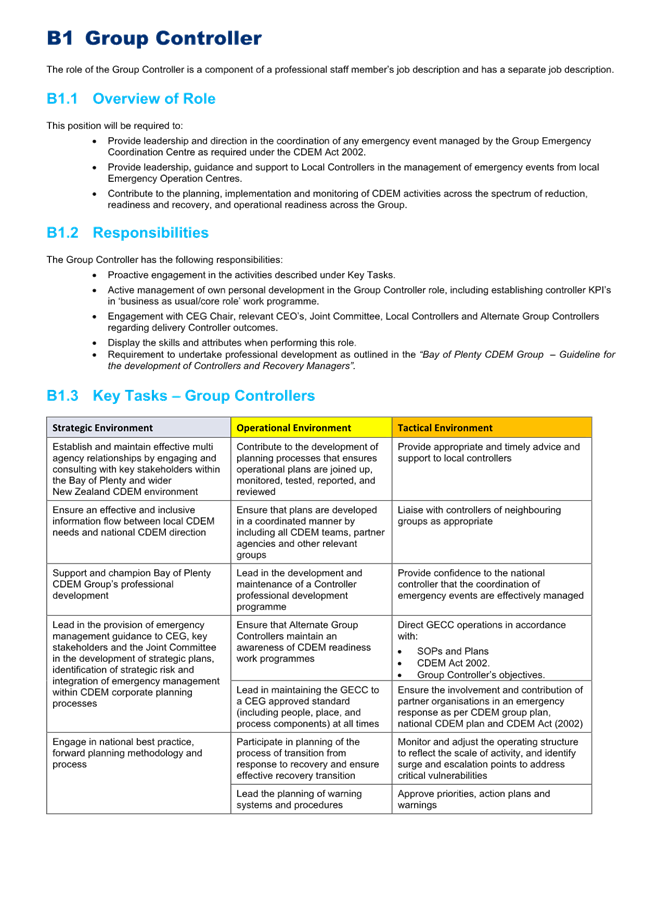
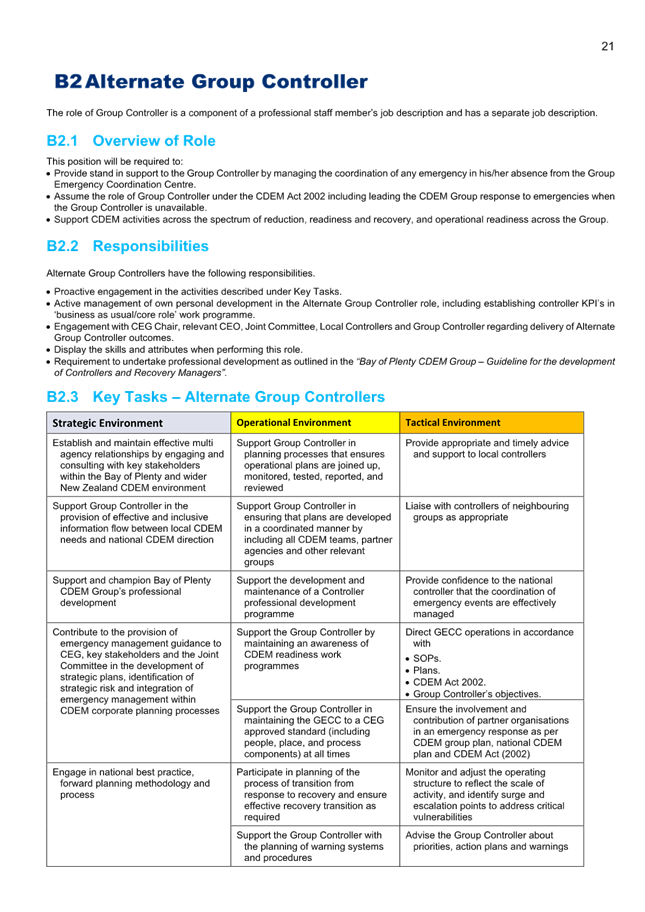
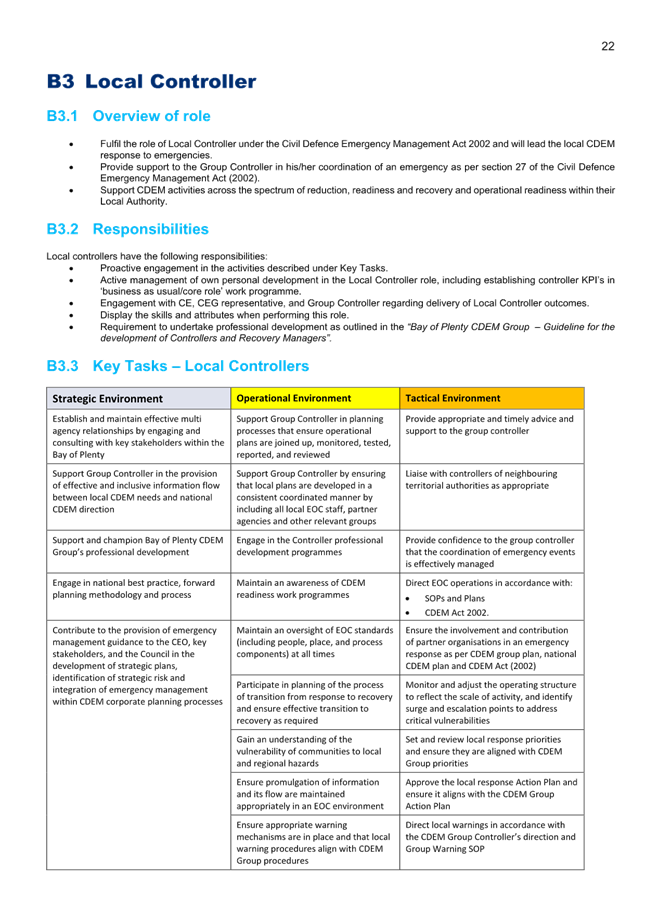
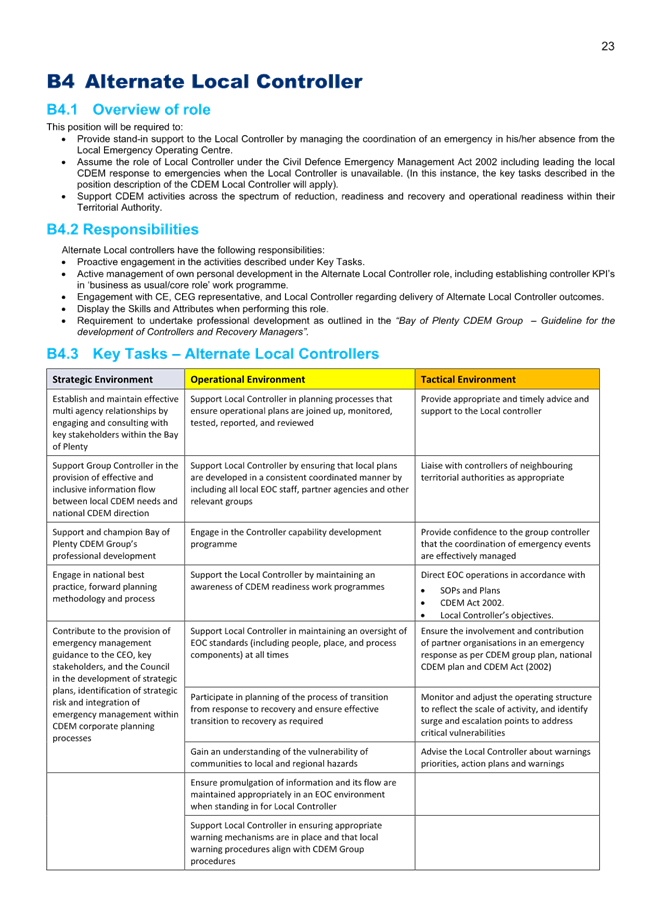
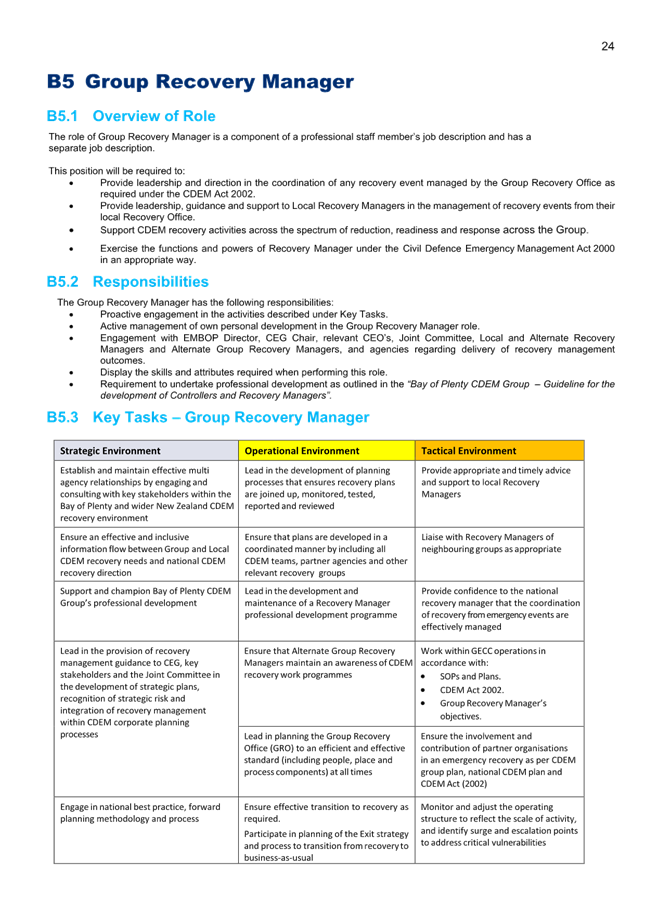
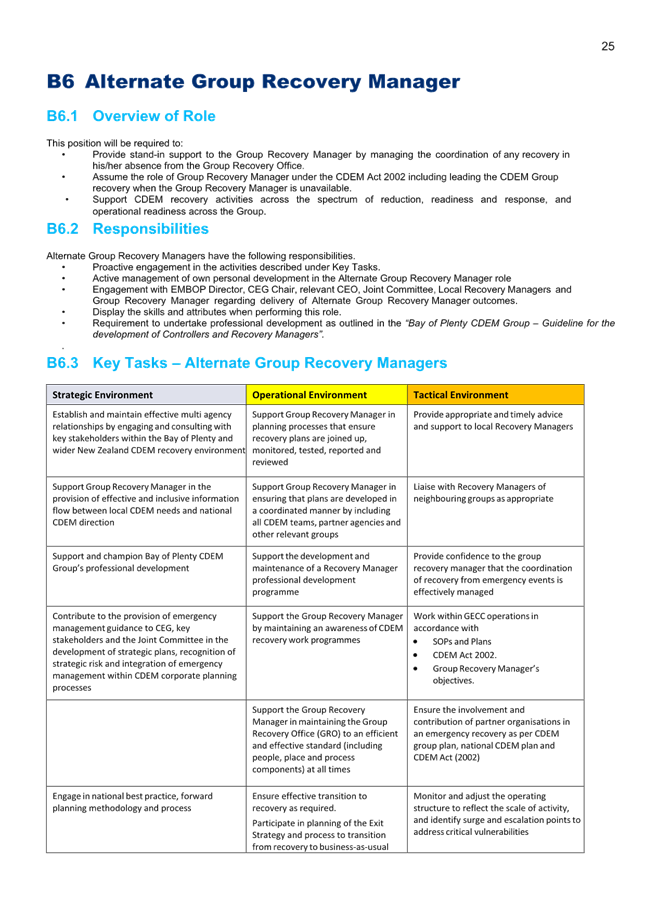
|
Ordinary Council meeting Agenda
|
7 October 2025
|
12 Discussion
of late items
13 Public
excluded session
Resolution to exclude
the public
|
Recommendations
That the public be
excluded from the following parts of the proceedings of this meeting.
The general subject
matter of each matter to be considered while the public is excluded, the
reason for passing this resolution in relation to each matter, and the
specific grounds under section 48 of the Local Government Official
Information and Meetings Act 1987 for the passing of this resolution are as
follows:
|
General subject of each matter to be
considered
|
Reason for passing this resolution in
relation to each matter
|
Ground(s) under section 48 for the
passing of this resolution
|
|
Confidential Attachment 2 - 11.6 -
Endorsement for New Civil Defence Emergency Management Controllers &
Recovery Managers
|
s7(2)(a) - The withholding of the information is
necessary to protect the privacy of natural persons, including that of
deceased natural persons
|
s48(1)(a) the public conduct of the relevant part
of the proceedings of the meeting would be likely to result in the
disclosure of information for which good reason for withholding would exist
under section 6 or section 7
|
|
14 Closing
karakia