|
Wastewater Management Review Committee
meeting Agenda
|
17 March 2026
|
9 Business
9.1 Wastewater
Activity Report
File
Number: A19836768
Author: Jim
Summers, Environmental Programme Leader
Authoriser: Reneke
van Soest, General Manager: Operations & Infrastructure
Purpose of the Report
1. To provide information to
the Wastewater Management Review Committee (WWMRC) on the status of the
wastewater networks and associated projects.
|
Recommendations
That the Wastewater
Management Review Committee:
(a) Receives the report
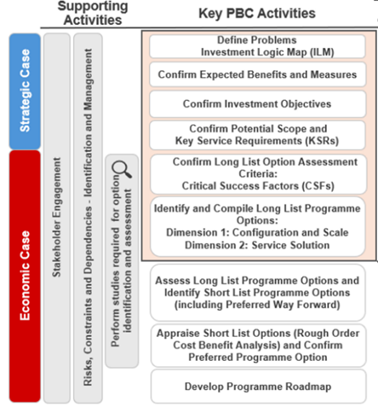
"Wastewater Activity Report".
|
discussion
Wastewater Resource Consents
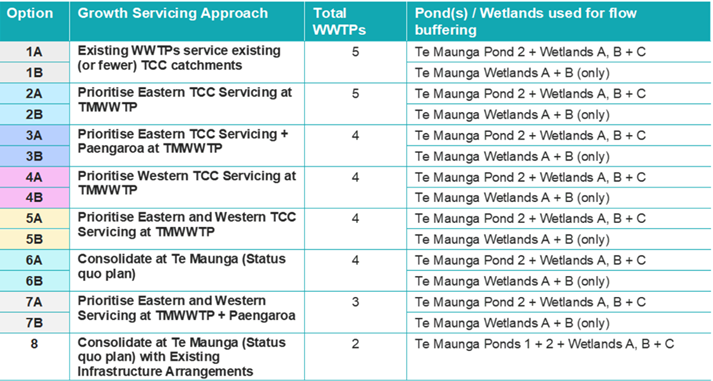
2. Monitoring results
for Councils wastewater consents are all within consent requirements. This
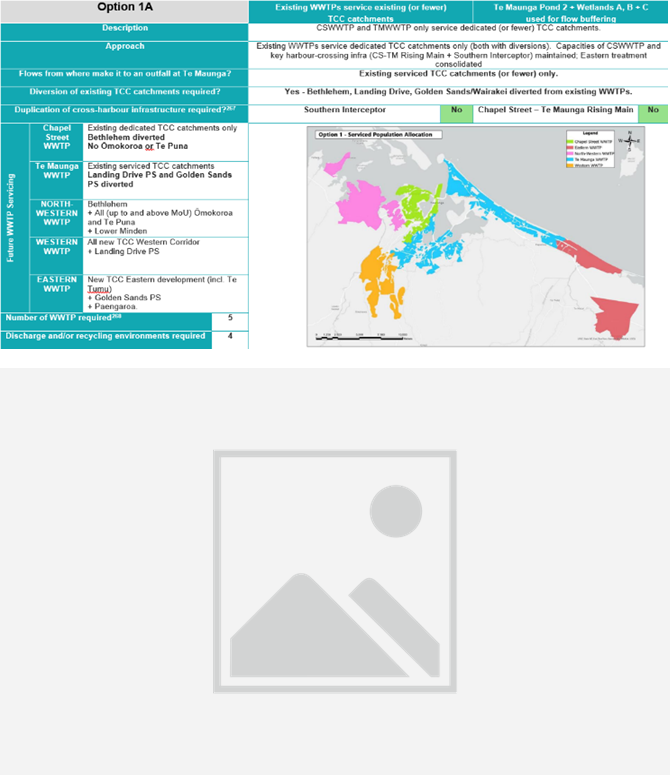
includes discharges from the outfall at Te Maunga.
3. Following the
submission of the Monitoring Upgrade and Technological Review (MUTR) to the Bay
of Plenty Regional Council (BoPRC), staff have yet to receive any feedback or
comments on the document.
4. Staff are continuing
to work with tangata whenua on a draft kaitiaki monitoring plan and proposed
baseline monitoring recommendations. Marearea are also working on a report on
the effectiveness of the consent conditions in relation to cultural values.
5. These pieces of work
will be available for staff to review soon, with a workshop proposed to be held
prior to the next committee meeting for a more in-depth discussion on this work
and the other recommendations in the MUTR report.
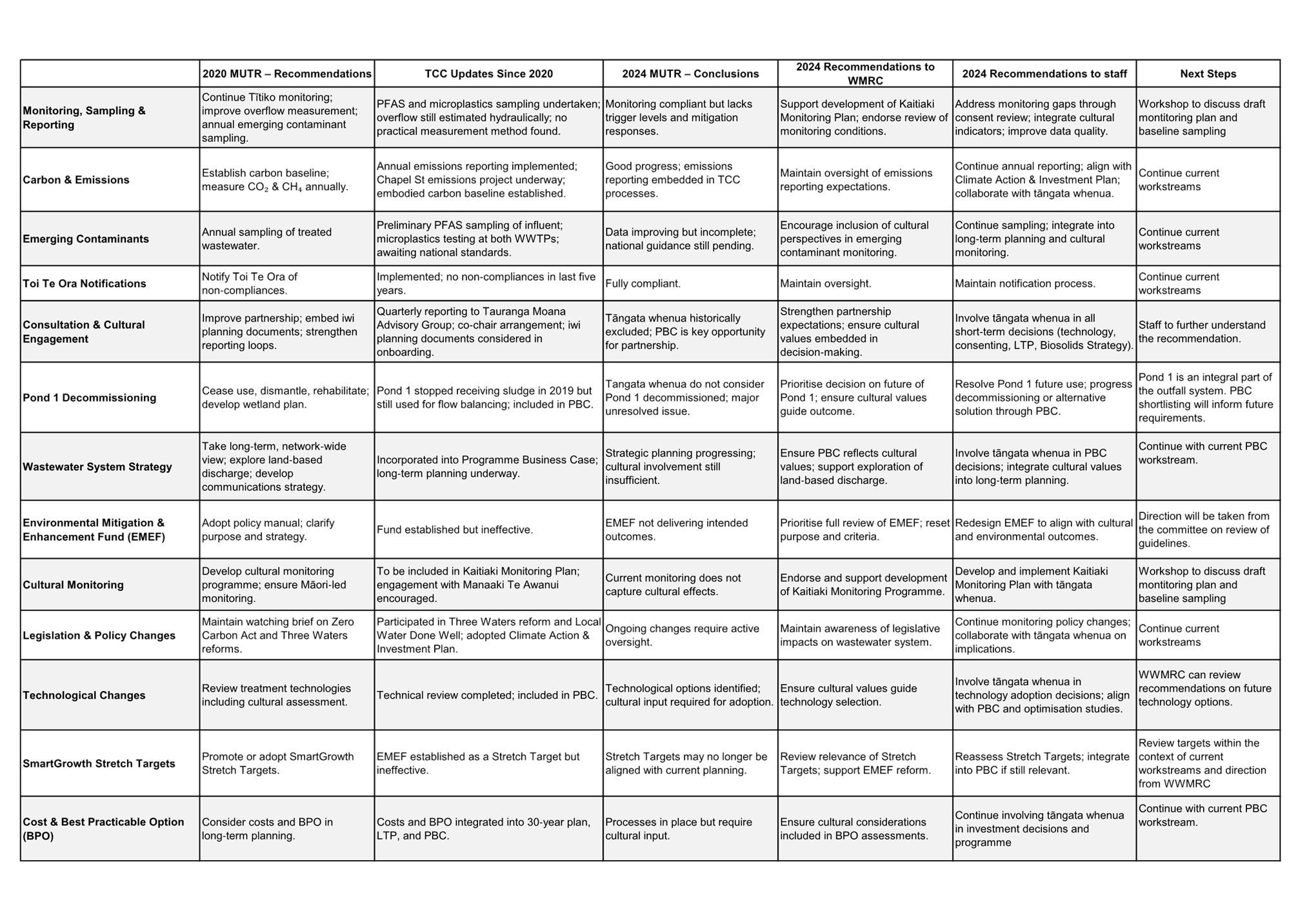
6. Attachment 1
includes a summary of recommendations from the previous and latest MUTR
reports.
Wastewater Overflows
7. Since the previous
committee meeting there have been 31 blockages that have been notified to
council. 27 did not leave the network and were contained to land and 4
potentially made the receiving environment. These were all notified to BoPRC,
Toi Te Ora and local hapu/iwi RMA reps. Water quality sampling was undertaken,
and warning signage placed in the relevant areas until results indicated no
further impacts on water quality.
RC62722 & RC62723
- Te Maunga & Chapel Street Odour
8. No odour complaints
received for Chapel Street or Te Maunga Wastewater Treatment Plant (WWTP).
Clarifier 3
9. Physical works and
preliminary commissioning completed. The final commissioning will be carried
out when Bioreactor 2 is completed.
Bioreactor 2
10. Construction is progressing
well with expected completion date towards the end of 2026. The final
commissioning will follow construction; this is expected to be in service early
2027.
Bioreactor 1
11. Advance ordering of long lead
materials will commence April 2026.
12. Once Bioreactor 2 is in
service, Bioreactor 1 will be taken off-line and drained (circa March 2027).
13. This will enable the equipment
inside the bioreactor to be replaced. The project is expected to take 3 months.
New Inlet Works (NIW)
14. Preliminary Design has been
completed and reviewed. Next design phase is scheduled to commence in April 26.
15. Construction is scheduled for
July 2028.
Opal Drive Wastewater
Pumpstation
16. Works are progressing well with
the new pump station expected to be operational by June 2026. An unexpected
intact archaeology find has halted works in a small area of the site while an
authority to proceed is sought from Heritage NZ
17. Once the new pump station is
fully operational the existing pump station will be demolished, with that part
of the site returned to mown grass.
Wairakei Wastewater
Pump Station
18. Design is complete and physical
works are currently being priced by the contractor
19. The BoPRC resource consent is
currently on hold pending further engagement between TCC and Ngā Potiki.
Wastewater Network - Operation
20. Since the last committee
meeting, the Wastewater Renewals team has continued to deliver significant
wastewater pipe relining works across the city. Relining remains an efficient
and cost-effective solution, extending the life of assets while minimising community
disruption compared to full replacement.
21. In addition to relining,
dig-and-relay works are in progress in Mansels Avenue, and Totara South.
Reactive maintenance activities have also been carried out across the wider
network to address issues and maintain service continuity.
Environmental
Mitigation and Enhancement Fund (EMEF)
22. There have been no changes
since the previous committee update. The fund remains at approximately
$850,000, and staff are available to support Tangata whenua members when they
choose to progress the guideline review.
 Wastewater Programme Business Case (PBC)
23. The
Wastewater Programme Business Case (PBC) was initiated to define future
investment in the marine outfall but was subsequently broadened in scope to
consider investment in the treatment plants and wider network. A project team
(including Iwi and Hapū representatives) has been established for some
time and have been working through the PBC (utilising Treasury’s Better
Business Case framework). The PBC process involves defining key matters to be
addressed within the wastewater scheme, the development of future investment
and proposes possible options or responses which could be implemented to
address to these issues.
24. Following
WWMRC endorsement of initial-stage outputs in early 2024 (ILM, benefits,
investment objectives, key service requirements (KSR’s) and critical
success factors (CSF’s)), and long list identification workshops with the
Project Team in May and June 2024,
technical work to identify those studies required to inform the assessment of a
long-list has been completed.
25. The scope and KSRs describe the
degree or scale of change required for the programme to be considered
successful. The broad scope of the PBC is reflected in a comprehensive set of
KSRs, spanning themes of growth and development, tāngata whenua partnership
and values, protecting and enhancing the environment, and resilience and
adaptability – they are the key requirements for any investment. The long
list of options are those responses potentially capable of achieving the KSRs
and will be assessed by the Project Team against the CSF’s and investment
objectives to achieve a short-list.
26. Key to the
technical work recently completed has been understanding in more detail the
Growth and Development Servicing KSR (geographic areas/populations) which
includes consideration of servicing within the Western Bay of Plenty District
where it makes sense to do so.
Growth Servicing Study
27. This
work, termed a ‘Growth Servicing Study’, provides further
definition to two high-level approaches identified by the Project Team; these
approaches being, to either maximise treatment and storage at the Te Maunga
WWTP site, or to limit expansion at Te Maunga to a (to be defined) point (the
later approach would see some or all new, and potentially existing, development
serviced by new WWTPs).
28. The
Growth Servicing Study has provided this definition by modelling a range of
growth servicing options (Options 1-7A/B + 8 as depicted in the table below)
considering population growth to 2100 and utilising the two existing wastewater
treatment plants at Chapel Street and Te Maunga, and also the addition of one
or more wastewater treatment plants in other fringe areas of the City. These
‘Configuration and Scale’ options consider growth, the location of
this growth, network constraints (including timing for when these constraints
appear), and outfall system capacity (i.e. availability of ponds for flow
balancing and impact on marine outfall sizing).
29. Although
meeting key geographical scope and population growth requirements is central to
these options, other KSRs directly influence the Configuration and Scale of a
future wastewater system. The long-list options therefore directly incorporate
relevant aspects of the following KSRs:
● KSR 3: Giving greater effect to
Tāngata whenua cultural values - variations of either reduced, or
ceased, use of the Te Maunga ponds for flow buffering into all options
● KSR 4: Incorporating Tāngata
whenua partner perspectives by
exploring options that divert selected existing catchments and/or planned new
developments away from existing TCC WWTPs and existing discharge locations
● KSR 19: Resilience to natural hazards, through key asset location options that
reduce reliance on sites prone to natural hazards (including climate change
effects)
● KSR 20: Operational resilience (with a flexibility lens), through
diversification of WWTP locations (and associated receiving environments or
reuse applications)
● KSR 21: Key Asset resilience, through replacement of the
existing Te Maunga marine ocean outfall with a resilient material
30. Refer
below for an example graphic depicting study outputs for Option 1A
31. The
Growth Servicing Study is now complete, with its findings included within a
completed draft Wastewater Programme Business Case report which includes the
full Strategic Case and the Economic Case up to and including identification
and compilation of long-list programme options. Staff have recently completed a
review of the draft document and intend to provide an update on this and
proposed next steps to the new GM Infrastructure and Operations and General Manager: Strategy, Partnerships & Growth
to ensure alignment of PBC against current growth planning needs. Following the GM briefing it is
anticipated that the PBC project team, including Iwi and Hapū
representatives, will reform to first
review the draft long-list Configuration and Scale options, and subsequently
undertake an assessment of those options to identify a short-list, including
the preferred way forward. A costing study of all Configuration and Scale
long-list options will also be carried out to define the high-level costs of
each to inform their affordability.
Indicative Programme for Next Steps
32. An
indicative programme for this next tranche of work, likely to take between 8-12
months, is as follows:
|
|
Project Team
|
WWMRC
|
|
April-May
|
- Workshop: Reset
- Workshop: Long-List Configuration and
Scale Options
- Issue of Draft (interim) PBC report
for information
|
|
|
May-June
|
|
- Issue of Draft (interim) PBC report
for information (if desired)
- Workshop: PBC Introduction
- Meeting: Confirm Long-List
Configuration and Scale Options
|
|
June-August
|
- 2 x Workshops: Long-List Assessment
|
|
|
August-October
|
- Workshop: Short-List Configuration and
Scale Options
|
|
|
October-November
|
|
- Meeting: Short-List Configuration and
Scale Option Endorsement
|
|
November-December
|
- Issue of Draft PBC report for
feedback
|
- Issue of Draft PBC report for
feedback
|
33. At
the completion of short-listing, the PBC report will be updated and work again
placed on hold to enable a new Water Organisation, if this decision is made on
2 April, to consider the PBC and short-list and advise any next steps with
respect to the PBC.
Biosolids Alternative Disposal Technical Assessment
34. Tauranga
currently sends 100% of biosolids produced from its Chapel and Te Maunga WWTPs
to vermicomposting. The only current back-up option available to
vermicomposting is sending to landfill out of district costing approximately
50% more per tonne for disposal. The long-term future cost of vermicomposting
disposal has some risk as it relies on sufficient supplies of cheap organic
media from for example pulp and paper processes and this source is reducing due
to recent mill closures. Like other land application processes, changing
legislation could also be a risk fo current disposal methods. Landfilling is
expensive and has it’s own uncertainty with biosolids in some locations
having been rejected or requiring further treatment (and significant capital
investment) before acceptance.
35. To
address these risks, work is underway on a Biosolids Alternative Disposal
Technical Assessment, the objective of which is to determine what near-term
next steps should be taken which would enable a range of future disposal
options to be considered if vermicomposting becomes no longer available.
36. To
meet the requirements for various end use disposal options the quality of
biosolids must be compared to the recently released Water Services (Wastewater
Environmental Performance Standards) Regulations 2025 which sets out the
approach for grading biosolids, how specific grades of biosolids can be safely
used, and establishes restrictions for biosolids with a lower grade. Biosolids
are given both a stabilisation grade (A or B), and a contaminant grade 1 or 2. Grade A equates to
high stabilisation requiring
pathogen reduction processes with Grade B low to moderate
stabilisation. Contaminant
grades reflect contaminant levels with Grade 1 meeting strict thresholds
for wider reuse, and Grade 2 requiring specific resource consents.
37. Limited
testing completed over 2022-2024 indicates that Chapel Street biosolids may be
a B1, and Te Maunga is unclassified (does not meet either A or B grades),
contaminant grade 2, however further long-term testing is required to confirm.
If confirmed, these classifications would mean that consent must be granted for
land application of Chapel Street biosolids (subject to various criteria) but
for Te Maunga a stricter consenting pathway exists, meaning that consent may
not be granted or if granted, the conditions imposed may be too onerous to
meet.
38. Due
to the potential differing stabilisation classifications and to enable the full
suite of long-term disposal options to be considered, (e.g. land application
and thermal treatment options) we are investigating the potential for anaerobic
digestion at Te Maunga. The next tranche of work will focus on undertaking a
high-level evaluation of costs and benefits, such as the potential to defer
other infrastructure and potential for reduced odour, energy and transportation
costs. This will involve at the outset further monitoring of biosolids to
confirm the classification of biosolids produced by each WWTP.
39. A
further update to the WWMRC on this work will be provided at the next WWMRC
meeting in June.
Attachments
1. MUTR
Discussion Summary - Attachment 1 - A19911148 ⇩