|

|
|
AGENDA
Ordinary Council meeting
Tuesday, 24 March 2026
|
|
I hereby give notice that an Ordinary meeting of
Council will be held on:
|
|
Date:
|
Tuesday, 24 March 2026
|
|
Time:
|
9:30 am
|
|
Location:
|
Tauranga City Council Chambers, Mareanui
L1, 90 Devonport Road
Tauranga
|
|
Please note that this
meeting will be livestreamed and the recording will be publicly available on
Tauranga City Council's website: www.tauranga.govt.nz.
|
|
Marty Grenfell
Chief Executive
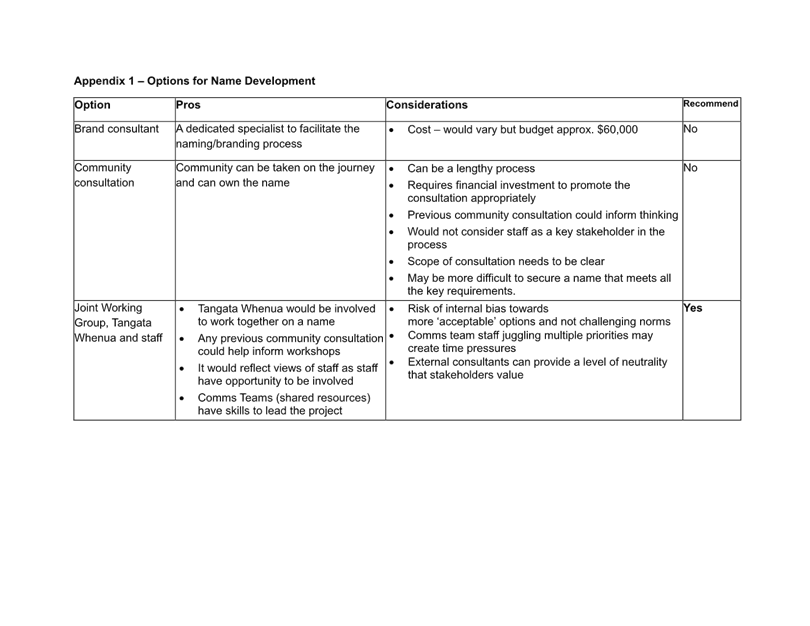
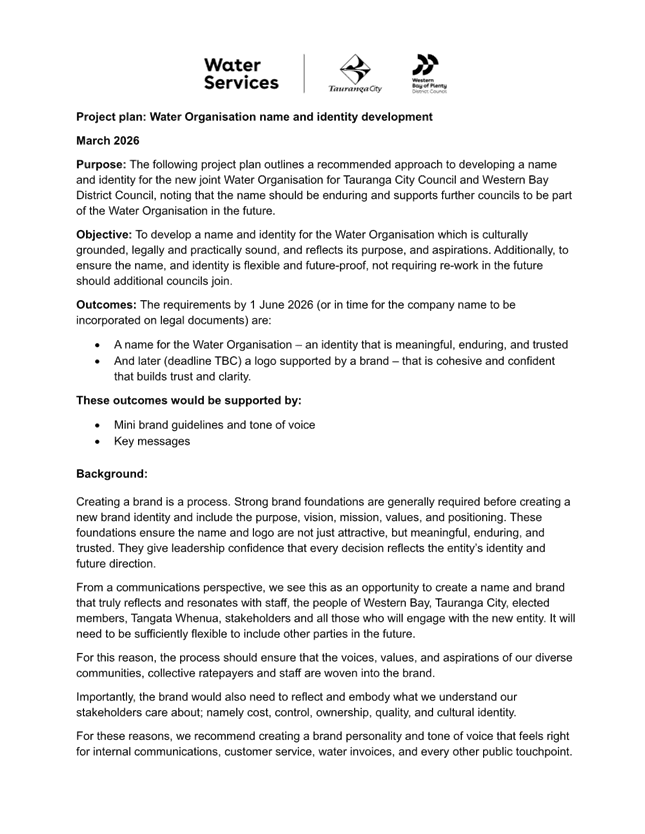
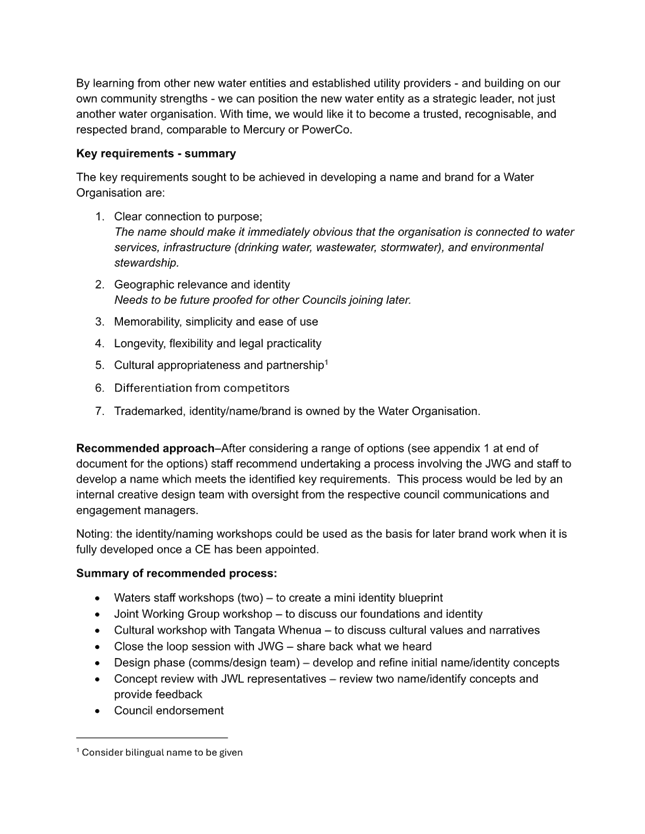
|
Terms of reference – Council
Membership
|
Chair
|
Mayor
Mahé Drysdale
|
|
Deputy Chair
|
|
|
Members
|
|
|
Quorum
|
Half of the members
present, where the number of members (including vacancies) is even;
and a majority of the members present, where the number of members
(including vacancies) is odd.
|
|
Meeting frequency
|
Three weekly or as required
|
Role
·
To ensure the effective and efficient governance
of the City.
·
To enable leadership of the City including
advocacy and facilitation on behalf of the community.
·
To review and monitor the performance of the
Chief Executive.
Scope
·
Oversee the work of all committees and
subcommittees.
·
Exercise all non-delegable and non-delegated
functions and powers of the Council.
·
The powers Council is legally prohibited from
delegating include:
○
Power to make a rate.
○
Power to make a bylaw.
○
Power to borrow money, or purchase or dispose of
assets, other than in accordance with the long-term plan.
○
Power to adopt a long-term plan, annual plan, or
annual report
○
Power to appoint a chief executive.
○
Power to adopt policies required to be adopted
and consulted on under the Local Government Act 2002 in association with the
long-term plan or developed for the purpose of the local governance statement.
○
All final decisions required to be made by
resolution of the territorial authority/Council pursuant to relevant
legislation (for example: the approval of the City Plan or City Plan changes as
per section 34A Resource Management Act 1991).
·
Council has chosen not to delegate the
following:
○
Power to compulsorily acquire land under the
Public Works Act 1981.
·
Make those decisions which are required by
legislation to be made by resolution of the local authority.
·
Authorise all expenditure not delegated to
officers, Committees or other subordinate decision‑making bodies of
Council.
·
Make appointments of members to the council-controlled
organisation Boards of Directors/Trustees and representatives of Council to
external organisations.
·
Undertake statutory duties in regard to
Council-controlled organisations, including reviewing statements of intent,
with the exception of the Local Government Funding Agency where such roles are
delegated to the City Delivery Committee. (Note that monitoring of all
Council-controlled organisations’ performance is undertaken by the City
Delivery Committee. This also includes Priority One reporting.)
·
Consider all matters related to Local Water Done
Well.
·
Consider any matters referred from any of the
Standing or Special Committees, Joint Committees, Chief Executive or General
Managers.
·
Review and monitor the Chief Executive’s
performance.
·
Develop Long Term Plans and Annual Plans
including hearings, deliberations and adoption.
Procedural matters
·
Delegation of Council powers to Council’s
committees and other subordinate decision-making bodies.
·
Adoption of Standing Orders.
·
Receipt of Joint Committee minutes.
·
Approval of Special Orders.
·
Employment of Chief Executive.
·
Other Delegations of Council’s powers,
duties and responsibilities.
Regulatory matters
Administration, monitoring and
enforcement of all regulatory matters that have not otherwise been delegated or
that are referred to Council for determination (by a committee, subordinate
decision‑making body, Chief Executive or relevant General Manager).
1 Opening
karakia
2 Apologies
|
Ordinary Council meeting Agenda
|
24 March 2026
|
3 Public
forum
3.1 Matt
Cowley - Tauranga Business Awards
Attachments
Nil
3.2 Shad
Rolleston on behalf of the Tangata Whenua Working Group Members
Attachments
Nil
3.3 Sam
Allen
Attachments
Nil
|
Ordinary Council meeting Agenda
|
24 March 2026
|
7 Confirmation
of minutes
7.1 Minutes
of the Council meeting held on 10 February 2026
File
Number: A19859702
Author: Clare
Sullivan, Senior Governance Advisor
Authoriser: Sarah
Holmes, Team Leader: Governance & CCO Support Services
|
Recommendations
That the Minutes of the
Council meeting held on 10 February 2026 be confirmed as a true and correct
record.
|
Attachments
1. Minutes
of the Council meeting held on 10 February 2026
|
Ordinary
Council meeting minutes
|
10 February 2026
|
|

|
|
DRAFT MINUTES
Ordinary Council meeting
Tuesday, 10 February 2026
|
Order of Business
1 Opening
karakia. 3
2 Apologies. 4
3 Public
forum.. 4
3.1 Richard
Longley - Miro St Parking. 4
4 Acceptance
of late items. 4
5 Confidential
business to be transferred into the open. 4
6 Change to
the order of business. 4
7 Confirmation
of minutes. 4
7.1 Minutes
of the Council meeting held on 16 December 2025. 4
7.2 Minutes
of the Council meeting held on 2 February 2026. 5
8 Declaration
of conflicts of interest 5
9 Deputations,
presentations, petitions. 5
10 Recommendations from
other committees. 5
11 Business. 5
11.1 Local
Water Done Well - Options for Stormwater 5
11.2 Submission
on Planning Bill and Natural Environment Bill 8
11.3 Draft
Submission on Simplifying Local Government proposal 8
11.4 Rates
Capping Submission. 9
11.9 Draft
Annual Plan 2026/27. 9
11.5 User
Fees and Charges Review - Issues and Options. 12
11.6 Transport
Resolutions Report No.59. 13
11.7 Bay
of Plenty Mayoral Forum Triennial Agreement 2025-2028. 13
11.8 Miro
Street Parking Improvements. 14
12 Discussion of late
items. 15
13 Public excluded
session. 15
13.1 Public
Excluded Minutes of the Council meeting held on 26 August 2025. 15
13.2 Public
Excluded Minutes of the Council meeting held on 16 September 2025. 16
13.3 Public
Excluded Minutes of the Council meeting held on 29 October 2025. 16
13.4 Public
Excluded Minutes of the Council meeting held on 16 December 2025. 16
13.5 Council-Controlled
Organisations - Board Appointments beyond 30 June 2026. 17
Confidential Attachment 2 11.1 - Draft Annual
Plan 2026/27. 17
Confidential Attachment 3 11.1 - Draft Annual
Plan 2026/27. 17
14 Closing karakia. 17
MINUTES
OF Tauranga City Council
Ordinary Council meeting
HELD
AT THE Tauranga City Council Chambers,
L1, 90 Devonport Road, Tauranga
ON
Tuesday, 10 February 2026 AT 9:30 am
|
MEMBERS PRESENT:
|
Mayor Mahé Drysdale,
Deputy Mayor Jen Scoular, Cr Hautapu Baker, Cr Glen Crowther, Cr Rick Curach,
Cr Steve Morris, Cr Marten Rozeboom, Cr Kevin Schuler, Cr Rod Taylor, Cr
Hēmi Rolleston
|
|
IN ATTENDANCE:
|
Marty Grenfell (Chief Executive),
Christine Jones (General Manager: Strategy, Partnerships & Growth), Craig
Rice (Chief Operating & Financial Officer), Sarah Omundsen (General
Manager: Regulatory & Community), Reneke van Soest (Operations &
Infrastructure), Charles Lane (Team Leader: Commercial Legal), Stephen Burton
(Transformation Lead – Water Services), Frazer Smith (Manager:
Strategic Finance & Growth), Cathy Davidson (Water Organisation
Establishment Lead), Wally Potts (Head of City Waters), Jeremy Boase,
(Head of Strategy, Governance & Climate Resilience), Tracey Hughes
(Manager: Organisational Financial Performance & Corporate Planning),
Susan Braid (Finance Lead Capital Performance & Community Investment),
Andrew Mead, (Head of City Planning & Growth), Janine Speedy (Team
Leader: City Planning), Carl Lucca (Team Leader: Structure Planning),
Mike Seabourne (Head of Transport), Shawn Geard (Manager: Transport System),
Caroline Lim (CCO Specialist), Clare Sullivan (Senior Governance
Advisor), Caroline Irvin (Governance Advisor),
|
Timestamps are included beside each of the items and relate
to the recording of the meeting held on 10 February 2026 on the Council's YouTube channel
1 Opening
karakia
Cr Hēmi Rolleston opened the meeting with a karakia.
Reflection and moment of
silence
The Mayor paid tribute to Sir Tim Shabolt, former Mayor of
Waitakere City and Invercargill City who died on 8 January, and Jules Radich,
former Mayor and Councillor of Dunedin City who died on 4 January. He
acknowledged the service they provided and paid respect to their
families. Council marked their passing with a moment of silence.
Achievement of Sam Ruthe
The Mayor noted the recent achievement of Sam Ruthe who on 1
February broke the NZ mile record – a record that had stood for 44 years
– and a world under-18 best record in Boston. The Mayor extended the
Council’s best wishes to Sam for his continued success.
2 Apologies
Nil
3 Public
forum
|
3.1 Richard Longley - Miro St
Parking
|
|
|
|
·
Mr Longley spoke to the Miro Street Parking Improvements
report. In his opinion, the proposal of a one-way system was a major
drawback and a significant inconvenience that would affect a number of
people.
·
He estimated that there were 128 mailboxes/dwellings on the
particular section of Miro Street.
·
He noted that only a small percentage of people had gone to the
consultation meeting.
·
He wanted the street to be kept two way. He also asked
that a 30km speed limit be installed or speed humps introduced on the street.
He had spoken to about 12 residents on Miro Street.
·
He asked that Council not accept the recommendation in the
report.
|
4 Acceptance
of late items
Nil
5 Confidential
business to be transferred into the open
Nil
6 Change
to the order of business
The Chair advised that supplementary agenda item 11.1: Draft
Annual Plan would be addressed before item 11.5: User Fees and Charges report.
7 Confirmation
of minutes
|
7.1 Minutes of
the Council meeting held on 16 December 2025
|
|
Resolution CO/26/2/1
Moved: Cr
Hēmi Rolleston
Seconded: Cr Glen
Crowther
That the Minutes
of the Council meeting held on 16 December 2025 be confirmed as a true and
correct record subject to a correction to item 11.9, Regulatory Hearings
Panel Term and Appointment Process, to amend the date in resolutions b)
and c) to 24 March, not 3 April as previously resolved.
Carried
|
8 Declaration
of conflicts of interest
Nil
9 Deputations,
presentations, petitions
Nil
10 Recommendations
from other committees
Nil
11 Business
Timestamp: 35 minutes
|
11.1 Local Water Done Well -
Options for Stormwater
|
|
Staff Christine
Jones, General Manager Strategy, Partnerships & Growth
Charles
Lane, Team Leader: Commercial Legal
Stephen
Burton, Transformation Lead – Water Services
Frazer
Smith, Manager: Strategic Finance & Growth
Cathy
Davidson, Water Organisation Establishment Lead
Wally
Potts, Head of City Waters
At 11.11am the meeting adjourned.
At 11.22am the meeting resumed in open.
|
|
motion
Moved: Cr
Marten Rozeboom
Seconded: Cr Kevin Schuler
That the Council:
(a) Receives
the report "Local Water Done Well - Options for Stormwater".
(b) Approves maintaining an
integrated approach for the responsibility and delivery of stormwater, water
supply and wastewater, i.e. a single organisation will both hold
responsibility and provide service delivery for all three water functions.
(c) Notes that if, following
consideration of due diligence matters, Council continues to establish a
multi-council Water Organisation with Western Bay of Plenty District Council,
this will result in the responsibility for, and delivery of, stormwater
services transferring to the Water Organisation along with water supply and
wastewater.
(d) Approves that Council’s
general approach will be for Tauranga City Council to retain ownership of
land used for stormwater purposes, regardless of whether this land is subject
to the Reserves Act 1977 and regardless of whether a Water Organisation is
established.
(e) Notes that if a Water
Organisation is established, exceptions to retention of land ownership can be
considered by Council on a case-by-case basis.
(f) Approves that
Council’s general approach is that the Water Service Provider for
stormwater shall own stormwater ‘hard’ infrastructure assets,
such as all pipes, pumps, dams, inlets and outlets etc.
(g) Notes that Council may choose
to influence stormwater charging by a Water Organisation via foundation
documents (the Constitution and Shareholders Agreement).
AN AMENDMENT WAS
PROPOSED:
Moved: Cr
Hautapu Baker
Seconded: Cr
Steve Morris
That the Council:
Replace
recommendation (g) with the following:
(g) Supports the inclusion of a
‘carve out’ in the founding documents and that Council discusses
with the other partners the ability for Tauranga City Council elected members
to directly set stormwater charges for its residents.
|
|
For: Mayor
Mahé Drysdale, Deputy Mayor Jen Scoular, Cr Hautapu Baker, Cr Glen Crowther,
Cr Rick Curach, Cr Steve Morris, Cr Hēmi Rolleston, Cr Kevin Schuler and
Cr Rod Taylor
Against: Cr
Marten Rozeboom
cARRIED 9/1
|
|
At 12.38pm the meeting adjourned.
At 1.49pm the meeting resumed in open.
A FURTHER AMENDMENT WAS PROPOSED
|
|
Moved: Cr
Steve Morris
Seconded: Cr Hautapu
Baker
That the Council:
(h)
Notes that Council may consider a pass‑through model
whereby the Water Organisation
invoices Tauranga City Council for stormwater services and Council recovers
those costs via targeted rates. Requests the Chief Executive to report back with
issues and options, including compliance with the Local Government (Water Services)
Act 2025, affordability and equity impacts, and mechanisms to avoid double‑charging.
For: Mayor
Mahé Drysdale, Deputy Mayor Jen Scoular, Cr Hautapu Baker, Cr Glen Crowther,
Cr Rick Curach, Cr Steve Morris, Cr Kevin Schuler and Cr Rod Taylor
Against: Cr Hēmi Rolleston
and Cr Marten Rozeboom
CARRIED 8/2
The substantive motion was taken in parts.
|
|
Resolution CO/26/2/3
Moved: Cr
Marten Rozeboom
Seconded: Cr Kevin Schuler
Part 1
That the Council:
(a) Receives the report
"Local Water Done Well - Options for Stormwater".
(d) Approves that Council’s
general approach will be for Tauranga City Council to retain ownership of
land used for stormwater purposes, regardless of whether this land is subject
to the Reserves Act 1977 and regardless of whether a Water Organisation is
established.
(e) Notes that if a Water
Organisation is established, exceptions to retention of land ownership can be
considered by Council on a case-by-case basis.
(g) Supports the inclusion of a
‘carve out’ in the founding documents and that Council discusses
with the other partners the ability for TCC elected members to directly
set stormwater charges for its residents.
(h)
Notes that Council may consider a pass‑through model
whereby the Water Organisation
invoices Tauranga City Council for stormwater services and Council recovers
those costs via targeted rates. Requests the Chief Executive to report back with
issues and options, including compliance with the Local Government (Water Services)
Act 2025, affordability and equity impacts, and mechanisms to avoid double‑charging.
For: Mayor
Mahé Drysdale, Deputy Mayor Jen Scoular, Cr Hautapu Baker, Cr Rick
Curach, Cr Steve Morris, Cr Marten Rozeboom, Cr Kevin Schuler and Cr Rod
Taylor
Against: Cr
Glen Crowther, Cr Hēmi Rolleston
CARRIED 8/2
Part 2
That the Council:
(b) Approves maintaining an
integrated approach for the responsibility and delivery of stormwater, water
supply and wastewater, i.e. a single organisation will both hold
responsibility and provide service delivery for all three water functions.
(c) Notes that if, following
consideration of due diligence matters, Council continues to establish a
multi-council Water Organisation with Western Bay of Plenty District Council,
this will result in the responsibility for, and delivery of, stormwater
services transferring to the Water Organisation along with water supply and
wastewater.
For: Mayor
Mahé Drysdale, Cr Hautapu Baker,Cr Steve Morris, Cr Marten Rozeboom,
Cr Kevin Schuler and Cr Rod Taylor
Against: Deputy
Mayor Jen Scoular, Cr Glen Crowther, Cr Rick Curach and Cr Hēmi
Rolleston
CARRIED 6/4
Part 3
That the Council
(f) Approves that
Council’s general approach is that the Water Service Provider for
stormwater shall own stormwater ‘hard’ infrastructure assets,
such as all pipes, pumps, dams, inlets and outlets etc.
For: Mayor
Mahé Drysdale, Cr Hautapu Baker, Cr Glen Crowther,Cr Steve Morris, Cr
Hēmi Rolleston,
Cr Marten Rozeboom, Cr Kevin Schuler and Cr Rod Taylor
Against: Deputy
Mayor Jen Scoular, Cr Rick Curach
Carried 8/2
|
Timestamp: 4 hours and 44
minutes
|
11.2 Submission on Planning
Bill and Natural Environment Bill
|
|
Staff Andrew
Mead, Head of City Planning & Growth
Janine
Speedy, Team Leader: City Planning
Carl
Lucca, Team Leader, Structure Planning
At 2.15pm, Cr Hautapu Baker withdrew from the meeting.
Action requested
·
That staff receive feedback from Te Rangapū on their views
on the submission.
|
|
Resolution CO/26/2/4
Moved: Cr
Steve Morris
Seconded: Cr Marten Rozeboom
That the Council:
(a) Receives the report
"Submission on Planning Bill and Natural Environment Bill".
(b) Endorse the key submission
points included as Attachment 1 on the Planning Bill and Natural Environment
Bill to be included in a detailed submission to the Select Committee.
(c) Delegates to the Chief
Executive to approve the submission on the Planning Bill and Natural
Environment Bill to the Select Committee.
Carried
Cr Hautapu Baker was not present
for the vote on this item.
|
Timestamp 4 hours and 58 minutes
|
11.3 Draft Submission on
Simplifying Local Government proposal
|
|
Staff Jeremy
Boase, Head of Strategy, Governance & Climate Resilience
Action requested:
·
That staff engage with Te Rangapū and iwi chairs on the
submission on Simplifying Local Government.
At 2.41pm, Cr Hautapu Baker re-entered the meeting.
|
|
Resolution CO/26/2/5
Moved: Cr
Rod Taylor
Seconded: Cr Marten Rozeboom
That the Council:
(a) Receives the report
"Draft submission on Simplifying Local Government proposal".
(b) Approves the draft submission
“Tauranga City Council Submission – Simplifying Local Government
draft proposal” included as Attachment 1 to this report.
(c) Delegates authority to the
General Manager: Strategy, Partnerships & Growth to make minor drafting,
typographical, and presentation amendments as required prior to formally
lodging the submission ahead of the 20 February 2026 deadline.
(d) Delegates authority to the City
Future committee to approve the submission, if following discussion,
changes are more than minor.
Carried
|
Timestamp 5 hours and 19 minutes
|
11.4 Rates Capping Submission
|
|
Staff Jeremy
Boase, Head of Strategy, Governance & Climate Resilience
|
|
Resolution CO/26/2/6
Moved: Mayor
Mahé Drysdale
Seconded: Cr Kevin Schuler
That the Council:
(a) Receives the report
"Rates Capping Submission".
(b) Retrospectively endorses
Council’s submission to the Department of Internal Affairs on the
government’s rate capping proposal, included as Attachment 1.
Carried
|
Timestamp: 5 hours and 21 minutes
|
11.9 Draft Annual Plan
2026/27
|
|
Staff Craig
Rice, Chief Operating & Financial Officer
Christine
Jones, General Manager, Strategy, Partnerships & Growth
Tracey
Hughes, Manager: Organisational Financial Performance & Corporate
Planning
Susan
Braid, Finance Lead Capital Performance & Community Investment
Jeremy
Boase, Head of Strategy, Governance & Climate Resilience
Action requested:
·
That staff look at opex savings before any levels of service
changes.
|
|
The motions were taken in parts.
Part 1
|
|
Resolution CO/26/2/7
Moved: Mayor
Mahé Drysdale
Seconded: Deputy Mayor Jen Scoular
That the Council:
(a) Receives the report "Draft
Annual Plan 2026/27".
(b) Notes the maximum limit on
rates increase for Year 3 of the 2024-34 Long Term Plan (LTP) was 12% net of
growth and the rates increase net of growth for 2027 was 10.4%.
(c) Asks for a draft budget with
options of 7.5% rates increase net of growth, after separating three waters
rates and charges:
(i) Set the capital
programme, of $450m including carry forwards and contingency. The projects
and contingency to be reported separately.
Carried
Extension of Meeting Time
|
|
Resolution CO/26/2/8
Moved: Cr
Marten Rozeboom
Seconded: Cr Kevin Schuler
That the Council meeting extends beyond six hours.
Carried
Part 2
|
|
Resolution CO/26/2/9
Moved: Mayor
Mahé Drysdale
Seconded: Cr Kevin Schuler
That the Council:
(c) Asks for a draft budget with
options of 7.5% rates increase net of growth, after separating three waters
rates and charges:
(ii) A reduction in operational
expenditure from Attachment 1 and Confidential Attachment 2
of $2.7M.
(iii) Additional savings target
across the organisation of $1.6M, noting the details of this are to be found
by the executive prior to the final budget.
(iv) Reductions
in charges under the waste collection rate of $1.3M of revenue to reflect
budgeted costs of delivering this service.
Carried
Part 3
|
|
Resolution CO/26/2/10
Moved: Mayor
Mahé Drysdale
Seconded: Cr Rod Taylor
That
the Council:
(c) Asks for a draft budget with
options of 7.5% rates increase net of growth, after separating three waters
rates and charges:
(v) Increase
in user fee revenue by $0.3M from applying 3% inflation rather than 2.3%
annual inflation that was assumed in the draft budget.
Carried
|
|
Part 4
|
|
Resolution CO/26/2/11
Moved: Mayor
Mahé Drysdale
Seconded: Deputy Mayor Jen Scoular
That the Council:
(d) Notes there are potential
additional savings for next year’s rates as a result of lower capital
delivery in 2025/26 leading to lower debt. This depends on the level of
carry forward budget approved with potential savings of $1 to $2m in interest
costs for 2026/27. Provide a clear calculation of interest and
depreciation for both years.
Carried
Part 5
|
|
Resolution CO/26/2/12
Moved: Mayor
Mahé Drysdale
Seconded: Cr Kevin Schuler
That the Council:
(e) Agrees the service provision
that council would consider for expenditure reduction to achieve rates
saving, noting an overall reduction in rates funded expenditure of $4.5 to
$5.3m would be required to achieve a rates increase of 7.5%, from the options
provided in Confidential Attachment 3 (with the three waters
activities separately disclosed).
Carried
Part 6
|
|
Resolution CO/26/2/13
Moved: Mayor
Mahé Drysdale
Seconded: Deputy Mayor Jen Scoular
That the Council:
(f) Requests details of the
budget adjustments required by resolution in all of the above be provided at
the April Council meeting for final decision-making.
Carried
Part 7
|
|
Resolution CO/26/2/14
Moved: Cr
Steve Morris
Seconded: Deputy Mayor Jen Scoular
That the Council:
(g) Provides all reporting in
three columns, excluding waters, waters and total at a detailed level.
Carried
Part 8
|
|
Resolution CO/26/2/15
Moved: Cr
Rick Curach
Seconded: Cr Rod Taylor
That the Council:
(h) Adopts
“option 1: do not consult” approach to consultation for the
annual plan 2026/27, assuming level of service
changes contemplated by resolution (e) are not significant in
terms of the Local Government Act 2002.
For: Mayor
Mahé Drysdale, Deputy Mayor Jen Scoular, Cr Hautapu Baker, Cr Rick
Curach, Cr Steve Morris, Cr Hēmi Rolleston, Cr Marten Rozeboom, Cr
Kevin Schuler and Cr Rod Taylor
Against: Cr Glen Crowther
CARRIED
9/1
(i) Undertakes
community engagement on the draft annual plan, and in anticipation of
the long-term plan,
include a demographically-sound and independent survey, by direct appointment
of the same supplier as the annual plan 2025/26, with 1000 respondents
(j) Attachments
2 and 3 can be transferred into the open once the annual plan has been adopted.
CARRIED
|
At 4.19pm the meeting adjourned.
At 4.30pm the meeting resumed in open.
Timestamp: 7 hours and 14 minutes
|
11.5 User Fees and Charges
Review - Issues and Options
|
|
Staff Christine
Jones, General Manager, Strategy, Partnerships & Growth
Actions requested
That staff:
·
Provide options regarding the crematorium fees for the 24 March
Council meeting.
·
For future reports leave the Te Ao section in the report and
add a statement.
|
|
Resolution CO/26/2/16
Moved: Mayor
Mahé Drysdale
Seconded: Cr Marten Rozeboom
That the Council:
(a) Receives the report "User
Fees and Charges Review - Issues and Options".
(b) Notes the work done to date
on the user fees and charges review by staff and elected members and agrees
to defer further progress on all aspects of the review until the long-term
plan process which will be progressed during 2026.
Carried
|
Timestamp: 7 hours and 24 minutes
|
11.6 Transport Resolutions
Report No.59
|
|
Staff Mike
Seabourne, Head of Transport
Shawn
Geard, Manager: Transport System
|
|
Resolution CO/26/2/17
Moved: Cr
Rod Taylor
Seconded: Cr Marten Rozeboom
That the Council:
(a) Receives the report
"Transport Resolutions Report No.59".
(b) Resolves
to implement the proposed traffic and parking controls for general safety,
operational, or amenity purposes as detailed in Attachment A -
including Attachment 7.1, 7.2, 7.7, 7.8,7.9,7.16, 7.21, 7.25
(c) That
these changes take effect on or after 11 February 2026, subject to the
installation of appropriate signs and road markings where necessary.
Carried
|
Timestamp: 7 hours and 32 minutes
|
11.7 Bay of Plenty Mayoral
Forum Triennial Agreement 2025-2028
|
|
Staff Jeremy
Boase, Head of Strategy, Governance & Climate Resiliance
|
|
Resolution CO/26/2/18
Moved: Mayor
Mahé Drysdale
Seconded: Cr Glen Crowther
That the
Council:
(a) Receives the report "Bay
of Plenty Mayoral Forum Triennial Agreement 2025-2028".
(b) Endorses the draft Bay of
Plenty Mayoral Forum Triennial Agreement 2025-2028, included as Attachment 1.
(c) Endorses the draft Bay of
Plenty Mayoral Forum Terms of Reference, included as Attachment 2.
(d) Authorises the Mayor to sign
the Triennial Agreement on behalf of Tauranga City Council.
(e) Supports a review of the
Triennial Agreement commencing no later than six months after it is signed to
ensure that it remains relevant given ongoing government reforms of the local
government sector, and requests that the Mayor formally communicate this to
the other signatories.
Carried
|
Timestamp: 7 hours and 41 minutes
|
11.8 Miro Street Parking
Improvements
|
|
Staff Mike
Seabourne, Head of Transport
Shawn
Geard, Manager: Transport System
Action requested
·
That staff provide a regular report on which transport projects
might be uplifted for additional savings.
The motion was taken in parts.
|
|
Resolution CO/26/2/19
Moved: Deputy
Mayor Jen Scoular
Seconded: Cr Kevin Schuler
Part 1
That the Council:
(a) Receives the report
"Miro Street Parking Improvements".
(b) Endorses converting Miro
Street (between Matai Street and Hinau Street) to a One-Way-Street with
angled parking to improve parking for residents of Miro Street at the cost of
up to $315,000.
(d) That the potential expansion
of the one-way system to northern section of Miro Street and Tawa Street is
planned as a future stage in the next LTP.
(e) That
the estimated saving against budget of $735,000, is re-prioritised to deliver
rapidly deployable projects, in accordance with City Delivery Committee
Resolution CDC/25/0/7 (recommendation (e) of the report “Transport
Minor Safety and Accessibility Prioritisation and Programme Status”
from 15 December 2025).
CARRIED
Part 2
That the Council:
(c) Constructs a footpath on the
eastern side of Miro Street between Matai Street and Hinau Street to both
improve accessibility for the angled carparking and also to mitigate any
continued berm parking issues – without formally banning berm parking
at this time at the cost of up to $150,000.
For: Mayor
Mahé Drysdale, Deputy Mayor Jen Scoular, Cr Hautapu Baker, Cr Marten Rozeboom,
Cr Kevin Schuler and Cr Rod Taylor
Against: Cr
Glen Crowther, Cr Rick Curach, Cr Steve Morris and Cr Hēmi Rolleston
CARRIED 6/4
|
12 Discussion
of late items
Nil
13 Public
excluded session
Resolution to exclude the public
|
Resolution CO/26/2/20
Moved: Deputy
Mayor Jen Scoular
Seconded: Cr Marten Rozeboom
That the public be excluded from the following parts of
the proceedings of this meeting at 5.24pm.
The general subject matter of each matter to be considered
while the public is excluded, the reason for passing this resolution in
relation to each matter, and the specific grounds under section 48 of the
Local Government Official Information and Meetings Act 1987 for the passing
of this resolution are as follows:
|
General
subject of each matter to be considered
|
Reason for
passing this resolution in relation to each matter
|
Ground(s)
under section 48 for the passing of this resolution
|
|
13.1 -
Public Excluded Minutes of the Council meeting held on 26 August 2025
|
s6(b) - The making
available of the information would be likely to endanger the safety of any
person
s7(2)(a) - The
withholding of the information is necessary to protect the privacy of
natural persons, including that of deceased natural persons
s7(2)(b)(ii) - The
withholding of the information is necessary to protect information where
the making available of the information would be likely unreasonably to
prejudice the commercial position of the person who supplied or who is the
subject of the information
s7(2)(g) - The
withholding of the information is necessary to maintain legal professional
privilege
s7(2)(h) - The
withholding of the information is necessary to enable Council to carry out,
without prejudice or disadvantage, commercial activities
s7(2)(i) - The
withholding of the information is necessary to enable Council to carry on,
without prejudice or disadvantage, negotiations (including commercial and
industrial negotiations)
|
s48(1)(a) - the public
conduct of the relevant part of the proceedings of the meeting would be
likely to result in the disclosure of information for which good reason for
withholding would exist under section 6 or section 7
|
|
13.2 -
Public Excluded Minutes of the Council meeting held on 16 September 2025
|
s7(2)(h) - The
withholding of the information is necessary to enable Council to carry out,
without prejudice or disadvantage, commercial activities
s7(2)(i) - The
withholding of the information is necessary to enable Council to carry on,
without prejudice or disadvantage, negotiations (including commercial and
industrial negotiations)
|
s48(1)(a) - the public
conduct of the relevant part of the proceedings of the meeting would be
likely to result in the disclosure of information for which good reason for
withholding would exist under section 6 or section 7
|
|
13.3 -
Public Excluded Minutes of the Council meeting held on 29 October 2025
|
s7(2)(b)(ii) - The
withholding of the information is necessary to protect information where
the making available of the information would be likely unreasonably to
prejudice the commercial position of the person who supplied or who is the
subject of the information
s7(2)(h) - The
withholding of the information is necessary to enable Council to carry out,
without prejudice or disadvantage, commercial activities
s7(2)(i) - The
withholding of the information is necessary to enable Council to carry on,
without prejudice or disadvantage, negotiations (including commercial and
industrial negotiations)
|
s48(1)(a) - the public
conduct of the relevant part of the proceedings of the meeting would be
likely to result in the disclosure of information for which good reason for
withholding would exist under section 6 or section 7
|
|
13.4 -
Public Excluded Minutes of the Council meeting held on 16 December 2025
|
s6(b) - The making
available of the information would be likely to endanger the safety of any
person
s7(2)(a) - The
withholding of the information is necessary to protect the privacy of
natural persons, including that of deceased natural persons
s7(2)(b)(ii) - The
withholding of the information is necessary to protect information where
the making available of the information would be likely unreasonably to
prejudice the commercial position of the person who supplied or who is the
subject of the information
s7(2)(d) - The
withholding of the information is necessary to avoid prejudice to measures
protecting the health or safety of members of the public
s7(2)(g) - The
withholding of the information is necessary to maintain legal professional
privilege
s7(2)(h) - The
withholding of the information is necessary to enable Council to carry out,
without prejudice or disadvantage, commercial activities
s7(2)(i) - The
withholding of the information is necessary to enable Council to carry on,
without prejudice or disadvantage, negotiations (including commercial and
industrial negotiations)
|
s48(1)(a) - the public
conduct of the relevant part of the proceedings of the meeting would be
likely to result in the disclosure of information for which good reason for
withholding would exist under section 6 or section 7
|
|
13.5 -
Council-Controlled Organisations - Board Appointments beyond 30 June 2026
|
s7(2)(a) - The
withholding of the information is necessary to protect the privacy of
natural persons, including that of deceased natural persons
|
s48(1)(a) - the public
conduct of the relevant part of the proceedings of the meeting would be
likely to result in the disclosure of information for which good reason for
withholding would exist under section 6 or section 7
|
|
Confidential
Attachment 2 - 11.1 - Draft Annual Plan 2026/27
|
s7(2)(a) - The
withholding of the information is necessary to protect the privacy of
natural persons, including that of deceased natural persons
s7(2)(b)(ii) - The
withholding of the information is necessary to protect information where
the making available of the information would be likely unreasonably to
prejudice the commercial position of the person who supplied or who is the
subject of the information
|
s48(1)(a) the public
conduct of the relevant part of the proceedings of the meeting would be
likely to result in the disclosure of information for which good reason for
withholding would exist under section 6 or section 7
|
|
Confidential
Attachment 3 - 11.1 - Draft Annual Plan 2026/27
|
s7(2)(a) - The
withholding of the information is necessary to protect the privacy of
natural persons, including that of deceased natural persons
s7(2)(b)(ii) - The
withholding of the information is necessary to protect information where
the making available of the information would be likely unreasonably to
prejudice the commercial position of the person who supplied or who is the
subject of the information
|
s48(1)(a) the public
conduct of the relevant part of the proceedings of the meeting would be
likely to result in the disclosure of information for which good reason for
withholding would exist under section 6 or section 7
|
Carried
|
The meeting resumed in open at 6.13pm.
14 Closing
karakia
Cr Rolleston closed the meeting with a karakia.
The meeting closed at 6.13 pm
The minutes of this meeting were confirmed as a true and
correct record at the Ordinary Council meeting held on 24 March 2026.
|
Ordinary Council meeting Agenda
|
24 March 2026
|
11 Business
11.1 Local
Water Done Well - Project Update
File
Number: A19779936
Author: Cathy
Davidson, Manager: Directorate Services
Fiona Nalder,
Principal Strategic Advisor
Authoriser: Christine
Jones, General Manager: Strategy, Partnerships & Growth
Please
note that this report contains confidential attachments.
|
Public Excluded Attachment
|
Reason why Public Excluded
|
|
Item 11.1 - Local Water
Done Well - Project Update - Attachment 1 - Detailed Budget Information
|
s7(2)(a) - The
withholding of the information is necessary to protect the privacy of natural
persons, including that of deceased natural persons.
s7(2)(i) - The
withholding of the information is necessary to enable Council to carry on,
without prejudice or disadvantage, negotiations (including commercial and
industrial negotiations).
|
Purpose of the Report
1. To provide an update of
the following project matters – the establishment budget (the budget up
until 1 July 2027), digital programme, recruitment of a Chief Executive, name
and identity development, and key milestones for the project post-April 2026,
and to seek approval for the overarching principle of maintaining or bettering
current Tangata Whenua arrangements.
|
Recommendations
That the Council:
(a) Receives the report
"Local Water Done Well - Project Update".
(b) Notes that future project
updates will be provided via the quarterly reporting against the Water
Services Delivery Plan (beginning April 2026) to the Department of Internal
Affairs.
(c) Adopts the principle of
maintaining Tangata Whenua participation, engagement and arrangements, with
existing commitments and practices either retained or bettered during, and
following, the transition to a Water Organisation.
(d) Notes the future key
milestones in this report, and the list of topics scheduled for consideration
and further work post-April 2026 as provided by Attachment 3.
(e) Attachment 1 can be
transferred into the open following negotiations with suppliers.
|
Executive Summary
2. Tauranga
City Council (Council), in partnership with Western Bay of Plenty District
Council (WBOPDC), is progressing the establishment of a multi‑council
Water Organisation (WO) as part of the Government’s Local Water Done Well
(LWDW) reform programme.
3. The
WO is scheduled to ‘go live’ on 1 July 2027, and this report
provides an update on key components required to support that transition. These
include the establishment budget, progress of the digital programme,
recruitment of the Establishment Chief Executive and Board, development of the
organisation’s name and identity, key project milestones following April
2026, and the Te Ao Māori approach underpinning the work.
4. This
report is one of four reports being presented to Council on 24 March 2026
addressing Local Water Done Well matters, and should be considered alongside
the three companion reports addressing commercial terms, due diligence and the
financial implications of establishing a WO.
Establishment budget
5. Council’s
share of the combined establishment and digital budget for the WO (leading up
until July 2027) is provided in Table 1 below. Further details are provided by
confidential Attachment 1.
Table
1: Original approved budget versus revised budget projection
|
|
Original Budget
|
TCC Current Budget
|
TCC Updated Projection
|
|
TOTAL
|
$9,464,000
|
$8,638,776
|
$8,527,945
|
|
Projected Saving
|
$110,831
|
Digital programme
6. The
digital programme, a partnership with IAWAI and WBOPDC, has two major phases.
7. Phase
1, approved in December 2025, focuses on achieving exit from Watercare by
October 2026 and establishing standalone asset, work order, and GIS systems for
all three partner organisations. Infor is the lead technology provider and key
contractual arrangements are in place.
8. Phase
2, commencing following Council’s decision on 2 April 2026, will
establish the full suite of organisational systems for the future WO. This will
include consideration of billing, finance, customer, regulatory, and HR/payroll
functions. An estimated amount for Council’s share of the proposed
investment for Phase 2 is included in the draft Annual Plan. A business case
and commercial proposal will be presented to Council in June 2026, and this
will also seek approval of Phase 2 budget requirements.
9. No
financial details are provided within this open report due to commercial
sensitivity (Phase 1) and to protect Council’s negotiation position
(Phase 2).
Recruitment
10. Recruitment
for the Establishment Chief Executive is well advanced, with interviews
underway and a preferred candidate expected to be appointed in April 2026,
should Council confirm establishment of the WO. Recruitment of the Chair and
Board will follow shortly thereafter.
Name and identity for the WO
11. Work
is also underway to develop a proposed name and identity for the WO. This will
be undertaken collaboratively with the Joint Working Group, comprising elected
members and Tangata Whenua representatives (with wider Tangata Whenua
involvement), to ensure cultural integrity, clarity of purpose, legal
suitability, and long‑term applicability.
Work post-April 2026
12. Key
milestones after April 2026 include recruitment, development of the Transfer
Agreement, development of the Statement of Expectations, progression of
organisational policies and strategies, and ongoing reporting to the Department
of Internal Affairs, together with list of topics for further consideration and
work as identified by the Joint Working Group.
13. Following
the 2 April decision, it is intended to move from the current Joint Working
Group to a Joint Committee, and a new terms of reference will be developed for
the Committee and brought to Council.
Te Ao Māori
14. A
strong Te Ao Māori approach remains central to the project. Tangata Whenua
representatives sit alongside Councillors on the Joint Working Group, guiding
the development of recommendations. This report seeks Council endorsement of
the principle that existing Tangata Whenua engagement arrangements will be
maintained or bettered through, and after, the transition to a WO. Further
work, such as developing engagement and remuneration policies, will occur after
April 2026. It is proposed that Tangata Whenua will sit on the future Joint
Committee, together with Councillors.
Background
15. Tauranga
City Council (Council), in partnership with Western Bay of Plenty District
Council (WBOPDC, is progressing the establishment of a Multi-Council Water
Organisation (WO) in response to the Government’s Local Water Done Well
(LWDW) reform programme. The WO has a ‘go live’ date of 1 July
2027.
16. On
15 August 2026 Council passed resolutions (CO/25/0/22) requesting:
· a
project plan for the establishment of the proposed water organisation.
· quarterly
reports to Council on engagement, progress against the project plan, work
completed in the previous quarter and work proposed for the upcoming quarter,
including budget tracking and risks.
17. Council
endorsed the Multi-Council Water Organisation Summary Plan (including Due
Diligence) on 29 October 2025. This plan sets out the approved approach to
complete the necessary steps to establish the WO. It was prepared based on the
Commitment Agreement between the two councils and the approved Water Service
Delivery Plans (WSDP).
18. Since
October Council has received the following reports progressing the
establishment of the proposed WO
· 16
December 2025 – Project Update and Recruitment
· 16
December 2025 – Digital Programme
· 10
February 2026 – Options for Stormwater
19. This
project update is being presented to Council on 24 March 2026 alongside three
additional Local Water Done Well reports covering the proposed commercial
terms, the financial implications of establishing a WO, and the due diligence
findings. These four reports, when considered holistically, progress
establishment work and provide a comprehensive project update on the work
completed to establish the WO.
20. The
matters covered by this report are:
· Establishment
budget (the budget up until 1 July 2027)
· Digital
programme
· Recruitment
of a Chief Executive
· Name
and identity development
· Key
milestones for the project post-April 2026
· Te
Ao Māori approach
Establishment budget
21. Council’s
share of the combined establishment and digital budget for the WO (leading up
until July 2027) is provided in Table 1 below. Further details are provided by
Confidential Attachment 1.
Table
1: Original approved budget versus revised budget projection
|
|
Original Budget
|
TCC Current Budget
|
TCC Updated Projection
|
|
TOTAL
|
$9,464,000*
|
$8,638,776
|
$8,527,945
|
|
Projected Saving
|
$110,831
|
* Establishment plus Phase 1
Digital
22. Budget
sharing arrangements between Council and WBOPDC are set out by the Commitment
Agreement.
23. People
and workforce considerations are discussed in more detail in the companion
Local Water Done Well – Due Diligence report. The two councils (TCC and
WBOPDC) will work together with the WO to transfer staff to suitably similar
roles in the WO and, where necessary, will look to minimise redundancy costs
through a sinking lid approach. Overall, it will be important to the success of
the WO to retain skilled staff and existing organisational knowledge.
24. All
budgets, establishment and digital, are debt funded opex and will be
transferred to the proposed WO.
Digital programme
25. Note:
no financial detail (approved budgets or future estimated funding requirements)
is included in this section due to commercial sensitivity and to protect
Council’s negotiation position.
26. The
Local Water Done Well Digital programme has two phases:
· Phase
1 - exit from Watercare by October 2026
· Phase
2 – establish digital services for the proposed WO by on 1 July 2027
Phase 1
– exit from Watercare
27. Phase
1 was approved by Council in December 2026 and is being delivered in
partnership with WBOPDC and IAWAI, delivering significant cost savings for all
three parties. Infor has been selected as the technology provider and costs are
being shared by the three parties (IAWAI 50%, Council/TCC 35%, WBOPDC 15%). A
Joint Project Agreement governs cost sharing, procurement and management of
Phase 1.
28. Phase
1 will deliver standalone Asset and Work Order Management capabilities for all
three organisations, alongside integration with Council’s existing GIS
capabilities. A new GIS capability will also be established for IAWAI as part
of the programme.
29. Phase
1 is on track for completion by the end of October 2026. Contractual agreements
with all key providers have been signed or are close to execution, including
Infor, Ernst & Young (data migration), Watercare, and Downer.
Phase 2 – standing up of WO capabilities
30. Delivery
of Phase 2 will commence following Council’s decision whether to continue
with the establishment of a WO (due 2 April 2026). The scope of Phase 2 will
consider billing, finance, customer, regulatory, and HR & payroll systems
and processes and full IT architecture requirements will be considered against
what services will continue to be provided by Council in the short term.
31. If
Council decides to proceed with establishment of a WO, commercial negotiations
with delivery vendors will commence in April, and a business case will be
presented for Council consideration in June 2026. The current partnership
approach with WBOPDC and IAWAI is proposed to continue for Phase 2. An estimate
of Council’s share for the proposed investment in Phase 2 is included in
the draft Annual Plan, and this will be brought to Council for approval in June
2026 along with the business case.
Recruitment of an Establishment Chief Executive and Board
of Directors
32. On 16 December 2025 Council
approved the recruitment and appointment of a WO Establishment Chief Executive
(CO/25/0/6).
33. Several strong applicants
applied for the position. Shortlisting has been completed and the interview
process began on 13 March 2026. If Council decides to proceed with
establishment of the WO on 2 April 2026, an accompanying 2 April Council report
will seek approval to make a formal offer to the preferred candidate. This will
initially be on a 2-year fixed term basis, with the potential for the
appointment to become an ongoing arrangement.
34. The appointed Chief Executive
will commence in the role depending on availability (mid-2026 at the latest).
35. Following the 2 April decision,
it is recommended that recruitment commence for the Board of Directors of the
WO. Recruitment will initially focus on appointing a Chair and two Board
members, with the remainder of the Board to be appointed in advance of the 1
July 2027 ‘go live’ date. A Council paper seeking approval to
recruit the Board is scheduled for 21 April 2026.
Developing the name and identity for the proposed Water
Organisation
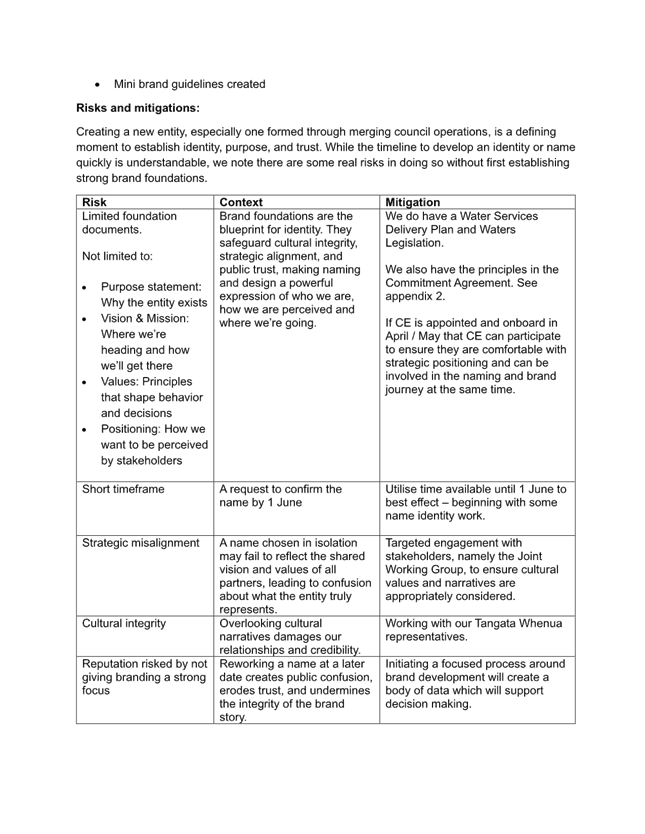
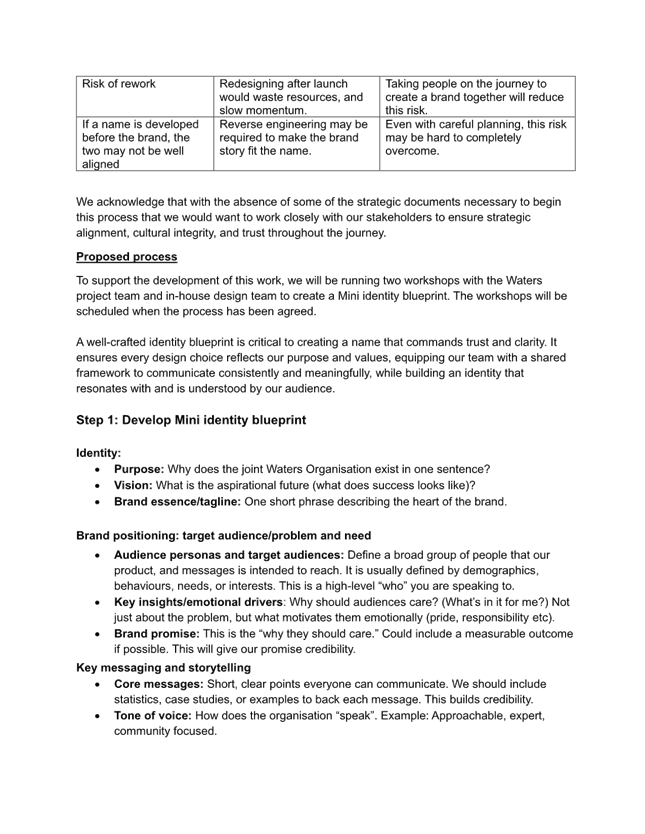
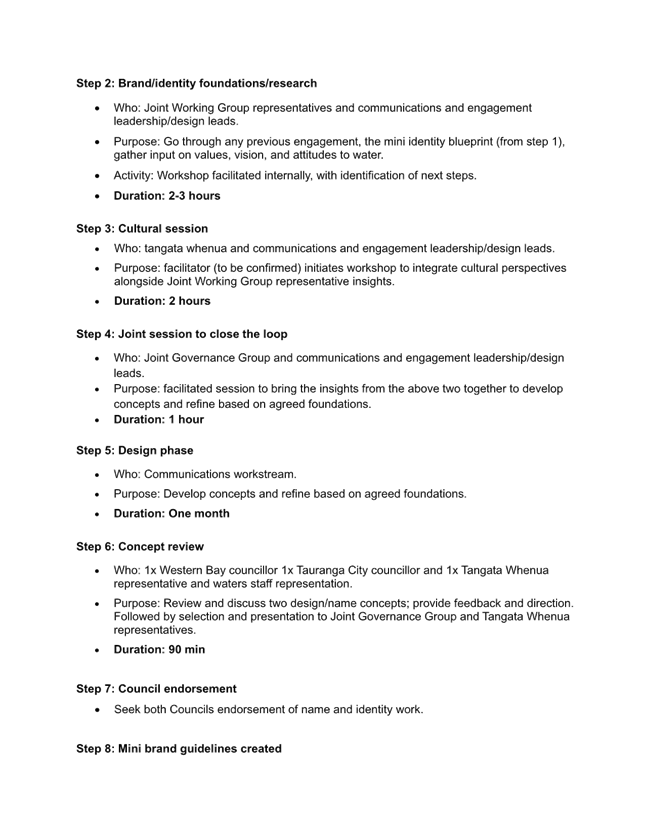
36. A high-level project outlining
the process for development a name and identity for the proposed WO is provided
as Attachment 2. The objective is to develop and adopt a name for the proposed
WO ahead of incorporation, so that the chosen name is used in legal
documentation establishing the WO.
37. The proposed name will be
brought to Council for approval.
38. The recommended approach is to
work with the members of the Joint Working Group (includes elected members from
Council and WBOPDC, and Tangata Whenua representatives) to develop a proposed
name. Council staff and wider Tangata Whenua involvement is also
proposed. A full brand development process is not proposed, as this is
intended to occur later to enable the participation of the WO Chair and Board,
and the WO Chief Executive.
39. The following key requirements
have been identified.
· Clear
connection to purpose – the name should make it apparent that the
organisation is focussed on the delivery of water services and values
environmental stewardship.
· Geographic
relevance and identity, whilst also future-proofed so that other councils can
join later.
· Memorable,
simple and easy to use.
· Offer
longevity, flexibility and legal practicality.
· Be
culturally appropriate and recognise partnership (potentially bilingual).
· Differentiation
from competitors.
· Trademarked,
the identity/name/brand is owned by the WO.
Key milestones - post-April 2026
40. Work has commenced on
developing a project plan for post-April, based on the assumption that Council
will continue towards establishment of a multi-council WO. The following are
high-level milestones.
· First
report on implementation of the Water Services Delivery Plan due to the
Department of Internal Affairs in April 2026
· Appoint
Chief Executive in April 2026 (subject to Council decision, 2 April 2026),
commence recruitment of executive management roles from May 2026.
· Commence
recruitment of a Chair and partial Board in April 2026
· Commence
development of a Transfer Agreement in April 2026 (must be in place for
‘go live’ date of 2 July 2027).
· Develop
a Statement of Expectations, April to December 2026
· Establish
staff pathways for transition to the WO, commencing April 2026
· Develop
an operations focussed transition plan, commencing April 2026
· Return
to Council with a Phase 2 digital business case in June 2026
· Commence
development of a Water Services Strategy in July 2026
· ‘Go
live’ date for multi-council WO is 1 July 2027.
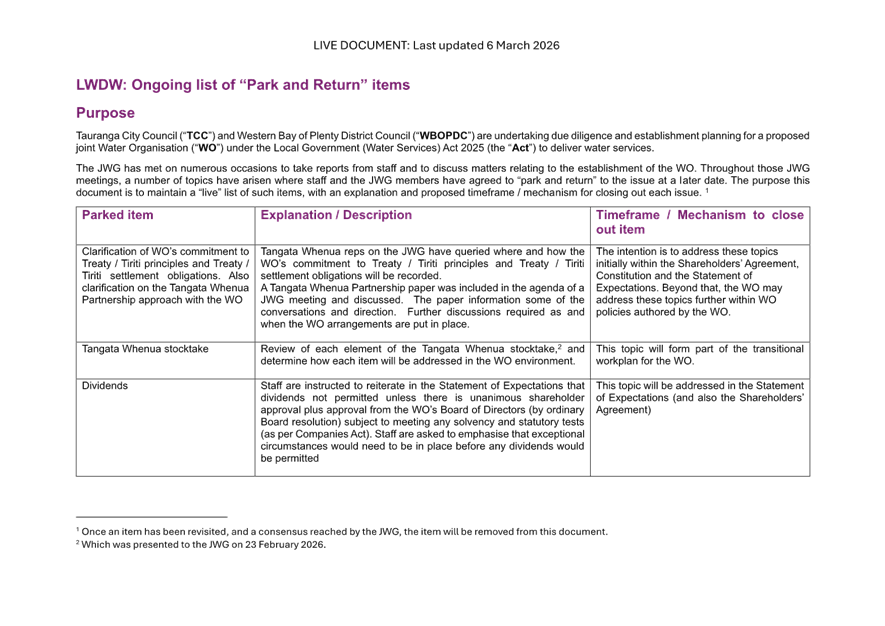
41. In addition to the high-level
milestones above, the Joint Working Group (a group consisting of elected
members from Council and WBOPDC, and Tangata Whenua representatives) has
identified issues and work to be progressed post-April 2026. These are provided
in Attachment 3 and will be considered and incorporated into future work
programmes as appropriate.
TE AO MĀORI APPROACH
42. Council
is working in partnership with Tangata Whenua on the establishment of the
proposed WO, ensuring that Council’s Te Ao Māori principles are
considered and integrated into project work. Tangata Whenua were invited to
select representatives to work alongside elected members to represent the
interests of all Iwi, Hapū, Māori entities, tāngata whenua
forums and whenua Māori trusts.
43. Tangata
Whenua appointed the following representatives:
· Hakopa
Tapiata
· Kiritapu
Allan
· Kylie
Smallman
· Roana
Bennett
· Rohario
Murray
· Shadrach
Rolleston
44. These
representatives are members of the Joint Working Group, along with elected
members from Council and WBOPDC. The Joint Working Group has been considering a
range of work related to the establishment of the proposed WO and making
recommendations for decision-making by Council and WBOPDC.
45. A
stocktake of existing Tangata Whenua arrangements in place at Council and
WBOPDC was presented to the Joint Working Group on 23 February 2026 alongside a
suggested approach for transitioning existing arrangements to the WO. In
response, the Joint Working Group agreed to recommend to both Councils that
they:
· Adopt
the principle of maintaining Tangata Whenua participation, engagement and
arrangements, with existing commitments and practices either retained or
bettered during, and following, the transition to a Water Organisation.
· Agree
that developing a Tangata Whenua Engagement Policy and a Tangata Whenua
Remuneration Policy is to be a priority for the Water Organisation, and note
that this will be considered for inclusion in the Statement of Expectations.
· Agree
that the Water Organisation is to consider each existing arrangement (as
identified in each Council’s Tangata Whenua stocktake) and assess and
identify how they will be transferred across to Water Organisation, and note
that this will be considered for inclusion in the Statement of Expectations.
· Explore
the development of an overarching Tangata Whenua Framework, including strategic
guidance and input.
46. This
report presents the first recommendation above for Council consideration. The
remaining recommendations relate to work intended to occur post-April, once
Council has decided whether to proceed with establishment of a WO. These will
be addressed by future project plans and work programmes (refer also to
Attachment 2).
47. The
Council paper ‘Local Water Done Well – Commercial Terms’, a
companion paper to this report, presents a suite of Commercial Terms for
Council decision. In addition to various matters relating to the Shareholders,
Shareholding and the Board, it also recommends forming a Joint Committee which
includes Tangata Whenua, alongside elected members from Council and WBOPDC.
48. The
proposed Joint Committee will replace the Joint Working Group. Including
Tangata Whenua representatives enables their continued involvement in
governance discussions.
Statutory Context
49. The matters in this report form
part of Council’s overall response to the government’s Local Water
Done Well reform programme and associated legislation. There are no specific
statutory compliance matters to be considered in respect of this report.
STRATEGIC ALIGNMENT
50. Council’s overall
response to the Local Water Done Well reforms supports delivery of the
following community outcomes.
|
Contributes
|
|
We are an inclusive city
|
☐
|
|
We value, protect and enhance the environment
|
ü
|
|
We are a well-planned city that is easy to move
around
|
ü
|
|
We are a city that supports
business and education
|
☐
|
|
We are a vibrant city that embraces
events
|
☐
|
51. This report, and the wider
water reform programme, are part of ensuring Tauranga has water services that
are sustainable, affordable, well-planned and maintained, and of high quality.
Options Analysis
52. This
report seeks approval of the overarching principle of maintaining
Tangata Whenua participation, engagement and arrangements, with existing
commitments and practices either retained or bettered during, and following,
the transition to a WO, as recommended by the Joint Working Group
Option one: approve the overarching principle that
Tangata Whenua participation, engagement and arrangements will be maintained or
bettered during, and following, transition to a WO. (RECOMMEDED)
|
Advantages
|
Disadvantages
|
|
Supports the agreed
upon recommendation of the Joint Working Group.
Provides clarity for
Tangata Whenua regarding continuation of existing arrangements (with
opportunity to improve upon these over time).
Sets the WO up for
organisational success by setting a baseline for Tangata Whenua which follows
existing practices and arrangements.
Demonstrates Council
compliance with s81 of the Local Government Act 2002 (Contributions to
decision-making processes by Māori).
|
Sets the direction for
the WO ahead of appointing a Chief Executive, Chair and Board.
|
Option one: do not approve the overarching principle that
Tangata Whenua participation, engagement and arrangements will be maintained or
bettered during, and following, transition to a WO. (NOT RECOMMEDED)
|
Advantages
|
Disadvantages
|
|
Does not set direction
for the WO ahead of appointing a Chief Executive, Chair and Board, retaining
flexibility.
|
Does not support the
agreed upon recommendation of the Joint Working Group.
Prolongs uncertainty
for Tangata Whenua regarding the position of the WO.
May cause operational
difficulties for the WO, if key practices, arrangements, agreements and
policy positions are not maintained.
Requires alternative
arrangements to ensure compliance with s81 of the Local Government Act 2002
(Contributions to decision-making processes by Māori).
|
Financial Considerations
53. The financial implications of
establishing a WO are discussed in the accompanying 24 March 2026 Council
report ‘Local Water Done Well – Financial Implications’.
54. An update on establishment
costs is provided earlier in the report.
Legal Implications / Risks
55. The legal considerations
related to establishing a WO with WBOPDC are discussing in the accompanying 24
March 2026 Council report ‘Local Water Done Well – Commercial
Terms’. This paper presents recommended commercial terms for Council approval.
Once approved, and subject to Council’s final decision to proceed with
establishing a WO on 2 April 2026, these will inform the drafting of foundation
documents for the WO (e.g. the Constitution).
CLIMATE IMPACT
56. This report has no direct
climate impacts, however the proposed WO will enable an integrated sub-regional
approach to the management and delivery of water, wastewater and stormwater
services, providing opportunities for improved climate and environmental
outcomes over time.
Consultation / Engagement
57. Engagement regarding the option
of establishing a multi-council Water Organisation occurred alongside
Council’s 2025/2026 Annual Plan consultation process.
Significance
58. The Local Government Act 2002
requires an assessment of the significance of matters, issues, proposals and
decisions in this report against Council’s Significance and Engagement
Policy. Council acknowledges that in some instances a matter, issue,
proposal or decision may have a high degree of importance to individuals,
groups, or agencies affected by the report.
59. In making this assessment,
consideration has been given to the likely impact, and likely consequences for:
(a) the current
and future social, economic, environmental, or cultural well-being of the
district or region
(b) any persons who are likely to be
particularly affected by, or interested in, the decisions.
(c) the capacity of the local authority
to perform its role, and the financial and other costs of doing so.
60. In accordance with the
considerations above, criteria and thresholds in the policy, it is considered
that the decisions proposed by this report are of medium significance. The
recommendations are focused on enabling participation of Tangata Whenua, have minimal
cost implications, and propose an approach which is based on existing
arrangements.
61. The decision of whether to
proceed with establishment of a WO is of high significance and was consulted on
alongside the 2025/2026 Annual Plan. This decision will be brought to Council
on 2 April 2026, but will not require further consultation prior to decision-making.
ENGAGEMENT
62. Taking into consideration the
above assessment, that the decisions are of medium significance, officers are
of the opinion that no further engagement is required prior to Council making a
decision, noting that the required engagement has already occurred in 2025
(alongside consultation for the 2025/26 Annual Plan).
Next Steps
63. The next steps for this project
depend on Council decisions scheduled for 2 April 2026. If Council decides to
continue to establish a WO with WBOPDC, next steps will include:
· Seeking
Council approval to appoint the preferred candidate as the Establishment Chief
Executive for the WO.
· Seeking approval to initiate the
Board appointments.
· Establishing
the formal Joint Committee.
· Developing
a work programme through to 1 July 2027 to establish the WO and set it up for
success. This will include transition pathways for staff.
· Scoping
Phase 2 of the digital programme, ahead of bringing a proposal to Council for
consideration in June 2026.
· Commencing
work to develop key policies, processes and plans for the WO, including a
Tangata Whenua Engagement Policy and a Tangata Whenua Remuneration Policy,
alongside development of other required policies and plans such as a
Significance and Engagement Policy and the Water Services Strategy.
Attachments
1. Detailed
Budget Information - A19930973 - Public Excluded
2. Name
and identity development for Water Organisation - A19917686 ⇩ 
3. Items for
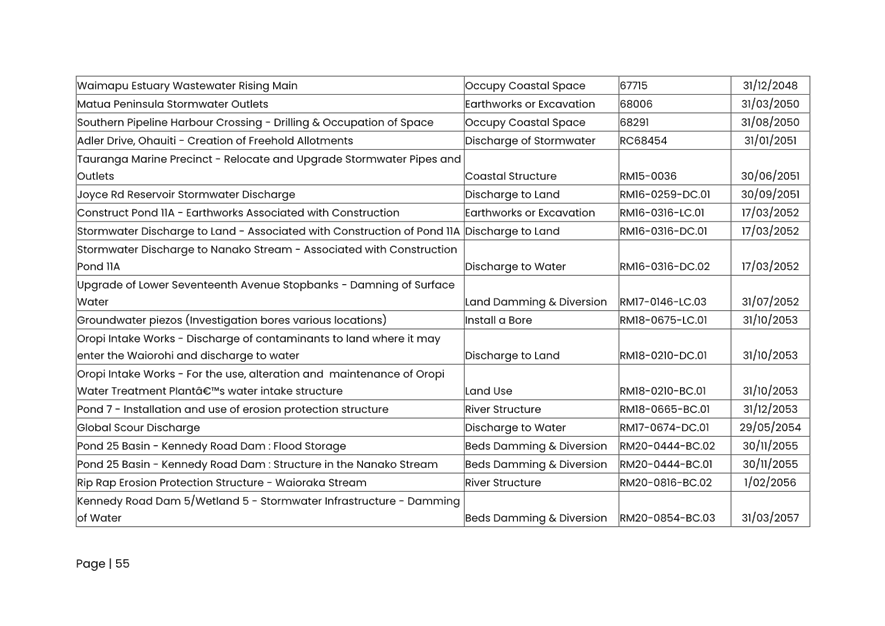
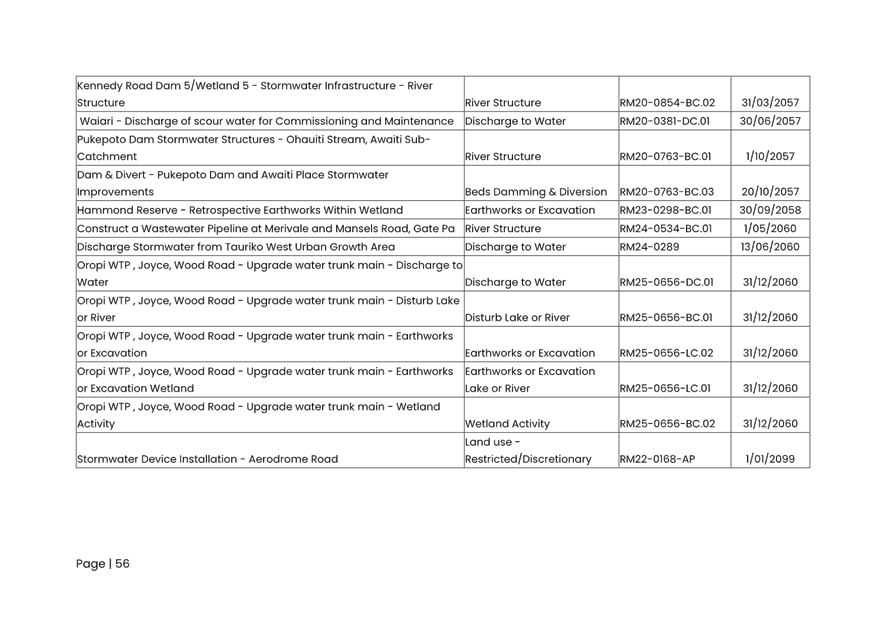
consideration and inclusion in forward work programme - A19917684 ⇩ 
|
Ordinary
Council meeting Agenda
|
24
March 2026
|

|
Ordinary
Council meeting Agenda
|
24
March 2026
|
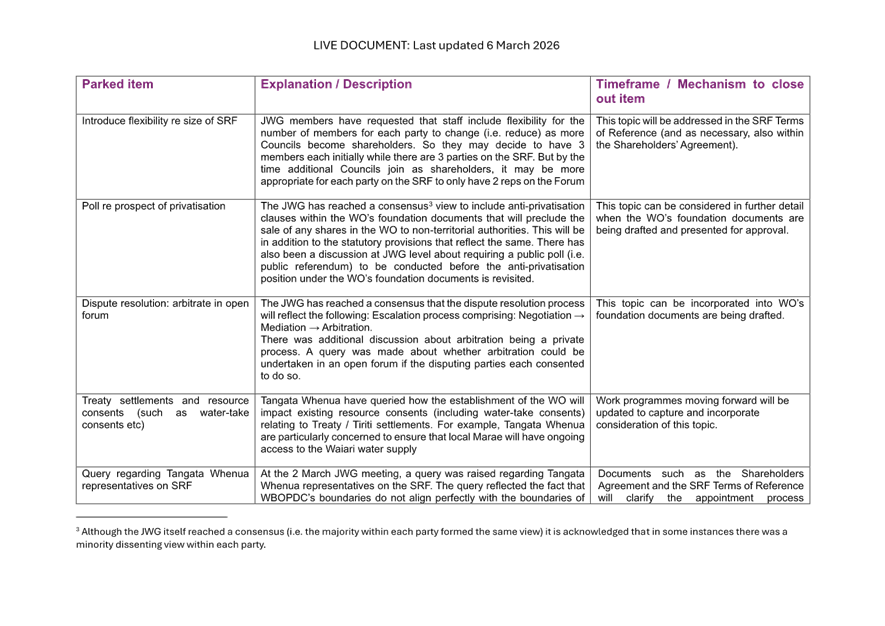
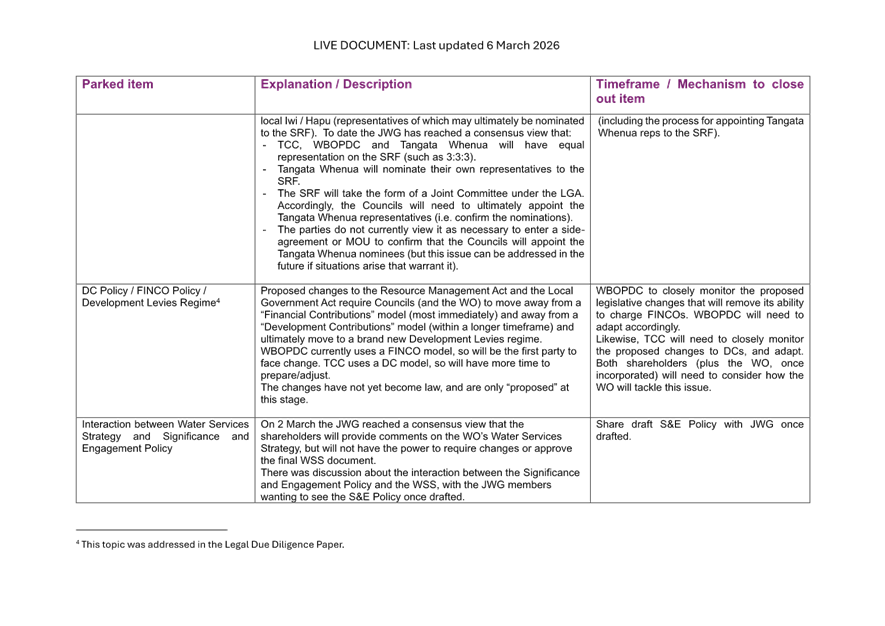
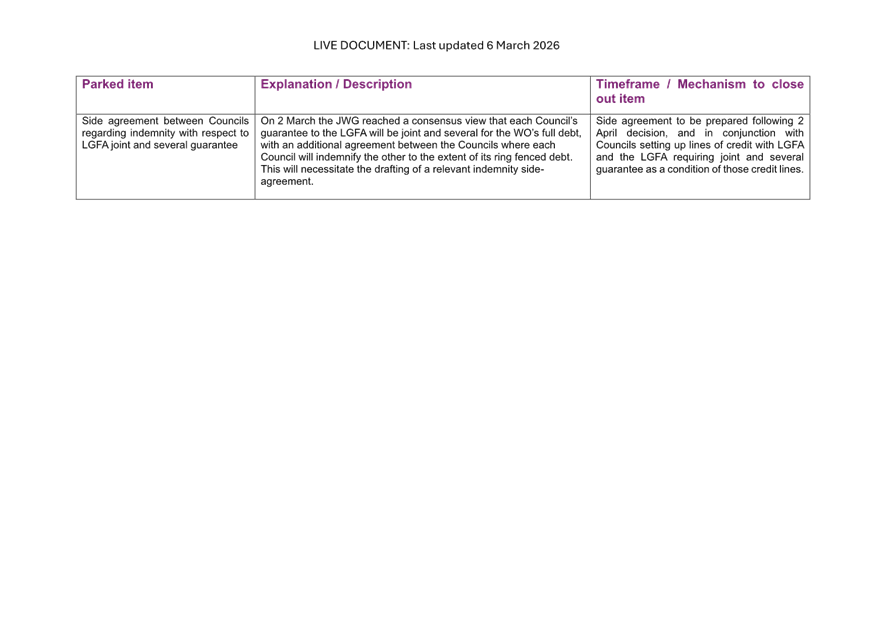
|
Ordinary
Council meeting Agenda
|
24
March 2026
|
11.2 Local Water Done Well
- Commercial Terms
File
Number: A19713134
Author: Charles
Lane, Team Leader: Commercial Legal
Tyler Buckley,
Commercial Solicitor
Authoriser: Christine
Jones, General Manager: Strategy, Partnerships & Growth
Purpose of the Report
1. The purpose of this report is to present
recommendations of the Joint Working Group (comprised of representatives from
Tauranga City Council, Western Bay District Council and Tangata Whenua) on the
Commercial Term Sheet for consideration and final decision by Tauranga City
Council and Western Bay of Plenty District Council. Once agreed, the Commercial
Term Sheet will inform the drafting of the proposed Water Organisation’s
founding documents (the Shareholders’ Agreement and Constitution) under
the Local Waters Done Well framework.
|
Recommendations
That the Council:
(a) Receives the report
"Local Water Done Well - Commercial Terms" and Attachment 1.
(b) Approves and endorses the
Commercial Term Sheet at Attachment 1:
(i) With no exceptions; or
(ii) With the exception of
commercial term(s):
(1) [insert commercial term #]
(2) [insert commercial term #]
(c) Subject to a decision by both
Tauranga City Council and Western Bay of Plenty District Council to approve
the Local Water Done Well due diligence (proposed for 24 March 2026), and a
decision by both Tauranga City Council and Western Bay of Plenty District
Council to establish the Water Organisation (proposed for 2 April 2026):
(i) Tauranga City Council
and Western Bay of Plenty District Council shall work together in good faith
to resolve any outstanding commercial terms not yet approved by both Tauranga
City Council and Western Bay of Plenty District Council.
(ii) Notes that staff will
prepare the Water Organisation’s Shareholders’ Agreement and
Company Constitution:
(1) In a manner that is
consistent with the approved Commercial Term Sheet and any additional
commercial terms subsequently agreed by Tauranga City Council and Western Bay
of Plenty District Council; and
(2) To enable incorporation of
the Water Organisation by 1 July 2026, with operations commencing on 1 July
2027.
(d) In relation to whether
Tangata Whenua may hold Class A (voting) shares in the Water Organisation,
confirms that Class A (voting) shares in the Water Organisation may either:
(i) be held by Tangata
Whenua; or
(ii) be held only by shareholding
councils.
(e) Notes all parties on the
Joint Working Group have reached a consensus on all terms within the
Commercial Term Sheet at Attachment 1, with the exception of whether Tangata
Whenua should hold Class A (voting) shares in the Water Organisation
(f) Notes staff will report
back to Tauranga City Council and Western Bay of Plenty District Council in
relation to the draft Shareholders’ Agreement and Company Constitution
for the Water Organisation for endorsement and approval prior to execution by
the Mayor and Chief Executive.
|
Executive Summary
1. Tauranga City
Council (“TCC”) and Western Bay of Plenty District Council
(“WBOPDC”) are considering whether to establish a
multi-Council Water Organisation (“WO”) under the Local
Government (Water Services) Act 2025 (“Act”). If
established, the WO will be responsible for managing and delivering drinking
water, wastewater and stormwater[1]
within the TCC and WBOPDC boundaries. In terms of timing:
(a) TCC and WBOPDC will decide
whether to establish the WO on 2 April 2026; and,
(b) If TCC and WBOPDC decide to
proceed with the WO’s establishment, the intention is to incorporate that
WO around July 2026. The WO would then have a 1-year establishment phase before
a “go-live” date of 1 July 2027.
2. This report presents
the Commercial Term Sheet (“CTS”), which outlines the key
commercial terms that will underpin the WO’s foundation documents (the
Constitution and Shareholders’ Agreement). The CTS has been developed
through a robust due diligence process and extensive engagement with the Joint
Working Group (“JWG”), comprising representatives from TCC,
WBOPDC and Tangata Whenua. The JWG has reached consensus on all but one of the
commercial terms, and this paper seeks Council’s endorsement of the CTS
and direction on the outstanding matter.
3. Endorsing the CTS
will enable staff to begin drafting the WO’s foundation documents
following the decisions of TCC and WBOPDC on 2 April 2026. It will also provide
clarity on the governance, ownership and operational arrangements of the
proposed WO, including the establishment of a Joint Committee (“JC”)
to support strategic alignment between the shareholders, Tangata Whenua and the
WO Board. The JC will initially have a recommendatory / advisory role only, and
will sit between the shareholders and the WO Board, helping to ensure effective
governance and oversight during the WO’s establishment and beyond.
Background to the Joint Working
Group (“JWG”) and JWG recommendations within this Paper
4. In September 2025,
TCC and WBOPDC entered a Commitment Agreement to explore the establishment of a
WO. Between late 2025 and early 2026, TCC and WBOPDC have been undertaking an
establishment planning and due diligence process for the proposed WO.
5. As anticipated under
the Commitment Agreement,[2]
working group representatives[3]
from TCC, WBOPDC and Tangata Whenua formed the JWG. Part of the JWG’s
role has been to receive presentations and Issues & Options papers from
staff regarding the structure of the WO’s foundation documents (being the
WO’s company Constitution and the Shareholders’ Agreement) so that
if TCC and WBOPDC decide to proceed with the establishment of the WO on 2 April
2026, the foundation documents can be promptly prepared.
6. The JWG’s
Terms of Reference require the JWG to form a consensus view on each matter
(where possible) and then present that consensus view as a recommendation to
the respective councils for final decision making. Where a consensus view
cannot be reached, the matter is to be reported to the respective councils with
an outline of each party’s position and associated rationale.
7. To date, staff have
met with the JWG on 10 separate occasions (each JWG meeting has run for
approximately 3 hours) to work through the detail of each Issues & Options
Paper.[4]
The JWG meetings (and accompanying papers) have provided an opportunity for the
JWG members to undertake detailed consideration of each matter presented to
them.
8. In addition to the
JWG meetings outlined above, the representatives for each council have attended
weekly meetings with staff (each internal meeting has run for approximately 1
to 2 hours) where the Issues & Options Papers for the upcoming JWG meeting
have also been introduced.
9. Elected Members from
outside of each council’s working group members have been invited to
attend the JWG meetings. Many Elected Members have taken up that invitation and
have often attended the JWG meetings under a watching brief, with speaking rights
extended to non JWG members on certain occasions.
10. In summary, the JWG members
have worked diligently to understand the issues presented to them. Each meeting
involved robust discussion, and significant thought and analysis underpin the
JWG’s recommendations set out in this paper.
EXPLANATION OF THE Commercial
Term Sheet
11. As noted above, part of the
JWG’s role has been to form recommendations regarding the structure of
the WO’s foundation documents. On that basis, staff prepared and
presented the CTS to the JWG. The CTS covers off all the key details that will
need to be included within the WO’s founding documents, being the
Constitution and Shareholders’ Agreement. The CTS ensures that the agreed
positions of TCC, WBOPDC and Tangata Whenua are accurately reflected in the
WO’s founding documents.
12. The CTS contains 46 different
topics. Each CTS item was presented to the JWG with an explanation and
different options to choose:
(a) Where the CTS item was
classified as “political” the options were presented with
advantages and disadvantages. 37 out of 46 items were political.
(b) Where the CTS item was
classified as “commercial” the options were presented with a staff
recommendation only (i.e. without advantages and disadvantages). 9 out of 46
items were commercial.
13. Each of these topics were
explained in writing to the JWG members within an Issues & Options Paper
(all of which are contained within in a link on TCC’s and WBOPDC’s
respective LWDW webpages[5]).
The topics were then presented in person by staff to the JWG members. All JWG
parties (TCC, WBOPDC and Tangata Whenua) received the written documents and
attended the presentations. As noted above, as at the date of this paper, there
have been 10 in-person JWG meetings lasting approximately 3 hours each. At
those meetings, all 3 JWG parties have raised questions, interrogated staff
recommendations and debated the issues.
14. The final version of the CTS,
including the JWG’s recommendations is found at Attachment 1 of this
paper.[6]
This is presented for approval and endorsement by both TCC and WBOPDC. For ease
of reference, the CTS includes footnotes that identify when each topic was
presented to the JWG (including references to the relevant Issues & Options
paper). The material that underlies the CTS (including Issues & Options
Papers, Fact Sheets, question responses etc.) can be found on TCC’s and
WBOPDC’s respective LWDW webpages.
15. The following sections set out
the JWG’s consensus recommendations on the CTS items. For the purposes of
this paper, the CTS has been organised into the following subject areas:
(a) JWG recommendations on WO
ownership and voting rights.
(b) JWG recommendations on WO
shareholder decision making.
(c) JWG recommendations on
shareholder influence on the WO.
(d) JWG recommendations on the
Joint Committee.
(e) JWG recommendations on
WO’s Board.
(f) JWG recommendations on
LGFA guarantees.
(g) JWG recommendations on
financial ring-fencing.
16. The items set out below include
footnotes referencing the relevant CTS item numbers in Attachment 1. The
following sections summarise the JWG’s consensus position on each
commercial term. They do not reflect all options considered by the JWG. Those
options are set out in Attachment 1, with further explanation (including
advantages, disadvantages, and staff recommendations) provided in the Issues
& Options Papers contained on TCC’s and WBOPDC’s respective
LWDW webpages.
JWG recommendations on WO
ownership & voting rights
Commercial terms where
the JWG reached a consensus view
17. The following is an overview of
the JWG’s consensus on items relating to the ownership and voting right
in relation to the WO:
(a) Class A and Class B shares: Shares
in the WO will be divided into two classes: [7]
(i) Class A shares will
relate to shareholder voting rights only (rather than ownership of the WO).
These shares will issued on incorporation of the WO, and will be divided evenly
across council shareholders. At the WO’s commencement, TCC and WBOPDC will
own Class A shares on a 1:1 basis. When a third shareholder is added, Class A
shares will be owned on a 1:1:1 basis (and so on). It is important to note that
these voting rights relate to a relatively small subset of shareholder
decisions, albeit the most significant ones[8].
All day‑to‑day operational decisions will be made by the WO, which
will be responsible for giving effect to the Statement of Expectations and
implementing the Water Services Strategy.
(ii) Class B shares will relate to
ownership of the WO. These shares will entitle the holder to a proportionate
share of any dividends or other distributions, but would not carry voting
rights. These shares will be issued based on the net assets being transferred
to the WO by each shareholding council and will be issued following completion
of the transfer agreement between each respective council and the WO. To ensure
a fair process, it is recommended that TCC and WBOPDC engage a single
independent valuer to value the water assets of both councils using the same
valuation methodology, and the same key input assumptions. The valuations will
be as at 1 July 2027, being the date the WO will become operational.
(b) Review and adjustment of
Class B shares: The allocation of Class B shares will be reviewed and
adjusted on a regular basis.[9]
For clarity, the methodology of allocating Class B shares will not change
whenever a review occurs. The triggers for undertaking reviews are set out
directly below:[10]
(i) The addition of a Council
shareholder to the WO.
(ii) The departure of a Council
shareholder from the WO.
(iii) Any reorganisation of local
government structures (such as amalgamation or otherwise) that directly
impacts any of the Council shareholders.
(iv) An end (or substantial change) to
the WO’s financial ring-fencing arrangements.
(v) Any periodic re-valuation of
the water-related assets transferred to the WO by all of the shareholding
Councils.
(vi) A material change to the value of
the water-related assets transferred to the WO by any one of the shareholding
Councils which would result in more than a 5% change in the shareholding
allocation.
(vii) If the methodology for allocating shares
includes a basis in addition to net assets (such as connections or population),
a material change in that basis which would result in more than a 5% change in
the shareholding allocation[11].
(viii) In the absence of any other
“trigger-event” occurring, once every 6 years.
(c) Anti-privatisation: Specific
anti-privatisation clauses will be added to the WO’s foundation document
(over and above the anti-privatisation provisions in the Act). Unanimous
shareholder approval will be required for the anti-privatisation clauses within
the foundation documents to be amended.[12]
(d) Dividends: Dividends
will not be payable from the WO to shareholders unless there is unanimous
shareholder approval plus approval from the WO’s Board of Directors (by
ordinary Board resolution) subject to meeting any solvency and statutory tests
(as per Companies Act).[13]
All parties accepted that the WO’s financial operating model is very
unlikely to support the regular distribution of substantial dividends to the
shareholders.[14]
Commercial terms where
the JWG were unable to reach a consensus view: Class A (voting) shares
18. There was one CTS item relating
to WO ownership and voting rights where the parties were unable to reach a
consensus. Specifically, the topic of whether or not Tangata Whenua will hold
Class A shares (voting rights, rather than ownership).[15] This is a summary of each
party’s position:
(a) TCC’s representatives on
the JWG formed a view that only shareholding councils will hold shares (whether
it be Class A shares or Class B shares) in the WO. This view is based on
several factors: The legislation does not anticipate share ownership by parties
other than councils[16];
Tangata Whenua is not a shareholder in any other Water Organisation across New
Zealand; external legal advice from Simpson Grierson, and advice from DIA, has
suggested there are more appropriate forums to capture Tangata Whenua’s
input, including the JC; and, it is unclear what legal entity would hold the
Class A shares on behalf of Tangata Whenua, or what the governance arrangements
would look like for that legal entity.
(b) WBOPDC’s representatives
on the JWG formed a view that only shareholding councils will hold shares
(whether it be Class A shares or Class B shares) in the WO. In addition to the
points noted above, WBOPDC’s rationale is that Tangata Whenua will be
equally represented on the JC, which it considers to be the appropriate forum
and one that provides sufficient opportunity for Tangata Whenua to have a say
on matters related to the WO.
(c) Tangata Whenua’s
representatives on the JWG formed a view that that if it is legally possible
for Tangata Whenua to hold Class A shares, then Tangata Whenua wishes to do so.
19. The JWG’s Terms of
Reference require that where the JWG is unable to reach a consensus
recommendation for the councils, the matter will be escalated to the full
councils, together with an explanation of the different positions and
associated rationale. On that basis, it is for TCC and WBOPDC to make a final
decision regarding the prospect of Tangata Whenua holding Class A shares, after
considering the competing viewpoints above.
JWG recommendations on WO
shareholder decision making processes
20. The following is an overview of
WO shareholder decision-making processes, based on the consensus view of the
JWG:
(a) Class A (voting) shares:
As mentioned above, shares in the WO will be divided into two classes. Class A
shares (voting rights) will be divided equally between the shareholding
councils.[17]
In other words each shareholder will have equal voting rights (regardless of
ownership shareholding percentage).[18]
(b) Decisions reserved for
unanimous approval: Where it is for the shareholders to make decisions,
some matters will require unanimous shareholder approval. [19]
The matters that will require unanimity are outlined directly below: [20]
(i) Adding new shareholding
councils to the WO.
(ii) Liquidation or winding up of
WO.
(iii) Amending the WO’s
constitution or SHA.
(iv) Approving an amalgamation, merger or
major restructure of WO.
(v) The future addition of any
further decisions that will require unanimous approval.
(vi) Removal of anti-privatisation
clauses within foundation documents.
(vii) Payment of dividends by the WO[21].
(c) Decisions reserved for
special resolution: There is a list of topics within the Companies Act that
require a “special resolution” of shareholders. The special
resolution threshold under the Companies Act is 75%, although it is possible to
have a higher threshold. The JWG has recommended this threshold remain at 75%[22]. For the WO,
additional matters over and above those set out in the Companies Act will be
added to the list of special resolution topics.[23] The list of additional matters
requiring a special resolution are outlined directly below:[24]
(i) Issue of, or changes to
rights attaching to, or buy-backs of, shares.
(ii) A material change to the
nature of the WO's business.
(iii) Approving any shareholder
funding and/or shareholder guarantee obligations.
(iv) Giving financial assistance for the
purposes of purchasing shares.
(v) The future addition of any
further matters that will require special resolution approval.
(d) Ordinary resolution: Any
matter not reserved for unanimous approval, or special resolution, can be made
by an ordinary resolution which requires a majority vote, being greater than
50%.
(e) Shareholder Meetings: Shareholder
meetings will occur annually, with a right for any shareholder to call a
meeting at any time.[25]
(f) Quorum: At
shareholder meetings, a quorum will be formed by two representatives from each
shareholding council.[26]
JWG recommendations on
shareholder influence on WO
21. The shareholding councils will
have access to a range of tools to influence the WO, provide high‑level
strategic direction, and request information and assurance, supporting
effective shareholder oversight. The WO and the JC will remain subject to the
Local Government Official Information and Meetings Act 1987 (“LGOIMA”).
However, WO Board meetings themselves will not be subject to LGOIMA.
Notwithstanding this, shareholders may, through the Statement of Expectations
(“SOE”), set clear expectations regarding transparency and
openness in the WO’s operations and decision‑making. For example,
the WO Board could elect to hold one or more public board meetings each year,
similar to the approach taken by Watercare.
22. Set out below is an overview of
the mechanisms the shareholders could use to influence the WO, along with the
relevant JWG recommendation:
(a) Statement of Expectations: The
Act requires the shareholders to prepare one joint SOE every three years.[27] This is the
shareholders primary mechanism to provide high-level guidance and direction to
the WO. The WO is required to give effect to the SOE. The Act anticipates that
the SOE will address relatively high-level strategic matters only (with
operational details being left to the WO itself). However, there is an ability
for the SOE to go into some operational detail if a “carve-out” is
introduced within the WO’s foundation documents. The JWG has reached a
consensus that the shareholders may have some ability to provide operational
direction with respect to stormwater charging only (and pending further
direction, a carve-out can be introduced to reflect this).[28]
(b) Water Services Strategy: The
Act requires the WO to prepare a Water Services Strategy (“WSS”)
in response to a SOE. The WSS sets out how the WO will deliver water services
and achieve its objectives over the medium to long term, including how it
intends to respond to shareholder expectations. It explains the WO’s
planned approach to service levels, investment, financial sustainability, and
performance, while preserving the independence of the WO Board. In accordance
with the Act, and the recommendation from the JWG, the shareholders will
receive each WSS in draft from the WO, and will have an ability to provide
comments on the draft WSS (the shareholders will not be able to require the WO
to amend the draft WSS; nor will the shareholders have the ability to
“approve” the final WSS).[29]
The WO may also be asked to undertake public consultation on the WSS, subject
to direction from the shareholders and the requirements of the WO’s
Significance and Engagement Policy.
(c) Reporting by the WO: The
WO will be required to meet various reporting obligations to the shareholders
(including a WSS, water services annual report, water services half-yearly
report etc). In addition to the strict reporting obligations, the Act enables
shareholders to impose additional reporting obligations on the WO. Instead of
specifying any additional obligations at the formation of the WO, the
shareholders will rely on the flexibility of section 249 and require additional
documents to be provided by the WO as and when the councils see fit.[30]
(d) WO’s debt levels, and
LGFA: Shareholders will rely on the in-built statutory mechanisms to
influence the WO’s level of debt to the Local Government Funding Agency
(“LGFA”). Those mechanisms include the ability to include
strategic direction within the SOE (which the WO must give effect to), and the
ability to comment on the WO’s WSS.[31]
The topic of the LGFA is covered in greater detail later in this paper.
(e) Dispute Resolution: The
WO’s foundation documents will include an escalation process for disputes
between shareholders and the WO. Any dispute will seek to be resolved through
negotiation in the first instance. If the matter is not resolved through that
process, then it will proceed to mediation. Again, if the matter is not
resolved at mediation the final avenue will be arbitration.[32]
JWG recommendations regarding
the joint committee
23. The JC will sit between the
shareholding Councils and the WO Board and will act as the primary conduit
between those two governance layers. The JC will be established under the Local
Government Act 2002 (“LGA”) and will include representatives
from TCC, WBOPDC and Tangata Whenua. At inception, the JC will have a
recommendatory and advisory role only, with final decision‑making
authority retained by the shareholding Councils.[33]
24. The JC will consider a range of
strategic and accountability matters and provide recommendations back to the
shareholders, including on the preparation of the SOE, providing feedback on
draft WSS, recommending appointments to the WO Board, and reviewing the
performance of the WO Board[34].
Over time, it is envisaged that the JC may transition from a purely
recommendatory and advisory body to one with delegated decision‑making
powers. The JWG has made a recommendation on when the functions of the JC
should be formally reviewed.
25. In relation to the JC, the JWG
reached a consensus on the following recommendations:
(a) JC representation: The
stakeholders that will be represented on the JC are each shareholder (i.e. TCC
and WBOPDC) and Tangata Whenua. Each party will have an equal number of
representatives. The JC will commence with a total of 9 members (3 TCC
representatives; 3 WBOPDC representatives; 3 Tangata Whenua representatives).
Over time that number may change if more councils join the WO, for example.[35]
(b) TCC & WBOPDC
representatives on the JC: As noted above, both TCC and WBOPDC will each
have three representatives on the JC. At least one representative must be an
elected member. The second and third representatives may be an elected member,
a senior council officer, or an independent expert.[36]
(c) JC to be a recommendatory
and advisory body initially: At its outset, the Joint Committee will be an
advisory and recommendatory body only, with no delegated decision‑making
authority[37].
All final decisions will remain with the shareholding Councils. On this basis,
all parties represented on the JC, including Tangata Whenua, will hold an
equivalent formal position.
(d) Recommendations by the JC:
The JC will seek to make recommendations to the shareholding Councils on a
consensus basis wherever possible. Consensus refers to agreement between the
parties (TCC, WBOPDC and Tangata Whenua), rather than unanimity among all
individual members on the JC. Where consensus is achieved, the consensus
recommendation will be presented to the shareholding councils for decision.
Where consensus cannot be reached, the differing positions of the parties will
be recorded and presented for decision. [38]
The role of the JC may evolve over time, subject to the direction of the
shareholding councils.
(e) Tangata Whenua: As noted
above, Tangata Whenua will have the same number of representatives on the JC as
each shareholding council.[39]
Tangata Whenua will nominate members to be appointed to the JC, and it will be
for the shareholding councils to formally appoint those nominees.[40]
(f) Independent Chair:
Following a recommendation from the JC, the shareholding councils reserve the
right to decide whether or not to appoint or remove an Independent Chair to the
JC.[41]
If an Independent Chair is appointed to the JC, he or she will not have a vote
on any matter (in the event that matters arise that require a vote within the
JC).[42]
(g) Appointments to the JC:
TCC and WBOPDC will individually appoint its own representatives to the JC and,
TCC and WBOPDC will jointly appoint:
(i) Any Tangata Whenua
representatives (if approved).
(ii) An Independent Chair (if
approved).[43]
(h) JC Meetings: The JC will
meet bi-monthly or as otherwise determined by the JC or by the shareholding
Councils. [44]
(i) Responsibilities of
the JC: Acknowledging that at its inception the JC will be a recommendatory
and advisory body only (without delegated decision-making authority) the
responsibilities of the JC will be reflected in a “JC Responsibility
Subject Matter List”, and the councils can collectively choose to make
any amendments to that list moving forward. The list is set out at Schedule A
of the CTS.[45]
(j) Joint Committee
established under the LGA: For the purposes of meeting the relevant
legislative requirements, the JC will be formally established under the Local
Government Act 2002.[46]
(k) Review of the JC’s
functions and responsibilities: The shareholders will re-visit the
JC’s functions and responsibilities at the earlier of:
(i) another shareholder
joining the WO; or,
(ii) at the beginning
of the triennium for any new incoming council, at which point the JC will
prepare a report for consideration by the incoming council.”; or,
(iii) otherwise as determined by a
majority of the WO’s shareholders; or
(iv) any substantive legislative change
or other significant matter impacting Treaty / Tiriti settlements.[47]
JWG recommendaTions regarding
WO’s Board
26. In relation to the WO’s
Board, the JWG reached a consensus on the following recommendations:
(a) Size of the Board: The
Board will comprise up to five directors[48].
At commencement, fewer than five directors may be appointed, with the Board
growing to its full size over time. For succession planning purposes, there may
be periods where more than five directors are appointed concurrently to enable
a smooth transition between an outgoing and incoming director.
(b) Appointment of Directors: All
directors will be jointly appointed by the shareholders (directly or via a
recommendation from the JC although for clarity, the JC at its inception will
only have the ability to make recommendations). All directors will be jointly
appointed in a manner consistent with Director Skills Matrix and each
Council’s policy for appointing CCO directors.[49]
(c) Term of Appointment:
A director’s term of appointment will be up to 3 years, and a maximum of
3 terms (if elected for re-appointment on each occasion). No director will be
able to serve more than a 9 year maximum total duration.[50]
(d) Director Remuneration: The
JC will be tasked with making recommendations (that take into account each
shareholder’s policy, and market benchmarking data). It will then be for
the Councils to make a decision taking into account the JC’s
recommendation.[51]
(e) Director interests /
conflicts: Where a director has an interest (conflict) in a particular
matter that is put to the Board for a vote, the interested director will not be
able to vote. The only exceptions are where all directors have an interest
(being, any payment or other benefit under s 161 of the Companies Act; and the
entry into an indemnity or insurance arrangement ).[52]
(f) Board Meetings:
Board meetings will occur monthly or otherwise as determined by the Board.[53]
(g) Chair of the Board: The
Chair of the Board will not have a casting vote. [54]
The Chair of the Board will be selected and appointed by the Board.[55]
JWG recommendations regarding
LGFA lending to the WO, and shareholder guarantees
27. The LGFA is a Council-owned
borrowing vehicle that enables local authorities and eligible
Council-controlled organisations to access debt funding at a lower cost and on
longer terms than would typically be available individually.
28. For WOs established under the
Act, the LGFA is relevant as a potential primary source of debt finance,
supporting large-scale, long-term investment in water infrastructure. The LGFA
has made it clear that access to its lending is conditional on shareholder
Council support, typically through the provision of Council guarantees. The
LGFA has stated that for multi-Council WOs, each Council shareholder will need
to provide a joint and several guarantee of the WO’s full LGFA debt,
meaning that each council is individually liable for the entire amount of the
WO’s debt if the WO is unable to meet its obligations, regardless of each
council’s shareholding proportion or contribution to the WO’s debt.
29. The JWG has reached a consensus
to recommend the following:
(a) Each Council’s guarantee
to the LGFA will be joint and several for the WO’s full debt, with an
additional agreement between the Councils where each Council will indemnify the
other to the extent of its ring fenced debt.[56]
(b) If the shareholders wish to
change the approach to the LGFA guarantee, that will require greater than 75%
of shareholders to agree (i.e. special resolution threshold).[57]
JWG recommendations regarding
financial ringfencing
30. TCC and WBOPDC have agreed
that, upon forming the WO, each party’s finances will be
“ring-fenced” for an initial period of time. This point is
reflected in each party’s Water Services Delivery Plan (“WSDP”)
and also reflected in the Commitment Agreement between the parties dated 1
September 2025.
31. For clarity, this issue does
not seek to establish the date on which ring-fencing will come to an end.
Instead, this issue is merely concerned with setting a timeframe for the
shareholders to put the topic of ring-fencing under the microscope. And when the
ring-fencing topic is re-visited, all options will remain on the table for the
shareholders to consider – on one hand they may decide to set a fixed
date for harmonisation of finances (and commence the transitional process from
ring-fencing to harmonisation), but on the other hand they may decide to retain
ring-fencing and simply set another duration of time before re-visiting the
issue again.
32. The JWG has reached a consensus
to recommend that no later than three years after the incorporation of the WO,
the shareholders must consider whether to require the WO to provide a full
report to the shareholders on the issue of revisiting the financial ring‑fencing arrangement. The
shareholders may decide not to require that report at the three‑year point, but in that
case the requirement to obtain a full report must not be deferred beyond six
years after the incorporation of the WO. If the shareholders have not required
the WO to provide a full report before the date that is six years after the
incorporation of the WO, the WO must, at that time, provide a full report to
the shareholders on the issue of revisiting the financial ring‑fencing arrangement.[58]
Statutory Context
33. Over the past few years, the
current coalition government has enacted three pieces of legislation under the
banner of “Local Water Done Well”:
(a) The first stage of reforms, the
Water Services Acts Repeal Act 2024, repealed the previous government’s
‘Affordable Water’ legislation.
(b) The second stage, the Local
Government (Water Services Preliminary Arrangements) Act 2024, set out
transitional arrangements for local government water services delivery.
(c) The third stage, the Local
Government (Water Services) Act 2025 is the final component of the coalition
government’s ‘Local Water Done Well’ reform programme. It is
this piece of legislation that enables councils to create multi-council Water
Organisations like the one that is being considered by TCC and WBOPDC.
34. The matters in this report form
part of Council’s overall response to the government’s Local Water
Done Well reform programme and associated legislation. There are no specific
statutory compliance matters to be considered in respect of this report.
STRATEGIC ALIGNMENT
35. This contributes to the
promotion or achievement of the following strategic community outcome(s):
|
Contributes
|
|
We are an inclusive city
|
☐
|
|
We value, protect and enhance the environment
|
ü
|
|
We are a well-planned city that is easy to move
around
|
ü
|
|
We are a city that supports
business and education
|
☐
|
|
We are a vibrant city that embraces
events
|
☐
|
36. This report, and the wider water
reform programme, are part of ensuring Tauranga has water services that are
sustainable, affordable, well-planned and maintained, and of high quality.
OPTIONS ANALYSIS: acceptance of
jwg recommendations on commercial term sheet
37. The JWG has reached a consensus
on the CTS, and recommends the CTS at Attachment 1 be approved and endorsed by
the councils (TCC and WBOPDC). This report seeks approval of these
recommendations.
Option one: Approves
and endorses the Commercial Term Sheet at Attachment 1 with no exceptions.
|
Advantages
|
Disadvantages
|
|
· Provides
clear and timely direction to proceed with implementation.
· Signals
alignment and support for the negotiated commercial terms.
· Avoids
delays and maintains momentum in the workstream.
|
· Commits
to all terms as recommended, with limited opportunity for further refinement.
· May
lock in terms that some stakeholders have concerns about.
|
Option two: Approves
and endorses the Commercial Term Sheet at Attachment 1, with the exception of
specific commercial terms [to be listed, if any].
|
Advantages
|
Disadvantages
|
|
· Allows
for targeted refinement of specific terms that may require further
negotiation or clarification.
· Demonstrates
responsiveness to concerns while maintaining overall progress.
|
· May
delay finalisation of the Commercial Term Sheet and associated workstreams.
· Could
introduce uncertainty or require re-engagement with other parties to
renegotiate excluded terms.
|
OPTIONS ANALYSIS: Tangata whenua
and class a shares
38. The JWG was unable to reach a
consensus view on whether Tangata Whenua should hold Class A (voting) shares.
It is for the councils to decide this matter.
Option one: Tangata
Whenua may hold Class A (voting) shares in the Water Organisation
|
Advantages
|
Disadvantages
|
|
· Strengthens
partnership and trust between councils and iwi/Māori.
· Enables
direct input from Tangata Whenua into strategic governance decisions.
|
· Does
not necessarily align with legislative intent.
· May
require more complex governance arrangements and legal frameworks.
· Potential
for differing views among shareholders could complicate decision-making.
· Could
raise concerns among some councils or stakeholders about dilution of council
control.
|
Option
two: No entity other than shareholding councils may hold Class A (voting)
shares in the Water Organisation
|
Advantages
|
Disadvantages
|
|
· Maintains
clear and consistent governance structure with councils as sole voting
shareholders.
· Simplifies
decision-making and accountability lines.
· More
straightforward to implement under current legislative settings.
|
· Limits
formal governance participation of Tangata Whenua.
· May
be perceived by Tangata Whenua inconsistent with the partnership approach.
· Could
reduce the support of the Water Organisation among iwi / Māori
stakeholders.
|
Financial Considerations
39. The financial implications of
establishing a WO are discussed in the accompanying 24 March 2026 Council
report ‘Local Water Done Well – Financial Implications’.
Legal Implications / Risks
40. The legal considerations
related to establishing a WO are set out in this report. This paper presents
the JWG’s recommendation on the commercial terms for Council approval.
Once approved, and subject to Council’s final decision to proceed with
establishing a WO on 2 April 2026, these commercial terms will inform the
drafting of foundation documents for the WO (e.g. the Shareholders’
Agreement and Constitution).
TE AO MĀORI APPROACH
41. Council is working in
partnership with Tangata Whenua on the establishment of the proposed WO,
ensuring that Council’s Te Ao Māori principles are considered and
integrated into project work. For more detail on this process please refer to
the Te Ao Māori section of the accompanying 24 March 2026 Council report
‘Local Water Done Well – Project Update’ and to the
recommendations made by the Project Update report.
42. Inclusion of Tangata Whenua on
the Joint Working Group and recommendation for Tangata Whenua to have a place
on the Stakeholder Representative Forum is an important part of enabling
Tangata Whenua involvement in governance discussions (noting that the Forum is
not a final decision-making body).
CLIMATE IMPACT
43. This report has no direct
climate impacts, however the proposed WO will enable an integrated sub-regional
approach to the management and delivery of water, wastewater and stormwater
services, providing opportunities for improved climate and environmental
outcomes over time.
Engagement
44. Engagement regarding the option
of establishing a multi-council Water Organisation occurred alongside
Council’s 2025/2026 Annual Plan consultation process.
Significance
45. The Local Government Act 2002
requires an assessment of the significance of matters, issues, proposals and
decisions in this report against Council’s Significance and Engagement
Policy. Council acknowledges that in some instances a matter, issue,
proposal or decision may have a high degree of importance to individuals,
groups, or agencies affected by the report.
46. In making this assessment,
consideration has been given to the likely impact, and likely consequences for:
(a) the current
and future social, economic, environmental, or cultural well-being of the
district or region
(b) any persons who are likely to be
particularly affected by, or interested in, the decision.
(c) the capacity of the local authority
to perform its role, and the financial and other costs of doing so.
47. In accordance with the
considerations above, criteria and thresholds in the policy, it is considered
that the decision is of medium significance.
ENGAGEMENT
48. Taking into consideration the
above assessment, that the decision is of medium significance, officers are of
the opinion that no further engagement is required prior to Council making a
decision.
Next Steps
49. The next steps for this project
depend on Council decisions scheduled for 2 April 2026. If Council decides to
continue to establish a WO with WBOPDC, next steps will include:
· Drafting
the Shareholders’ Agreement and Constitution.
· Seeking
Council approval to appoint the preferred candidate as the Establishment Chief
Executive for the WO.
· Scoping
Phase 2 of the digital programme, ahead of bringing a proposal to Council for
consideration in June 2026.
· Commencing
work to develop key policies, processes and plans for the WO, including a
Tangata Whenua Engagement Policy and a Tangata Whenua Remuneration Policy,
alongside development of other required policies and plans such as a
Significance and Engagement Policy and the Water Services Strategy.
Attachments
1. LWDW
Consensus Record of Commerical Terms - A19933795 ⇩
|
Ordinary
Council meeting Agenda
|
24
March 2026
|
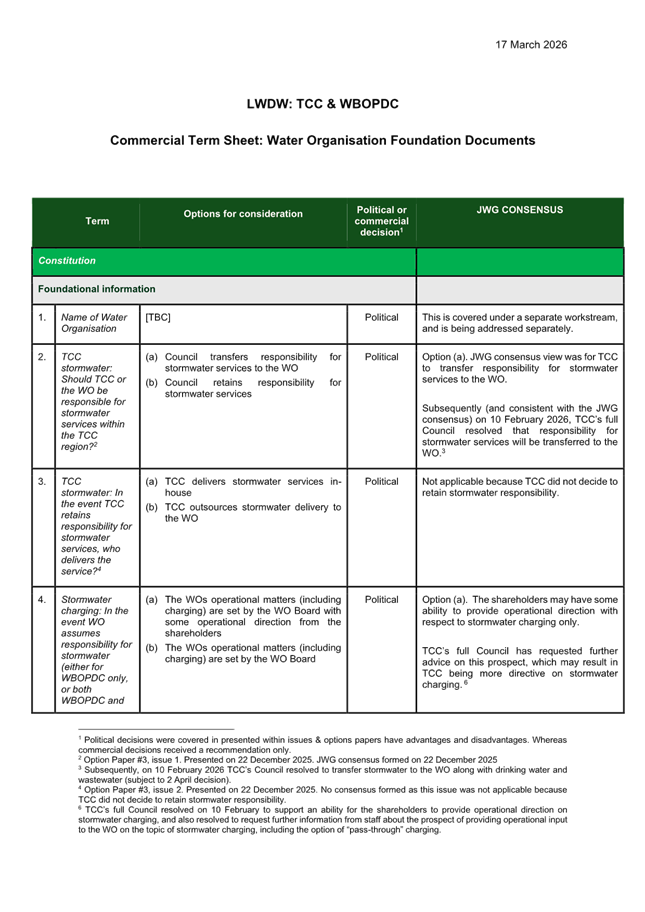
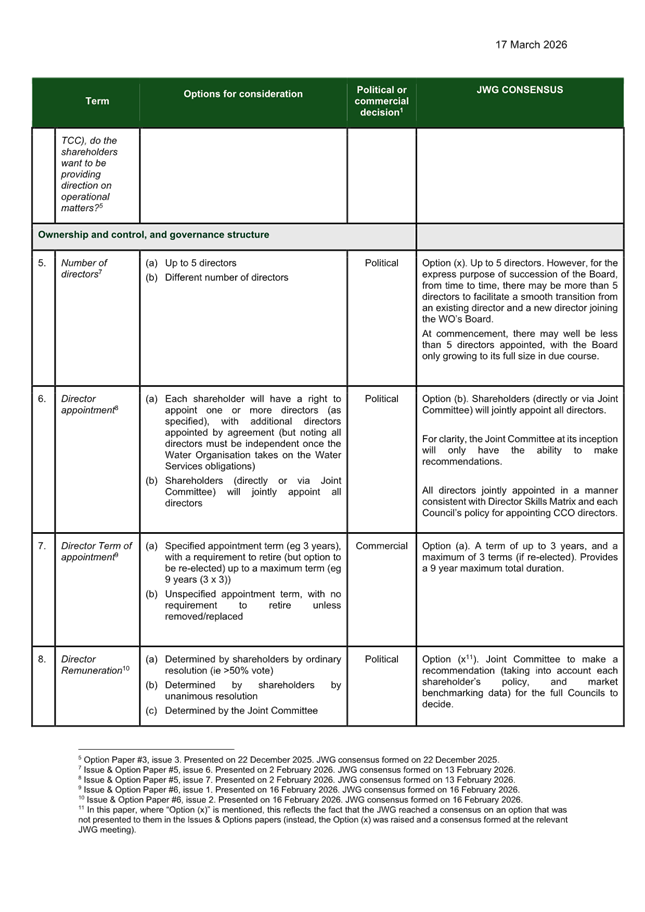
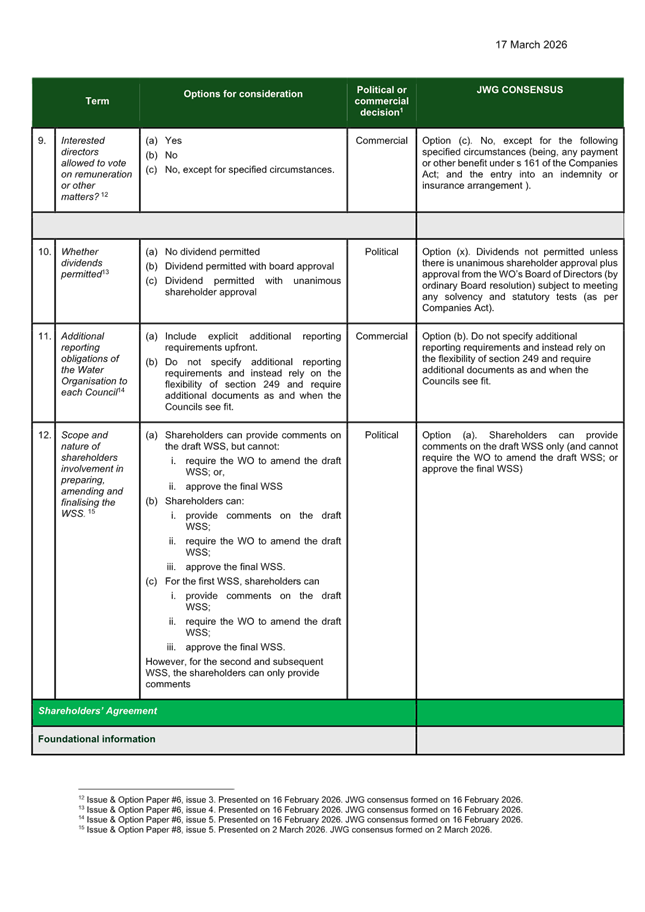
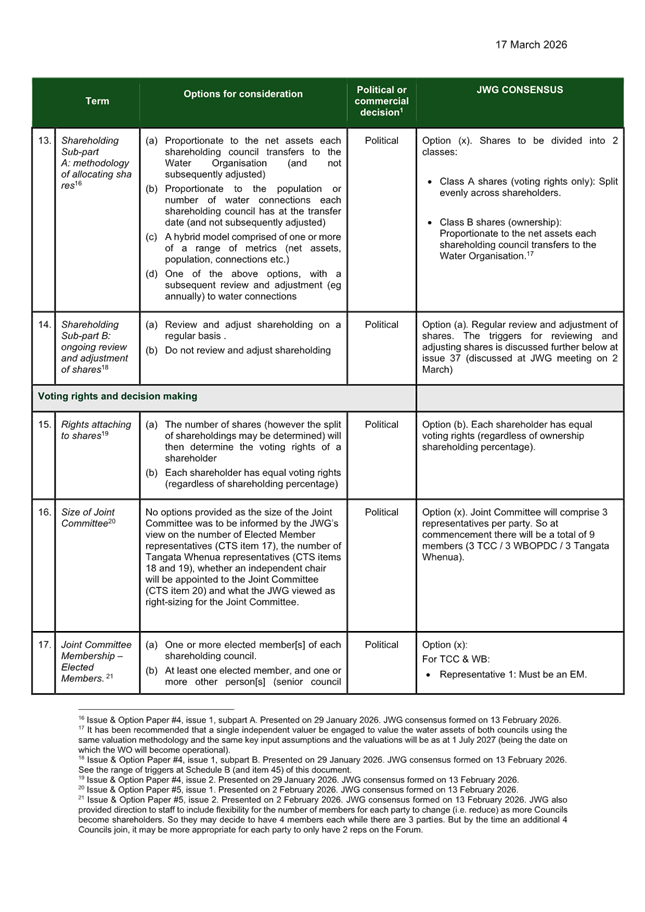
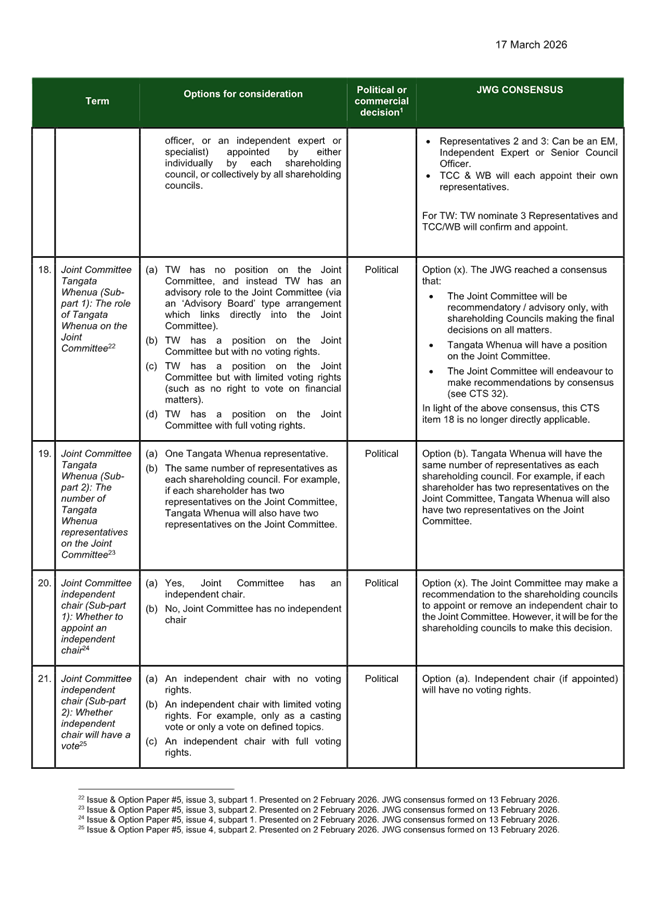
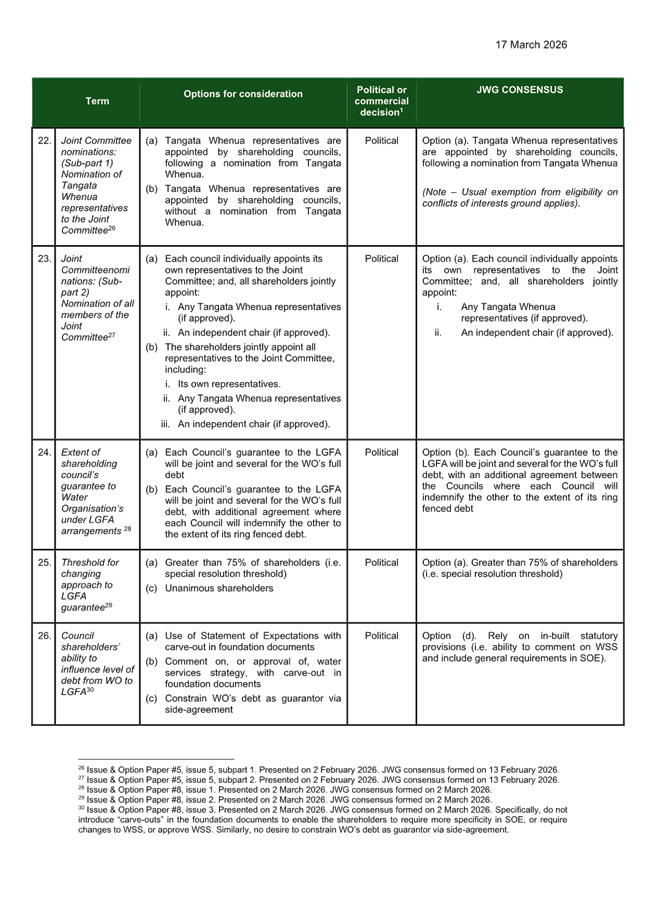
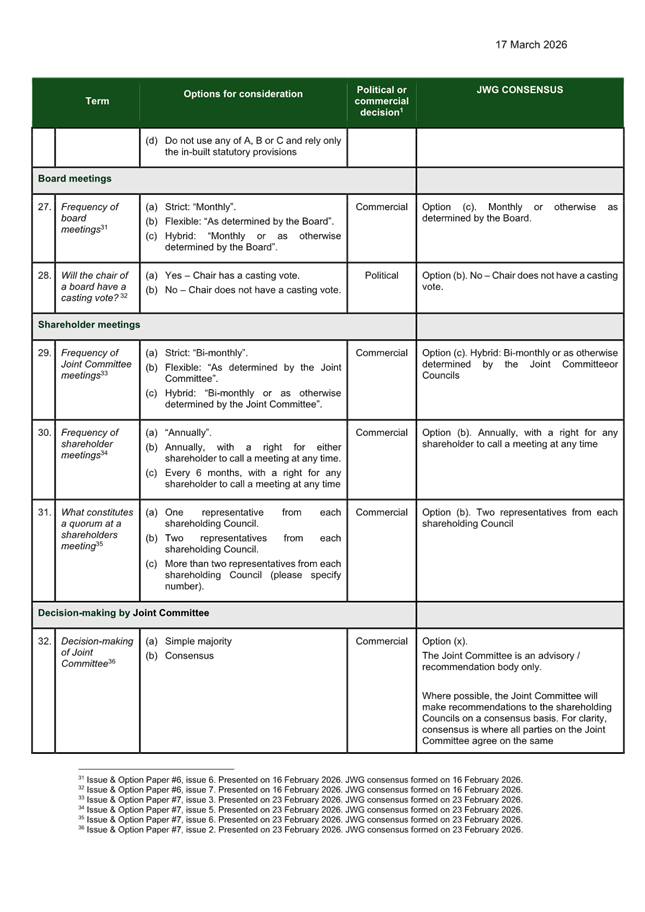
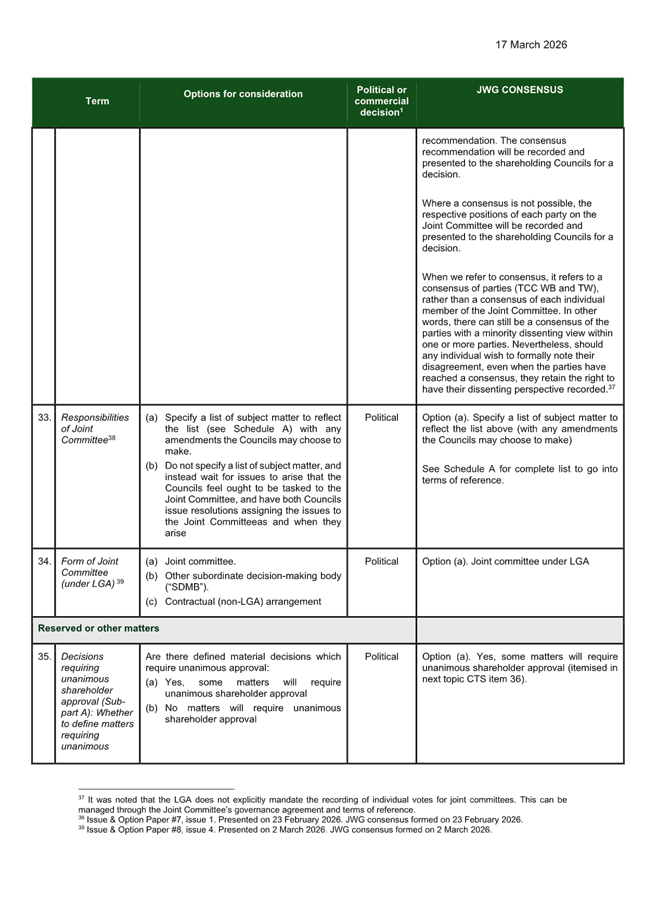
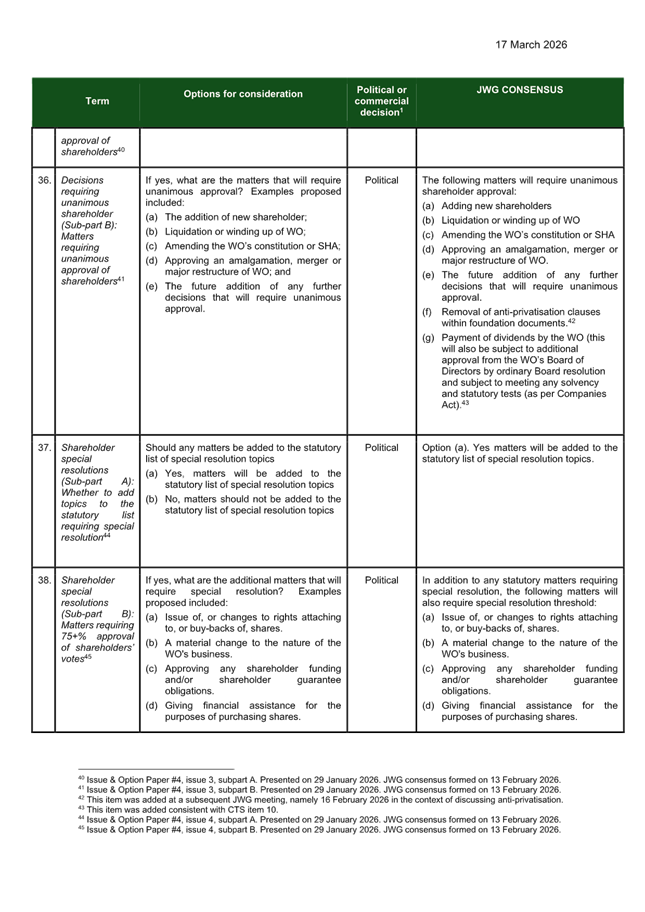
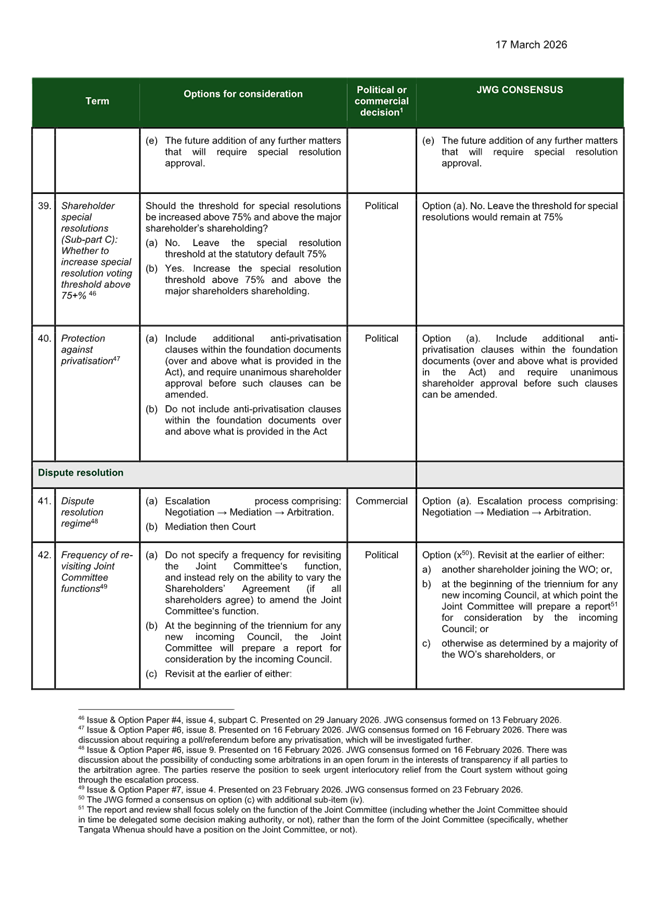
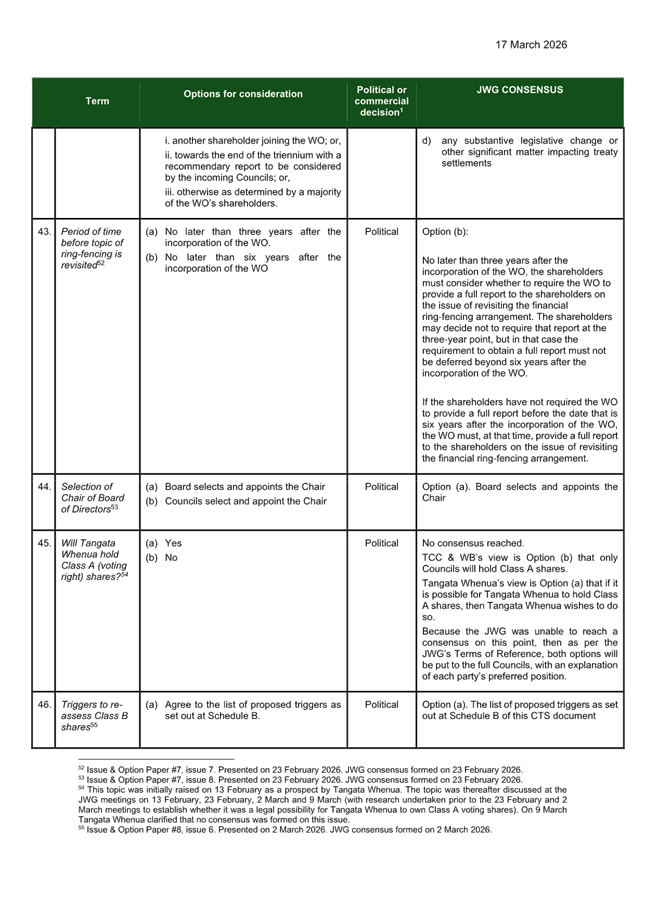

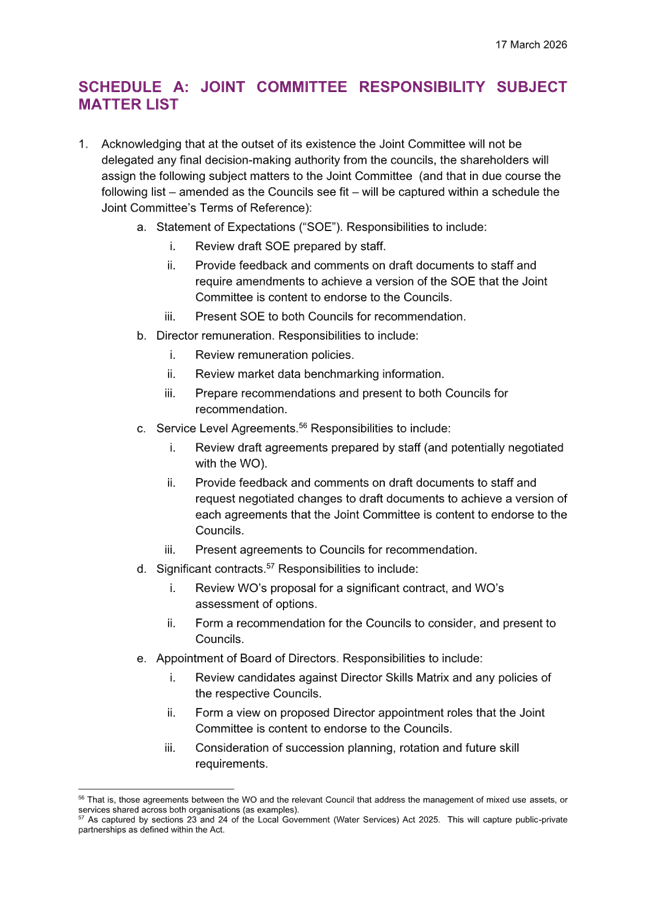
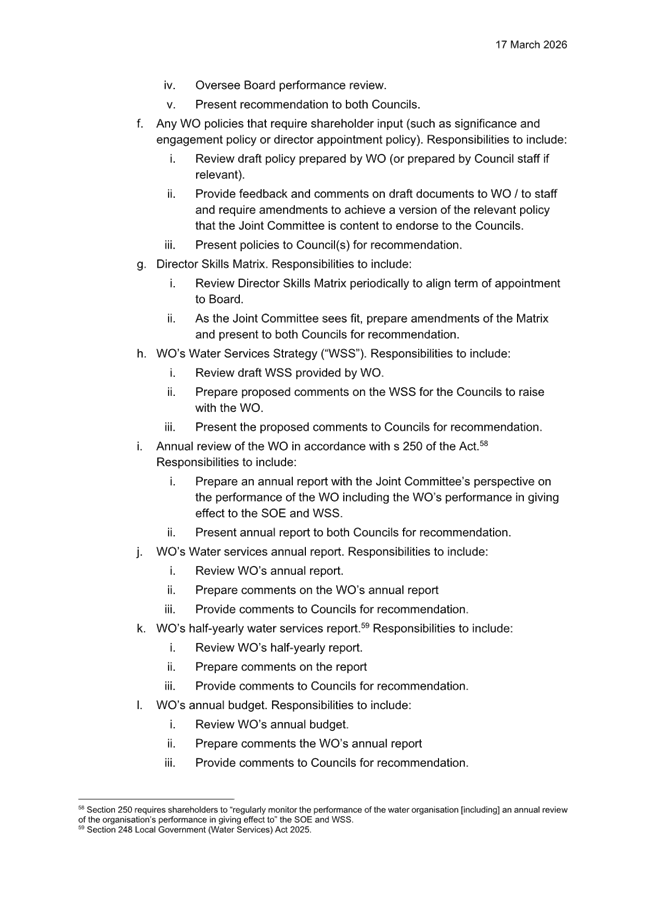

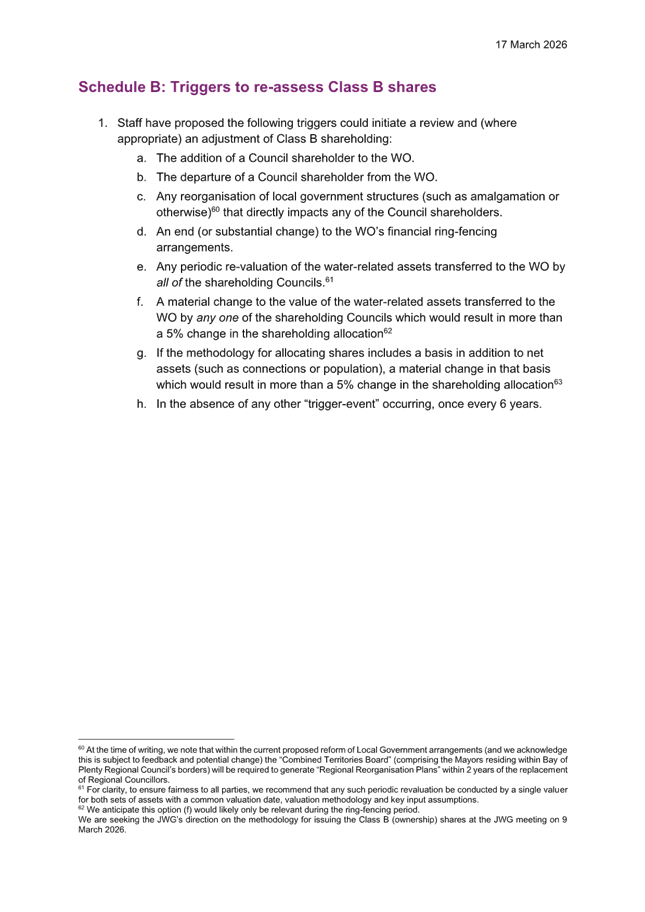

|
Ordinary
Council meeting Agenda
|
24
March 2026
|
11.3 Local Water Done Well
- Due Diligence
File
Number: A19834767
Author: Cathy
Davidson, Manager: Directorate Services
Fiona Nalder,
Principal Strategic Advisor
Authoriser: Christine
Jones, General Manager: Strategy, Partnerships & Growth
Please
note that this report contains confidential attachments.
|
Public Excluded Attachment
|
Reason why Public Excluded
|
|
Item 11.3 - Local Water
Done Well - Due Diligence - Attachment 1 - Legal Due Diligence Report
|
s7(2)(g) - The
withholding of the information is necessary to maintain legal professional
privilege.
|
|
Item 11.3 - Local Water
Done Well - Due Diligence - Attachment 3 - People and Workforce Due Diligence
Report - PLACEHOLDER
|
s7(2)(a) - The
withholding of the information is necessary to protect the privacy of natural
persons, including that of deceased natural persons.
|
Purpose of the Report
1. This report presents the
due diligence reports for legal, people and workforce, and AMOS (asset
management, operations and stormwater). It seeks Council’s (TCC’s)
acceptance of the reports and recommended actions, which are based on enabling progressing
with establishment of a Water Organisation.
|
Recommendations
That the Council:
(a) Receives the report
"Local Water Done Well - Due Diligence".
(b) Notes the contents of the due
diligence reports for legal, people and workforce and asset management,
operations and stormwater (AMOS).
(c) Accepts that no issues or
risks were identified which jeopardise the feasibility of proceeding to
establish a joint Water Organisation with Western Bay of Plenty District
Council.
(d) Notes that implementation
actions recommended by the due diligence reports will be incorporated into
the forward work programme, if Council decides to proceed with establishing
of a joint Water Organisation with Western Bay of Plenty District Council.
(e) Attachment 1 will not
be transferred to public as it is legally privileged, a redacted version is
available as Attachment 2 to this Council report.
(f) Attachment 3 can
be transferred into the open once workforce negotiations are completed.
|
Executive Summary
2. Tauranga
City Council (TCC), in partnership with Western Bay of Plenty District Council
(WBOPDC), is progressing work to establish a Multi‑Council Water
Organisation (WO) under the Government’s Local Water Done Well (LWDW)
reform programme. With a planned “go live” date of 1 July 2027, the
programme aims to ensure sustainable, high‑quality, and well‑planned
water services across the sub‑region.
3. This
report presents the findings from three key due diligence streams, legal,
people and workforce, and asset management, operations and stormwater (AMOS),
and recommends actions to support the transition to a joint Water Organisation.
Background
4. Council
endorsed the Summary Plan for establishing the WO on 29 October 2025, including
an outline of the due diligence required. The due diligence work completed to
date has focused on identifying critical issues that could materially
jeopardise the WO’s successful establishment, rather than cataloguing
every operational detail. This due diligence report is presented to Council
alongside companion reports addressing commercial terms, financial
implications, and overall project progress, which together provide a
comprehensive update on establishment activities.
5. The
Due Diligence papers presented by this report are joint TCC and WBOPDC
documents.
Legal Due Diligence
6. The
legal review identified no material risks that would prevent the successful
establishment of a joint WO. It considered the following four elements.
i. Contracts.
Twelve representative contracts were examined, showing that most can be novated
directly to the WO. For the remainder, early engagement with contractors is
recommended.
ii. Legal
claims risk was assessed for both councils, with only one live or likely
claim identified per council, none considered material to the establishment of
the WO.
iii. Property
access and land ownership arrangements were reviewed, with the Local
Government (Water Services) Act 2025 providing sufficient statutory rights to
ensure ongoing access for water services operations.
iv. Mechanisms
for funding of growth. While WBOPDC must transition from financial
contributions under the RMA to development contributions under the LGA, this
shift is required irrespective of the WO and does not present a substantive
risk.
People and
Workforce Due Diligence
7. The
people workforce review found no issues preventing TCC from progressing toward
the WO. An estimated 213 staff are expected to transfer, and most will be no
worse off under the new arrangements. Retaining institutional knowledge is
critical given low turnover and long tenure across both councils’ water
services teams. Smooth transition planning, including organisational design,
change management, and union engagement, will be central to maintaining service
continuity and supporting delivery of the ambitious capital programme required
to meet growth demands.
AMOS Due Diligence
8. The
AMOS review assessed ten functional areas using a traffic‑light system.
No red‑flag issues were identified. Both councils have well‑established
asset management practices and sound long‑term financial forecasts,
although several known asset risks require ongoing attention, including the
Katikati Outfall Pipe (WBOPDC) and structural work at the Chapel Street
Wastewater Treatment Plant (TCC). Operational performance and compliance levels
are high overall, and both councils have emergency response plans that will
need alignment ahead of transition. Key challenges relate to growth-driven
investment pressures, cross‑boundary service considerations, and the
importance of workforce capability.
Conclusion
9. Collectively,
the due diligence reviews confirm that no legal, people and workforce or
operational issues materially jeopardise the feasibility of establishing a
joint Water Organisation. The report recommends progressing the outlined
actions to ensure readiness for the 2 April 2026 decision and, if approved, a
smooth transition to the WO’s establishment.
Background
10. Tauranga
City Council (TCC), in partnership with Western Bay of Plenty District Council
(WBOPDC, is progressing the establishment of a Multi-Council Water Organisation
(WO) in response to the Government’s Local Water Done Well (LWDW) reform
programme. The WO has a ‘go live’ date of 1 July 2027.
11. Council
endorsed the Multi-Council Water Organisation Summary Plan (including Due
Diligence) on 29 October 2025. This plan sets out the approved approach to
complete the necessary steps to establish the WO. It was prepared based on the
Commitment Agreement between the two councils and the approved Water Service
Delivery Plans (WSDP).
12. As
part of completing work outlined by the Summary Plan, staff have completed due
diligence work, looking at legal, people and workforce, AMOS (asset management,
operations and stormwater) and finance matters relevant to the establishment of
the proposed WO.
13. The
focus of the due diligence process was to identify issues that would materially
jeopardise the successful establishment of a joint WO. It was not intended to
identify and capture all issues, only those which would impact on the
successful establishment and operation of the proposed WO.
14. This
paper presents the legal, people and workforce and AMOS due diligence reports
(joint TCC and WBOPDC documents). It is on the Council agenda for 24 March 2026
alongside three additional Local Water Done Well reports which: provide a
project update; present the proposed commercial terms; and present the
financial implications of establishing a WO. The financial due diligence report
provided as part of the wider Council report addressing financial implications.
These four reports, when considered holistically, progress establishment work
and provide a comprehensive project update on the work completed to establish
the WO. on
Legal Due Diligence
15. No significant issues
were identified that would jeopardise the establishment of a joint WO
with WBOPDC.
16. The Legal Due Diligence
Review Paper (Legal DD) is provided as confidential Attachment 1 to
this report, with a redacted public version provided as Attachment 2. The
purpose of the Legal DD was to identify and highlight any significant
legal risks that may jeopardise the successful establishment of a
joint WO with WBOPDC. The Legal DD is separate to the proposed commercial
terms, which will form the basis of the WO’s founding documents
(Shareholders‘ Agreement and Constitution) for the
proposed WO. The proposed commercial terms are provided for consideration by a
companion report also being presented at this 24 March 2026 Council
meeting.
17. The Legal DD focussed on
four key areas:
i. Water service and construction contracts: Whether key
contracts could be transferred to the WO.
ii. Live
or likely legal claims: Existing or emerging litigation risk tied to
water assets.
iii. Water
infrastructure property arrangements: Whether the WO can access
and operate assets and land.
iv. Development
and financial contributions: Alignment of Council practices with new
legislative framework.
18. A transfer agreement
will be developed to guide the transition of water services from Tauranga City
Council (TCC) to the proposed WO. This agreement will be the primary vehicle
for managing the transfer of contracts, legal claims and property ownership
from TCC to the WO. WBOPDC will also enter into a transfer agreement
with the proposed WO.
Water
service and construction contracts
19. Both Councils (TCC and
WBOPDC) have a number of existing contracts which
will likely need to transfer to the proposed WO. As part of the
Legal DD, 12 existing contracts were reviewed (see Attachment 1, Schedule 1 for
further detail). This was a random sample selection only, not all
existing contracts1.
20. No significant issues
were identified. The contracts were generally based on industry
standards (with special conditions as required). Many include clauses
enabling TCC to novate them to the WO without first needing the contractor or consultant‘s consent. Those
contracts without an automatic right
to novate, will still be able to be novated providing
the relevant contractor or consultant agrees to the novation. It
is recommended that for these contracts, early engagement occurs leading up to
the ‘go live’ date of 1 July 2027.
Legal
claims
21. Subject matter experts
at TCC and WBOPDC completed a legal claims risk summary (see
Attachment 1, Schedule 2).
· Part A of Schedule 2 summarises the live or likely
legal claims in relation to TCC water infrastructure.
· Part B of Schedule 2 summarises the live or likely
legal claims in relation to WBOPDC water infrastructure
22. Each Council identified one
live or likely legal claim. If further claims (or risks of claims)
arise before the 1 July 2027 ‘go live’ date, staff at each council
have been advised to disclose this.
23. Overall, it
was determined that neither of the two identified legal claims poses
a material risk to the establishment of the proposed WO.
Property
arrangements
24. Review of the Local
Government (Water Services) Act 2025 (the Act) provides WOs with extensive
rights to access land not owned by the WO for the purpose of carrying out water
services operations. This includes processes for providing owners with
notice, accessing Māori land,
and accessing land in an emergency.
25. Ownership of TCC land
used for water services purposes will be considered on a parcel-by-parcel basis
as part of developing the transfer agreement. As a general principle, and as
per Council resolution, the ownership of land used for stormwater purposes will
remain with TCC, although exceptions may be made on an individual
basis. TCC and WBOPDC can give the WO a general right of
access to land owned by the respective councils.
26. Regardless of where land
ownership sits, with the WO, TCC or a third party, the Act gives surety to WOs
that they will be able to gain access for water
services operations and no property concerns were identified as part
of the due diligence process.
Development
and financial contributions
27. Both TCC and
WBOPDC collect funds from developers to assist in meeting the costs
of delivering water infrastructure for new developments. The Councils use
different approaches to collecting funds.
· TCC uses development contributions, under the Local
Government Act 2002 (the LGA).
· WBOPDC uses financial contributions, under the Resource
Management Act 1991 (the RMA).
28. There are three primary
considerations, for TCC, WBOPDC and the proposed WO.
i. Replacement legislation for the RMA is currently at the
Select Committee stage and is expected to become law later in 2026, meaning
that councils which use financial contributions will need to transition to
development contributions under the LGA. This primarily affects
WBOPDC, who will need to move from a financial contributions policy to a
development contributions policy regardless of whether the WO
is established, or not.
ii. Longer-term, there
is a proposal to replace the development contributions mechanism
in the LGA with a new development levies mechanism, but this is not
expected to become law in 2026, and is unlikely to become
operative until 2028.
iii. WOs
can only use development contributions. However, it is expected that WOs
(along with councils) will need to transition to development levies upon this
mechanism replacing development contributions around 2028.
29. In summary, based
on the current proposals for replacement legislation, WBOPDC will need to
transition to development contributions, and at a future point (possibly from
2028) both Councils and the WO will need to transition to development levies.
However, this transition process is not considered to be a substantial issue
from a due diligence perspective and is work that will likely
need to be undertaken regardless of whether the WO is established, or
not.
People and Workforce Due Diligence
30. The People and Workforce Due
Diligence Paper (People DD) provides a summary of current staff numbers within
each organisation (TCC and WBOPDC), and outlines assumptions and
considerations, risks and opportunities and next steps,
31. It is a confidential document
as the information it contains refers to people’s employment conditions
and future employment opportunities. The full document is provided as
Attachment 3 and access is restricted to authorised staff and elected members
only, with this attachment to be circulated outside of the agenda system. The
People DD paper does not consider individual roles or future organisational
design.
32. Planning for a smooth
transition for existing staff to the proposed WO will be an important part of
ensuring its success for two reasons.
· Both Councils have water service workforces which hold significant
intellectual property, due to low staff turnover rates and length of tenure.
Providing a smooth transition for staff to the WO will assist the retention of
this intellectual property and protect levels of service for the community.
· The Local Water Done Well reform programme requires planning for
sustainable water services and, given the growth projected for the sub-region,
this is reflected in an ambitious capital programme for coming years.
Delivering this successfully will require retention of business knowledge and
current staffing levels.
33. No significant issues were
identified that would prevent TCC from progressing to establishment of the WO.
Key takeaways:
· Estimated total number of staff for the proposed WO is 213.
· Most staff impacted will be no worse off.
· Further work is required to understand the final impacts on
corporate and support services staff.
Asset Management, Operations and Stormwater Due Diligence
34. The Asset Management,
Operations and Stormwater Due Diligence report (AMOS DD) focussed
on identifying any significant issues that may fundamentally
jeopardise the successful establishment of a joint WO. The complete AMOS DD is
provided as Attachment 4.
35. The DD exercise
considered 10 areas, asking a series of questions under each. A traffic light
system was used to highlight areas of concern (green = no concerns, orange =
some concerns/uncertainty but a funded solution exist, red = further action required).
The responses to these questions are presented at the traffic light level
below, with Attachment 3 providing additional details and commentary
for each question.
Asset management
36. Both Councils have a
well-developed approach to asset management, and there is a reasonable level of
confidence that long-term financial forecasts are robust. TCC carries
risk regarding funding for condition assessments on water supply infrastructure
and the ability to fund the desired level of delivery for growth.
WBOPDC identified risk relating to project definition and scope,
which may result in budget changes.
37. Critical assets which
carry higher levels of risk are the Katikati Outfall Pipe (WBOPDC) which is
failing prematurely and may need future budgeted expenditure to be brought
forward, and the Chapel Street Wastewater Treatment Plant which needs structural improvements (TCC).
Both these risks are understood, documented and planned for.
|
Question
|
WBOPDC
|
TCC
|
|
1. Has the new dam safety legislation been
complied with? Are there risks around dam safety?
|
|
|
|
2. Are all projects in the Asset Management
Plan funded in the Long-Term Plan?
|
|
|
|
3. How often are Asset Management Plans
updated and are they up to date?
|
|
|
|
4. What are the Asset Management Maturity
levels? And what are the major improvements identified?
|
|
|
|
5. Is adequate provision made for the
replacement of existing assets?
|
|
|
|
6. How well does the organisation measure
and report on the condition and performance of its assets?
|
|
|
|
7. What is the situation with the Katikati
Outfall failing and the plan to address the issue?
|
|
N/A
|
|
8. What are the asset issues with the Chapel
Street Wastewater Treatment Plant and does that hold any risk in delivering
the services?
|
N/A
|
|
|
9. Is industry best practise followed when
compiling Asset Management Plans?
|
|
|
Operational performance
38. TCC has a high level of
operational performance. WBOPDC has issues relating to water loss and inflow
and infiltration (I&I) but programmes are in place to address this over
time.
|
Question
|
WBOPDC
|
TCC
|
|
1. Are we meeting the level of service set
out in our AMPS?
|
|
|
|
2. How does our performance compare to
industry norms and best practice?
|
|
|
Compliance
39. Both Councils achieve high
levels of compliance and no issues were identified.
|
Question
|
WBOPDC
|
TCC
|
|
1. Are we meeting regulatory compliance?
|
|
|
|
2. Do we have the necessary consents in
place to fulfil our mandate?
|
|
|
|
3. Are there any consents that have been
applied for but not granted?
|
|
|
|
4. Do the new Wastewater standards raise any
concerns?
|
|
|
|
5. Has water safety been an issue over the
last 3 years?
|
|
|
|
6. Can we meet the sufficiency requirements
for drinking water?
|
|
|
|
7. Are we meeting the Drinking Water
Standards Compliance criteria?
|
|
|
Operational resilience / emergency management
40. Both Councils have current
Emergency Response Plans but these will need to be aligned ahead of moving to a
joint WO and, as part of this process, revisited to ensure they align with
current risk appetite. Moving forward, emergency management processes, and
linkages and relationships with the two councils, need to be clarified prior to
the proposed ‘go live’ date of 1 July 2027.
|
Question
|
WBOPDC
|
TCC
|
|
1. What incident and emergency management
plans do Councils have in place?
|
|
|
|
2. How are the plans currently managed, and
are they related to other processes?
|
|
|
Capability to manage the impacts of growth
41. Growth is a major driver
of investment for both Councils. An ongoing challenge for the WO will be to
prioritise investment once its debt cap is reached and
it is suggested that the two Councils work together to develop an
investment framework.
42. There
are issues emerging around access to infrastructure funded and
constructed by the Councils. A separate paper is being presented
to Council (TCC) which considers how capital funding, debt and operational
costs/funding may be managed in these areas. This work is part of the Council
paper ‘Local Water Done Well – Financial Implications’ which
is a companion report to this paper.
|
Question
|
WBOPDC
|
TCC
|
|
1. Have we adequately made provision to meet
growth expectations?
|
|
|
|
2. Are there any cross-boundary issues with
services to support growth?
|
|
|
|
3. Does Council hold Environmental Bonds?
|
|
|
|
4. Does Council have any Specialised
Development Projects?
|
|
|
|
5. Are there Development Agreements in place
that need to be honoured by Council/the CCO?
|
|
|
Key relationships
43. Both TCC and WBOPDC have strong
existing relationships with Iwi and Hapū and a comprehensive stocktake has
been completed by each Council to identify and document these relationships. It
is planned to complete further work on how these relationships will be managed
by the WO, based on the principle of maintaining Tangata Whenua participation,
engagement and arrangements, with existing commitments and practices either
retained or bettered during, and following, the transition to a WO.
|
Question
|
WBOPDC
|
TCC
|
|
1. What are the current relationships
arrangements with iwi and hapu in place in the 3 Waters environment?
|
|
|
|
2. What is the situation with Land Drainage?
|
|
|
People resourcing and capability
44. Recruitment is an issue in the
water industry at a national level and new staff often need on-the-job training
to meet skills requirements. It is vitally important for both Councils to
retain their workforces over the transition period leading up to establishment
of the proposed WO. This is discussed further in the People and Workforce Due
Diligence paper (see Confidential Attachment 2).
|
Question
|
WBOPDC
|
TCC
|
|
1. Provide comment on our ability to deliver
services in the short to medium term.
|
|
|
|
2. What are the staff pathways and or staff
off-ramps?
|
|
|
Current service contracts
45. This area is identified as low
risk with a joint (TCC and WBOPDC) long-term contract in place which has
provisions to allow for novation to the proposed WO.
|
Question
|
WBOPDC
|
TCC
|
|
1. Do we have the necessary service
contracts (Major O&M only) in place to fulfil our mandate?
|
|
|
Land transfer
46. TCC has decided that, as a
general rule, the ownership of land used for stormwater purposes will remain
with TCC (with exceptions to be made on a case-by-case basis). There is
significant work required to develop a transfer agreement which will, amongst other
things, allow for the transfer of land ownership to the WO at the individual
land parcel level.
|
Question
|
WBOPDC
|
TCC
|
|
1. Do we foresee any issues with land
associated with stormwater, wastewater and water network?
|
|
|
Risk assessment
47. A strategic level risk register
was developed and is provided as Attachment 3, Appendix A. A key takeaway from
this risk review is the importance of retaining competent staff to ensure
maintenance of compliance, health and safety and programme delivery.
|
Question
|
WBOPDC
|
TCC
|
|
1. What are your key Water Services risks?
|
|
|
|
2. What are the risks if the AMP’s are
not current?
|
|
|
|
3. Can we deliver on our Capital programme?
|
|
|
RECOMMENDED ACTIONS
|
Due diligence topic
|
Actions / points to note
|
|
Legal
|
· As
part of developing the transfer agreement:
o arrange
for the direct novation of contracts to the WO where this is enabled.
Identify contracts with no novation clauses and commence early engagement
with the relevant contractors/consultants.
o work
with the WO and third party claimants to agree on which (if any) liabilities
related to legal claims are transferred to the WO.
o assess
Council owned land parcels on an individual basis to consider whether
ownership should transfer to the WO.
· Note
that WBOPDC has work to complete to manage the transition from financial
contributions to development contributions, ahead of the WO ‘go
live’ date of 1 July 2027.
|
|
People and workforce
|
· Appoint
Chief Executive and commence recruitment of Chairperson and Board.
· Develop
and confirm pathways for staff transfer to the proposed WO, including
identifying transferring corporate/support staff roles.
· Develop
and consult with staff on an organisational chart for the
WO.
· Develop
a change management and communications plan focussed on supporting staff
through the establishment phase leading up to 1 July 2027.
· Engage
with the Union regarding the current Collective Employment Agreements and an
agreement for the WO.
· Decide
which digital platform will be used as the Human Resource Information System
(HRIS) to ensure operational readiness by 1 July 2027.
|
|
AMOS
|
· It
is recommended that the following are addressed in the Statement of
Expectations for the WO:
o Guidance
on growth expectation to meet Councils growth expectations and ensure
alignment between programmes
o Direction
to ensure that growth pays for growth
o Set
expectations around Council cross boundary arrangements, including funding
and approvals required from the respective Councils.
o Set
expectations around emergency preparedness and involvement in emergency
response
o An
investment prioritisation framework to ensure there is alignment on
investment program.
o Councils
risk appetite for emergency response and climate change.
· Note
that if, in the future, another organisation wishes to join the WO, it is
recommended that they complete a similar AMOS due diligence report.
|
Statutory Context
48. The matters in this report form
part of Council’s overall response to the government’s Local Water
Done Well reform programme and associated legislation. There are no specific
statutory compliance matters to be considered in respect of this report.
STRATEGIC ALIGNMENT
49. Council’s overall
response to the Local Water Done Well reforms supports delivery of the
following community outcomes.
|
Contributes
|
|
We are an inclusive city
|
☐
|
|
We value, protect and enhance the environment
|
ü
|
|
We are a well-planned city that is easy to move
around
|
ü
|
|
We are a city that supports
business and education
|
☐
|
|
We are a vibrant city that embraces
events
|
☐
|
50. This report, and the wider
water reform programme, are part of ensuring Tauranga has water services that
are sustainable, affordable, well-planned and maintained, and of high quality.
Options Analysis
Option 1 (RECOMMENDED)
51. Approve the recommendations of
this report, including:
· Accepting that no issues or risks were identified in the Legal,
People and Workforce and AMOS Due Diligence papers which jeopardise the
feasibility of proceeding to establish a joint Water Organisation with Western
Bay of Plenty District Council.
· Approving implementation of actions recommended by this report,
subject to Council deciding to proceed with establishment of a joint Water
Organisation with Western Bay of Plenty District Council.
|
Advantages
|
Disadvantages
|
|
Allows
for the project to progress to the next stage, the decision of whether to
proceed with establishment of the proposed WO.
Provides
direction regarding next steps and actions, allowing staff to continue work,
subject to the 2 April 2026 decision.
Recognises
the subject matter expertise of the staff and consultants who have prepared
the due diligence reports.
|
None
identified.
|
Option 2 (not recommended)
52. Do not approve the
recommendations of this report. The advantages and disadvantages of this option
are the converse to option 1.
Financial Considerations
53. The financial implications of
establishing a WO are discussed in the accompanying 24 March 2026 Council
report ‘Local Water Done Well – Financial Implications’. This
report includes consideration of a Financial Due Diligence paper.
54. An update on establishment
costs is provided by the accompanying 24 March 2026 Council report ‘Local
Water Done Well – Project Update’.
Legal Implications / Risks
55. Please refer to the earlier
section in this report titled Legal Due Diligence and the accompanying 24 March
2026 Council report ‘Local Water Done Well – Commercial
Terms’ which presents recommended commercial terms for Council approval.
TE AO MĀORI APPROACH
56. Council is working in
partnership with Tangata Whenua on the establishment of the proposed WO,
ensuring that Council’s Te Ao Māori principles are considered and
integrated into project work. For more detail on this process please refer to
the Te Ao Māori section of the accompanying 24 March 2026 Council report
‘Local Water Done Well – Project Update’ and to the
recommendations made by the Project Update report.
57. Additionally, the accompanying
24 March 2026 Council report ‘Local Water Done Well – Commercial
Terms’ recommends forming a Joint Committee which includes Tangata
Whenua, alongside elected members from Council and WBOPDC. Inclusion of Tangata
Whenua on the Joint Committee is an important part of enabling Tangata Whenua
involvement in governance discussions (noting that the Committee is not a
decision-making body).
CLIMATE IMPACT
58. This report has no direct
climate impacts, however the proposed WO will enable an integrated sub-regional
approach to the management and delivery of water, wastewater and stormwater
services, providing opportunities for improved climate and environmental
outcomes over time.
Consultation / Engagement
59. Engagement regarding the option
of establishing a multi-council Water Organisation occurred alongside
Council’s 2025/2026 Annual Plan consultation process.
Significance
60. The Local Government Act 2002
requires an assessment of the significance of matters, issues, proposals and
decisions in this report against Council’s Significance and Engagement
Policy. Council acknowledges that in some instances a matter, issue,
proposal or decision may have a high degree of importance to individuals,
groups, or agencies affected by the report.
61. In making this assessment,
consideration has been given to the likely impact, and likely consequences for:
(a) the current
and future social, economic, environmental, or cultural well-being of the
district or region
(b) any persons who are likely to be
particularly affected by, or interested in, the decisions.
(c) the capacity of the local authority
to perform its role, and the financial and other costs of doing so.
62. In accordance with the
considerations above, criteria and thresholds in the policy, it is considered
that the decisions are of medium significance.
63. This is because, although the
decisions of this report have little direct impact on the delivery of services
and Council budgets, passing the recommendations of this report sends a strong
message to the community that there are no fundamental legal, people and
workforce or AMOS due diligence issues that would jeopardise the successful
establishment of the proposed WO.
64. The decisions recommended by
this report are the next step in progressing the establishment of the proposed
WO, with the final decision regarding whether to proceed or not scheduled for 2
April 2026.
ENGAGEMENT
65. Taking into consideration the
above assessment, that the decisions are of medium significance, officers are
of the opinion that no further engagement is required prior to Council making a
decision. No further engagement is required as Council has completed the
required consultation in 2025.
Next Steps
66. The next steps for this project
depend on Council decisions scheduled for 2 April 2026. If Council decides to
continue to establish a WO with WBOPDC, next steps will include progressing the
recommended actions outlined by this report.
Attachments
1. Legal
Due Diligence Report - A19924108 - Public Excluded
2. Legal
Due Diligence Report - REDACTED version - A19924112 ⇩ 
3. People
and Workforce Due Diligence Report - PLACEHOLDER - A19924118 - Public Excluded
4. AMOS Due
Diligence Report - A19924106 ⇩ 
|
Ordinary
Council meeting Agenda
|
24
March 2026
|
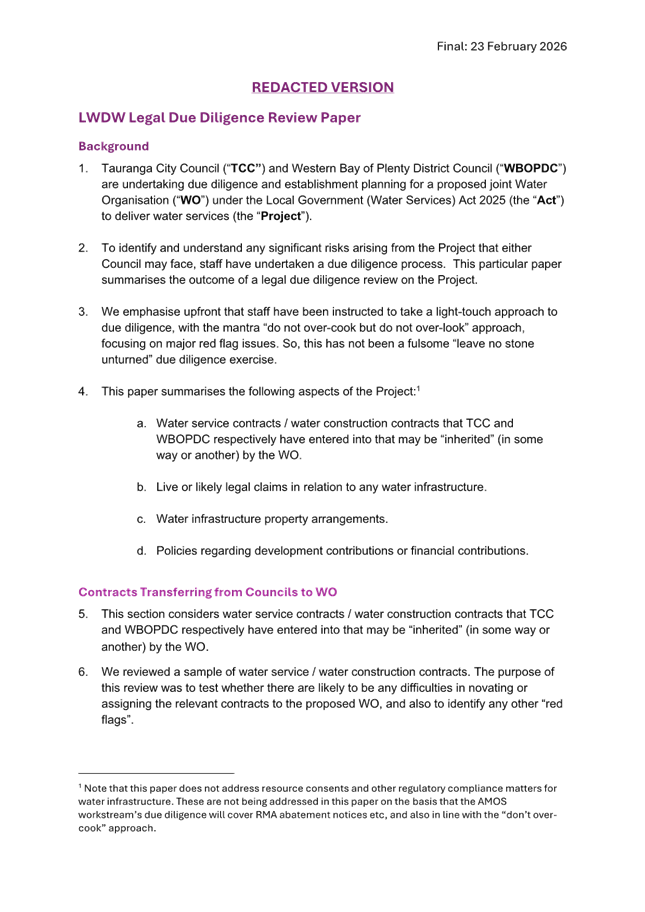
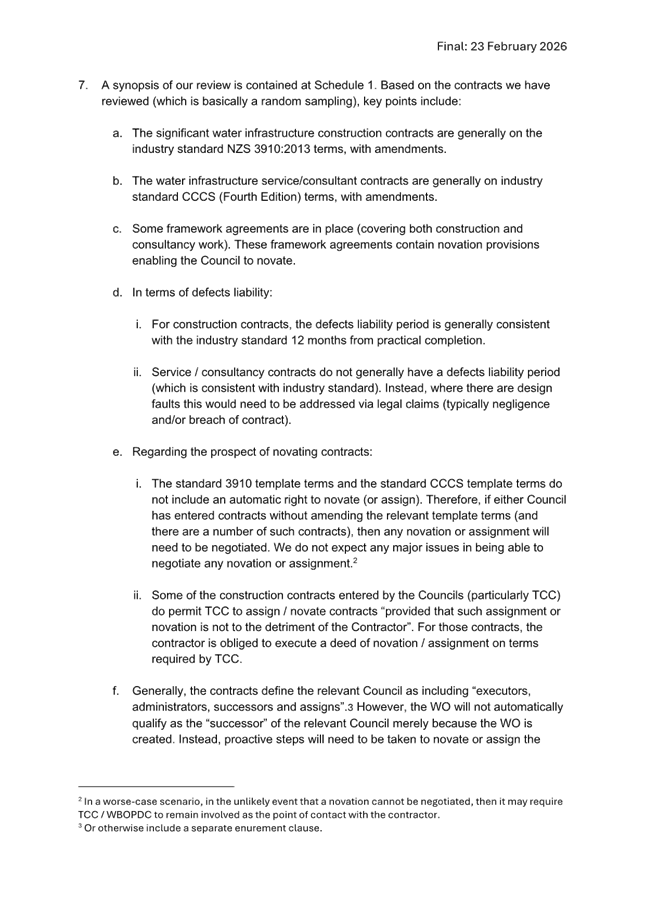
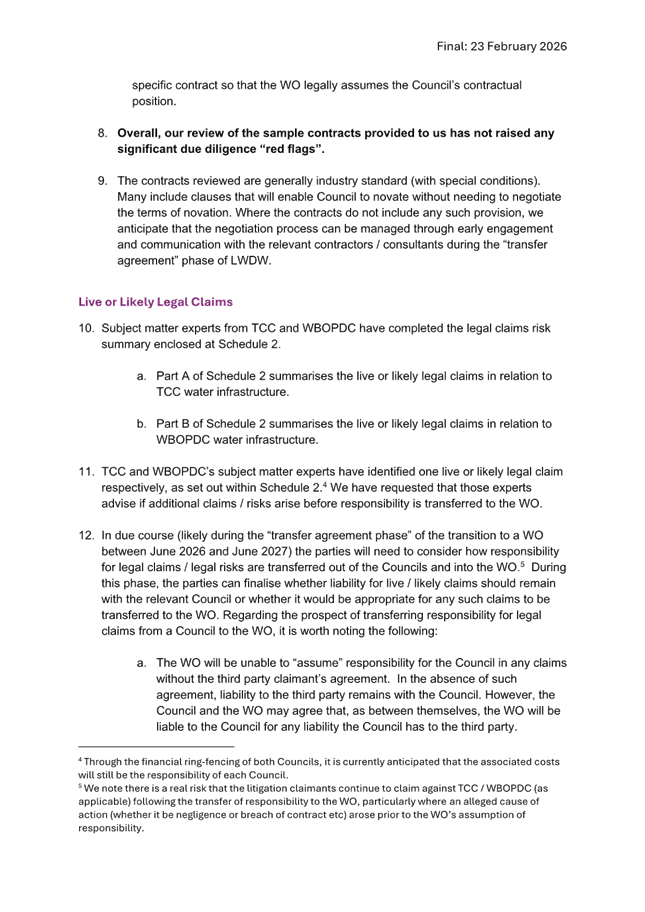
|
Ordinary
Council meeting Agenda
|
24
March 2026
|
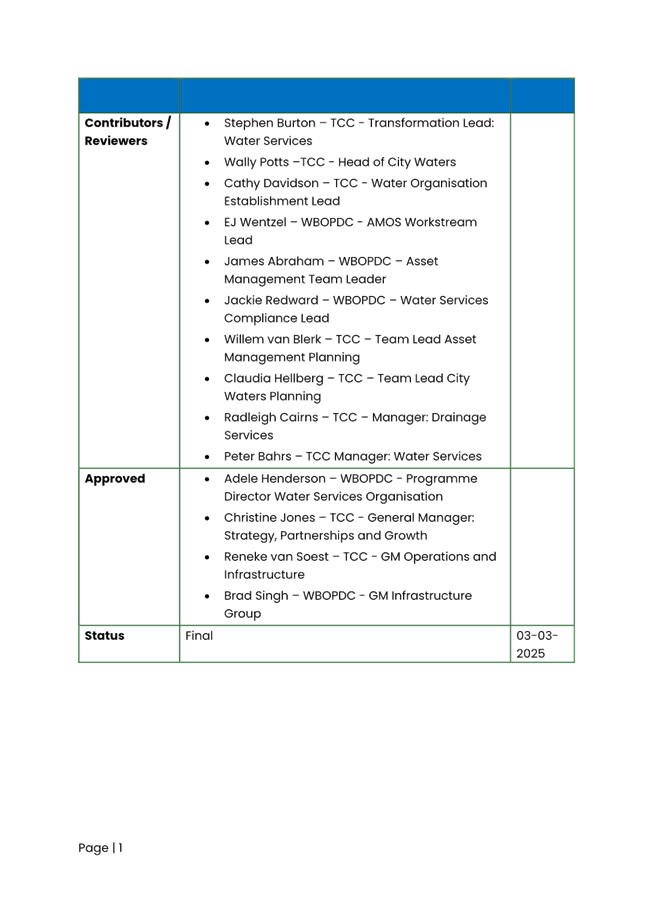
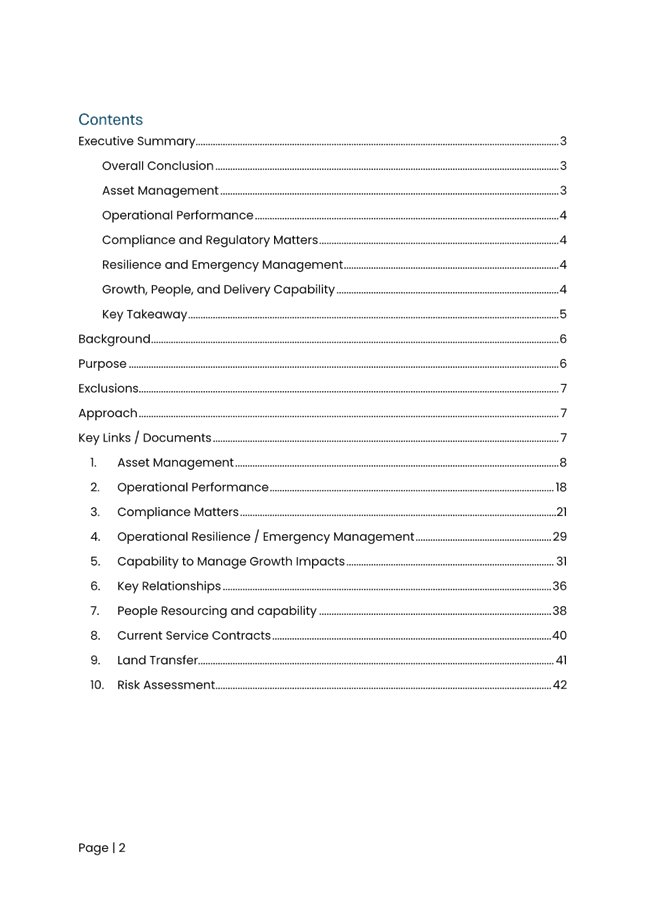
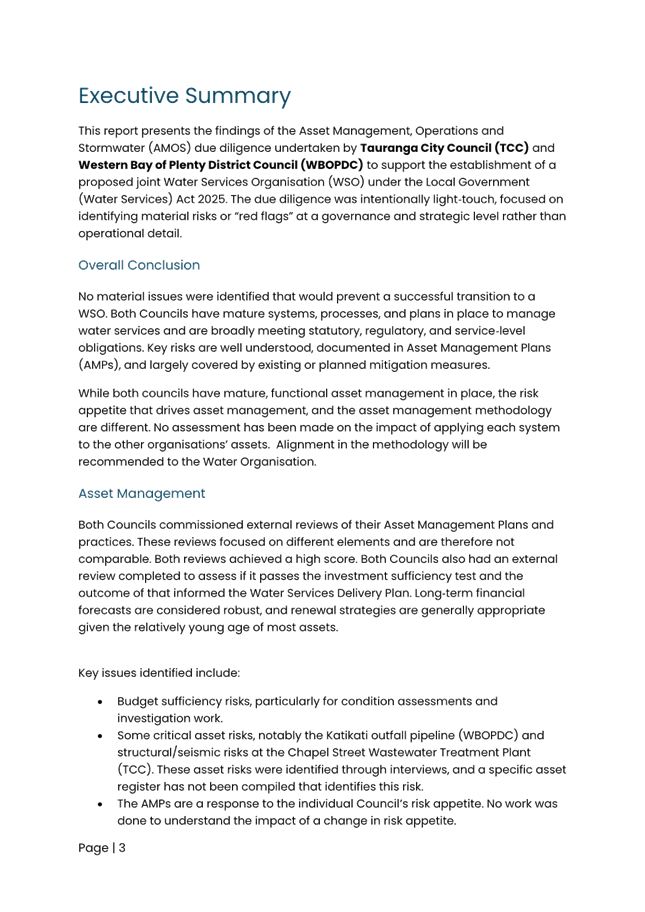
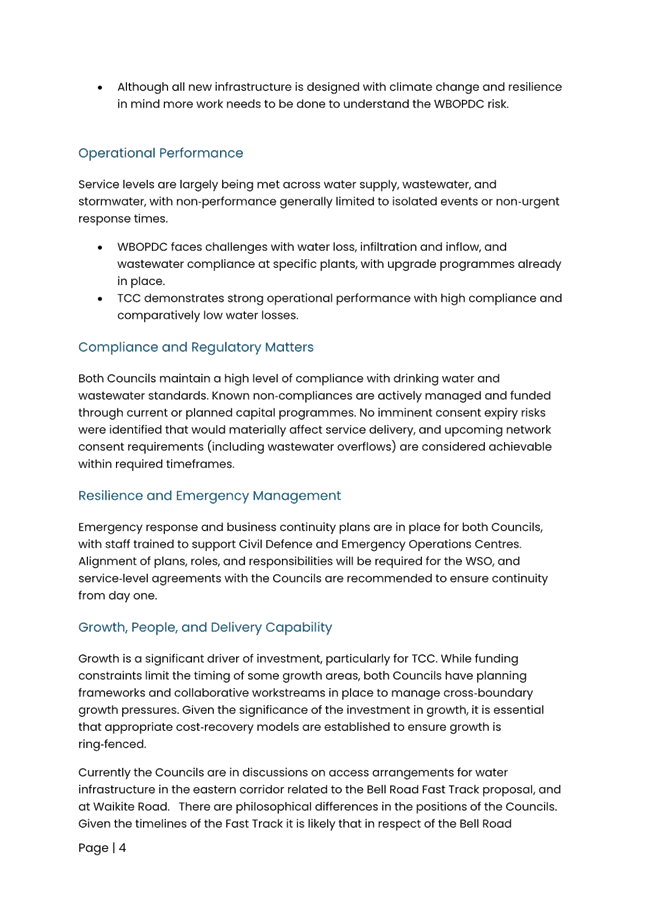
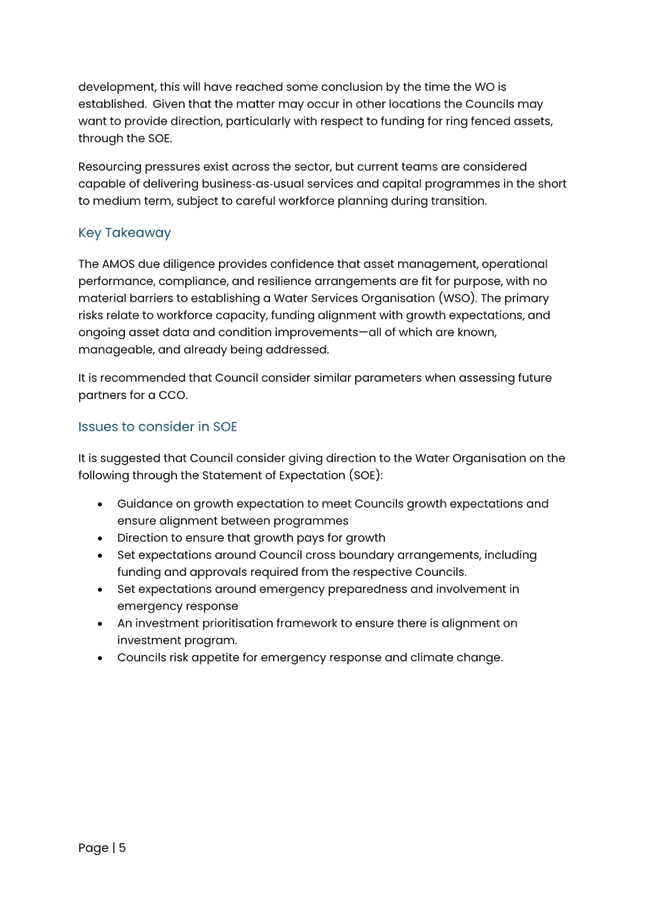
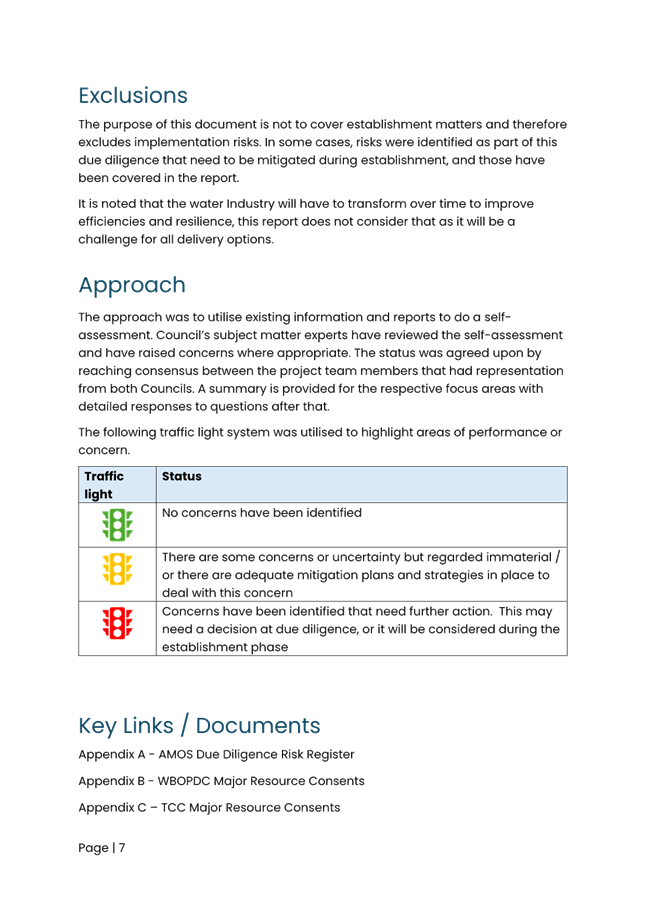
|
Ordinary
Council meeting Agenda
|
24
March 2026
|
11.4 Local Water Done Well
- Financial Implications
File
Number: A19573534
Author: Craig
Rice, Chief Operating and Financial Officer
Kathryn Sharplin,
Head of Finance
Frazer Smith,
Manager: Strategic Finance & Growth
Charles Lane, Team
Leader: Commercial Legal
Fiona Nalder,
Principal Strategic Advisor
Authoriser: Christine
Jones, General Manager: Strategy, Partnerships & Growth
Please
note that this report contains confidential attachments.
|
Public Excluded Attachment
|
Reason why Public Excluded
|
|
Item 11.4 - Local Water
Done Well - Financial Implications - Attachment 5 - PLACEHOLDER -
Confidential Attachments to the Cost Impacts of Establishing a Water
Organisation report
|
s7(2)(a) - The
withholding of the information is necessary to protect the privacy of natural
persons, including that of deceased natural persons.
|
Purpose of the Report
1. This report presents the
expected financial implications for Tauranga City Council (Council) resulting
from establishment of the proposed Water Organisation, seeks approval of
principles to guide the exit of water services from Council.
Options
for Council consideration regarding the approach to managing cross-boundary
access to, and funding of, infrastructure will be circulated separately.
|
Recommendations
That the Council:
(a) Receives the report
"Local Water Done Well - Financial Implications".
(b) Notes that updated financial
modelling has delivered results consistent with the previous results reported
to Council, and that a multi-council Water Organisation remains the most
cost-effective option for the community.
Cross-boundary
(c) Notes
the cross-boundary access to, and funding of, infrastructure is being
addressed as a separate issue.[59]
Financial Due Diligence Report
(d) Accepts, noting (c) above,
that the financial due diligence report identified no issues which would
jeopardise the successful establishment and operation of the proposed Water
Organisation
(e) Notes that implementation of
next steps recommended by the financial due diligence report will be
incorporated into the forward work programme if Council decides to proceed
with establishing a joint Water Organisation with Western Bay of Plenty
District Council.
Cost
Impacts of Establishing a Water Entity
(f) Notes there are likely
to be an estimated $9m to $10m pa of costs remaining in Council, which were
previously allocated as overheads to the water services activity, which will
need to be managed downwards as part of the transition to a Water
Organisation and right sizing of Council.
(g) Approves the following
principles to guide the exit of water services from Council and the right
sizing of the remaining corporate functions at Council.
(i) Set the Water
Organisation up for success.
(ii) De-risk the transfer of
functions.
(iii) Ensure the costs of set-up
for the organisation and reset for the remaining Councils are minimised.
(iv) Follow a process that is fair to
staff affected by the change.
(v) Have a medium-term view that
the water organisation will be an efficient standalone Organisation.
(h) Attachment 5 can be
reviewed for potential transfer into public after 12 months.
|
Executive Summary
2. Tauranga City
Council (Council/TCC) and Western Bay of Plenty District Council (WBOPDC) are
jointly considering the establishment of a sub‑regional Water
Organisation (WO) that would assume responsibility for water supply, wastewater
and stormwater services. Following significant due diligence and financial
analysis, this report presents the financial implications for Council.
3. This report is one
of four Local Water Done Well reports being presented to Council on 24 March
2026. When considered together these reports form a comprehensive package of
work updating Council and seeking key decisions regarding due diligence
matters, ahead of the final decision of whether to progress establishment of a
WO, scheduled for 2 April 2026.
Financial Modelling of Delivery Options
4. Updated financial
modelling (Attachment 1) reaffirms earlier findings: a multi‑council WO
is the lowest‑cost option for households and businesses across the sub‑region.
5. The most expensive
option is retaining water services in‑house (status quo). The primary
driver is that WOs can hold higher levels of debt than councils, reducing short‑term
revenue requirements for capital investment.
6. In contrast,
retaining water services exposes TCC to a forecast breach of its 330% debt
covenant, due to revenue reductions associated with earlier decisions (such as
not proceeding with IFF funding for Te Manawataki o Te Papa and lower
government roading subsidies). Avoiding this breach requires either substantial
revenue increases (~$177m) or downsizing the capital programme by ~$585m over
seven years. Both the multi‑council and standalone WO options maintain
compliance with Council’s debt limits.
Financial Due Diligence Findings
7. The Finance Due
Diligence (Finance DD – Attachment 2) process focused on identifying any
material risks to establishing and operating a joint WO. The findings confirm:
· Debt
identification: Both councils’ water‑related debt is reasonable
and not a barrier to establishing a WO. Combined water debt is approximately
$640.6m. Independent review by Mafic (Attachment 3) confirms the methodology is
sound.
· Treasury
management: No issues were identified. LGFA has confirmed willingness to
lend to water entities, with a five‑year transition period to meet the 8%
FFO‑to‑debt ratio.
· Asset
valuation: Councils will undertake a joint valuation in early 2027 to
ensure consistency. No material asset valuation risks were identified.
· Capital
programme deliverability: Both councils have demonstrated capability to
deliver significant capital programmes; risks relate mainly to timing rather
than feasibility.
· Stormwater
assets: Stormwater networks (excluding land) will transfer to the WO,
though asset identification and valuation require further work.
· Depreciation:
Councils currently use different depreciation funding approaches; the WO will
adopt a unified methodology during establishment.
· Growth
funding: WBOPDC must transition from RMA financial contributions to
development contributions. Future legislation may replace both mechanisms with
development levies. Further work is required but no viability risks are
identified. Cross-boundary growth funding issues are discussed separately,
outside of the Finance DD.
· Price
paths: Councils have agreed to maintain ring‑fencing for at least
three years (with review by year six) to avoid cross‑subsidisation
between Tauranga and Western Bay communities.
8. Overall, Finance
DD identifies no material impediments to the WO’s establishment and
outlines a set of next steps for refining debt positions, asset transfer
arrangements and treasury policies.
Cost Impacts on Council
9. The establishment of
the WO will significantly reshape Council’s organisational structure.
Water services currently contribute 24% of total overhead allocations. Once
water services transfer, approximately $9–$10 million in overheads will
remain within Council and will need to be addressed through organisational
restructuring and right‑sizing. This includes allocations across
governance, executive leadership, digital services, finance, property, and
other corporate functions.
10. The WO will also incur new
standalone corporate costs estimated at $3.6m per year, including governance,
executive leadership, digital systems not provided under service-level
agreements (SLAs), and additional compliance and stakeholder‑related
functions.
11. Transition is planned across
three phases:
· Establishment
(April 2026 – June 2027):
o Preparation
of transfer agreements (assets, staff, contracts)
o Confirmation
of day‑one systems, accommodation, and operational requirements
o Refinement
of overhead allocations and service delivery models
· Go‑Live
(from 1 July 2027):
o Councils
provide transitional SLAs to the WO
o WO
builds internal capability and progressively reduces reliance on councils
· Reset
and Right‑Sizing (post‑transition):
o Councils
adjust remaining corporate structures through the 2027–2037 LTP and
2028/29 Annual Plan
o Redeployment
and staffing impacts managed with fair and transparent processes
o Opportunities
for staff to transition to the WO are prioritised
12. Refer to Attachments 4 and 5
for further information (noting that Attachment 5 is confidential and being
distributed to Councillors outside of the agenda system).
Cross‑Boundary Infrastructure Access and Funding
13. A critical issue requiring
resolution prior to establishing the WO is how to manage cross‑boundary
access to infrastructure, particularly where developments in one
council’s area seek to connect to infrastructure in another
council’s area due to geographic proximity. Key risks include:
o Inability
to ensure growth pays for growth
o inequitable
cost burdens on ratepayers
o loss
of capacity intended for planned growth
o misalignment
with prudent financial management obligations under the Local Government Act
Conclusion and recommendations
14. The overall financial
analysis and due diligence identify no issues that would jeopardise the
successful establishment and operation of a WO. This report recommends
accepting the findings of the Finance DD and approving principles to guide the
exit of water services from Council and the right sizing of the remaining
corporate functions at Council. (Note that this conclusion excludes cross
boundary issues which are addressed separately).
15. Cross boundary issues. A
separate paper will be distributed with further detail and a proposed
recommendation.
Background
16. Tauranga City Council (Council)
is currently working with Western Bay of Plenty District Council (WBOPDC) to
establish a multi-Council Water Organisation, which will have responsibility
for, and management and delivery of, water supply, wastewater and stormwater
(water services) for the sub-region. Both councils will make a final decision
as to whether to proceed with establishment on 2 April 2026.
17. This paper is being presented
to Council on 24 March 2026, ahead of the 2 April 2026 decision date, along
with three companion papers which provide a project update, present due
diligence findings and seek approve of proposed commercial terms.
18. This combined package of work,
together with the 10 February 2026 stormwater options Council paper, respond to
the due diligence commitments outlined in the Council endorsed
‘Multi-Council Water Organisation Summary Plan (Including Due Diligence)’
(CO/25/26/12).
19. The intent of this work package
is to close out the due diligence process ahead of Council’s 2 April 2026
decision of whether to continue with establishment of a WO.
20. This report is focussed on
financial considerations for Council, including:
· Financial
modelling of water service delivery options
· Financial
due diligence
· Cost
implications for Council from establishing a Water Organisation
· Growth
access and funding considerations
Financial modelling of Water
Service Delivery options
21. On 15 August 2025 Council
resolved that the due diligence process was to include detailed comparative
analysis of in-house and council-controlled organisation options (CO/25/0/22).
22. Attachment 1 provides
this information. The following discussion provides high-level takeaways from
this work. Please refer to Attachment 1 for further detail, including graphs
and tables. Note that the financial information for the option for keeping
stormwater services in house with the other two waters in a WO is excluded from
this modelling as this option was not supported by Council on 10 February 2026,
when a decision was made that all three waters would be provided through the
same service delivery model.
23. The costliest option for the
community is the in-house (status quo) option. This is predominantly
because a WO is able to borrow more, which reduces the revenue requirement. A
multi-council WO is the least costly option, as providing water services as a
single council/standalone WO reduces the levels of discount available due to
the smaller size of the WO.
24. This finding aligns with the
findings of the indicative business case (presented to Council in December
2024) and the in-house financial modelling provided to Council via a public
workshop on 23 June 2025.
25. If Council retains the water
service activity in-house, Council would breach its debt covenant (330%) if it
delivered the budgeted capital spend for water. This is due to significant
capital revenue reduction within Council (particularly in the transport
activity) since the Long-Term Plan (2024-2034) was adopted. There is also more
debt arising from the decision to not use IFF funding for Te Manawataki o Te
Papa.
26. If this option was selected
Council would need to increase revenue by around $177m or reduce capital (and
debt) by $585m over the forecast 7-year period (or a combination of these two
options).
27. Council’s debt to revenue
ratio remains the same under the modelling for the multi-council WO and the
standalone WO, and does not result in a breach to Council’s debt
covenant.
FinancE Due Diligence report
28. The Finance Due Diligence
report (Finance DD) was prepared jointly by Council (TCC) and WBOPDC staff,
with an independent desk-top review of the approach taken towards identifying
debt. The high-level findings from the Finance DD are presented below, please
review to Attachment 2 for further detail.
29. The due diligence approach
focussed on identifying those issues which would materially jeopardise the
establishment and operation of a Council (TCC) and WBOPDC WO, and if needed,
identify areas where further work will be required during the establishment
phase of the WO (the period leading up to ‘go live’ on 1 July
2027).
30. Both councils have agreed for
no price harmonisation (ring-fencing) for an initial period of at least three
years. This means that the Tauranga and Western Bay communities will not be
subject to cross-subsidisation. This has been a key consideration when
assessing risk as part of the Finance DD process, as it has resulted in a focus
on identifying only those financial issues which would jeopardise the
establishment and operation of the WO as a whole.
Confirmation of debt
31. No debt related issues were
discovered which would materially jeopardise the establishment and operations
of the proposed WO.
32. Table 1 below sets out each
council’s debt position, as at 30 June 2025. Council’s water
related debt is $489.3m. The combined water related debt for Council and WBOPDC
is $640.6m. and will require ongoing management and monitoring by the proposed
WO. However, the ability to hold higher levels of debt than councils, combined
with the forecast revenue and capital expenditure programme, provides assurance
that the WO will be able to maintain the Local Government Funding
Agency’s (LGFA’s) 8% Free Funds from Operations (FFO) requirement
and meet financial sufficiency requirements.
33. Table 1 shows that WBOPDC water
related debt is 86% of their total debt, much higher that Council’s 35%.
However external expert advice provided assurance that this is not unusual for
smaller councils with similar geographic and demographic characteristics. The
capital expenditure programme for rural councils is often driven by transport
and water service activities, with the transport activity predominantly funded
from government subsidies. Table 1 also compares debt to assets, and shows that
WBOPDC’s water debt is a higher proportion to their water assets.
Table
1: Water debt summary
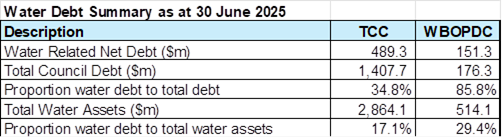
34. Due to the impact of
transferred debt on the future delivery programme of the WO, Council and WBOPDC
contracted independent expert Mafic to complete a review of the methodology and
findings of the councils’ debt identification. This review was completed
at the end of February 2026 and is provided as Attachment 3. Overall,
Mafic assessed the approach used by the councils to assess debt as reasonable
and that the proportion of total debt attributed to the water activities to be
accurately derived.
35. Next steps will include
finalising the WO’s debt position as at 1 July 2027.
Treasury management
36. The treasury function includes
managing borrowing, debt levels and hedging of debt, and ensuring sufficient
liquidity for unplanned funding needs.
37. No treasury management concerns
were identified which would impede the establishment and operation of the
proposed WO.
38. The due diligence for this
included engaging with the LGFA, which has confirmed that it is willing to
provide lending to water entities (i.e. the proposed WO). This provides the WO
with access to the LGFA’s competitive borrowing rates. It also de-risks
the process of transitioning Council debt and associated hedging to the new WO.
39. The WO’s borrowing
capacity will be limited by the 8% FFO to debt ratio (as mentioned above). The
LGFA will provide five years for the WO to reach compliance with the FFO to
debt ratio. In year one the WO is forecast to sit outside of the 8% ratio, but
it is expected to be compliant for the remaining 10 years forecast by the Water
Services Delivery Plan.
40. If the two councils decide to
continue with the establishment of a joint WO, the next steps will include
appointment of treasury advisors to support the transfer of debt and associated
hedging, and on setting the WO up as a borrower with the LGFA and novating
across existing debt.
Assets and valuation
41. Most of the asset related due
diligence has occurred as part of the AMOS (asset management, operations and
stormwater) workstream. The Finance DD has focussed specifically on the
financial implications relating to the transfer of assets to the proposed WO.
42. The primary consideration is
ensuring that the methodology applied to asset valuations is consistent across
the two councils.
43. A further significant
consideration is the impact of asset condition on the financial position of the
proposed WO. This is one driver for the ‘ring-fencing’ approach,
which ensures that the cost of any asset failures will essentially be borne by
the relevant community (i.e. failure of Council’s assets will be met by
the Tauranga community and vice versa). However, there may still be an impact
on organisational resources.
44. To address these two concerns,
Council and WBOPDC have agreed to:
· A
joint valuation exercise in the first half of 2027, prior to ‘go
live’ date of 1 July 2027. This will ensure that the assets transferred
to the WO are valued on a consistent, transparent and accurate basis.
· Further
analysis during the establishment period to determine the financial impacts of
asset condition and further work on assessing asset condition to ensure current
assumptions are correct.
45. TCC elected members have also
requested that each Council engages a peer review of the valuation.
46. This proposed work means that
there are no anticipated asset valuation issues which would jeopardise the
establishment and operations of the proposed WO.
Deliverability of forecast
capital expenditure
47. The Water Services Delivery
Plan (WSDP) sets out a significant capital programme for both councils. This is
a key part of ensuring the WO meets the sustainability requirements put in
place by the Local Water Done Well reform programme.
48. The deliverability and
affordability of these capex programmes was assessed for each council as part
of the Finance DD process.
49. No issues were identified which
would significantly impact the establishment and operation of the proposed WO.
Both councils have consistently achieved high levels of capital project
delivery in recent years, providing confidence in the ability of the WO to
deliver the combined forward capital works programme. Where risks were
identified, these largely related to timing of delivery rather than the cost of
delivery.
Stormwater assets
50. Both councils have confirmed
that the responsibility for stormwater will transfer to the proposed WO, along
with stormwater assets (excluding land, with exceptions to this on a
case-by-case basis).
51. Work is needed to confirm which
stormwater assets will transfer and the value of these assets, and
consideration will need to be given to maintenance contracts to ensure future
maintenance and renewal costs are allocated equitably. These tasks will form part
of the establishment work programme leading up to 1 July 2027.
52. No issues were identified which
would jeopardise the successful establishment and operation of the proposed WO.
Depreciation
53. Depreciation refers to the
financial approach adopted to manage the wearing out of assets over time.
Currently the two councils take different approaches to funding depreciation.
54. Council charges rates based on
depreciation calculations and then use this to fund the capital expenditure for
renewals (the replacement of existing assets). WBOPDC do not do this, instead
they charge rates for debt retirement and renewals.
55. The WO will need to adopt a
consistent methodology for meeting the costs of depreciation, ideally before
establishment. Non price harmonisation will not be able to be removed until a
consistent methodology is developed. This work will commence as part of the
establishment work programme, prior to the ‘go-live’ date of 1 July
2027. This is not assessed as a significant issue.
Growth funding
56. Council uses development
contributions as a method to fund growth (under the Local Government Act 2002).
WBOPDC currently uses financial contributions under the Resource Management Act
1991 (RMA), but will need to transition in the short-term to development
contributions due to the replacement of the RMA.
57. Ultimately, new legislation is
expected to replace development contributions with development levies, however
the timing of this is uncertain. More detail regarding this is provided by the
Legal Due Diligence paper. Refer to the companion Council report ‘Local
Water Done Well – Due Diligence’ which is also on the agenda for 24
March 2026.
58. In the short-term, WBOPDC will
need to develop new policies to enable collection of development contributions.
59. It is recommended that growth
funding mechanisms for the WO are addressed prior to the ‘go live’
date. However, this is not anticipated to substantially impact on the viability
of the proposed WO.
60. Additionally, there are
decisions to be made regarding cross-boundary access to infrastructure funded
by each council. This is discussed in more detail later in this report.
Price paths
61. The councils have agreed to an
initial non-harmonisation approach (‘ring-fencing’), which will
apply to debt, operational expenditure and revenue. This approach recognises
that the two councils are transferring different levels of debt/assets and
revenue charges, and avoids cross-subsidisation.
62. It has been discussed, in
principle, that ring fencing will be revisited three years following the
‘go live’ date, with a formal review required within six years.
Metrics that would enable price harmonisation (the removal of ring fencing) have
yet to be developed, however they may include:
· Comparable
price per connection
· Similar
individual FFO to debt ratios
· Comparable
level of assessment and reliability of asset condition ratings
· Consistent
basis for funding of depreciation and renewals
63. The ring-fencing approach has
been adopted as an enabler for the establishment of a joint WO, and the
proposed review is not considered a significant issue which would jeopardise
the WO.
Next steps
64. The Finance DD identified no
issues which would jeopardise the successful establishment and operation of the
proposed WO, however it did identify matters which need further attention and
management prior to the ‘go live’ date of 1 July 2027. If Council
decides to proceed with the establishment of the WO, the following next steps
are recommended by the Finance DD.
· Continued
updates to each council’s water activity debt through to the transfer
date
· Confirmation
of any adjustments arising from local council decisions, and agreement on
transfer of assets and other liabilities that may impact debt balances
· Ongoing
monitoring of capital programme delivery impacts on debt levels, validating any
changes to revenue or depreciation treatment that influence debt movements
· Appointment
of treasury advisers to support the transfer of debt and associated hedging
· Treasury
management setup activities will continue to be progressed collaboratively and
will include:
o preparing
and documenting the novation of debt by each council;
o preparing
and documenting the novation of interest rate hedging;
o developing
a treasury policy and draft treasury strategy;
o determining
and establishing LGFA and/or other borrowing facilities and operational banking
requirements; and
· Establishing
transactional banking arrangements and Day 1 working capital facilities,
informed by the WO CEO or CFO once appointed
· A
co-ordinated 2027 revaluation using a single independent valuer - to ensure
that all asset transfers are fair, reasonable, and based on a fully consistent
and transparent valuation approach.
· Agreement,
as part of the revaluation, how asset condition will be considered.
· Confirm
if any further work is required to understand each Council’s asset
condition prior to the revaluation process.
· Confirm
which assets are to be transferred and ensure that the same classes of assets
are transferred by both councils
· Confirm
treatment of any investment properties, Intangible assets or forestry assets
that may need to be transferred
· Ongoing
monitoring of project timing, costs, and any unplanned capital requirements
through to 1 July 2027
· Confirm
which land assets within the wider water activities will be retained by the
councils and identify any associated debt.
· As
part of the asset revaluation process, compare and match the useful lives of
each asset type for consistency.
Cost impacts of establishing a
Water Organisation
65. A comprehensive discussion of
the expected costs of establishing a WO is provided as Attachment 4 and
confidential Attachment 5. Attachment 5 will be distributed separately
to Councillors outside of the agenda system, as it contains sensitive
information regarding employment and staff numbers.
66. As with the other sections of
this report, this is a high-level summary only, focussed on overarching
considerations, and the detailed discussion is provided by the Attachments.
67. The cost impacts of
establishing a WO have been analysed to assist the successful transition of
water services to a standalone external organisation. The indicative business
case, presented to Council in December 2024, noted that Council would be left
with higher corporate overheads and Council passed the following resolution in
response (CO25/2/49).
Notes
that there is projected to be a stranded cost disbenefit to the remaining
organisation (initial estimate between $7-$10m) with potential for a
significant portion of this cost to be recovered in the short to medium term
through transitional arrangements between Council and the CCO. Further work is
required on stranded costs.
68. This report, and associated
Attachments 4 and 5, respond to the above resolution. WBOPDC have also
undertaken a similar exercise, and high-level summaries of their findings are
included within confidential Attachment 5.
Current provision of corporate services
69. The water services activity is
currently supported by a range of services which are provided at a corporate
wide level. These corporate services include digital services, accommodation,
finance, communications, executive management and governance. Council currently
meets the cost of these corporate services by charging externally facing
activities (such as water services) an overhead allocation.
70. The water services activity
provides 24% of the overall total allocated overheads, and compromise
approximately 13% of expenditure for water services. This level of expenditure
on corporate services falls within industry benchmarks for utility companies.
Figure 1 below shows how these overheads are distributed across the range of
corporate services.
Figure
1: activities making up allocated costs to water services 2025/2026
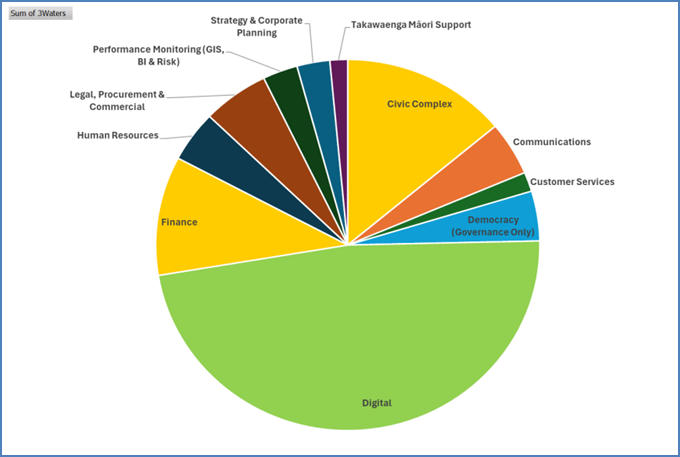
71. Establishing the WO will
include consideration of how these services are delivered to the WO in the
future. Some services will move to in-house provision by the WO, and some will
continue to be provided by Council to the WO via service level agreements. However,
it is expected that the WO will transition over its first one to two years of
operation to a position where it operates largely independently from Council,
with minimal ongoing service level agreements with Council.
Transitioning to a Water Organisation
72. If Council decides to continue
with establishing a WO, the transition is proposed to be guided by the
following principles
i. The water organisation is set up for
success.
ii. De-risk the transfer of functions.
iii. Ensure the costs of set-up for the
organisation and reset for the remaining Councils are minimised.
iv. Follow a process that is fair to staff affected
by the change.
v. Have a medium-term view that the water
organisation will be an efficient standalone Organisation.
73. Three stages are involved in
setting up the WO and transitioning to a largely in-house corporate services
model.
i. Establishment stage prior to 1 July
2027,
ii. Go-live with Councils supporting the
WO through transition,
iii. Independent standalone WO and reset plan
for both Council and WBOPDC to resize activities and functions impacted by the
establishment of the new water entity.
Stage 1: Establishment
74. This period runs from April
2026 to 1 July 2027 (the ‘go-live’ date). A transfer agreement will
be developed which will manage the transfer of assets, staff and contracts to
the WO. Water service support costs will be further considered during this
period, and there will be a focus on standing up those services which need to
be in place from day 1 of operations, such as accommodation and access to
business systems.
Stage 2: Go-live
75. This is the period directly
following 1 July 2027. The WO, Council and WBOPDC will work together to
collectively support the successful operation of the WO and the areas of both
councils affected by the transition. The focus will be providing a smooth transition
experience for customers/the community, suppliers and staff.
76. Service level agreements will
be put in place for a number of activities. However, most of these arrangements
will be transitional, as the WO establishes itself and looks for efficiency
gains.
77. Confidential Attachment 5
(circulated via Stellar) provides the results of early work identifying which
services will be directly transferred, which services may be transferred (staff
and systems) during the transition period, and the remaining costs to be
managed through a Council reset post-transition. Figure 2 below shows which
services are expected to be shared over the short-term, which will have
short-term service level agreements, and which are expected to have a
longer-term service level agreements.
Figure
2: Council and WO – indicative service level agreements
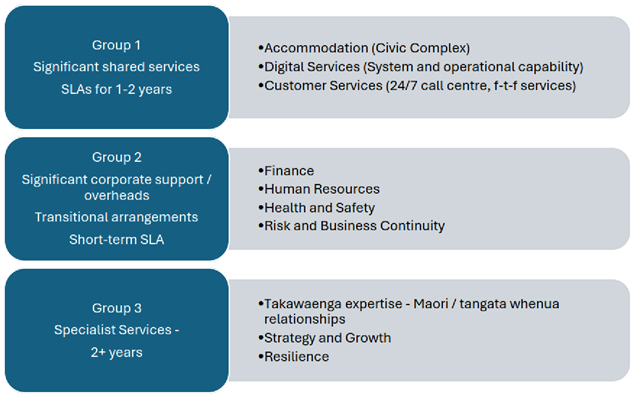
78. There are some allocated costs
across governance / executive management and some aspects of remaining
allocators where costs may not form part of transfer of staff or SLAs. These
costs are estimated to total about $9m-$10m pa for Council.
79. The WO will also have
additional corporate costs which will not be covered by service level
agreements with the two councils, or by transfer/transitional arrangements.
These are estimated to cost $3.6m pa and are summarised as follows:
· Water
organisation Board (estimate $440k pa)
· Water
organisation executive (estimate $1.8m pa)
· Digital
system operational costs not part of SLA (note licencing SCADA, Lutra, and
Watercare already in place- estimate $850k)
· Additional
compliance stakeholder and capital delivery related costs ($500k).
Stage 3: Reset and
right-size existing Council operations post-transition
80. Both Council and WBOPDC are
anticipated to require a reset and right-size of existing operations once the
WO has transitioned to being a largely independent organisation. Changes are be
expected to be signalled through the 2027-37 Long-term Plan and the subsequent
annual plan for 2028/29.
81. Consideration will be given to
working with the WO to ensure that impacted staff have access to opportunities
at the WO where suitable (ahead of the wider employment market).
Next steps
82. If Council decides to proceed
with establishing a joint WO, upcoming work will include:
· Decisions
around accommodation, customer services and digital service level agreements,
and arrangements with the two councils and the WO.
· Consideration
of options for transferring to the WO - services and opportunities for relevant
staff
· Consideration
of transitional requirements on the two councils and preparation for reset and
right sizing
· Consideration
of new support costs, including the Board, executive, digital and other support
requirements.
· Representation
of these changes through the LTP process.
Options Analysis –
Financial Implications
Financial Due Diligence report
83. Option 1 – accept that no
financial due diligence issues were identified that would jeopardise the
successful establishment and operation of the proposed Water Organisation and
approve the next steps outlined in the financial due diligence report. (Noting
that cross-boundary access to, and funding of, infrastructure is being managed
separately).
|
Advantages
|
Disadvantages
|
|
Allows
for the project to progress to the next stage, the decision of whether
to proceed with establishment of the proposed WO.
Provides
direction regarding next steps and actions, allowing staff to
continue work, subject to the 2 April 2026 decision.
Recognises
the subject matter expertise of the staff and consultants who have
prepared the due diligence reports.
|
None identified.
|
84. Option 2 – do not accept
that no financial due diligence issues were identified that would jeopardise
the successful establishment and operation of the proposed Water Organisation
and do not approve the next steps outlined in the financial due diligence
report.
|
Advantages
|
Disadvantages
|
|
None identified.
|
The
disadvantages of option 2 are converse of the advantages of option 1.
Increases the risk of
needing to revise Council’s preferred option for water delivery (a
joint WO). This in turn would trigger consultation and the need to revise the
Water Services Delivery Plan by 3 September 2026.
|
Cost impacts of establishing a Water Organisation
85. Option 1 – Approve the
following principles to guide the exit of water services from Council and the
right sizing of the remaining corporate functions at Council.
i. The water organisation is set up for
success.
ii. De-risk the transfer of functions.
iii. Ensure the costs of set-up for the
organisation and reset for the remaining Councils are minimised.
iv. Follow a process that is fair to staff affected
by the change.
v. Have a medium-term view that the water
organisation will be an efficient standalone entity.
|
Advantages
|
Disadvantages
|
|
Sets clear direction
for managing the exit of water services from Council.
Provides a focus on
enabling the Water Organisation to be successful and largely independent.
Recognises there may be
staff impacts and that these need to be managed fairly.
Prioritises
cost-minimisation.
|
May make it more
difficult to prioritise outcomes which are not envisaged by the principles
above.
|
86. Option 2 – do not approve
the following principles to guide the exit of water services from Council and
the right sizing of the remaining corporate functions at Council.
i. The water organisation is set up for
success.
ii. De-risk the transfer of functions.
iii. Ensure the costs of set-up for the
organisation and reset for the remaining Councils are minimised.
iv. Follow a process that is fair to staff affected
by the change.
v. Have a medium-term view that the water
organisation will be an efficient standalone entity.
|
Advantages
|
Disadvantages
|
|
Preserves flexibility
of outcomes, ensuring that outcomes not envisaged by the principles above can
still be prioritised.
|
Does not provide
clarity regarding Council’s priorities and preferred transition
principles.
May mean that important
principles, such as minimising costs whilst still treating staff fairly are
not managed from a balanced perspective.
May mean that outcomes
for the Water Organisation are overlooked in favour of achieving positive
Council outcomes.
|
Cross Boundary Infrastructure
ACCEss and FUNding
87. An issues and options paper
addressing cross-boundary infrastructure access and funding, providing further
information and options, and making a recommendation, will be circulated
separately to this Council report as Attachment 6 (see Placeholder).
88. The discussion regarding
cross-boundary infrastructure access and funding has been prompted by instances
where development is planned adjacent, or in proximity, to the boundary line
between two Councils. In these instances, developments in one council’s
area often seek to access infrastructure in the neighbouring council area. This
is generally because the neighbouring council infrastructure provides the
closest connection (and therefore costs less to connect to).
89. The concern with this approach
is that each council can only collect funding for growth from within their
boundaries. If development outside of a council’s area connects into that
council’s infrastructure, contributing to the cost of that infrastructure
can currently only be secured by agreement and not legally required. Water
infrastructure is extremely expensive to deliver, and the development
contributions collected to pay for that infrastructure can be millions to tens
of millions of dollars for medium to large scale developments.
Statutory Context
90. The matters in this report form
part of Council’s overall response to the government’s Local Water
Done Well reform programme and associated legislation. There are no
specific statutory compliance matters to be considered in respect of this
report.
STRATEGIC ALIGNMENT
91. Council’s overall
response to the Local Water Done Well reforms supports delivery of
the following community outcomes.
|
Contributes
|
|
We are an inclusive city
|
☐
|
|
We value, protect and enhance the environment
|
ü
|
|
We are a well-planned city that is easy to move
around
|
ü
|
|
We are a city that supports
business and education
|
☐
|
|
We are a vibrant city that embraces
events
|
☐
|
92. This report, and the wider
water reform programme, are part of ensuring Tauranga has water services that
are sustainable, affordable, well-planned and maintained, and of high
quality.
Legal Implications / Risks
93. The range of options for
managing cross-boundary access to, and funding of, infrastructure have
differing legal implications and levels of risk for Council. Refer to the
issues and options paper, and associated recommendation/s circulated separately
to this paper.
TE AO MĀORI APPROACH
94. Council is working in
partnership with Tangata Whenua on the establishment of the proposed
WO, ensuring that Council’s Te Ao Māori principles are considered
and integrated into project work. For more detail on this process please refer
to the Te Ao Māori section of the accompanying 24 March 2026 Council
report ‘Local Water Done Well – Project Update’ and to the
recommendations made by the Project Update report.
95. Additionally, the
accompanying 24 March 2026 Council report ‘Local Water Done Well –
Commercial Terms’ recommends forming a Joint Committee which
includes Tangata Whenua, alongside elected members from Council and WBOPDC. Inclusion
of Tangata Whenua on the Joint Committee is an important part of
enabling Tangata Whenua involvement in governance discussions (noting
that the Committee is not a decision-making body).
CLIMATE IMPACT
96. This report has no
direct climate impacts, however the proposed WO will enable an
integrated sub-regional approach to the management and delivery of
water, wastewater and stormwater services, providing opportunities
for improved climate and environmental outcomes over time.
Consultation / Engagement
97. Engagement regarding the option of establishing a
multi-council WO occurred alongside Council’s 2025/2026 Annual Plan
consultation process.
Significance
98. The Local Government Act 2002
requires an assessment of the significance of matters, issues, proposals and
decisions in this report against Council’s Significance and Engagement
Policy. Council acknowledges that in some instances a matter, issue,
proposal or decision may have a high degree of importance to individuals,
groups, or agencies affected by the report.
99. In making this assessment,
consideration has been given to the likely impact, and likely consequences for:
(a) the current
and future social, economic, environmental, or cultural well-being of the
district or region
(b) any persons who are likely to be
particularly affected by, or interested in, the decisions.
(c) the capacity of the local authority
to perform its role, and the financial and other costs of doing so.
100. In accordance with the considerations
above, criteria and thresholds in the policy, it is considered that the
decisions are of high significance overall.
101. The decision to accept the findings of the
Finance DD is assessed as of medium significance. It is a key step in
progressing towards the decision to establish a WO, but carries no direct
financial implications.
102. The decision to adopt principles to guide
the exit of water services from the organisation is assessed as of medium
significance. No engagement is required, and it is not recommended as these
principles are focused on managing the internal impacts of establishing a WO
and have a logical flow from previous decisions (such as the principles in the
Commitment Agreement with WBOPDC).
103. Recommendations regarding cross-boundary
infrastructure will be circulated separately, with a separate significance
assessment.
ENGAGEMENT
104. Taking into consideration the above
assessment, that the decisions are of medium to
high significance, and that public consultation has previously occurred on
water service delivery options, officers are of the opinion that no
further engagement is required prior to Council making a
decision.
Next Steps
105. Progress the next steps as outlined by the
Finance DD and contained within this report (subject to the decision of whether
to proceed with establishing a WO, due 2 April 2026).
Attachments
1. Financial
Modelling of Water Delivery Options - A19929793 ⇩ 
2. Finance
Due Diligence Report - A19929916 ⇩
3. Independent
Water Debt Review - A19929993 ⇩ 
4. Cost
Impacts of Establishing a Water Organisation - A19930495 ⇩
5. PLACEHOLDER
- Confidential Attachments to the Cost Impacts of Establishing a Water
Organisation report - A19930535 - Public Excluded
6. PLACEHOLDER -
Cross-Boundary Issues and Options Paper - A19933358 ⇩
|
Ordinary
Council meeting Agenda
|
24
March 2026
|
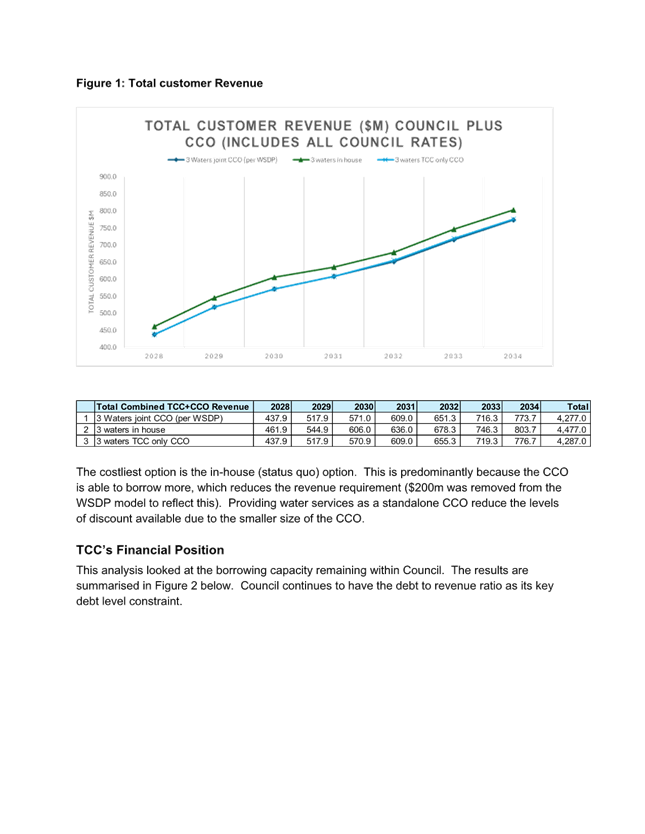
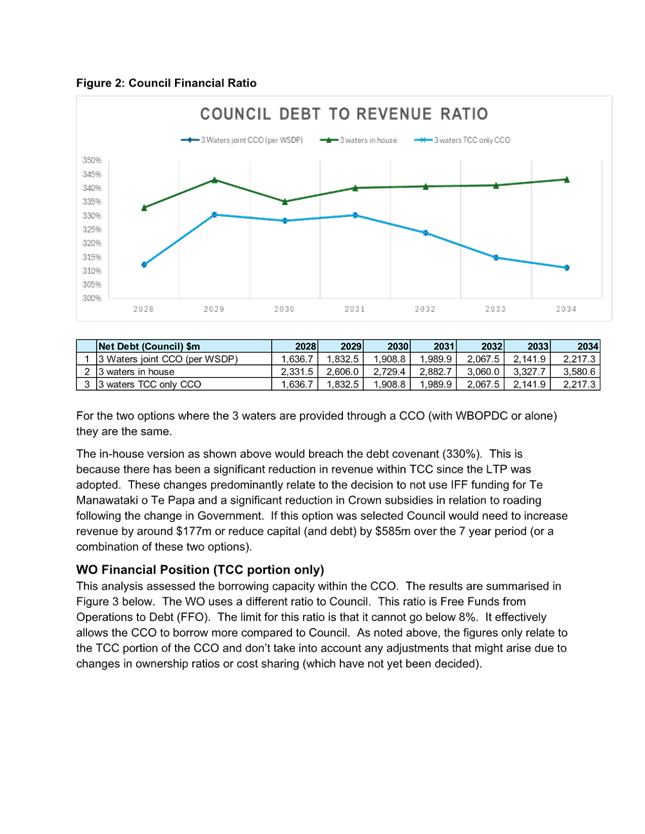
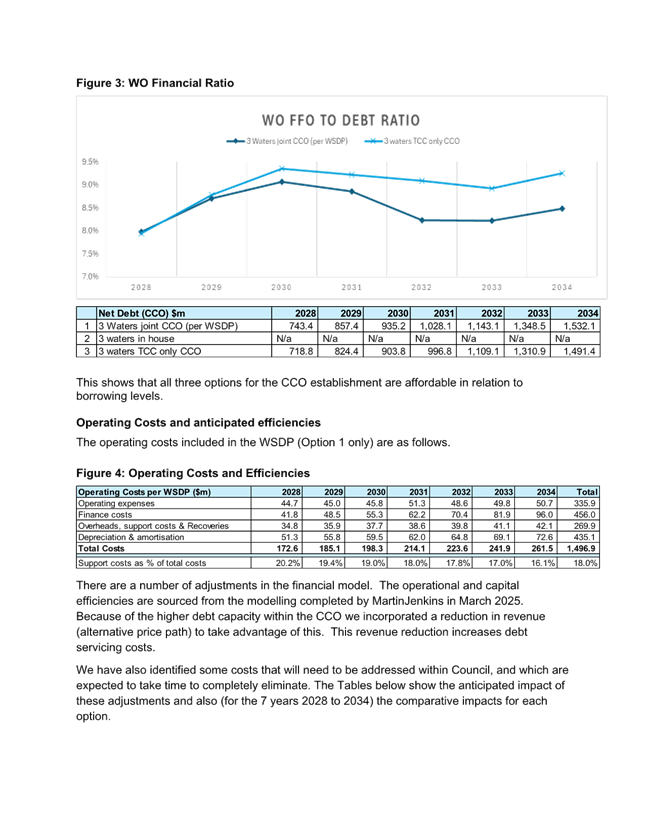
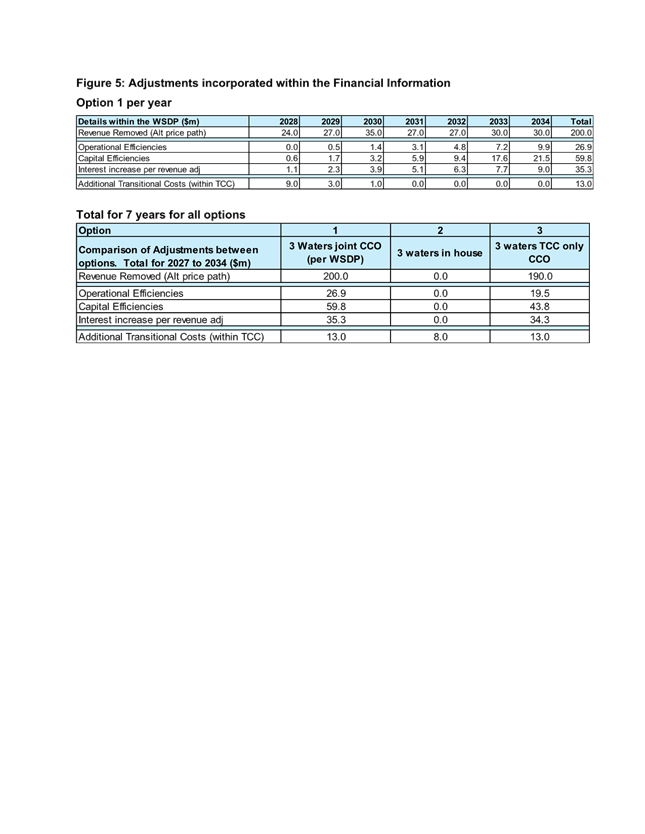
|
Ordinary
Council meeting Agenda
|
24
March 2026
|
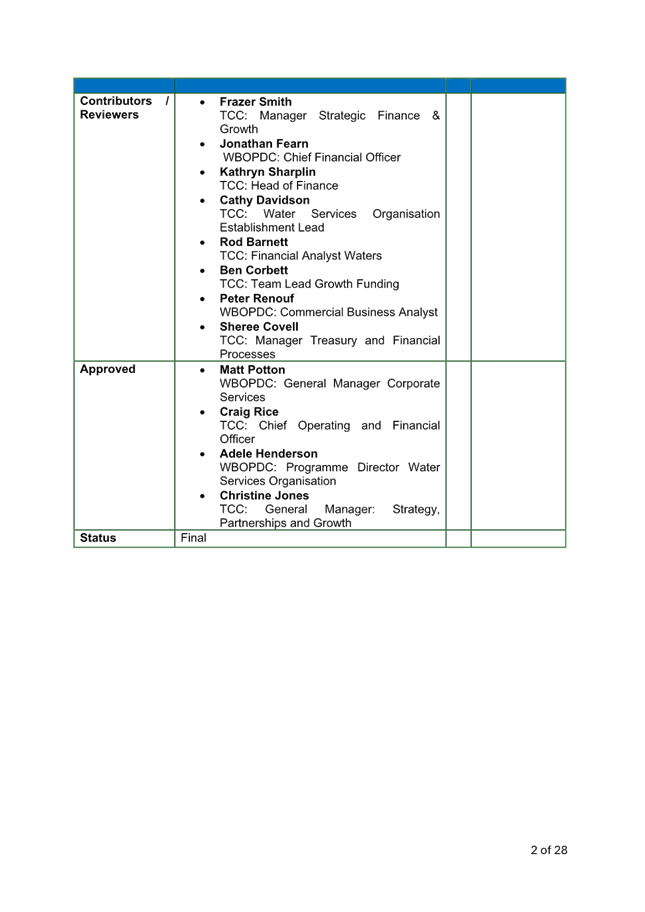
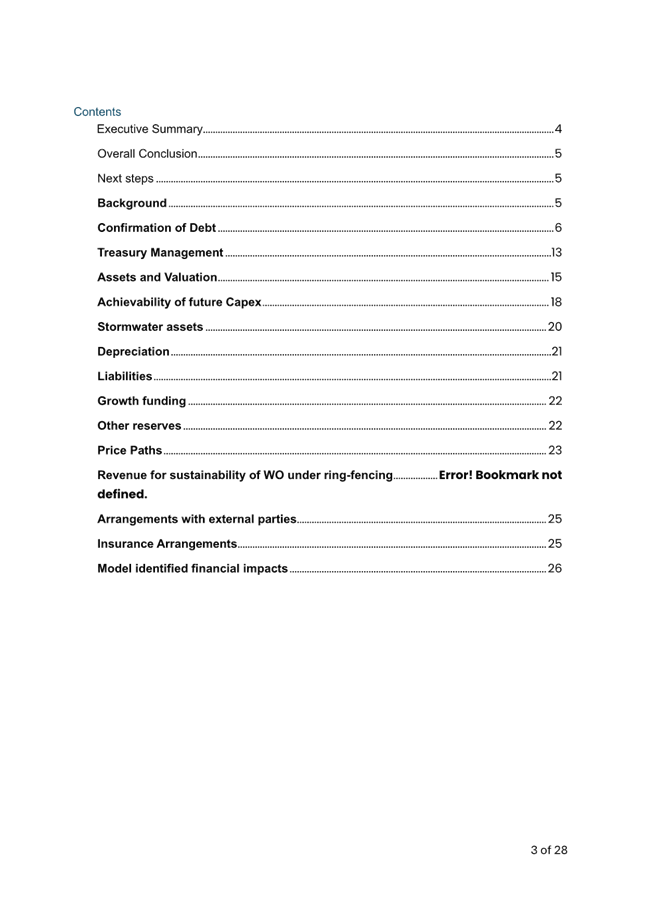
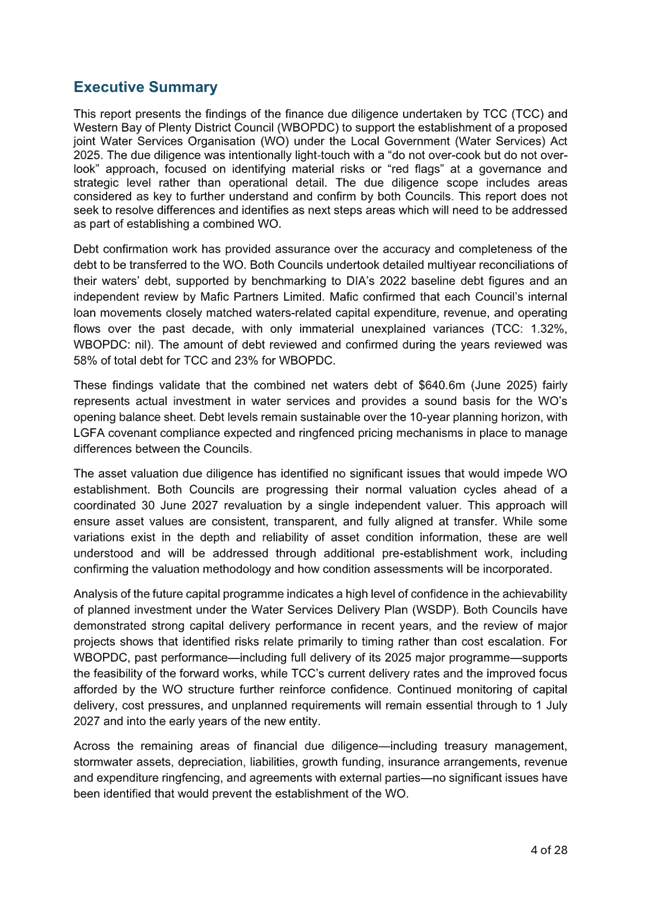
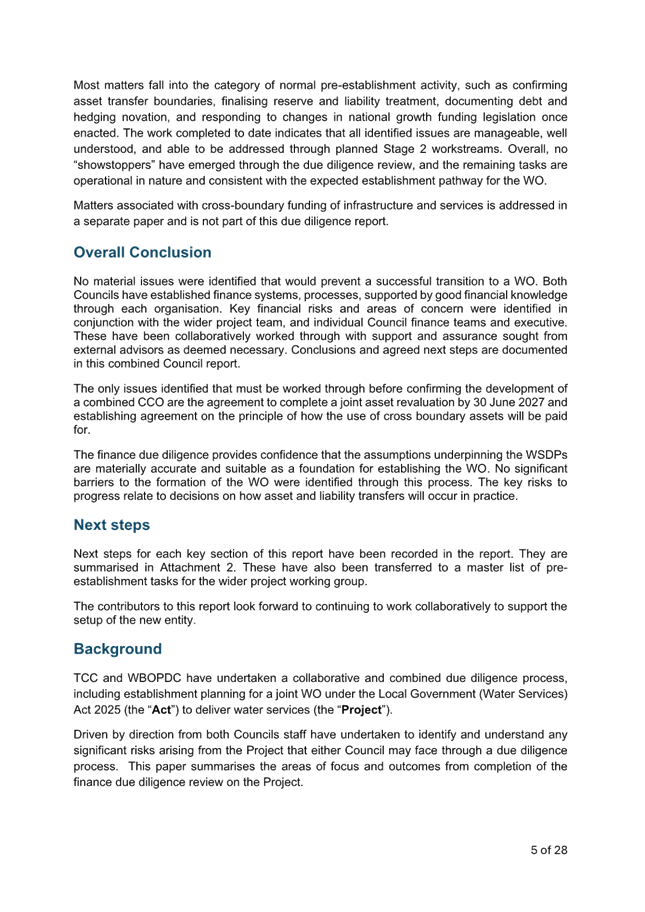
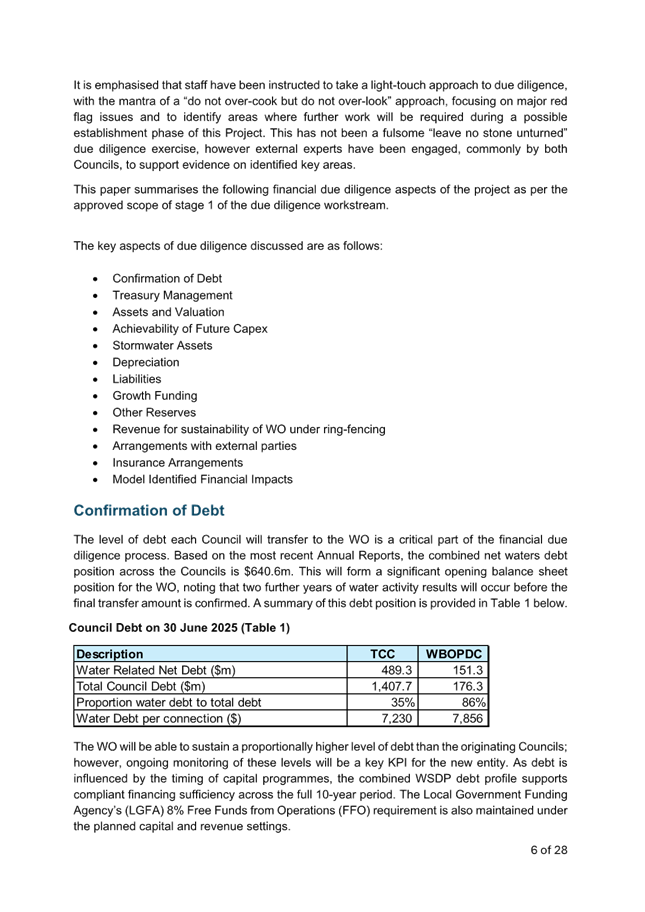
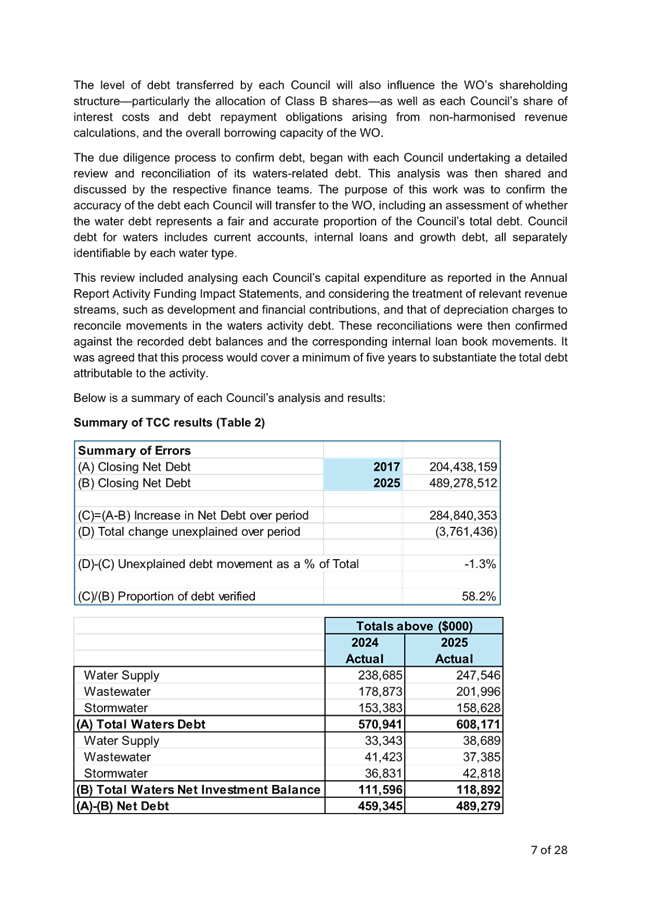
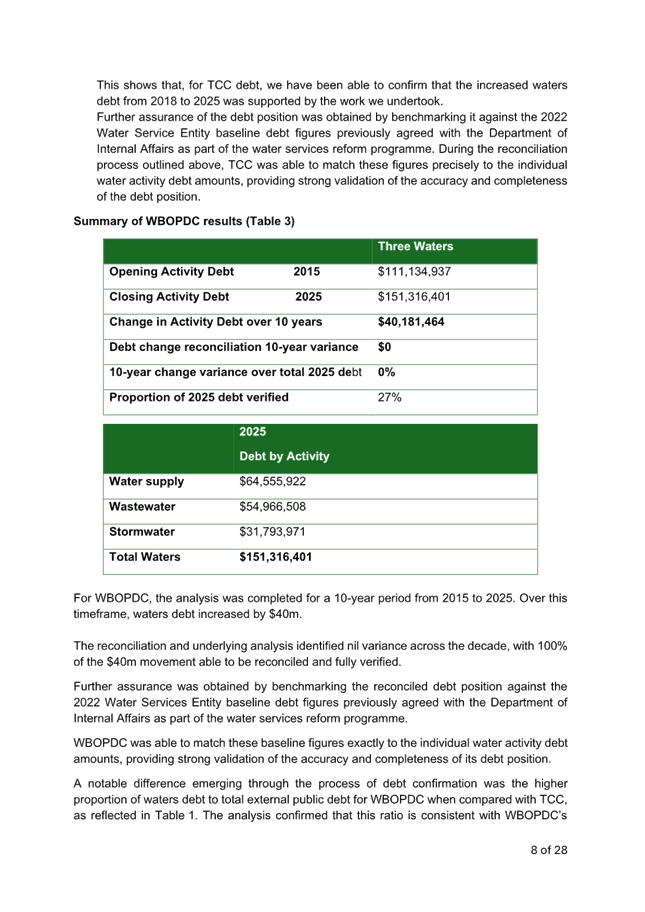
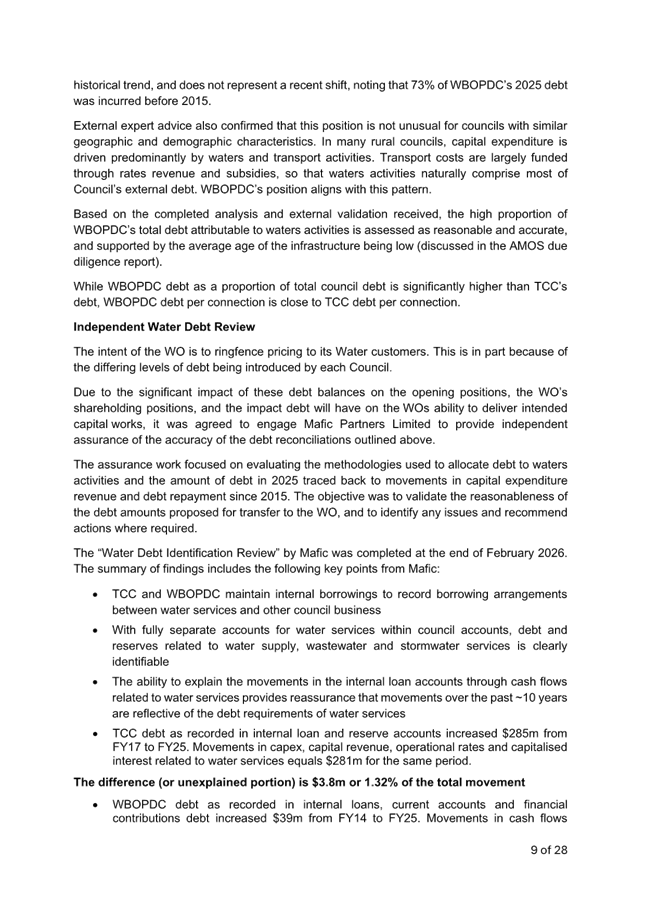
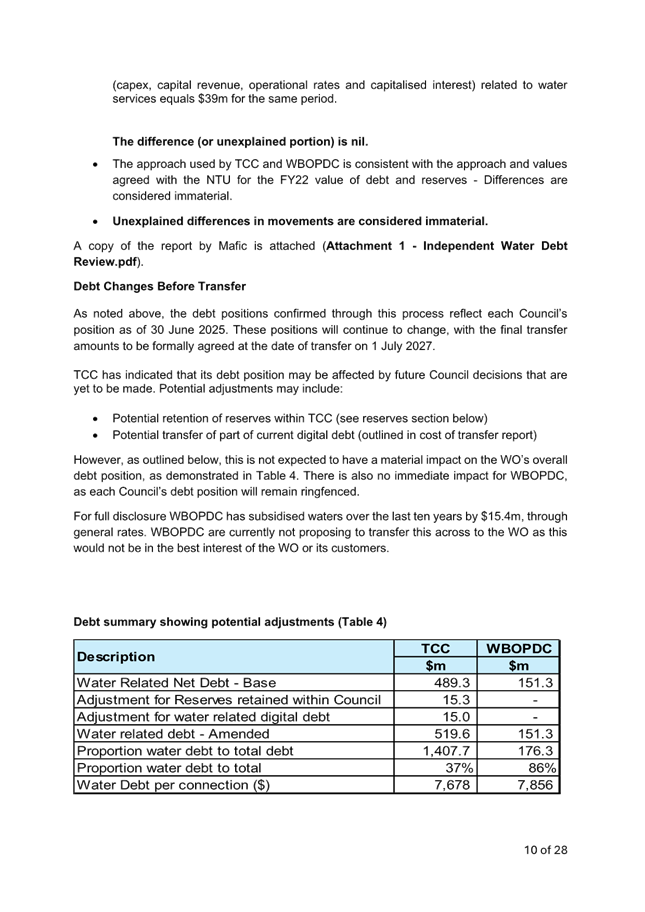

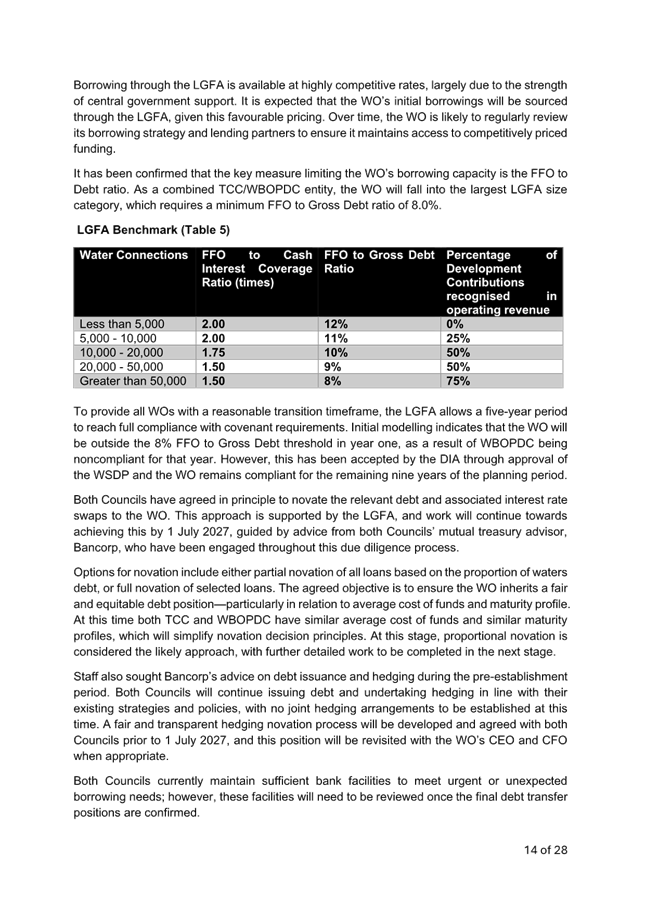
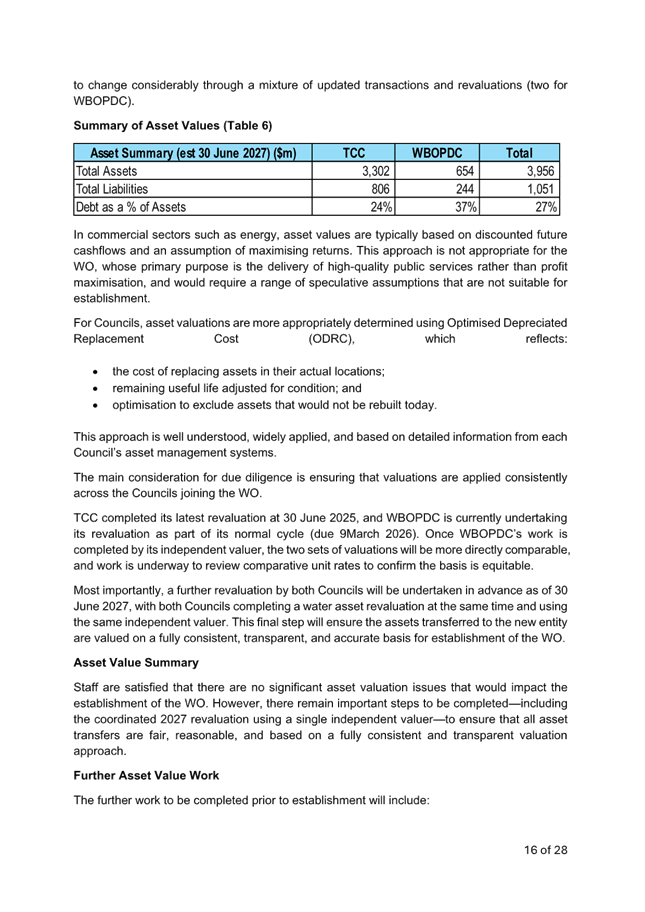
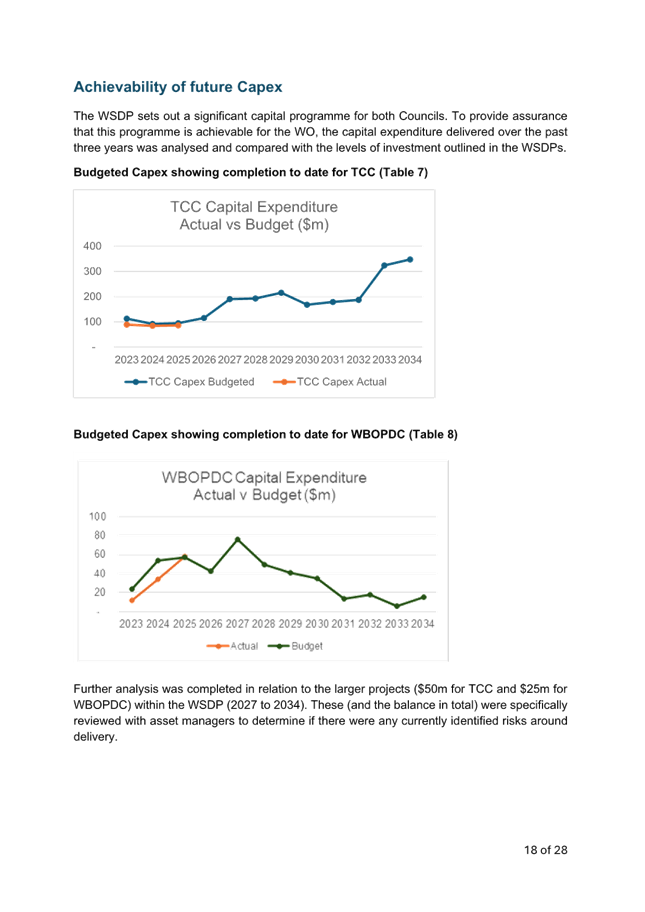
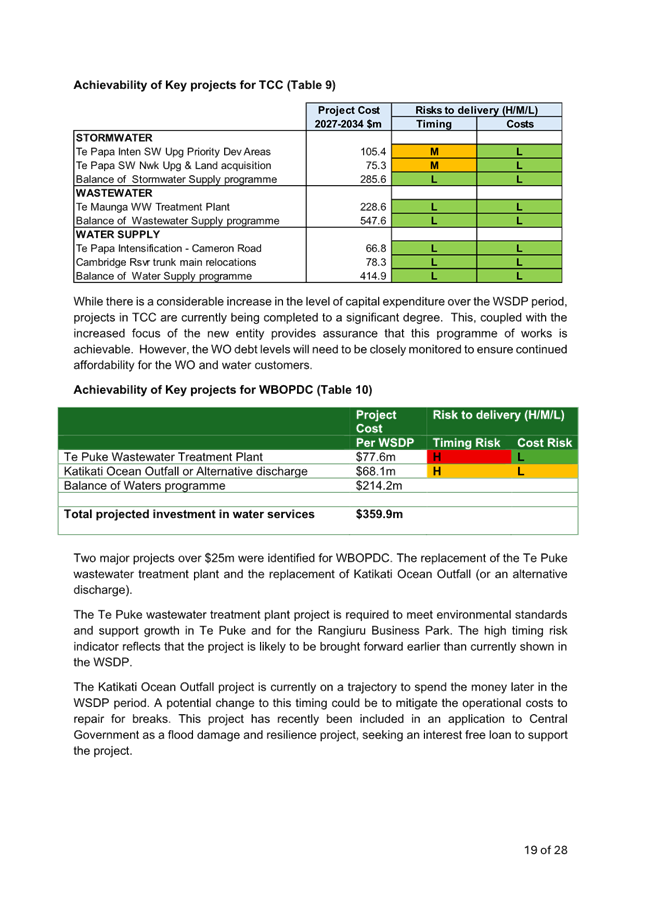
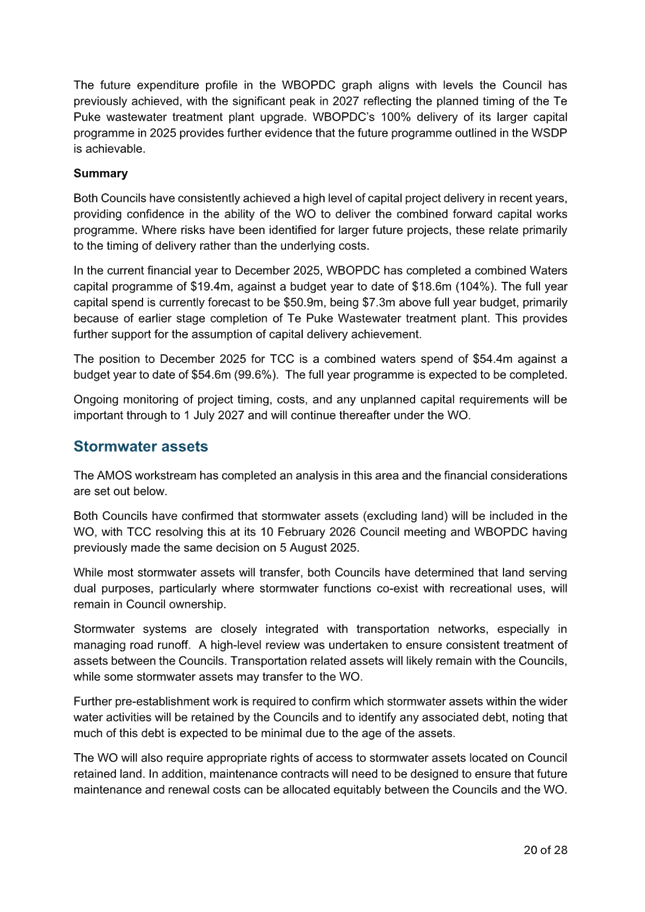
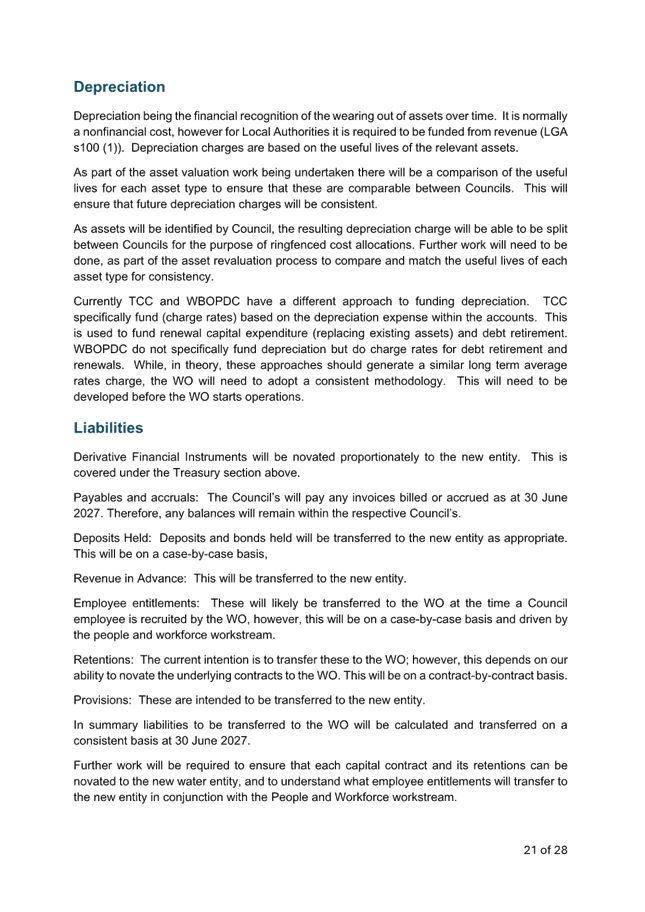
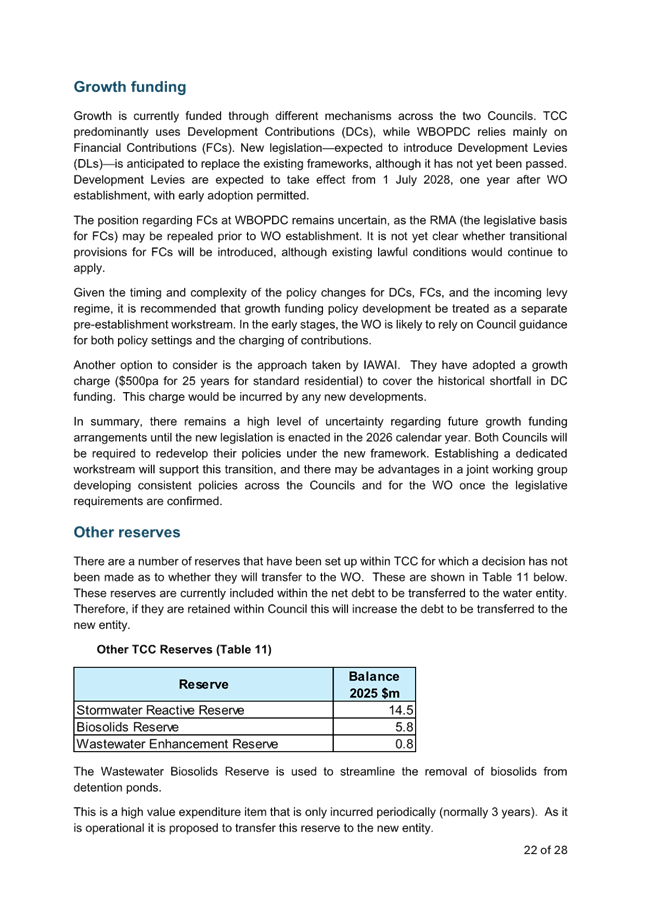
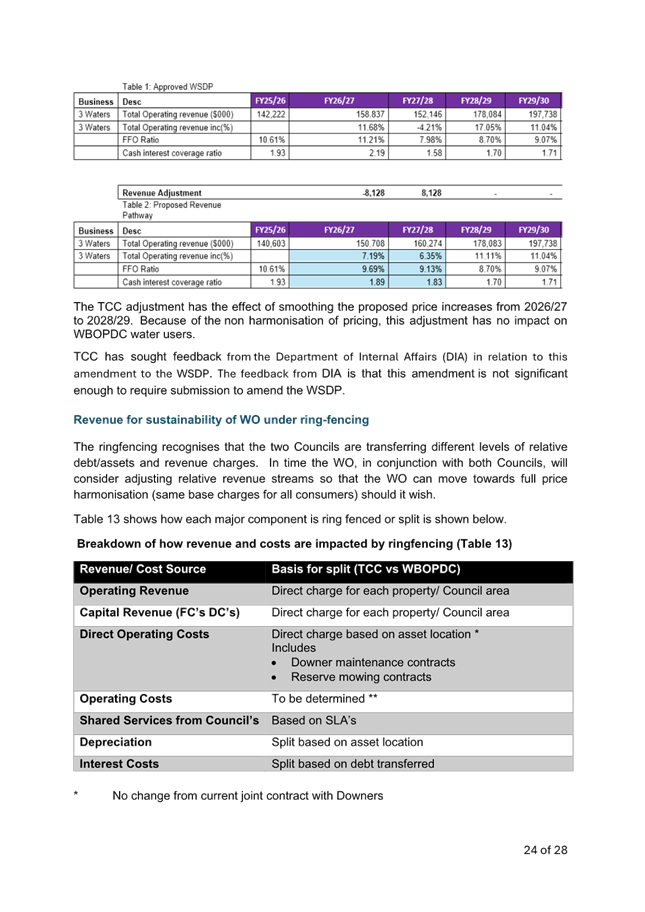
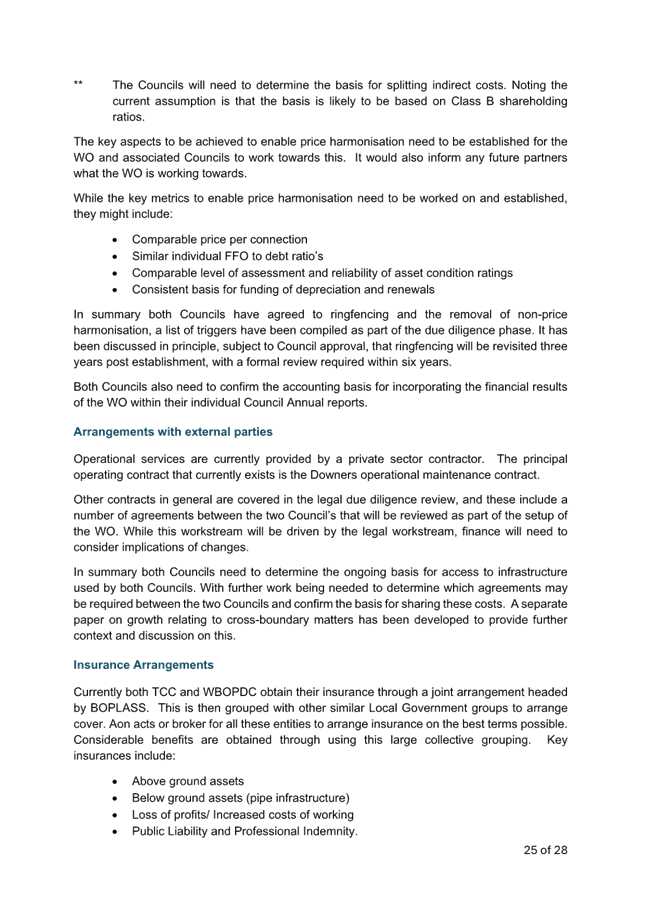
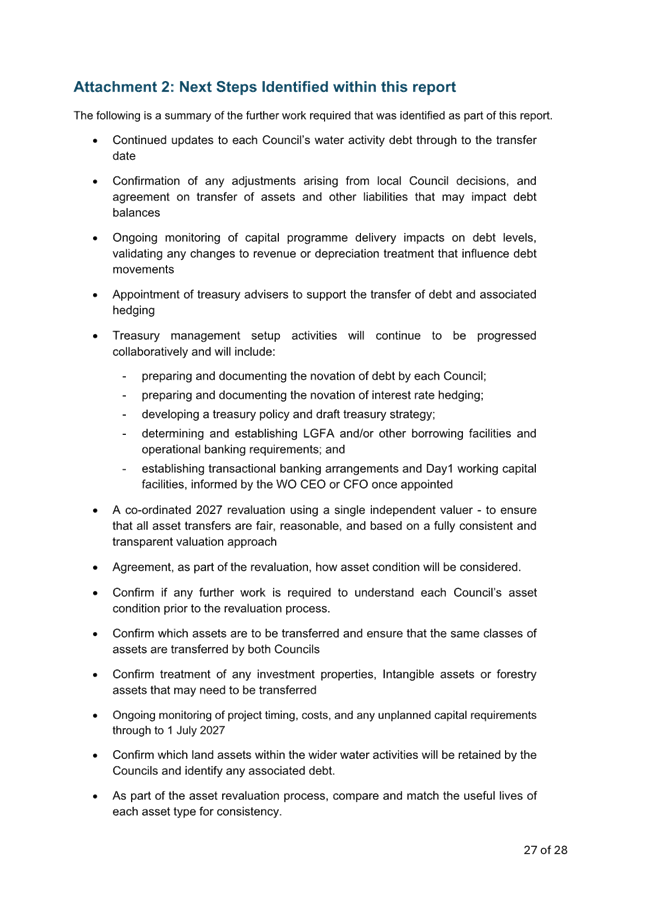
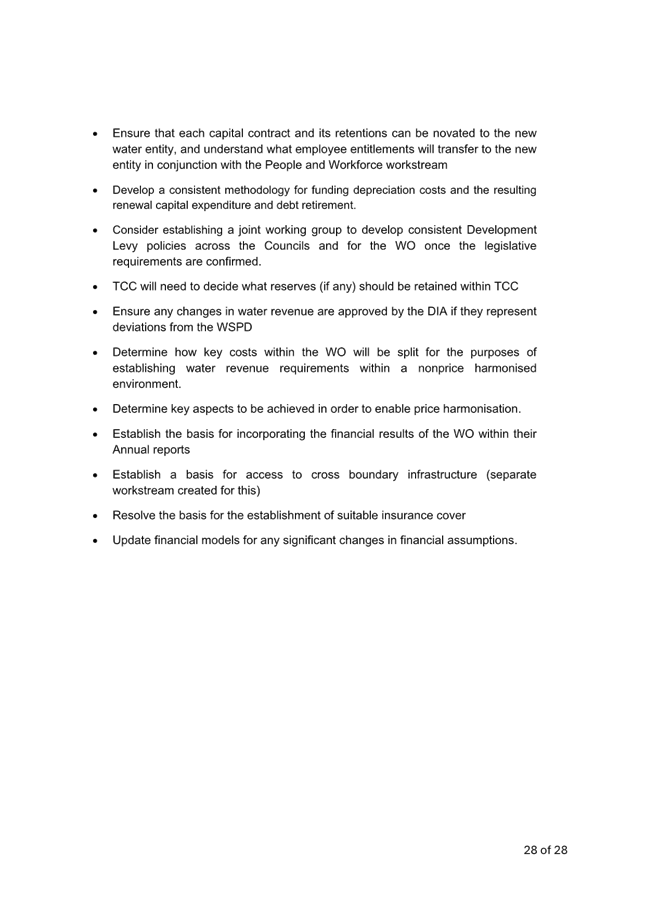
|
Ordinary
Council meeting Agenda
|
24
March 2026
|
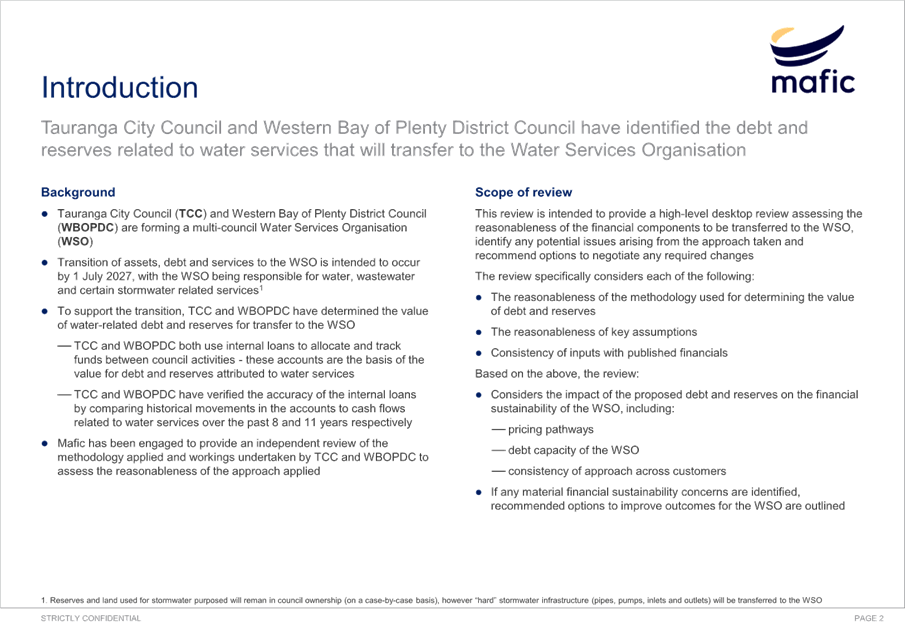
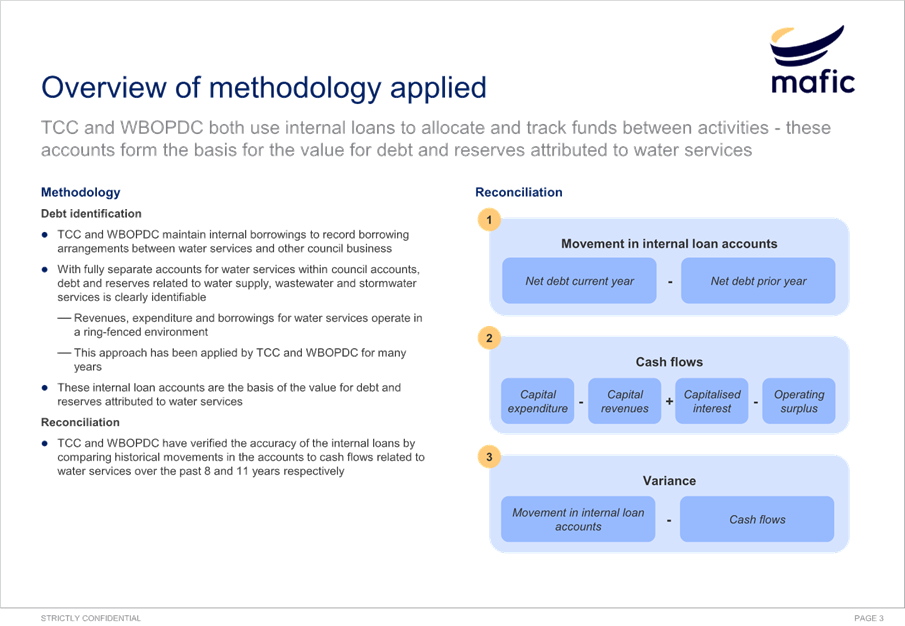
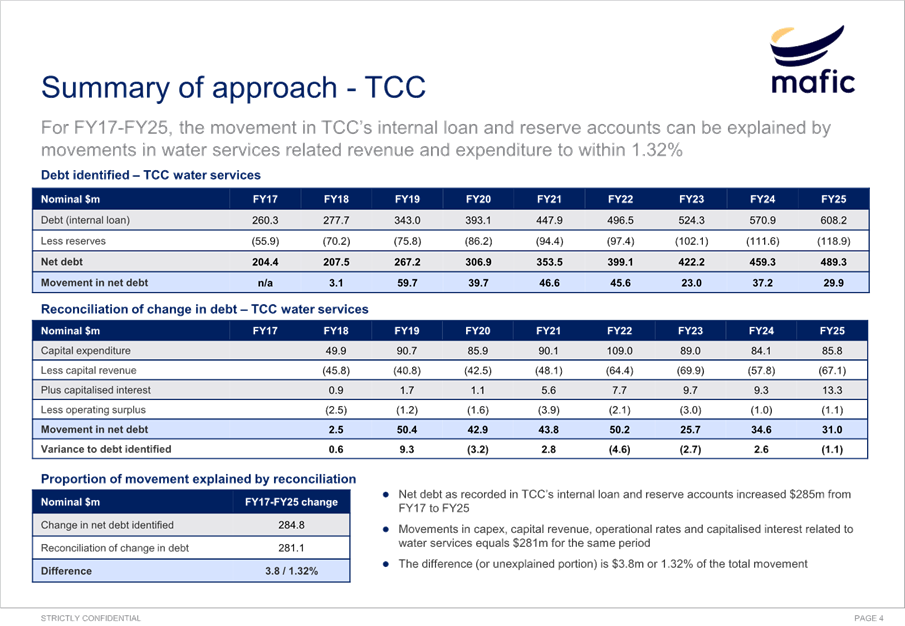
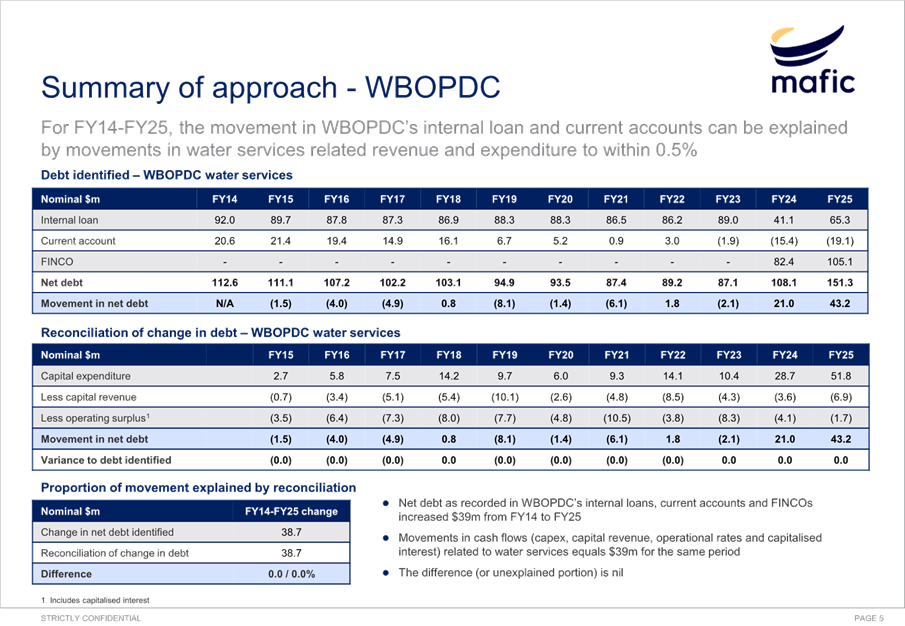
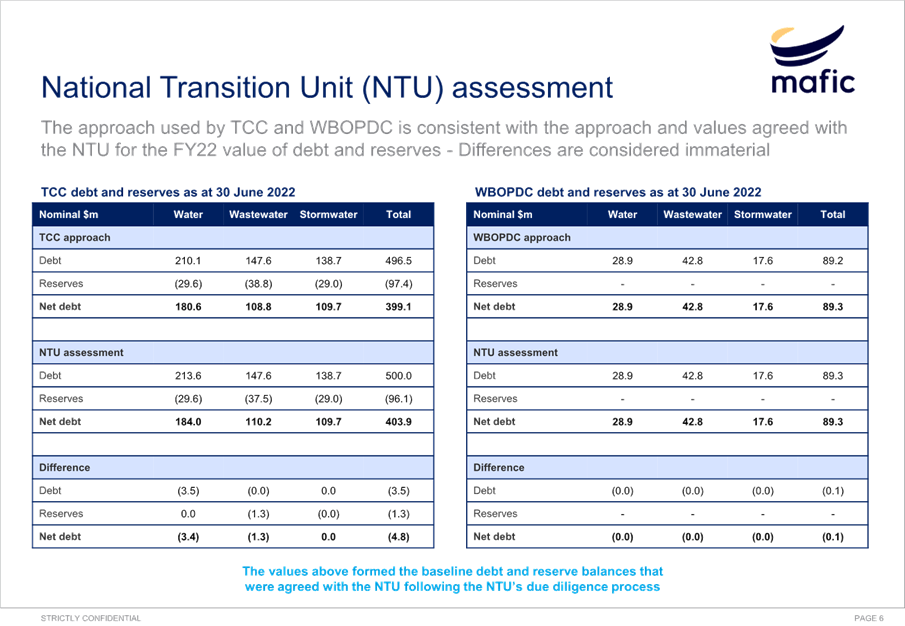
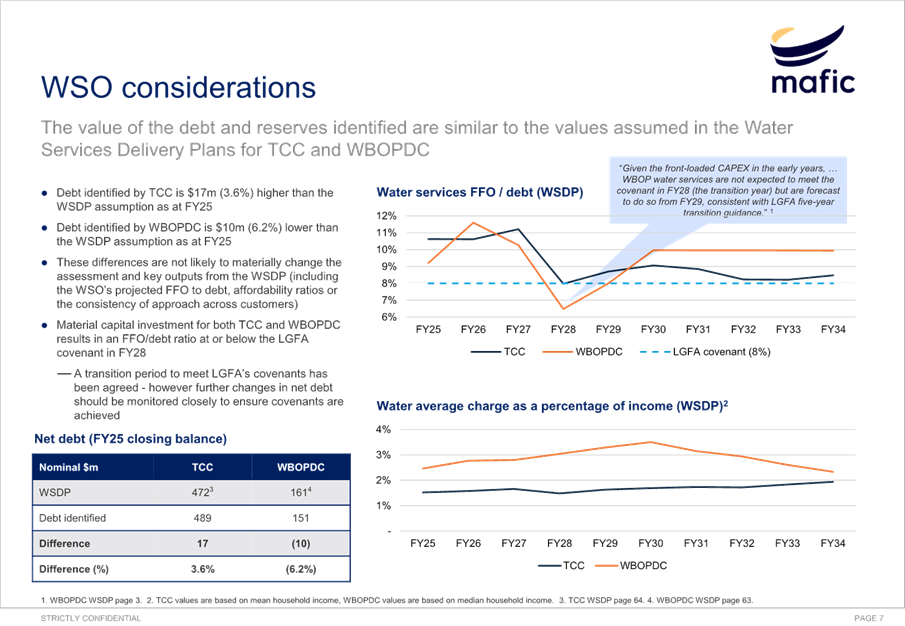
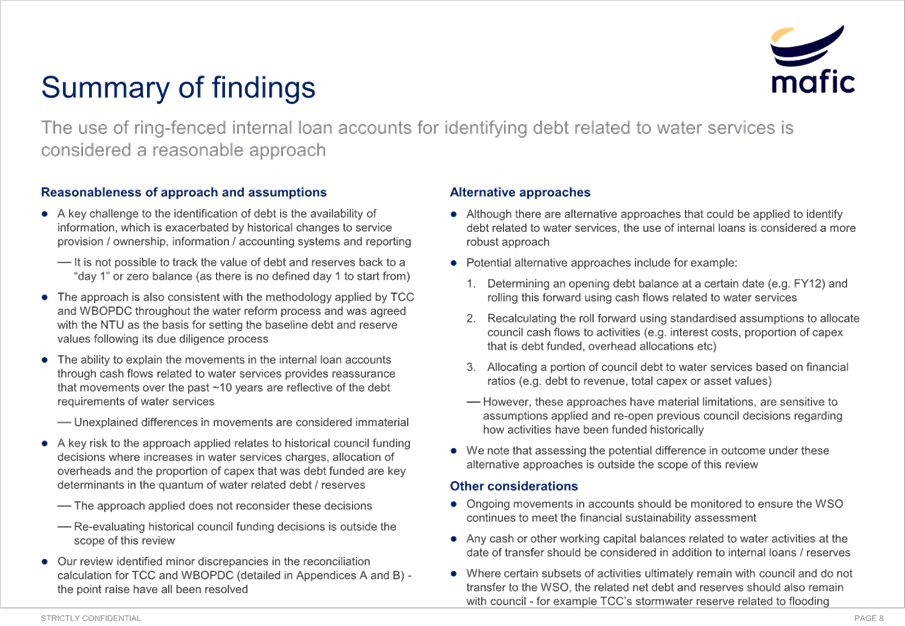
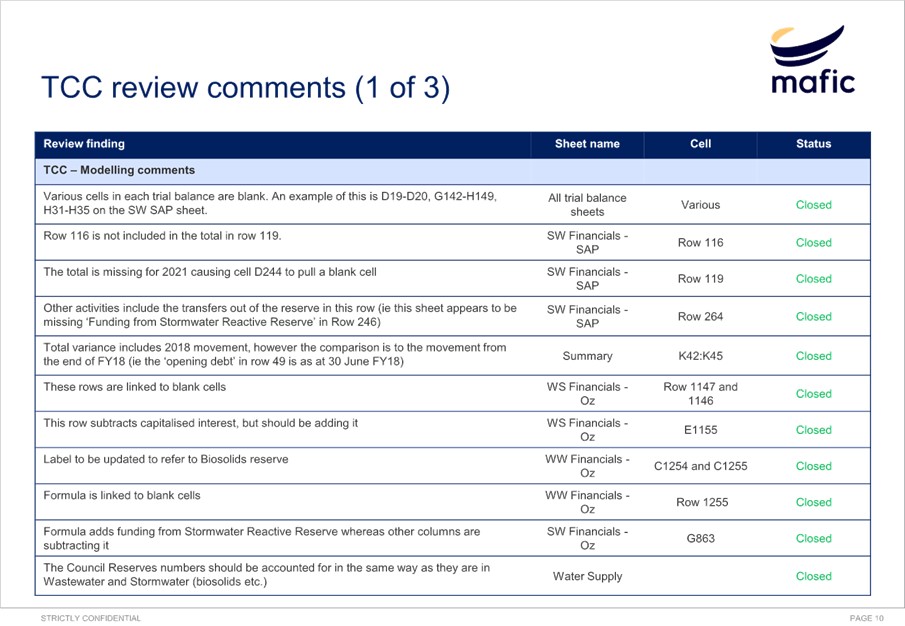
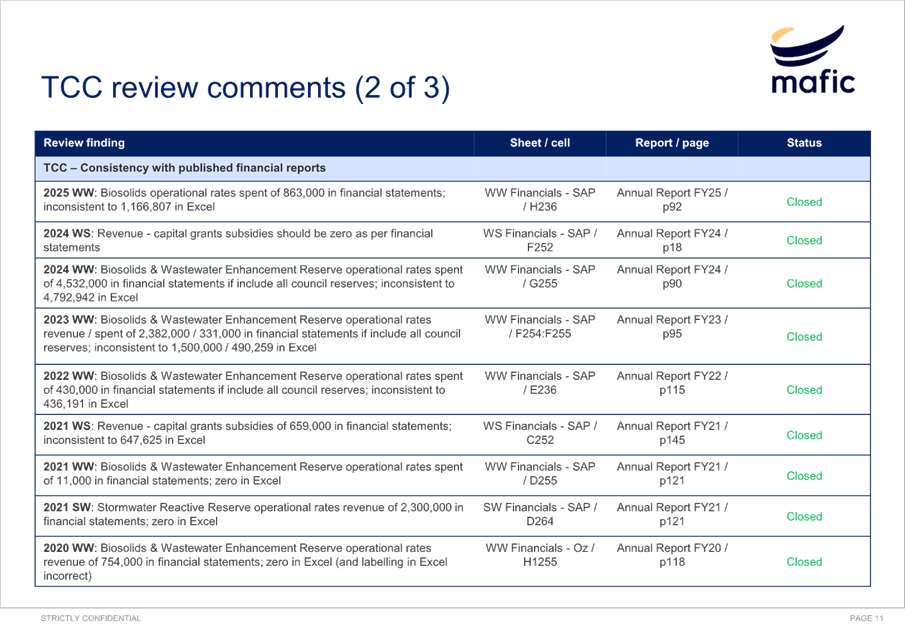
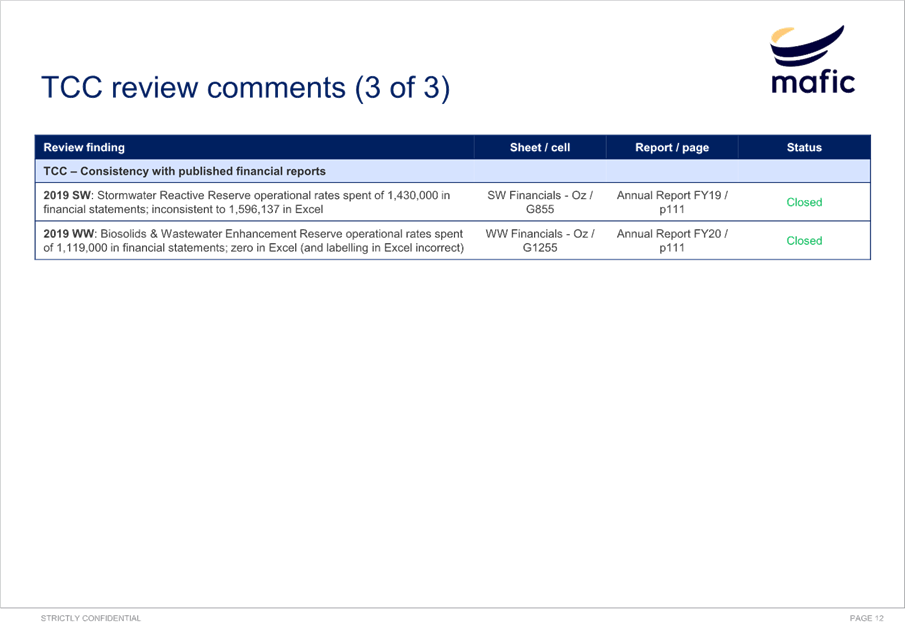

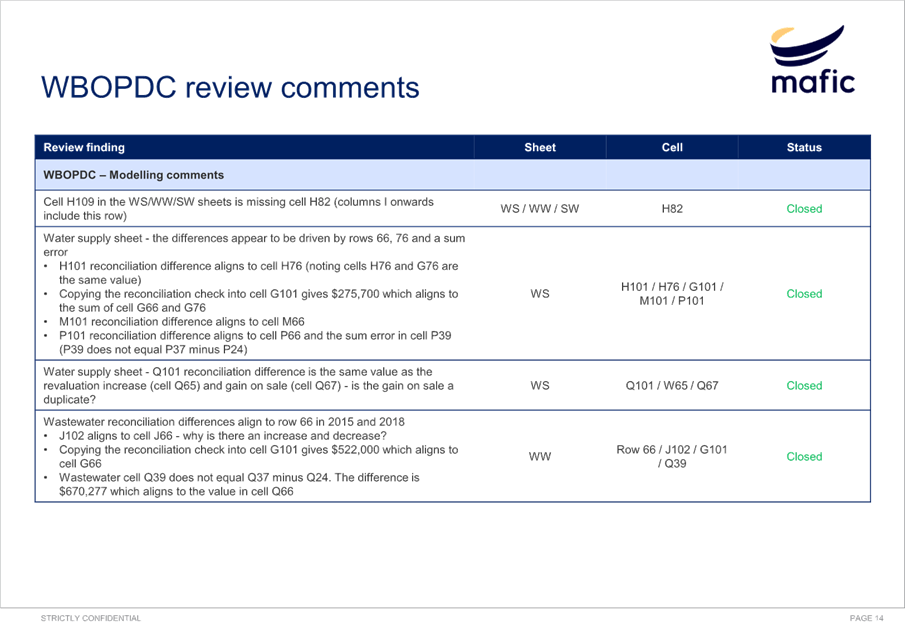
|
Ordinary
Council meeting Agenda
|
24
March 2026
|
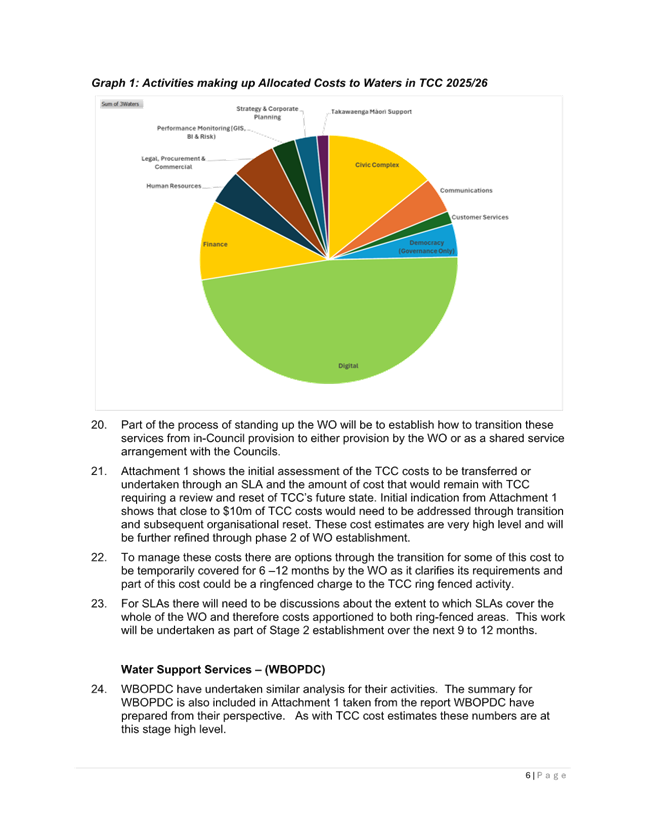
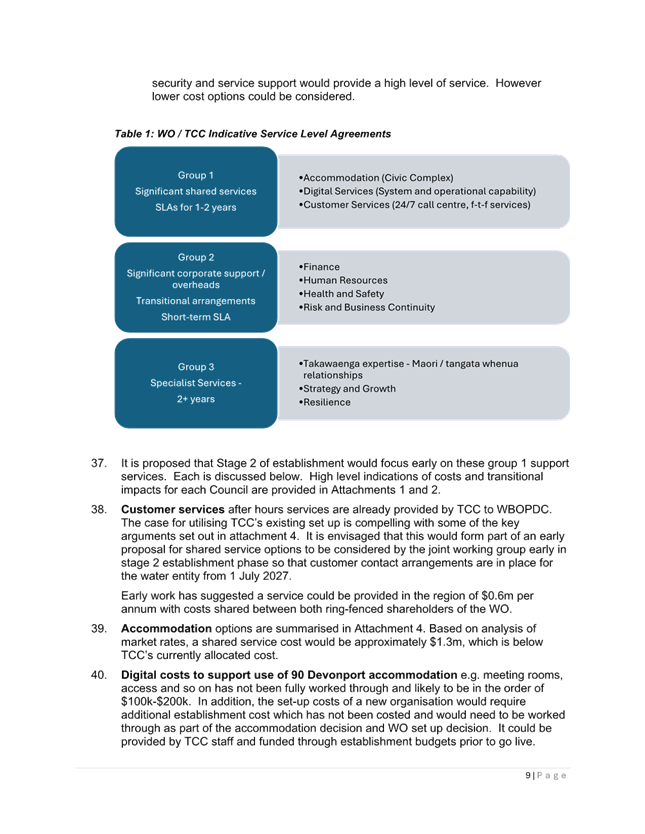
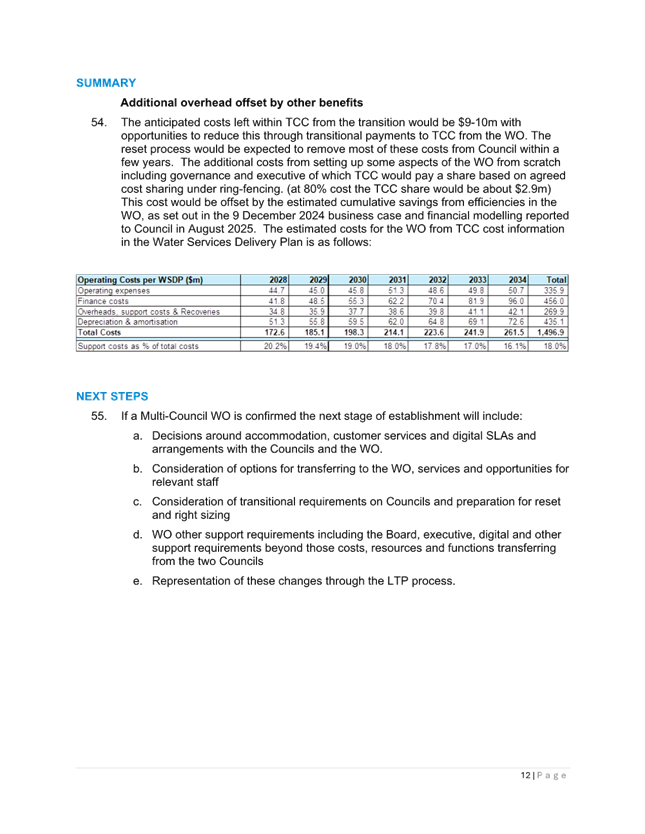
|
Ordinary
Council meeting Agenda
|
24
March 2026
|

|
Ordinary
Council meeting Agenda
|
24
March 2026
|
11.5 Annual Plan 2026-27
Update
File
Number: A19873403
Author: Kathryn
Sharplin, Head of Finance
Tracey Hughes,
Manager: Organisational Financial Performance and Corporate Planning
Authoriser: Craig
Rice, Chief Operating and Financial Officer
Purpose of the Report
1. This report provides an
update on the Annual Plan 2026-27 after adjustments have been incorporated in
the corporate planning system as agreed by Council at the 10 February 2026
meeting. This paper presents financial information prior to consideration
of level of service changes to be considered in a separate report to this
Council meeting. It also seeks approval of additional expenditure and
associated funding not included in the February working draft annual plan.
|
Recommendations
That the Council:
(a) Receives the report
"Annual Plan 2026-27 Update ".
(b) Confirms the capital budget
of $400m for projects in 2026/27 and the list of deferred projects to be
reprioritised through the Long-term Plan per Attachment 1. A further
$50m of carry forwards from 2025/26 is anticipated.
(c) Agrees to the annual plan
budgets for waters as set out in Attachment 2 with a rates requirement
of $96m excluding water by meter charges. This is an increase after
growth of 7.5%. The water by meter charge has increased by 7.5% from
$3.87 per cubic metre to $4.16 per cubic metre, including GST.
(d) Notes that based on decisions
from 10 February 2026 and, including recommendations (b) and (g) in this
report, the rates requirement for 2026/27 excluding waters would be $260m,
which is a rates increase of 9.7% after growth if no placeholder budget for the
Māori ward is included or 9.9% if it is.
(e) Notes that currently no
budget for Māori ward consultation is included in the draft financials
in this report.
(f) Agrees regarding a
Māori ward referendum budget to EITHER
(i) include $500,000 as a
placeholder expenditure budget for a referendum on the Te Awanui Māori
ward if future Council decision-making leads to a need for such a referendum
which would have a rates impact of $350k.
OR
(ii) not include a budget for a
potential referendum on the Te Awanui Māori ward, noting that this
decision does not in any way pre-empt Council’s substantive
decision-making on the future of that ward.
(g) Agrees that additional
budgets are included in the 2026/27 Annual Plan for the January 2026 weather
event recovery and review of $2.6m to be funded from the risk reserve, which
has a net impact on debt for the year of $2.6m with only the cost of borrowing
impacting rates (up to $100k).
(h) Notes the risk reserve has a
balance at 30 June 2025 of $5m, with a further $1m per annum budgeted to be
contributed to the reserve in 2025/26 and in 2026/27 and that the balance
would be reduced by costs arising in 2025/26 that are funded from the reserve.
(i) Notes
that for capital expenditure the placeholder budget currently included for
the January weather event is $6m.
(j) Notes that the above
weather event expenditure of $2.6m for opex funded from the risk reserve, and
$6m capex funded from loans is currently included in the draft financials in
this report.
(k) Notes that the remaining
challenge to meet 7.5% rates increase is a rate-funded amount of $5.6m.
(l) Agrees to let this
report lie on the table pending consideration of the level of service paper
which recommends changes and reductions to level of service resulting in cost
savings of $2.8m.
(m) Agrees to EITHER
(i) request the Chief
Executive to consider other funding options to further reduce the rates
requirement including:
(1) carry forward any rates
surplus from 2025/26 rather than repaying debt after reviewing areas of
underspend against budget
(2) further support staff costs
relating to establishment of the new water organisation could be loan funded
through Water debt
OR
(ii) consider a higher rates
increase for the firm base case (of 8.5% assuming recommendations (a) through
(l) are adopted).
(n) Notes that the financial
prudence balanced budget measure is currently 97.8% which will need to be
disclosed to Local Government Funding Agency as our lender under the terms of
the bespoke covenant.
|
|
|
Executive Summary
2. On 10 February 2026,
Council considered a report on the Draft Annual Plan 2026/27. This report had
followed the December 2025 report that presented working draft budgets. At the
December meeting Council requested further work be undertaken to find budget
reductions with an aim of achieving a 7.5% rate increase.
3. Council requested
that the waters activities be reported separately to other activities of
Council and that increases in both the waters activities and the remaining
Council should be limited to 7.5% (after accounting for growth).
4. The reduction to
7.5% is confirmed in the budgets summarised in Attachment 1 for waters
activities. This reduction has primarily been achieved by rephasing the timing
of water charge increases over early years. The changes have been
accepted as not significant by the Department of Internal Affairs, so there is
no need to amend the already approved Water Services Delivery Plan (WSDP).
5. The report presented
to the 10 February Council meeting proposed areas of savings that were agreed
by Council but noted further savings in the order of $4.5m to $5.3m would be
required to achieve a rates increase of 7.5%.
6. A separate report to
this Council meeting identifies areas of potential level of service reduction
that if adopted will reduce this gap.
7. The rates increase
for the rest of Council is above 7.5% at present. Council will need to make
decisions at this Council meeting on expenditure reduction to move closer to
this target. The current rates requirement excluding waters activities is
$260m, a rates increase of 9.7%. This does not include an allowance of
$500k for Māori ward consultation (rates impact $350k as an allocated
cost, approximately 0.15% additional rates).
8. Council has yet to
decide about consultation on a Māori ward and is asked to choose whether
to allow for budget for consultation of $500k in the annual plan, which would
have a rates impact of $350k.
9. Council confirmation
is sought of the $400m capital budget for the 2026/27 year and the
deferred projects identified in Attachment 1, or to agree adjustments to
the proposed deferrals as part of consideration of this report. A further $50m
of carry forwards from 2025/26 is anticipated, bringing the total capital
programme for 2026/27 to $450m.
10. The decisions at this Council
meeting on other reports, including levels of service options, will be
incorporated in the Annual Plan 2026-27 firm base case.
11. The levels of service options
do not provide sufficient savings to achieve a 7.5% rate increase. The
remaining gap is approximately $2.4m if all levels of service recommendations
are approved. This gap could be reduced in two ways:
(a) by capturing support staff time
on the establishment of the waters entity (funded by waters loan).
(b) By assigning any forecast rates
surplus from the current year against the 2026/27 rates requirement rather than
reducing debt.
Alternatively,
Council could agree to a proposed rates increase higher than 7.5%, noting that
$2.3m of expenditure is equivalent to 1% rates increase.
12. Debt at 30 June 2027 excluding three waters activities is
currently forecast to be $988m. Three waters debt at June 2027 is projected to
be $648m. This is a total net debt of $1,636m and the debt to revenue ratio is
at 268% which is within LGFA base covenants without utilising the approved
bespoke covenant.
13. The
draft financials show an imbalanced budget where allowable revenue for the
“financial prudence” calculation (which excludes development
contribution revenue and reserve funding) is 97.8% of expenditure. This
would need to be communicated to the Local Government Funding Agency under the
terms of the bespoke covenant.
Background
14. The 10 February report
“Draft Annual Plan 2026/27” followed an earlier report and
direction from the 16 December 2025 draft annual Plan report.
15. Decisions and actions from the
10 February report have been incorporated in the revised key financials table
shown as Table 4 below.
16. In summary this table of
changes arising from the 10 February Council meeting includes:
(a) All key financial measures for
three waters separated from the rest of Council
(b) A draft capital budget at
$400m, with the forecast carry forward of 2025/26 budget of a further $50m
included in the year end debt levels but not in the capital budget line.
(c) Draft rates requirement for the
rest of Council, excluding three waters, noting this rate increase is currently
at 9.7% pending Council’s decisions on level of service budgets today.
17. These changes are discussed
below along with other areas of budget decisions sought from Council in this
report.
Discussion
Separation of waters
from rest of Council
18. Water activities have been
identified separately in this report and in the budget in Attachment 2.
The 7.5% increase for water rates and metered water has been achieved primarily
by altering the price paths across the three waters services. The change
in pricing, particularly of water by meter charges, reduces the planned surplus
for that activity that was included in the WSDP approved by DIA. This
change is a timing difference where the price increase will now be phased more
evenly between 2026/27 and 2027/28. The change to the revenue assumptions
in the WSDP has been advised to DIA who have confirmed no change to the WSDP is
required. The movement of expected revenue is a result of short-term phasing
changes and is not material. The wastewater and water activities are
ring-fenced in Council and continue to record surpluses under the revised
budgets.
Capital Deferrals
19. There have been no changes made
to the capital programme that was presented on 10 February and the proposed
deferrals. The capital programme and list of deferred projects are reproduced
as Attachment 1 and Council confirmation of these budgets is sought in
this report.
Cost Impacts of January Weather Event
20. The January 2026 weather event
has led to areas of expenditure not previously anticipated in preparation of
the 2026/27 Annual Plan. Approval for additional budget for 2026/27 to
fund recovery and response is sought. The additional funding is $2.6m for
opex, funded from the risk reserve, and $6m capex funded by loan.
21. Council has an option to
approve or not approve the additional budget identified for review and
recovery.
Table 1 –
Options regarding additional budget for the January 2026 weather event recovery
and review
|
Option
|
Summary
|
Advantages
|
Disadvantages /
Risks
|
|
1
|
Approve additional
operating expenditure budgeted at $2.6m.
|
Meets required payments
in relation to assisting with information for various reviews being
undertaken on the January weather event and the Mauao and wider city recovery
initiatives.
|
Increased
debt unless a decision is made to fund the expenditure through rates.
Negative
impact on balanced budget.
|
|
2
|
Do not approve
additional operating expenditure budgeted at $2.6m.
|
Reduces debt in this
draft by $2.6m along with associated interest costs
|
Council would not be
resourced to adequately contribute to the reviews that have been established
of the weather event. The planned recovery work would not be
undertaken.
|
22. Funding from the risk reserve
and loans both increase the levels of debt. Funding opex through reserves
does not impact rates but does negatively impact the balanced budget by 0.4%.
If Council chooses to fund this expenditure through rates rather than the risk
reserve, debt will reduce $2.6m from that indicated in Table 4, and rates
requirement would increase by the same amount, moving the year-on-year rates
increase from 9.7% to 10.8%.
23. The opening balance of the risk
reserve at 1 July 2026 would be $6m less payments funded through the risk
reserve in 2025/26 relating to the January 2026 weather event.
24. To summarise, the options for
funding of additional operating expenditure relating to the January 2026
weather event are:
Table 2 – Options regarding funding of additional
budget for the January 2026 weather event recovery and review
|
Option
|
Summary
|
Advantages
|
Disadvantages /
Risks
|
|
1
|
Fund the operating
expenditure (currently budgeted at $2.6m) from the risk reserve
|
Minimal increase to
rates (interest only).
Uses risk reserve for
the purpose it was created.
|
Increased
debt as reserves are not held as cash.
Negative
impact on balanced budget.
Reduces available
reserve for future use.
|
|
2
|
Fund the operating
expenditure (currently budgeted at $2.6m) from rates
|
Reduces debt in this
draft by $2.6m along with associated interest costs
Risk
reserve remains intact for future use.
|
Additional rates
requirement of 1.1%, increasing the total requirement to 10.8% excluding
waters.
|
Māori ward referendum budget
25. Under current legislation,
Council will be required in the 2026/27 year to decide if it wants to retain
the Te Awanui Māori ward. If it decides it wishes to retain the
ward, then it will be required to conduct a referendum of all voters to confirm
or reject that proposal.
26. This report does not seek to
consider whether or not Council wishes to retain the Māori ward.
That is a matter that Council will be invited to consider ahead of the
statutory deadline for that decision-making of 30 November 2026.
27. The total costs of a referendum
will include electoral officer costs, postage costs, and marketing and
promotion costs. Having taken advice from the electoral officer,
including current postal rates, a broad estimate of $0.5 million should be
budgeted for a city-wide referendum if required.
28. On 16 December 2025, Council
considered this issue and resolved as follows:
Council
notes that funding for the Māori Ward referendum was not included in the
Long-Term Plan and if Council wishes to budget for a referendum the expenditure
would require a decision of Council, which is likely to have an impact on rates
of 0.2%.
29. Council is now invited to
formally decide whether or not to budget for a referendum. There are two
principal options:
Table 3 –
Options for Māori ward referendum budget
|
Option
|
Summary
|
Advantages
|
Disadvantages /
Risks
|
|
1
|
Budget $500,000 for a
potential referendum
|
Ensures
budget is available if a referendum is required once Council makes its
substantive decision on the future of the Te Awanui Māori ward.
Is a decision that is
less likely to be construed as a premature decision on the future of the Te
Awanui Māori ward.
|
If
a referendum is not required, the community will have been
‘over-rated’ in the 2026/27 year. (If there is an
organisation-wide rates surplus at the end of that year, Council will
determine how that surplus is applied.)
Increases rates by
0.15%.
|
|
2
|
Do not budget $500,000
for a
potential referendum
|
Community
is not ‘over-rated’ if a referendum is not required.
No increase to rates.
|
If
a referendum is required, funding would need to be found from offsetting
budget savings.
Decision may be seen as
prematurely deciding on the future of the Te Awanui Māori ward.
|
Revised Financials
30. The agreed changes from the 10
February Council meeting have been incorporated in the financials below.
There has also been a review of interest rates included which was based on
interest rate projections at 3 March. These had seen a reduction in our
weighted average cost of borrowing to 3.91%.
31. However, this last week has
seen significant risk to these assumptions with the conflict in the Middle
East. An update to interest rates will be undertaken in May prior to finalising
the Annual Plan. The risk of current higher rates remaining is that new
and replacement borrowing will be more expensive, increasing our overall
borrowing costs
|
Ordinary
Council meeting Agenda
|
24
March 2026
|
Table 4
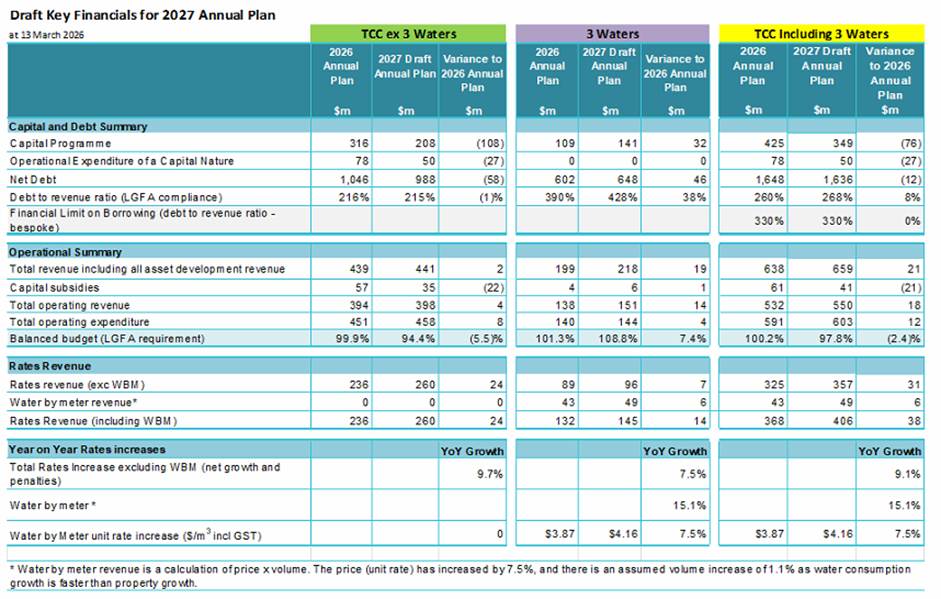
|
Ordinary
Council meeting Agenda
|
24
March 2026
|
Statutory Context
32. The Annual Plan is required to
be produced by council under the Local Government ACT 2002.
STRATEGIC ALIGNMENT
33. This contributes to the
promotion or achievement of the following strategic community outcome(s):
|
Contributes
|
|
We are an inclusive city
|
ü
|
|
We value, protect and enhance the environment
|
ü
|
|
We are a well-planned city that is easy to move
around
|
ü
|
|
We are a city that supports
business and education
|
ü
|
|
We are a vibrant city that embraces
events
|
ü
|
34. The Annual Plan aligns with all
community outcomes as it represents the resources Council commits to run the
organisation and deliver services grants to other organisations and capital
investments to achieve these outcomes.
Financial Considerations
35. The 2026-27 draft budget
included in this Annual Plan update has a whole of organisation rates
requirement of $357m. This is an overall rates increase of 9.1% after
growth of 0.5%, which is below the 12% limit on rates increases set in the
2024-34 Long-term Plan. It is also below the rates increase included in
the LTP for 2026-27, which was 10.4% after growth.
Legal Implications / Risks
36. There are no specific legal
implications associated with the update on the annual plan. However,
decisions on resourcing, which are actioned through the Annual Plan, may have
an impact on the level of risk associated with the organisation’s operations
and delivery.
37. The Middle East conflict is
having an immediate impact on fuel and interest costs which have not been
incorporated in interest and opex and capex costs in this Annual Plan
update. The update in May prior to adoption of the Annual Plan will
incorporate the latest assumptions at that time.
TE AO MĀORI APPROACH
38. The Annual Plan represents
resourcing to include the outcomes agreed by Council. The outcomes are
addressed through decisions on activities, capital expenditure and
services. These should align with Council’s Te Ao Māori
approach. The level of resourcing for the Annual Plan should have regard
to the agreed outcomes and deliverables the expenditure aims to achieve.
CLIMATE IMPACT
39. The Annual Plan includes both
operating and capital expenditure to adapt to a changing climate, reduce
emissions and enhance nature and biodiversity. These initiatives are
included in the Groups of Activity information.
Significance
40. The Local Government Act 2002
requires an assessment of the significance of matters, issues, proposals and
decisions in this report against Council’s Significance and Engagement
Policy.
Council
acknowledges that in some instances a matter, issue, proposal or decision may
have a high degree of importance to individuals, groups, or agencies affected
by the report.
41. In making this assessment,
consideration has been given to the likely impact, and likely consequences for:
(a) the current
and future social, economic, environmental, or cultural well-being of the
district or region
(b) any persons who are likely to be
particularly affected by, or interested in, the matter.
(c) the capacity of the local authority
to perform its role, and the financial and other costs of doing so.
42. In accordance with the
considerations above, criteria and thresholds in the policy, it is considered
that the matter is of medium significance.
ENGAGEMENT
43. Taking into consideration the
above assessment, that the matter is of medium significance, officers are of
the opinion that no further engagement is required prior to Council making a
decision.
44. Council has agreed that it will
not formally consult on the 2026/27 Annual Plan, as there is no significant
movement from year three of the 2024-34 Long-term Plan. However
consistent with decisions of Council on 10 February Council is proposing to undertake
engagement through a survey with the community with the agreed base case Annual
Plan available to respondents to the survey. This will help inform
Council’s direction through the next year including preparation of the
2027-37 Long-term Plan.
Next Steps
45. Following decisions from this
report and other reports to the 24 March Council meeting staff will further
revise the Annual Plan to report to Council as a revised base case on 21 April
2026.
Attachments
1. Draft
2027 Annual Plan Capital Projects - A19917345 ⇩
2. Draft 2027 Annual
Plan Operating Revenue and Expense - A19917614 ⇩
|
Ordinary
Council meeting Agenda
|
24
March 2026
|
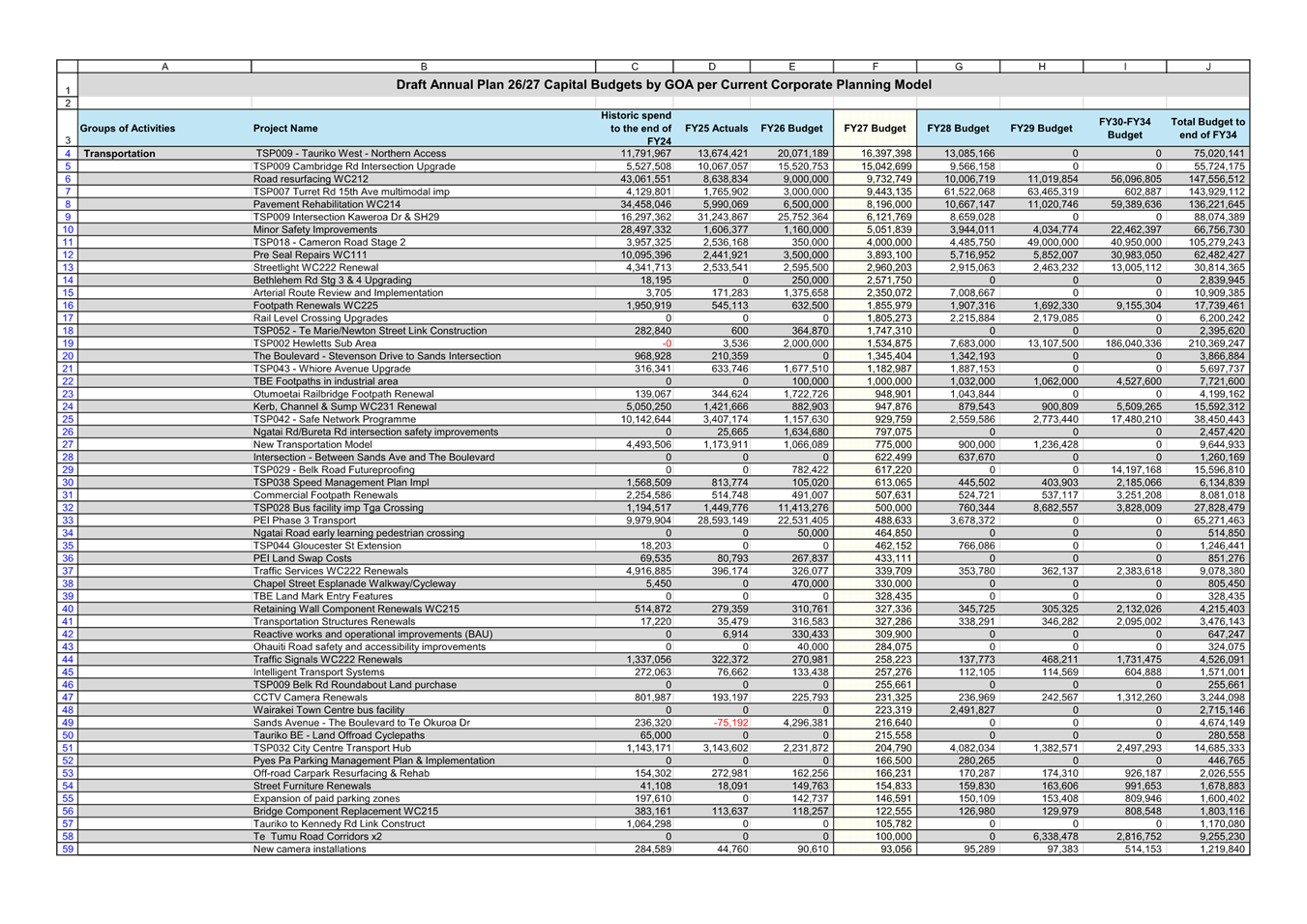
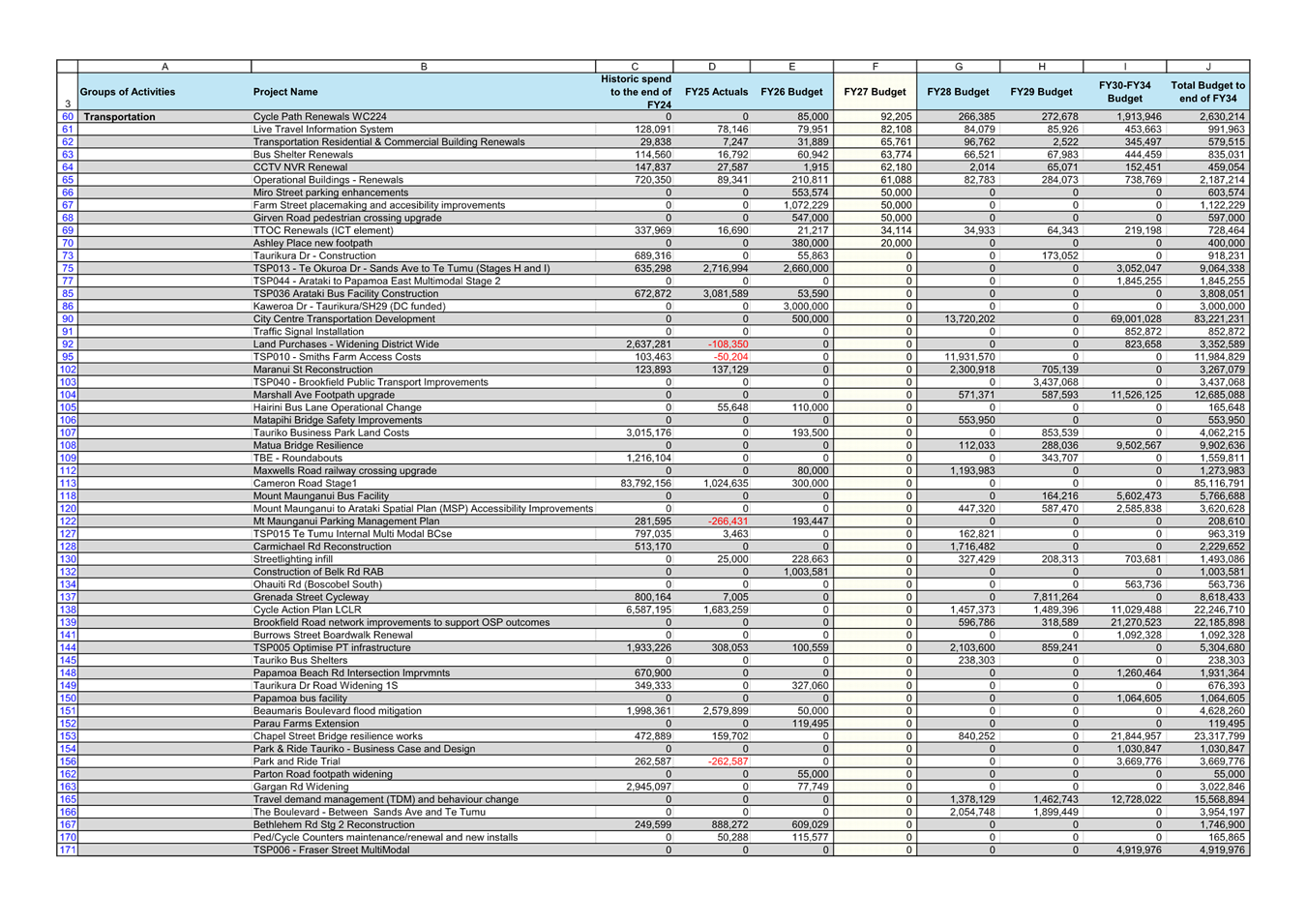
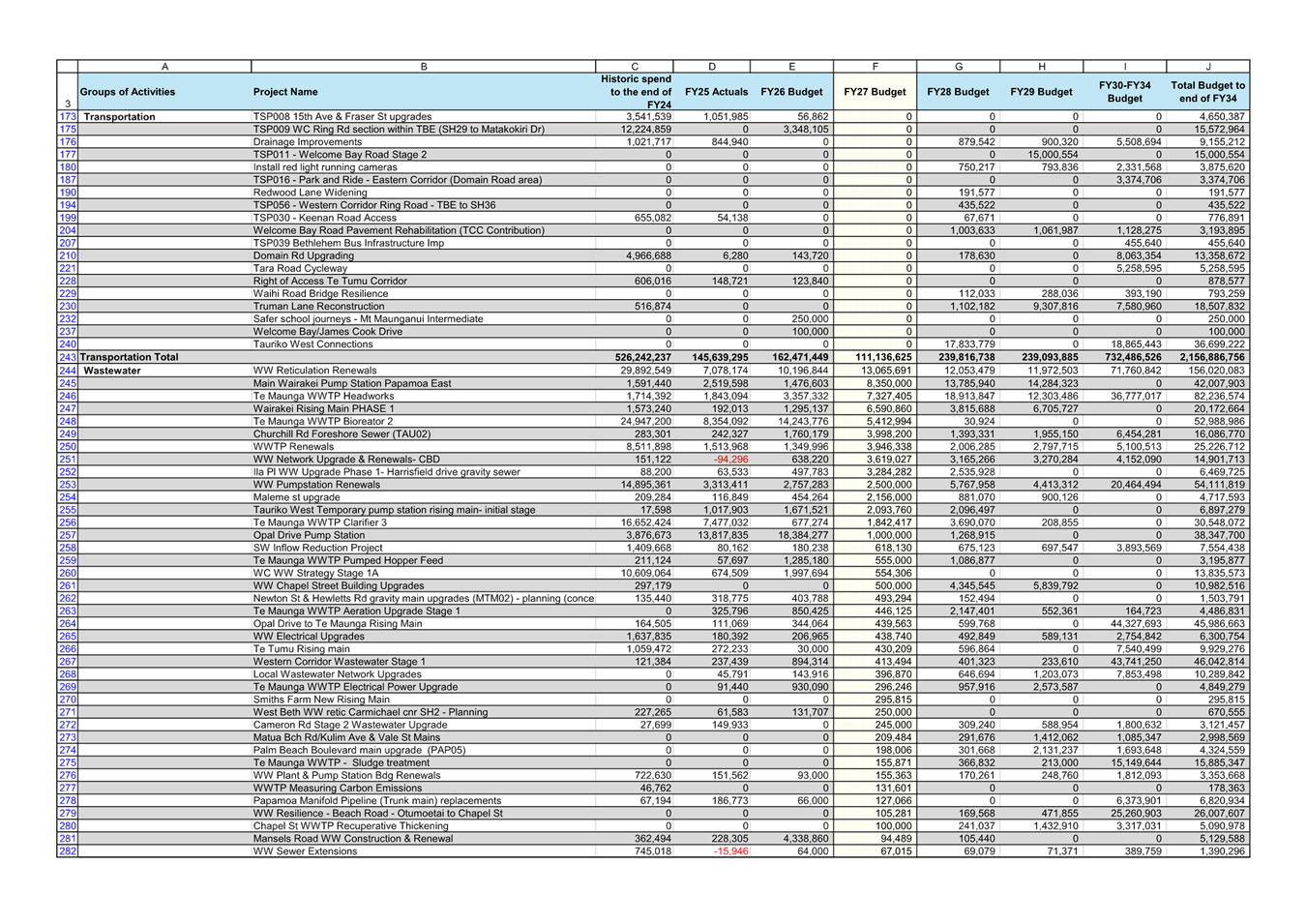
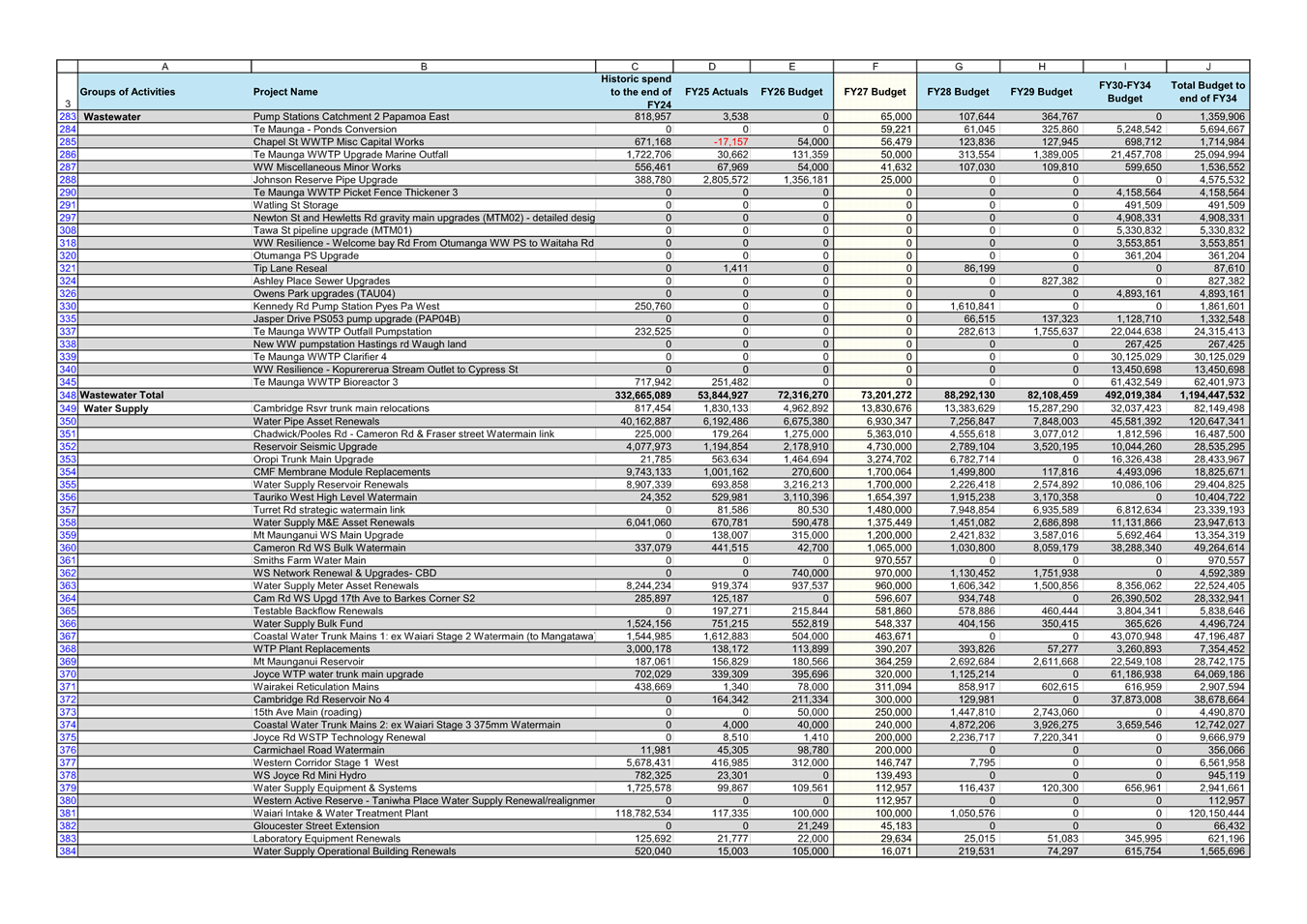
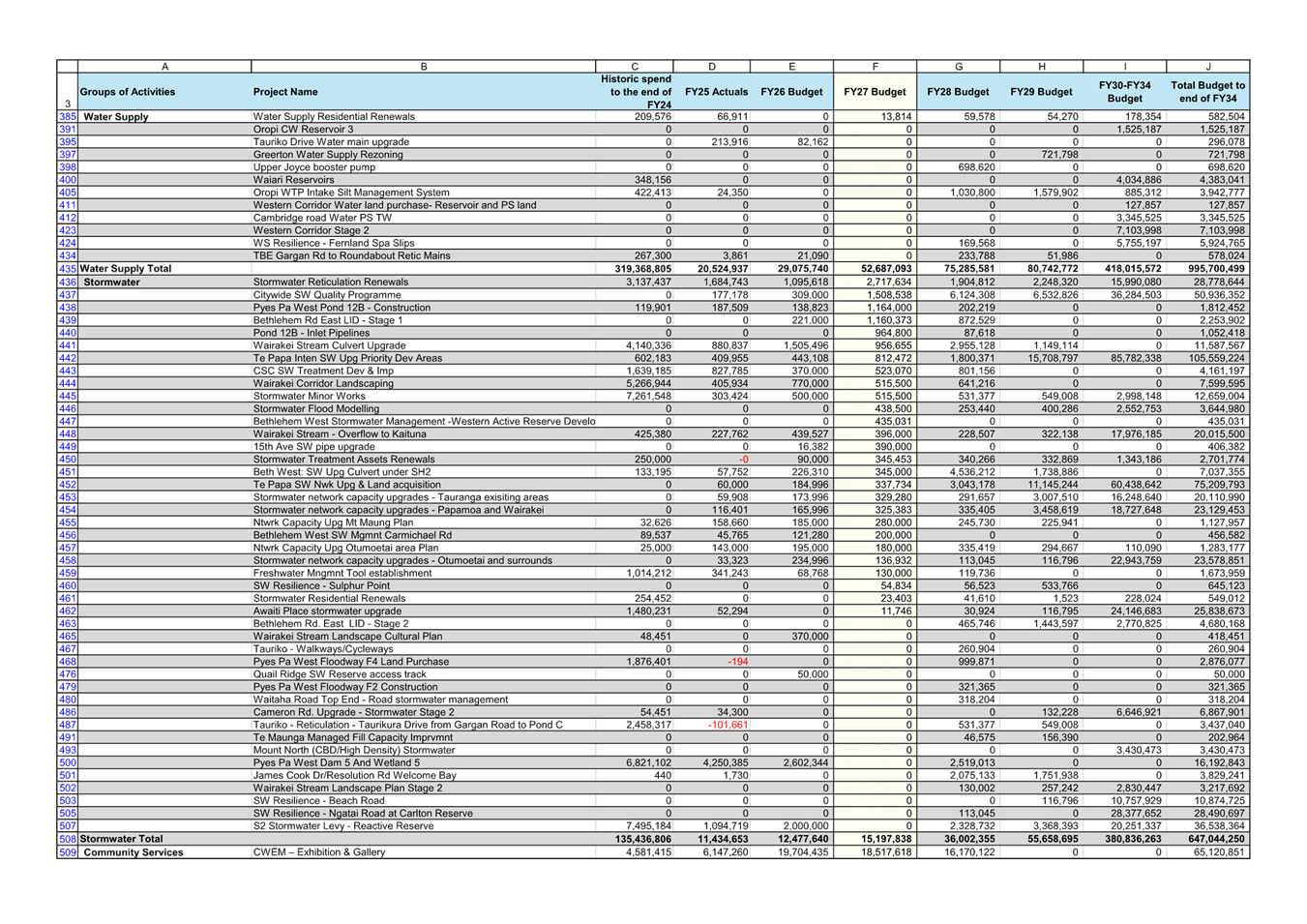
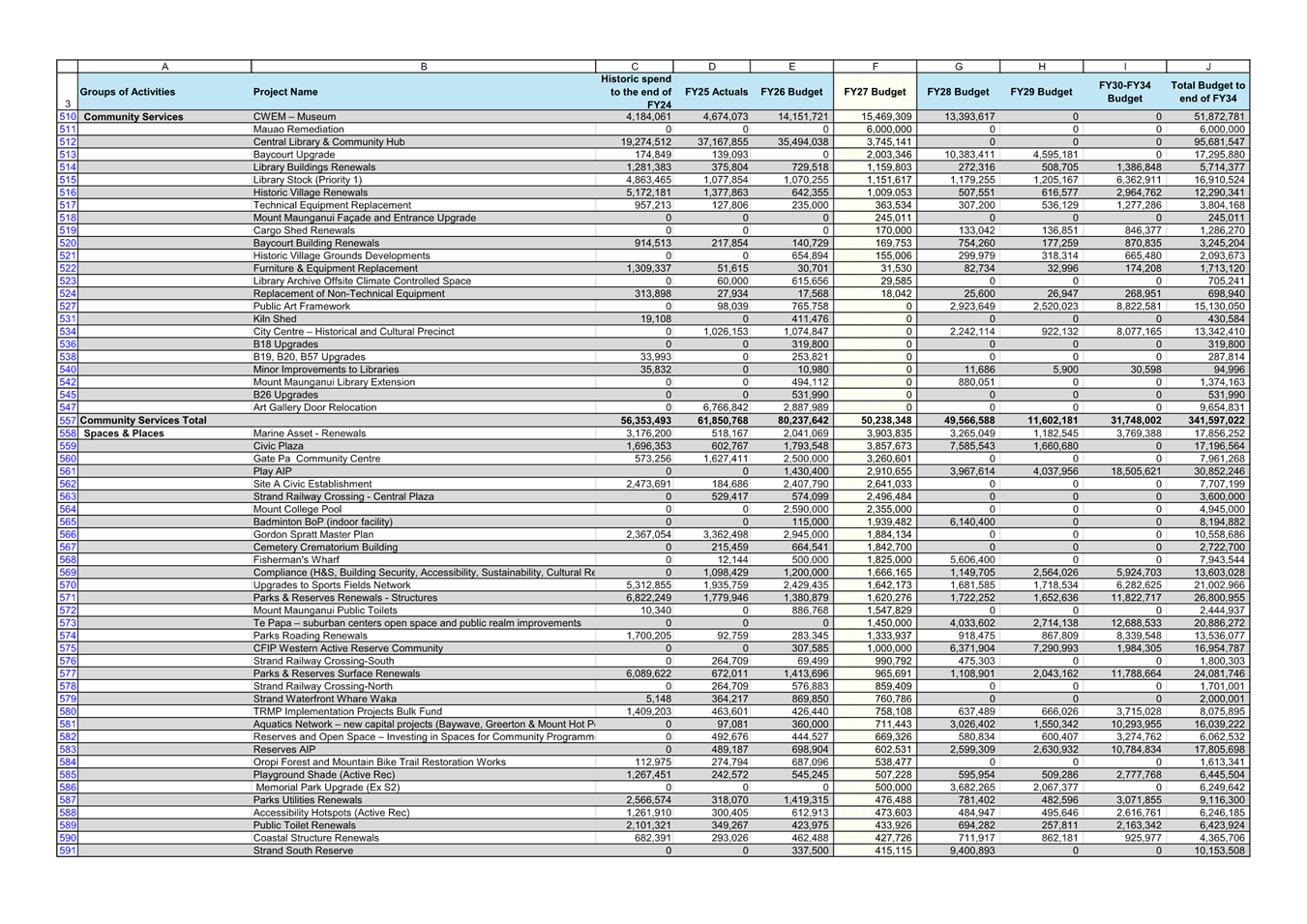
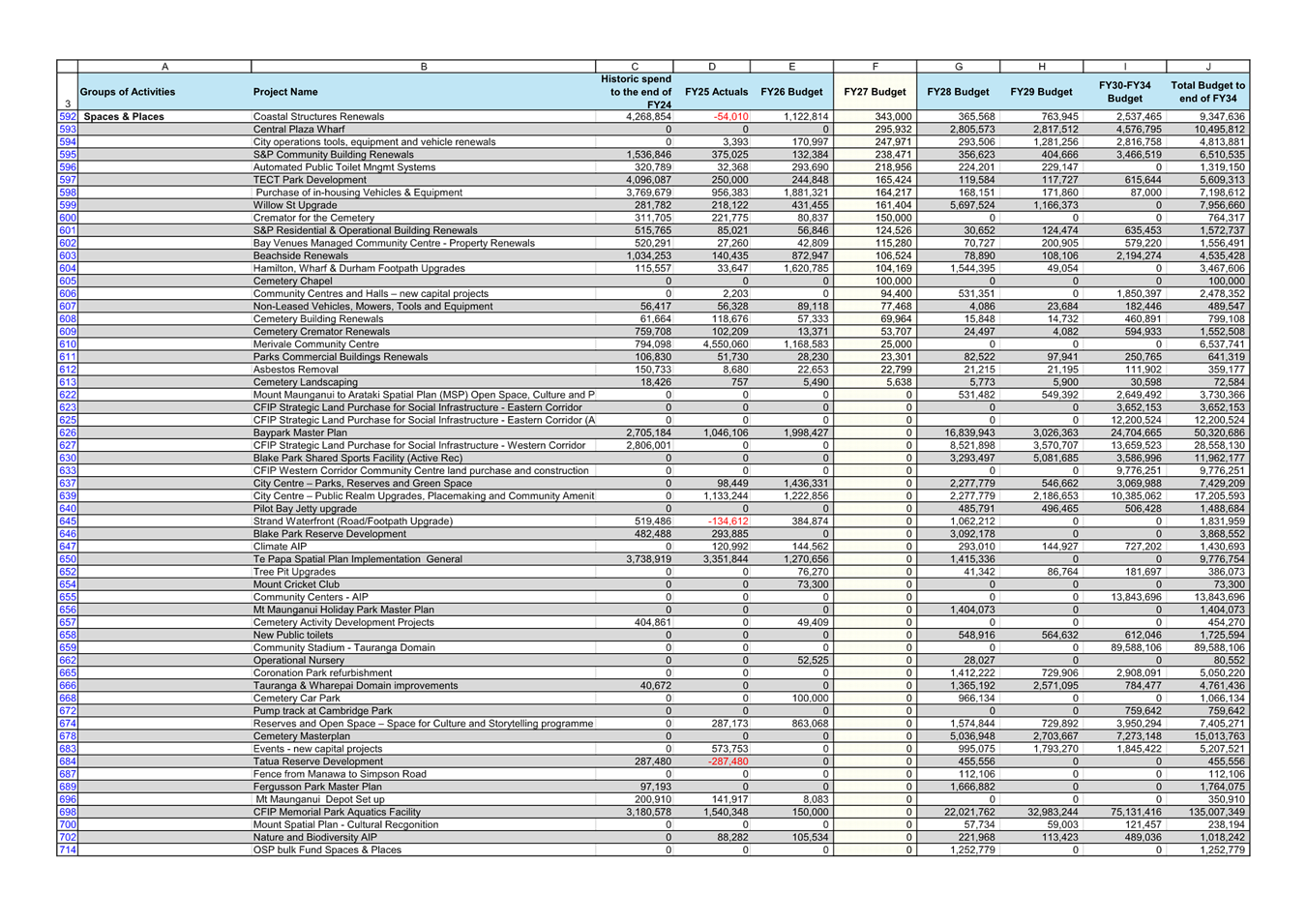
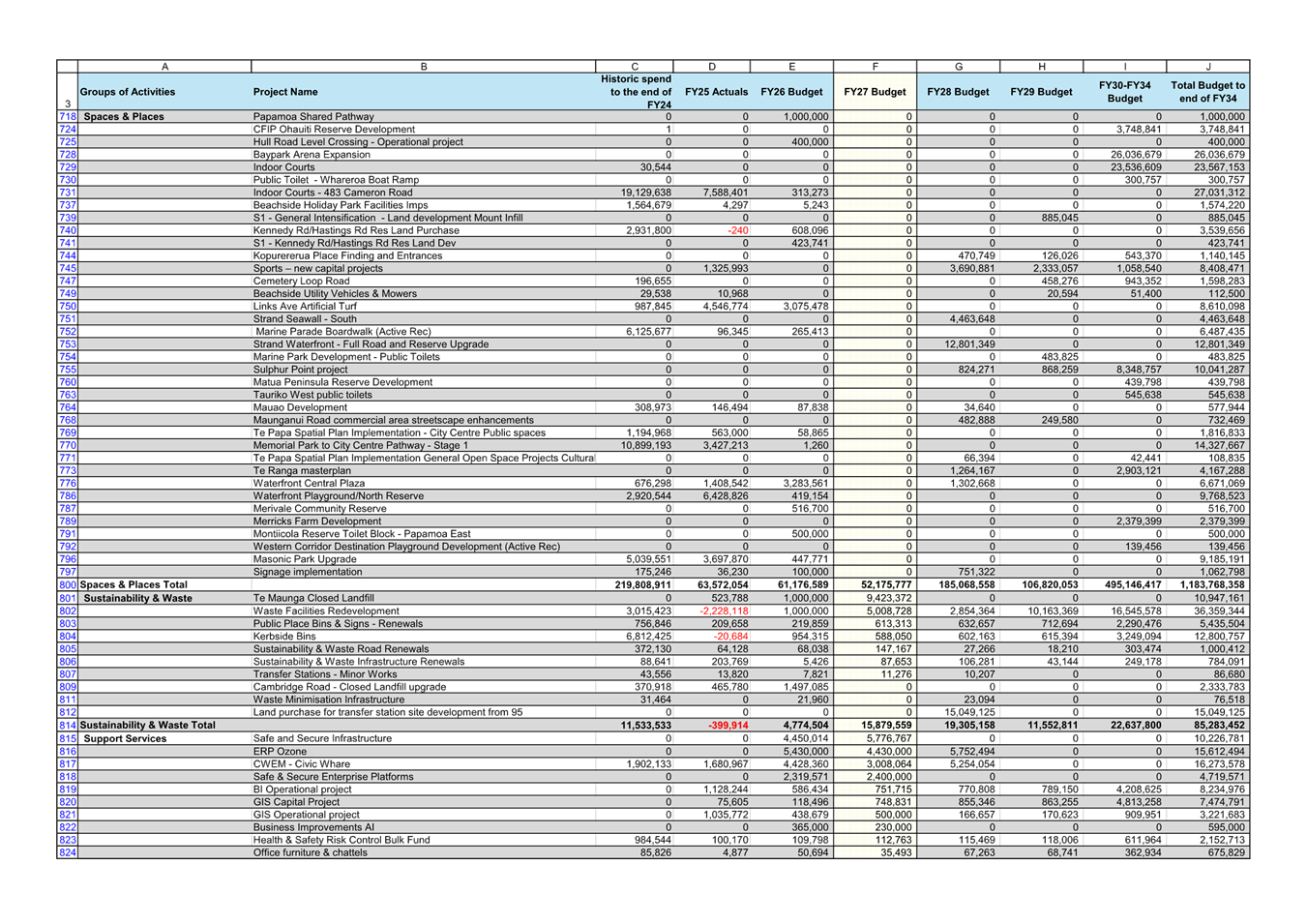
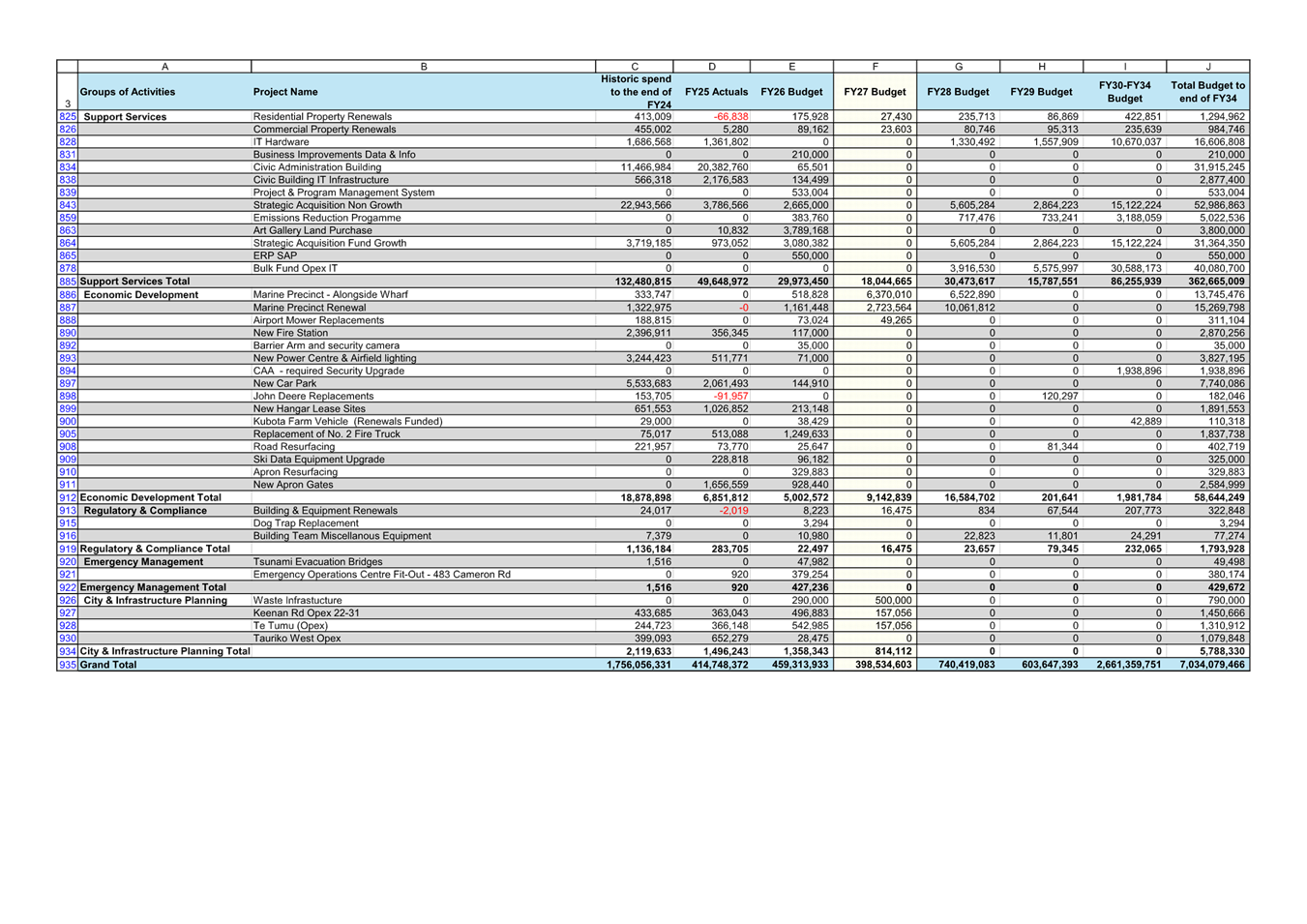
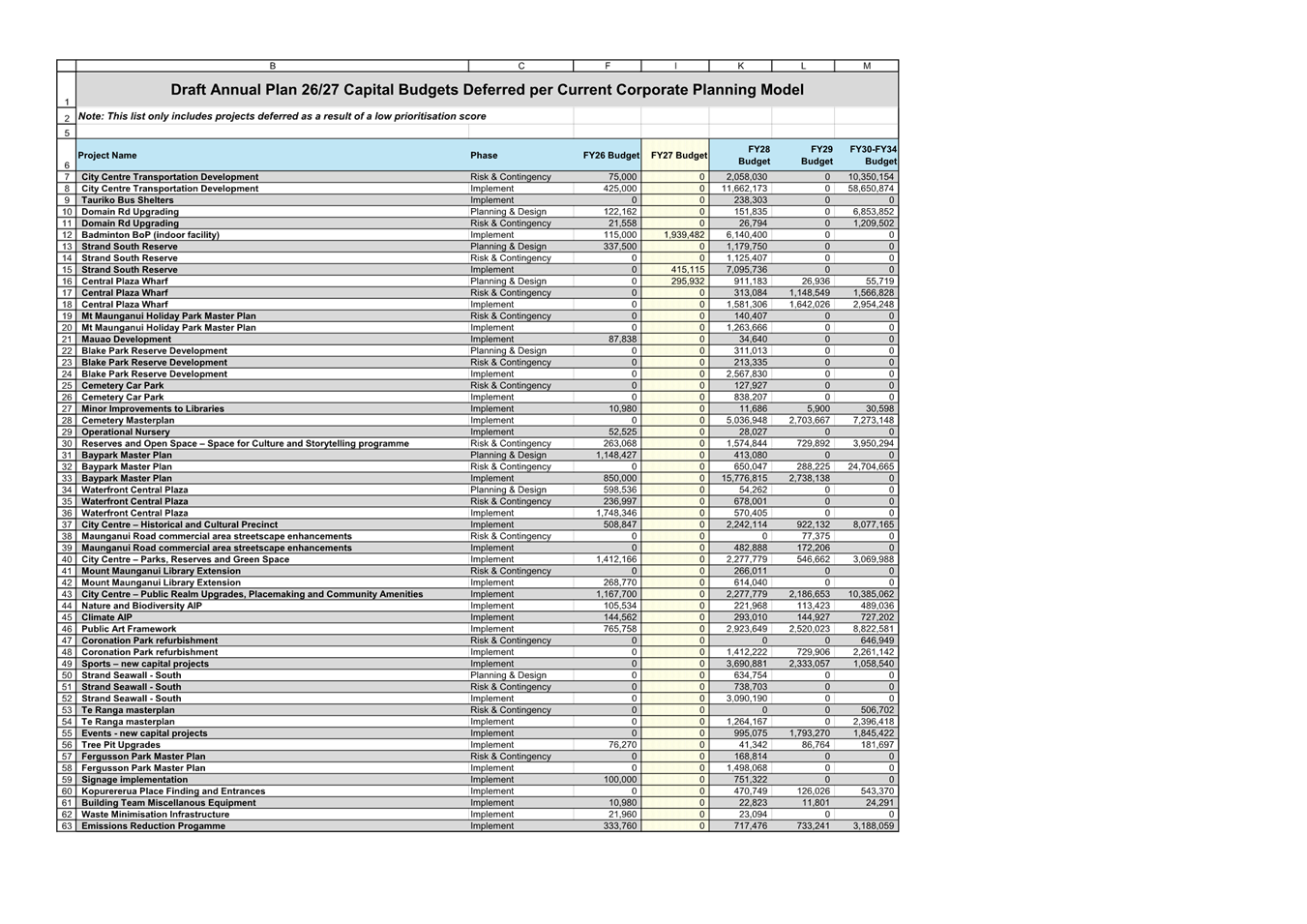
|
Ordinary
Council meeting Agenda
|
24
March 2026
|
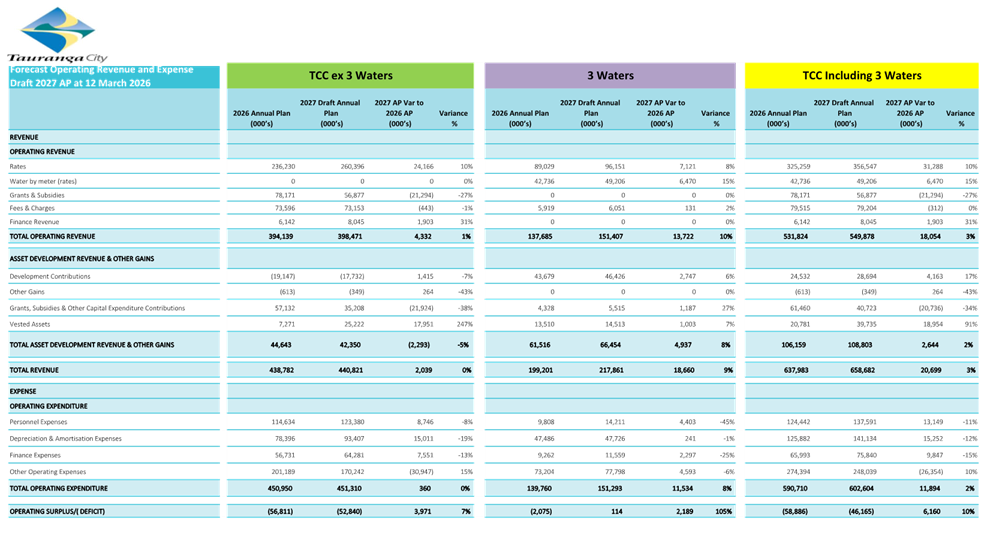
|
Ordinary
Council meeting Agenda
|
24
March 2026
|
11.6 Annual Plan 2026/27 -
Levels of Service Options - part 1
File
Number: A19774731
Author: Jeremy
Boase, Head of Strategy, Governance & Climate Resilience
Authoriser: Christine
Jones, General Manager: Strategy, Partnerships & Growth
Purpose of the Report
1. To consider various
levels of service and associated budgeting implications for inclusion in the
2026/27 Annual Plan.
|
Recommendations
That the Council:
(a) Receives the report
"Annual Plan 2026/27 - Levels of Service Options - part 1".
(b) Approves the following option
for 2026/27 for each of the levels of service identified in this paper:
Climate engagement, education & public awareness
(Attachment 1)
(i) Option 2 – Reduce
budget to $100,000 and allocates 0.1 Full Time Equivalent (FTE)
Communications support
Climate-related
grants and funding (Attachment 2)
(ii) Option 2 – Reduce each
of the three external grant funds to 50% of the 2025/26 value (being an
additional saving of $85,000 above the $50,000 saving previously made),
leaving a total remaining budget of $135,000.
Event
funding (Attachment 3)
(iii) Option 3 – Reduce the
amount of rates funding needed in 2026/27 by $500,000 and top up the
available funds with $300,000 from the Event Reserve.
|
Executive Summary
2. Council has resolved
to consider the future level of community-facing services in order to restrain
rates increases in the 2026/27 annual plan.
3. This paper covers
three issues identified by Council for further discussion. A separate
report in the public-excluded section of this agenda considers a number more.
4. Each issue has its
own dedicated issues and options paper included as an attachment to this
report.
5. The combined
recommendations covered by this report result in a $685,000 reduction in the
rates requirement for 2026/27.
Background
6. At its 10 February
2026 meeting, Council considered a range of issues related to the preparation
of the 2026/27 Annual Plan. Among the resolutions from that meeting were
two which, paraphrased, stated:
· That
Council requires $4.5m to $5.3m of savings to be attained from a list of
service levels included in a confidential attachment to the report to that
meeting, and
· That
Council requires details from the outcome of decision-making on the above to be
provided to the April Council meeting.
7. On 12 February 2026,
Council held an annual plan workshop. During the confidential section of
that workshop, elected members provided further individual and collective
guidance on the topics (from the confidential attachment to the 10 February
meeting) that Council wished to see addressed by options papers.
8. That list of topics
identified by elected members forms the basis of this report.
9. Each of the
attachments to this report covers one or more matters raised in that
list. Each provides Council with options for future service delivery to
the community, with those options prepared with a view to heling work towards
the $4.5m to $5.3m target identified in the 10 February resolution (which
itself will be updated through a separate annual plan report on this
meeting’s agenda).
10. Note that this report is one of
two. This report includes matters that can be covered in the open section
of the meeting.
11. A parallel report is included
in the public excluded section of this agenda. That report includes
attachments that cover matters where the level of service to be determined
involves potential future employment negotiations, or contract or other negotiations
with third parties. The details of decisions made on those matters will
be able to be released publicly once directly affected parties have been
informed.
Statutory Context
12. Section 97 of the Local
Government Act 2002 states that “a decision to alter significantly the
intended level of service provision for any significant activity undertaken by
or on behalf of the local authority” can only be made if provided for
in the long-term plan.
13. None of the recommended
resolutions included in this report are considered to meet this
threshold. As such, decisions can be made through this report.
14. Section 78 of the Local
Government Act 2002 states that Council “must, in the course of its
decision-making process in relation to a matter, give consideration to the
views and preferences of persons likely to be affected by, or to have an
interest in, the matter”. Section 78 further states that
Council “is not required by this section alone to undertake any
consultation process or procedure.”
15. The matters covered by this
report are considered to be ones where Council will be individually and
collectively able to give consideration to the likely views and preferences of
affected and interested parties without conducting formal consultation.
STRATEGIC ALIGNMENT
16. The various matters covered by
the attachments to this report contributes to the promotion or achievement of
the following strategic community outcome(s):
|
Contributes
|
|
We are an inclusive city
|
ü
|
|
We value, protect and enhance the environment
|
ü
|
|
We are a well-planned city that is easy to move
around
|
☐
|
|
We are a city that supports
business and education
|
☐
|
|
We are a vibrant city that embraces
events
|
ü
|
17. The impact on these outcomes is
specific to each paper. In general, any reduction in levels of service is
more likely to have a negative than positive impact on the achievement of
community outcomes.
Options Analysis
18. Each substantive attachment has
a subject-specific assessment of options.
Financial Considerations
19. Each substantive attachment
contains relevant financial information.
20. Taken together, the
recommendations in each of the papers result in a $685,000 reduction in rates
for the 2026/27 year. If Council resolves other options, this total will
be different.
Legal Implications / Risks
21. Any legal implications or risks
are identified in the individual attachments.
22. The Statutory Context section
above has consideration of the Local Government Act 2002 requirements for
decision-making.
TE AO MĀORI APPROACH
23. Where applicable, individual
attachments address matters relevant to Council’s Te Ao Māori
approach. Attachments 3 and 4, relating to Event Funding, specifically
reference the Kaupapa Māori Event Fund.
CLIMATE IMPACT
24. Where applicable, individual
attachments address matters relevant to Council’s climate impact.
Attachments 1 and 2 deal specifically with funding allocated to climate-related
matters.
Consultation / Engagement
25. There has been no specific
pre-engagement with the community on any of the matters covered by the
attachments to this report.
Significance
26. The Local Government Act 2002
requires an assessment of the significance of matters, issues, proposals and
decisions in this report against Council’s Significance and Engagement
Policy. Council acknowledges that in some instances a matter, issue,
proposal or decision may have a high degree of importance to individuals,
groups, or agencies affected by the report.
27. In making this assessment,
consideration has been given to the likely impact, and likely consequences for:
(a) the current
and future social, economic, environmental, or cultural well-being of the
district or region
(b) any persons who are likely to be
particularly affected by, or interested in, the decision.
(c) the capacity of the local authority
to perform its role, and the financial and other costs of doing so.
28. In accordance with the
considerations above, criteria and thresholds in the policy, it is considered
that the decisions covered by this report are of medium significance due to the
likely public interest and the various subgroups of the community who may be
directly affected.
ENGAGEMENT
29. Taking into consideration the
above assessment, that the decision is of medium significance, officers are of
the opinion that no further engagement is required prior to Council making a
decision. See the Statutory Context of this report for consideration of
the legal requirements.
Next Steps
30. Once decisions have been made,
budgets and work programmes will be amended accordingly.
Attachments
1. Issues
and Options - Climate engagement and education - A19760200 ⇩
2. Issues
and Options - Climate grants - A19760120 ⇩
3. Issues
and Options - Event Funding - A19760332 ⇩
4. Event Funding
Framework - Funded Events 2024-25 - A19872887 ⇩
|
Ordinary
Council meeting Agenda
|
24
March 2026
|
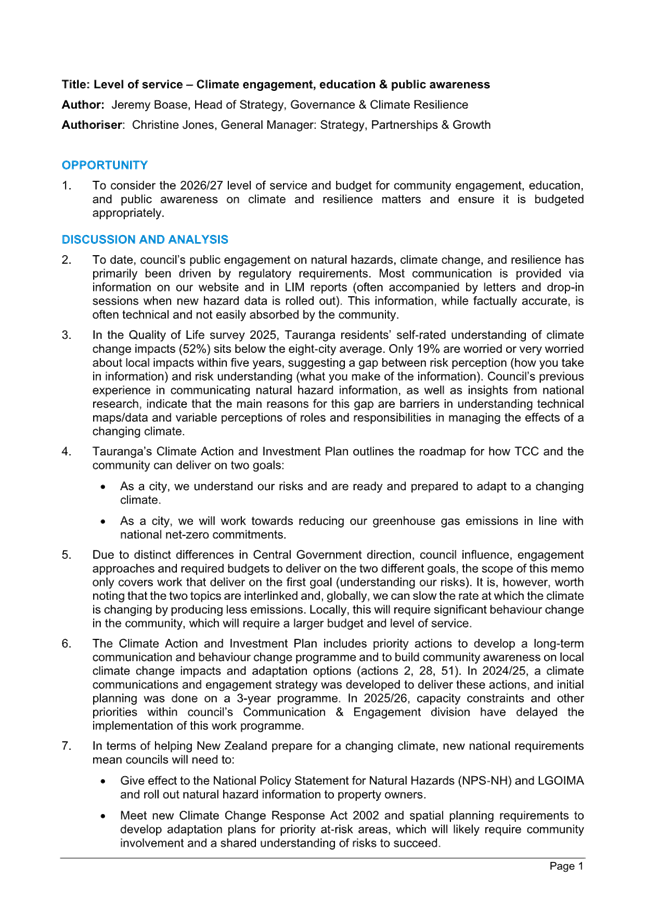
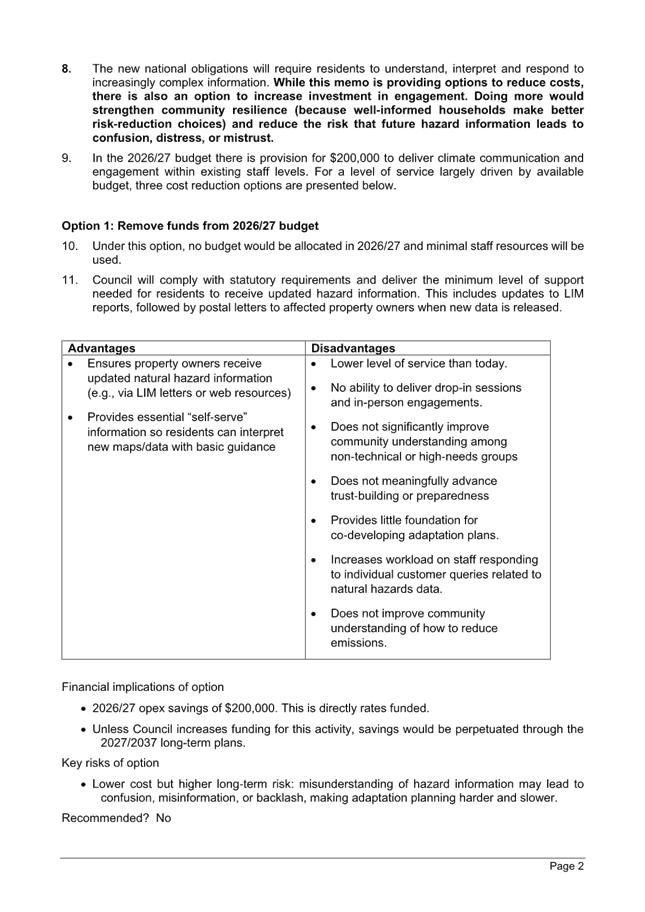
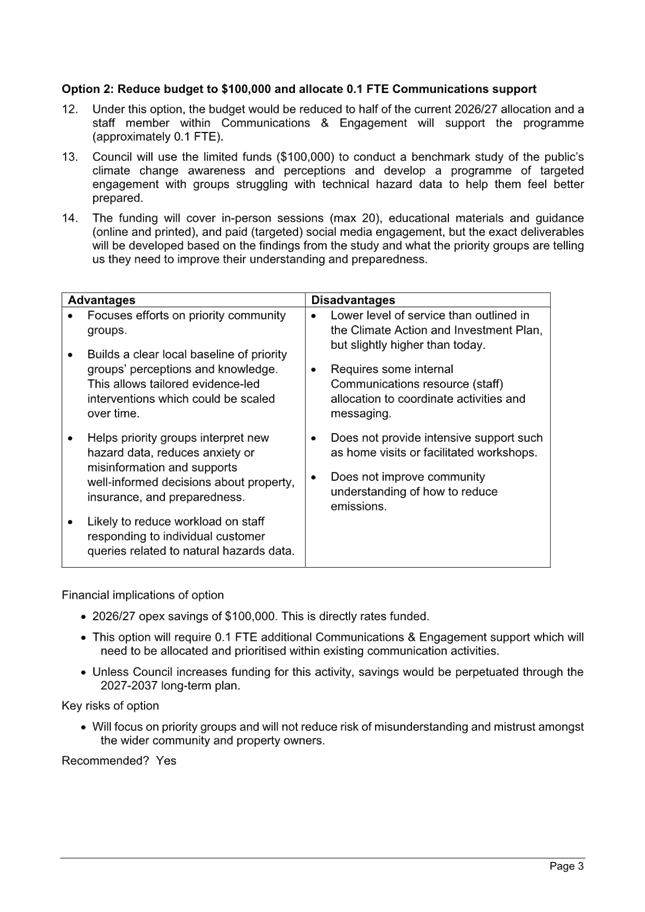
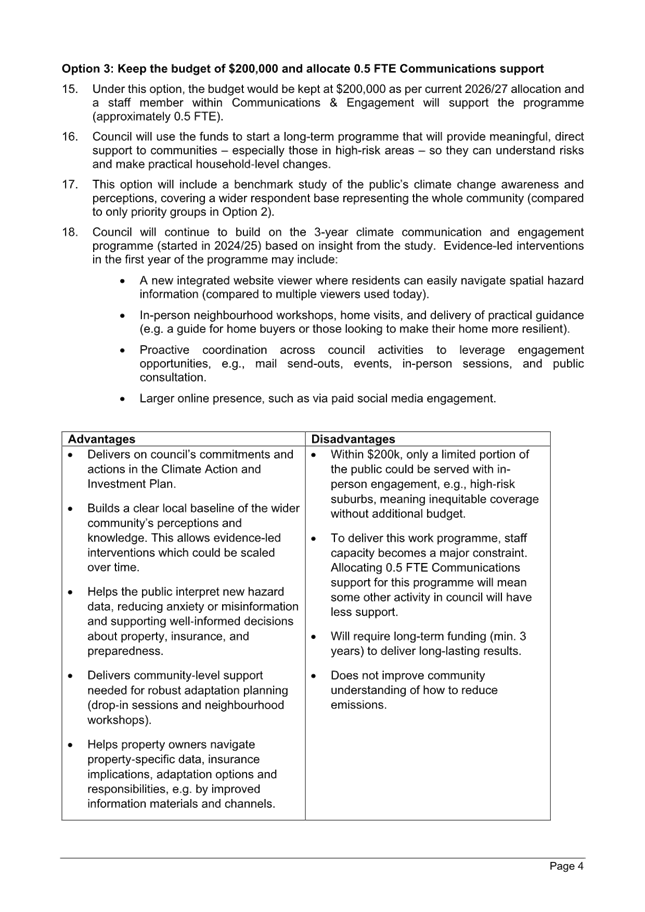
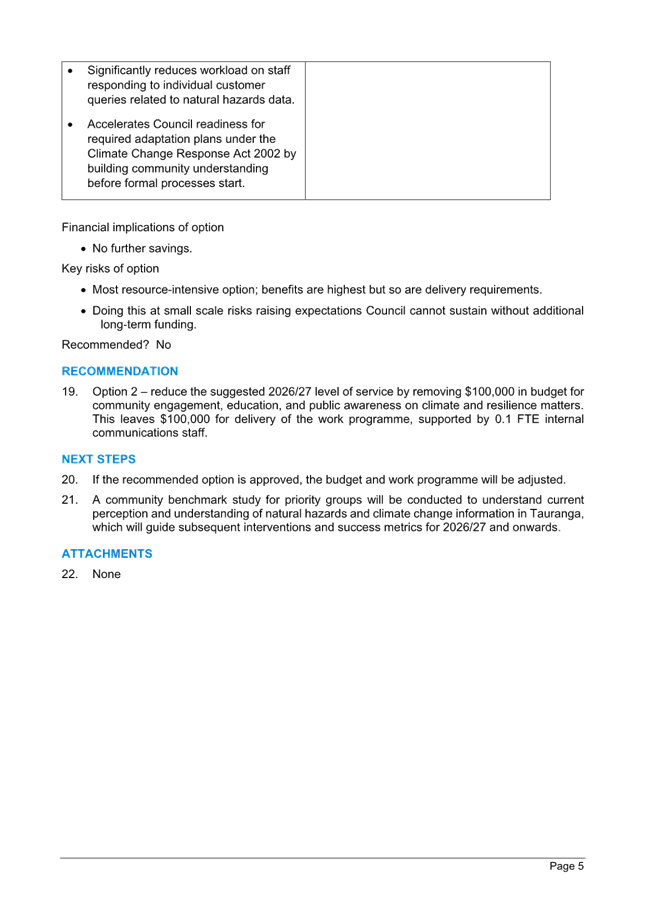
|
Ordinary
Council meeting Agenda
|
24
March 2026
|
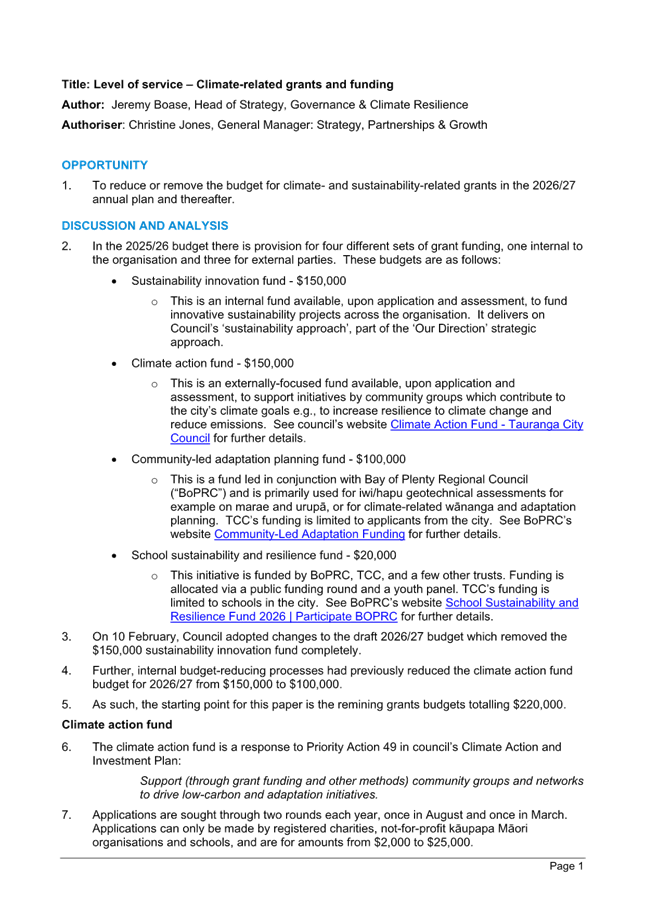
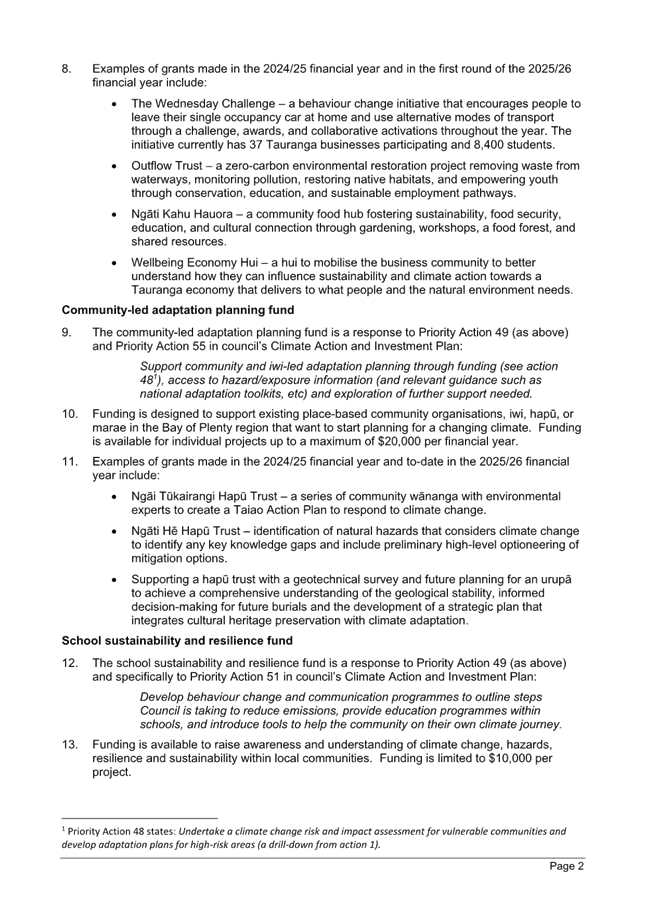
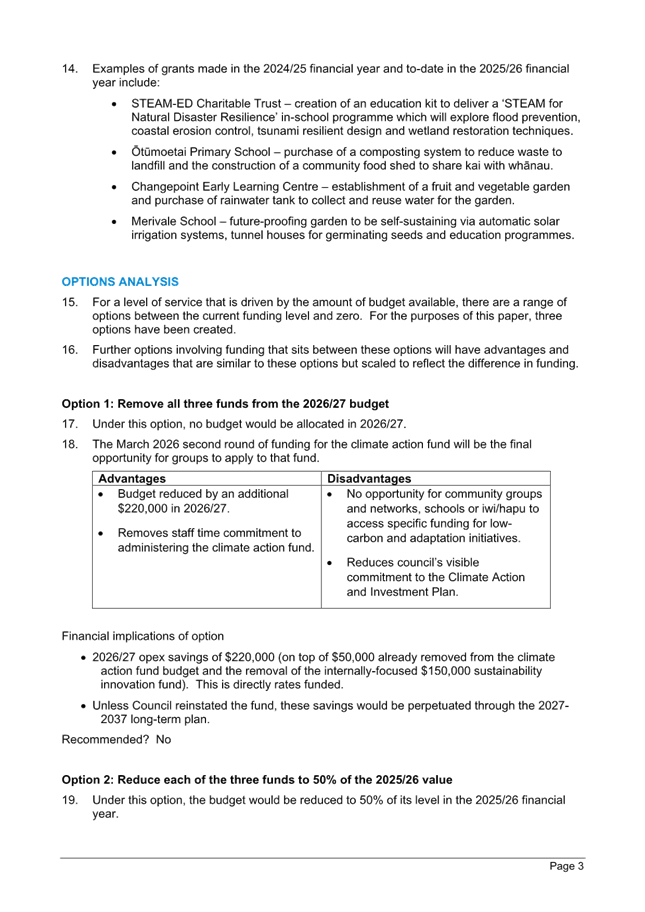
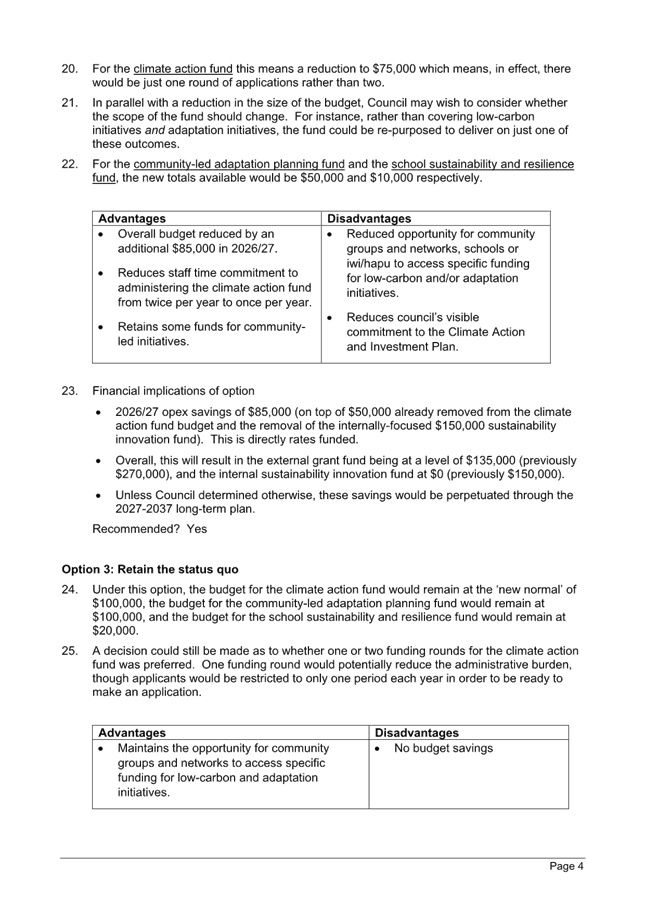
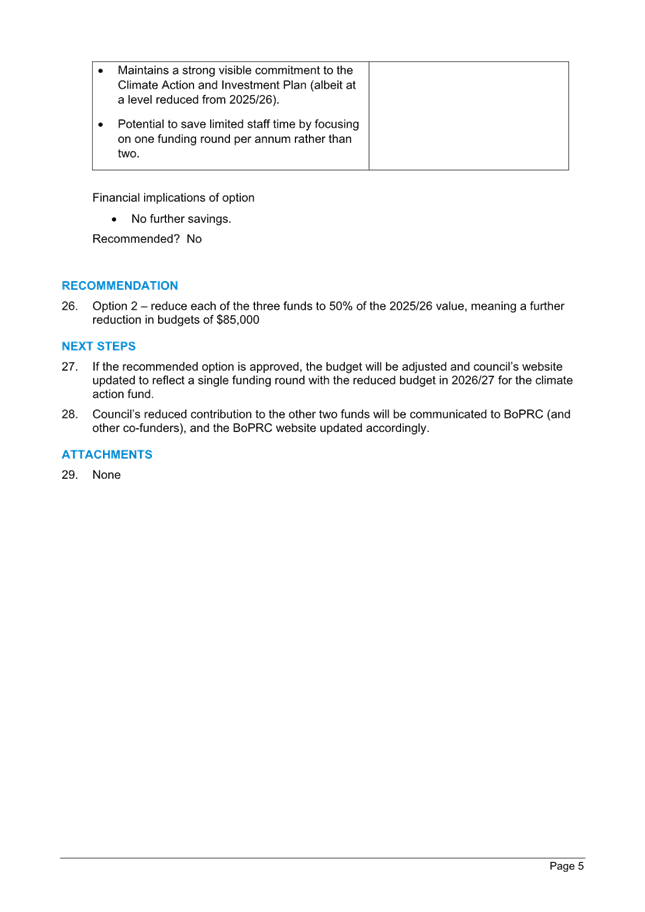
|
Ordinary
Council meeting Agenda
|
24
March 2026
|
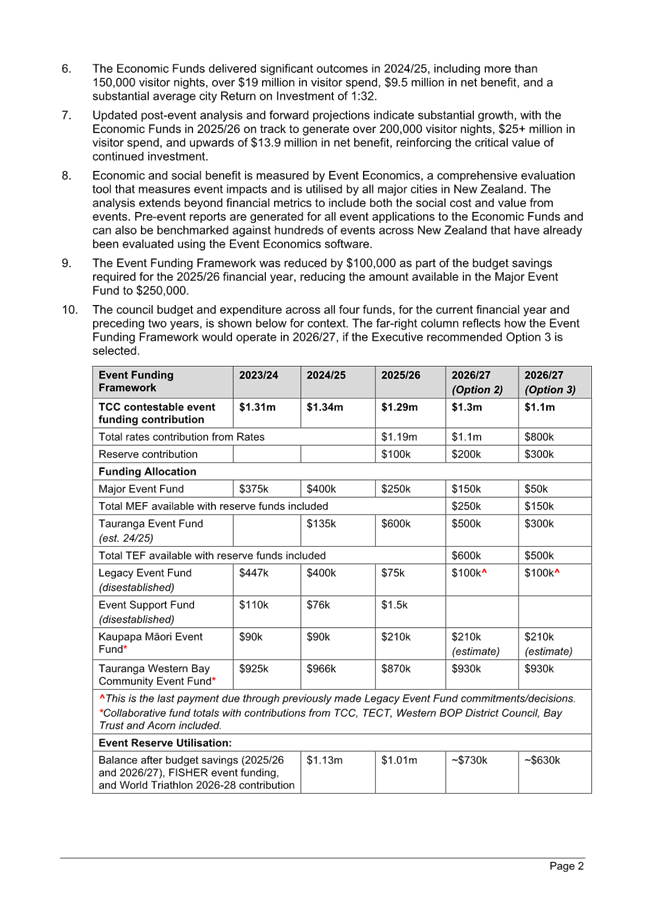
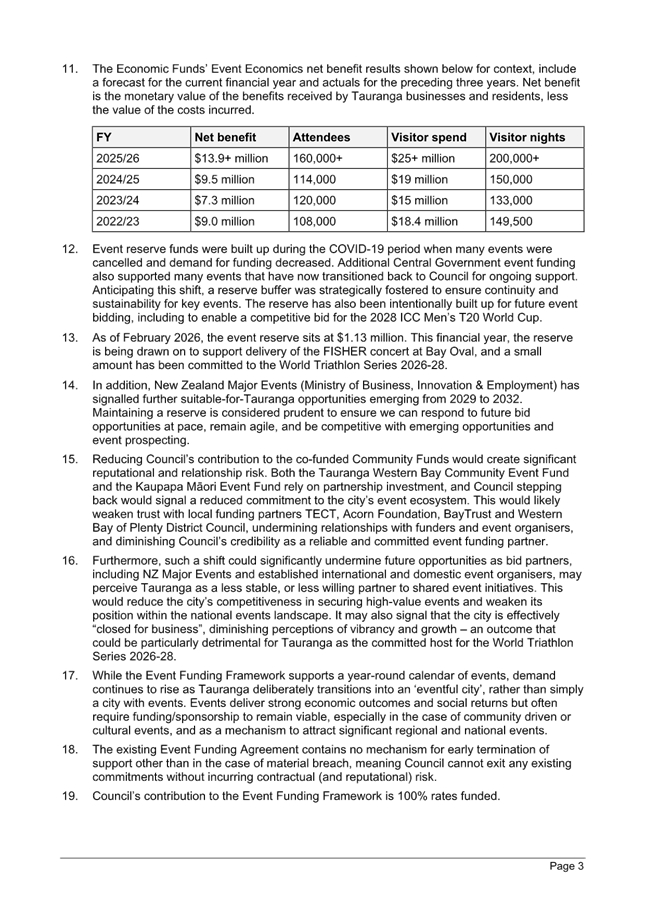
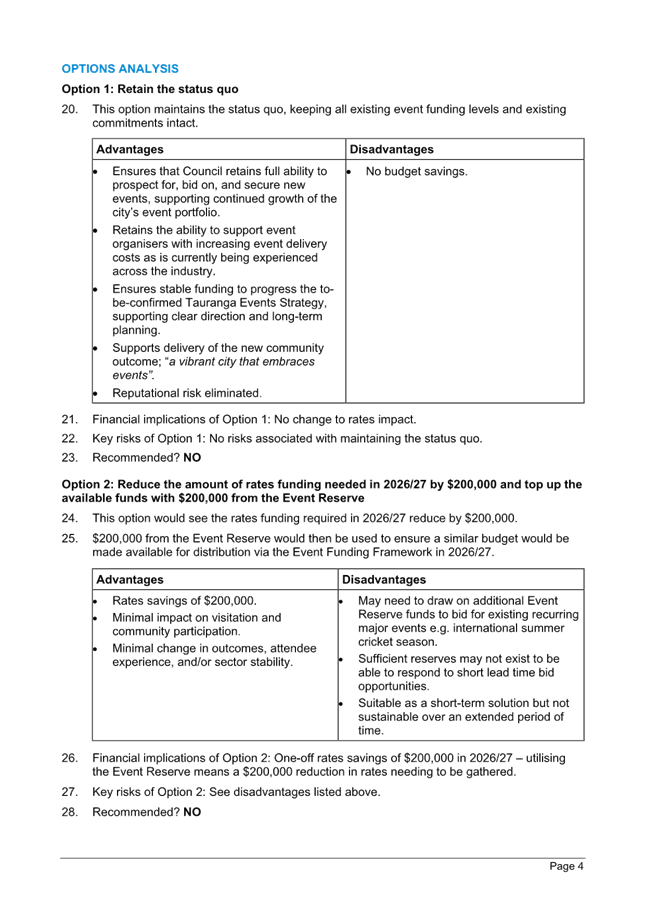
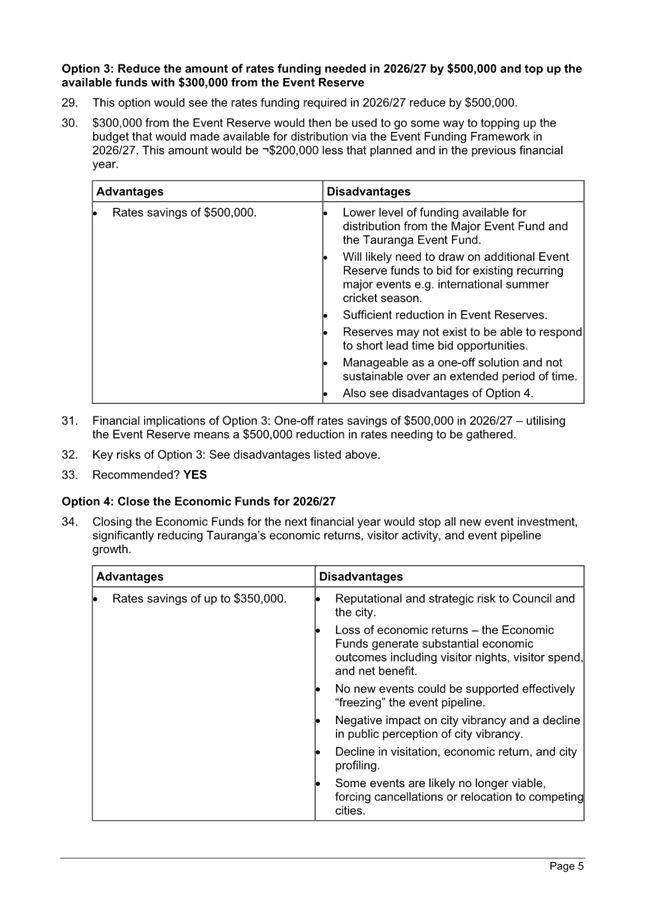
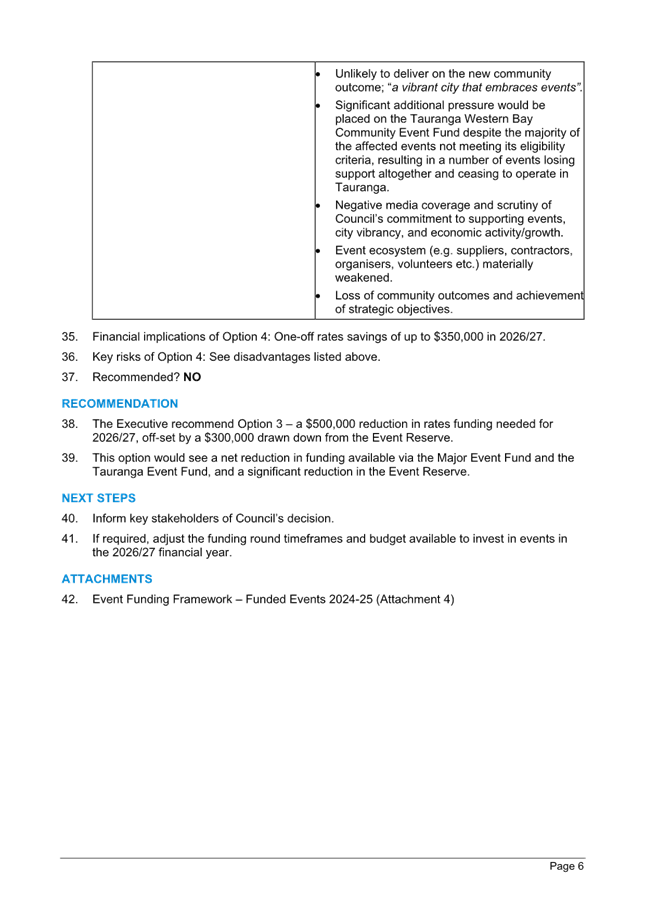
|
Ordinary
Council meeting Agenda
|
24
March 2026
|
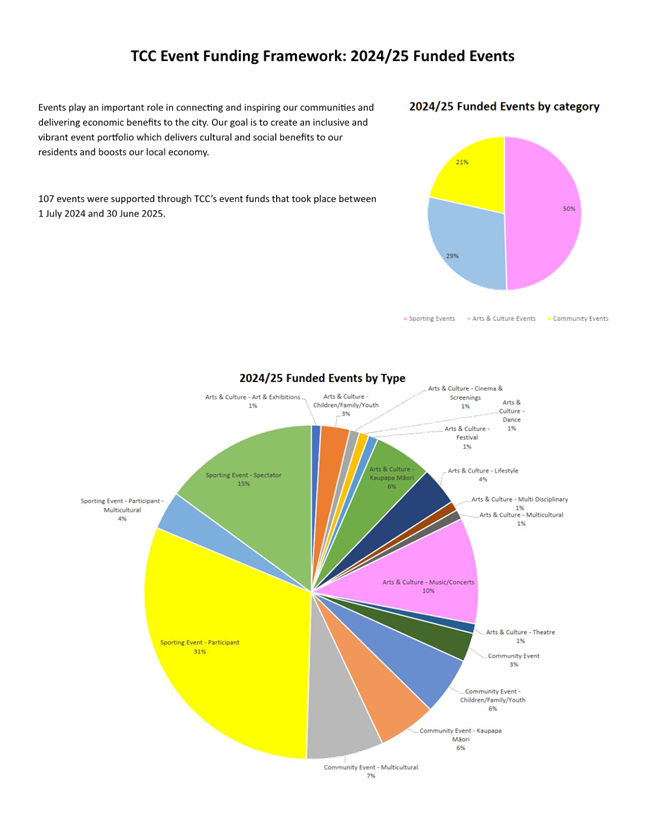
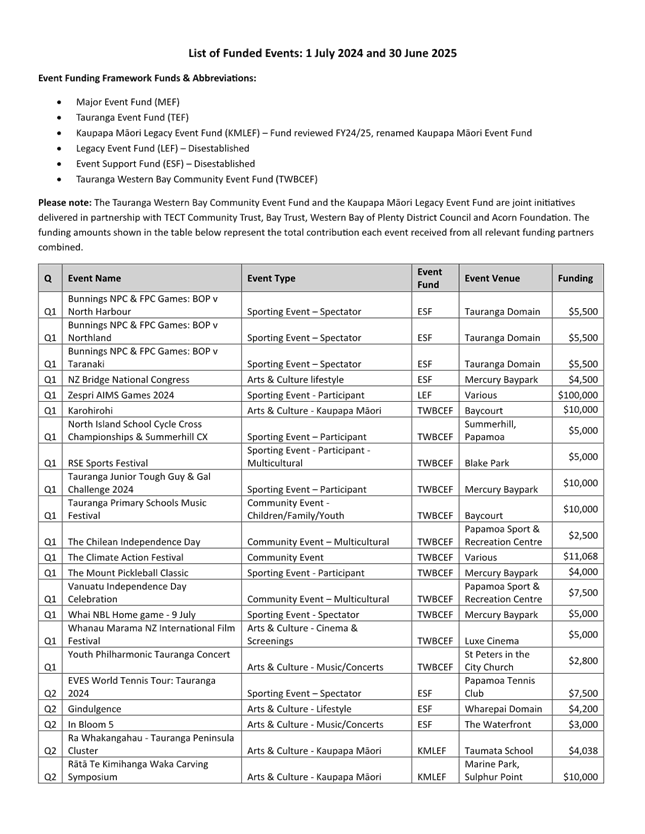
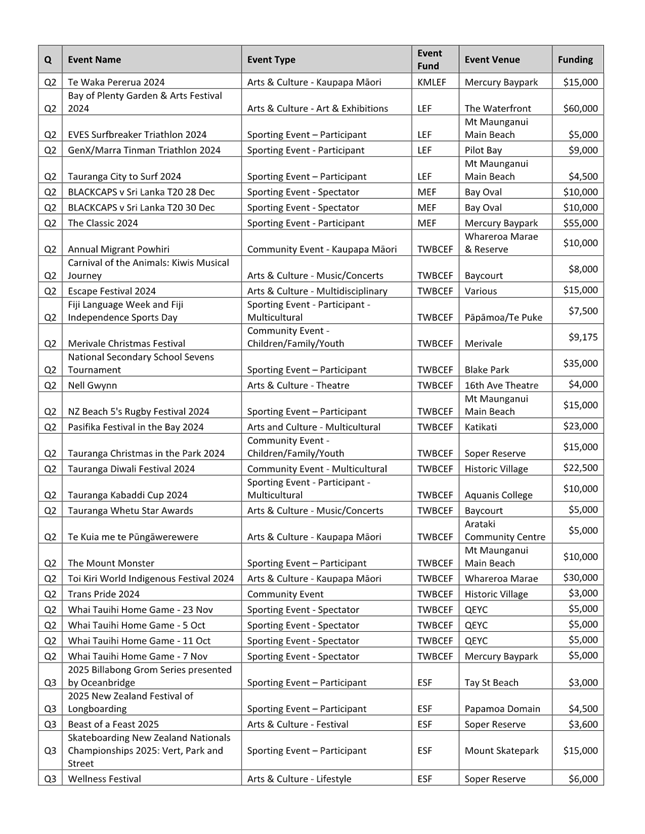
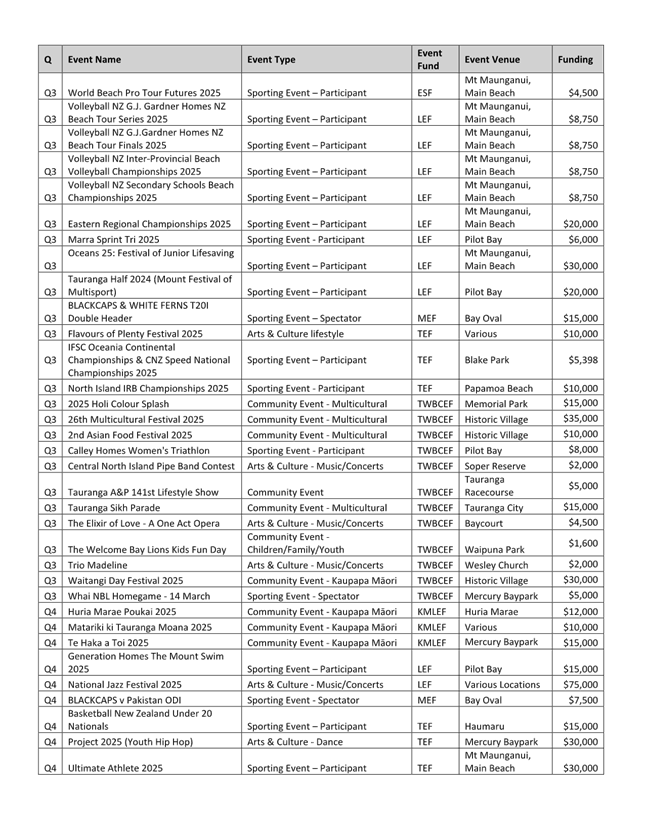
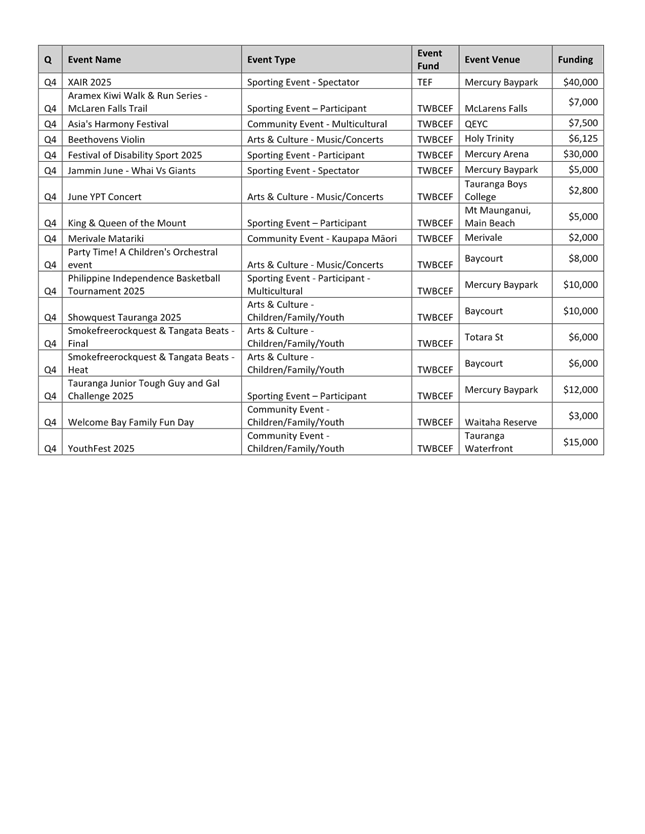
|
Ordinary
Council meeting Agenda
|
24
March 2026
|
11.7 January 2026 Weather
Event and Subsequent Expenditure
File
Number: A19870493
Author: Kathryn
Sharplin, Head of Finance
Frazer Smith,
Manager: Strategic Finance & Growth
Sheree Covell,
Manager: Treasury & Financial Processes
Authoriser: Craig
Rice, Chief Operating and Financial Officer
Purpose of the Report
1. The purpose of this
report is to provide Council with an update on the financial implications
arising from the January 2026 weather event. Unexpected events are not budgeted
for directly but annual contribution to a risk reserve is budgeted to enable
reserve funding of unexpected events. Delegation is sought to the Chief
Executive to undertake the forecast unbudgeted expenditure arising in 2025/26
from the January weather event.
|
Recommendations
That the Council:
(a) Receives the report
"January 2026 Weather Event and Subsequent Expenditure".
(b) Agrees retrospectively to the
expenditure that has been incurred to date of $2m committed primarily through
the emergency response stage, but also at the commencement of recovery and
review including the mayoral fund expenditure.
(c) Notes that in addition to
these costs internal productivity costs arising from staff redirected to the
Emergency Operations Centre (EOC) was $150k.
(d) Agrees to delegate to the
chief executive the financial authority to undertake further expenditure up
to $2.425m this financial year consistent with Table 1 in this report.
(e) Notes the forecast full year
deficit for the Beachside Holiday Park of $689k for which loss of profit
compensation is being sought from our insurers.
(f)
(g) Notes that costs will
continue into 2026/27 and this expenditure is incorporated in additional
budget requested in the “Annual Plan 2026-27 Update” report to
this meeting.
|
Executive Summary
2. This report
identifies financial implications for TCC from the January weather event.
3. The report broadly
categorises expenditure to 16 March as expenditure committed during the event
response ($1.45m) under direction of the emergency response controller, and
expenditure occurring subsequently as part of review and recovery
($550k). Retrospective Council agreement is sought for the total
committed expenditure to date of $2m.
4. The report also
forecasts expenditure arising from the weather event to the end of June 2026 at
$2.425m. This includes the full amount of the monitoring equipment with
TCC only expecting to pay a share with the balance covered by FENZ and NZ
Police. Council delegation to the Chief Executive for this unbudgeted
expenditure is requested in this report.
5. Recovery and review
expenditure is forecast to continue through 2026/27 and additional budget is
requested to be included in the 2026/27 Annual Plan as part of a separate
report to this meeting.
6. Funding the
expenditure identified in this report comes from a variety of sources including
NEMA, grants and insurance. The TCC portion of funding is proposed to
come from the risk reserve which has a balance at 30 June 2025 of $5m and has
been established for this purpose consistent with the financial strategy for
the 2024-34 Long-term Plan.
Background and Discussion
7. The January 2026
weather event resulted in declaration of a State of Emergency for the Bay of
Plenty. Tauranga experienced significant damage across the city including on
Mauao where a devastating landslide resulted in the loss of life and
significant damage to Mauao and surrounding facilities. An Emergency Operations
Centre and Controller were activated. Expenditure was committed under the
authority of the Controller during the state of emergency to ensure access to
the Mauao site was controlled, geotechnical information was gathered on damage
to Mauao and the landslide risk, monitoring was set up, welfare response and
public safety responses were put in place including establishment of He Maima
Aroha community care centre..
8. Subsequently
expenditure has been committed and further expenditure required to meet
requirements of a number of reviews and ongoing recovery and site safety.
Multiple active and independent inquiries underway include reviews by the
following organisations:
· Coroner
· Worksafe
NZ
· NZ
Police
· TCC
external review
· Central
Government
9. A significant amount
of the forecast expenditure this year and for next year (as included in the
Annual Plan Update report to this meeting) is on legal review of past
documentation technical information, interviews and ongoing legal advice.
This work will meet the requirements of the various reviews as well as
supporting TCC future decisions and organisation.
10. Other expenditure is also
proposed as part of recovery from that event, including appointment of a
recovery manager to lead the city’s long-term recovery from the Mauao
landslideand the wider impacts across the city.
11. This Council report is
concerned with financial delegation for unbudgeted expenditure forecast for the
remainder of this year required for the CE to approve this expenditure.
12. Detail of recovery proposals
will be provided as they are developed by the recovery team, working with
Council.
Statutory Context
13. There
are two Acts relevant to this report. The Civil Defence & Emergency
Management (CDEM) Act 2002 which governs powers to commit expenditure during a
State of Emergency and the Local Government Act 2002 which governs
responsibility for setting council budgets through annual plans and long-term
plans.
14. Under
the CDEM Act, while a State of Emergency is in force, a Controller may
authorise expenditure necessary to respond to the emergency, even if it exceeds
normal delegations. This flows from:
· Section 91 – power to give directions, including
directing actions that necessarily incur cost.
· Section 86–94 emergency powers framework, which
prioritises protection of life and property over normal administrative
controls.
15. In practice, this allows a
Controller to:
· Approve emergency procurement
· Hire contractors, equipment, or services
· Direct local authorities or lifeline utilities to act
(with costs incurred)
· Commit public resources immediately
16. There is no dollar cap in the
Act, but expenditure must be reasonable, necessary, and directly linked to the
emergency. Normal procurement and financial rules may be bypassed only to
the extent required.
17. For Council’s expenditure
controls during and after the weather event the Local Government Act 2002
guides budgeting and prudent financial management. Budget for Council
revenue and expenditure is set by Council through long-term plans and annual
plans. Unforeseen events affecting council operations and
responsibilities are part of the risk and uncertainty of planning and
budgeting. The financial strategy in the 2024-34 Long-term Plan (LTP)
sets out tools used by Council to manage risk and uncertainty in its budgets
(page 281). These tools include:
(a) Maintenance of debt headroom
below treasury limits to provide ability to borrow to respond to unforeseen
events
(b) Funding of a risk reserve,
funded from annual rates, that enables consistent funding to respond to
unforeseen events which are likely to occur sporadically over time.
18. Risk reserve funding in the LTP
was set at $1m per annum. This amount of funding has been maintained for
2024/25 and 2025/26 and is included in the draft 2026/27 Annual Plan. The
balance of the risk reserve at 30 June 2025 was $5m.
19. Council delegates to the Chief
Executive financial authority to spend to the budget. However, unbudgeted
emergency expenditure does not currently fall within this delegation, despite
the collection of funds for the risk reserve. Therefore, the CE must seek
additional financial authority to spend above existing financial delegations
and to access risk reserve funding.
STRATEGIC ALIGNMENT
20. This contributes to the
promotion or achievement of the following strategic community outcome(s):
|
Contributes
|
|
We are an inclusive city
|
ü
|
|
We value, protect and enhance the environment
|
ü
|
|
We are a well-planned city that is easy to move
around
|
ü
|
|
We are a city that supports
business and education
|
ü
|
|
We are a vibrant city that embraces
events
|
☐
|
21. Council reflects its
responsibility for maintaining and helping to restore areas of the city after
weather events by supporting emergency response and subsequent recovery and
review. The maintenance of a risk reserve is a key mechanism by which Council financially
plans for these events.
Options Analysis
22. Council has an option to
approve or not approve the additional expenditure identified for review and
recovery.
|
Option
|
Summary
|
Advantages
|
Disadvantages /
Risks
|
|
1
|
Approve financial
delegation to the CE for further unbudgeted operating expenditure for the
remainder of the current financial year of $2.425m
|
Achieves the
expenditure requirements for review response and recovery arising from the
January 2026 weather event.
|
Increases
debt.
|
|
2
|
Do not approve
financial delegation to the CE for further unbudgeted operating expenditure
for the remainder of the current financial year of $2.425m
|
Further debt is not
incurred in 2025/26.
|
Council would not be
resourced to adequately contribute to the reviews that have been established
of the weather event. The planned recovery work would not be
undertaken.
Undertakings to
suppliers would need to be managed.
|
Financial Considerations
Expenditure
23. The following table summarises
expenditure to date and projected expenditure through to the end of this
financial year. There is further expenditure required in 2026/27 of $2.6m
opex and $6m capex.
Table 1: Expenditure
Summary
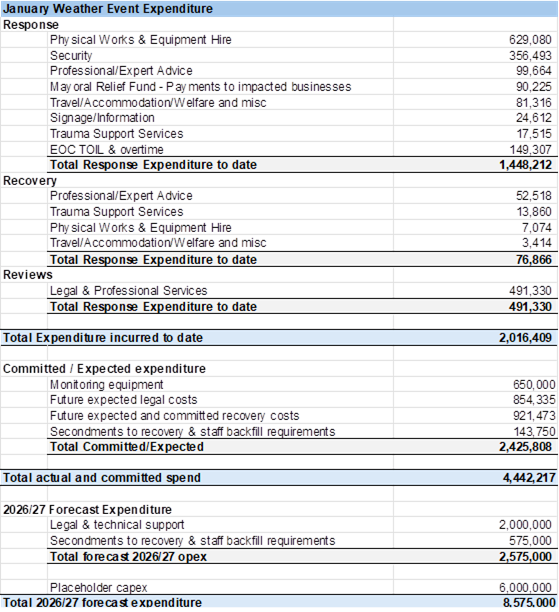
Revenue and Funding
24. We have outlined several
funding sources that will assist TCC/ the community to deal with the impacts of
the weather event. These include:
(a) Crown support through NEMA
(b) Mayoral relief fund
(c) Donations from the public
(d) Insurance Coverage
Crown Financial Support
through NEMA
25. NEMA (National Emergency
Management Agency) is the entity which provides Crown funding support in
relation to an emergency.
26. We are able to claim 100% of
eligible welfare cost back from NEMA. To date we have incurred
approximately $31,000 in welfare costs. We intend to make a claim in
April with reimbursable amounts to be determined by NEMA after their standard
claim review process. Although there is no new expenditure being
incurred, we are still receiving some late invoices.
27. In relation to costs of dealing
with the event and repairs to essential infrastructure we are unlikely to
qualify for funding from NEMA. To qualify Council would need to reach a
threshold of expenditure of approximately $6m. This threshold is based on
the size of the Council. In relation a potential claim for this funding
we note:
(a) For Councils, essential
infrastructure only relates to 3 waters assets (i.e. doesn’t include
restoration of Mauao or walkways)
(b) Relates to all damaged
infrastructure from the event, not just at this site (i.e. includes damage to
infrastructure at other sites around Tauranga)
(c) We only get 60% of the amount
over the threshold (approximately $6m) from NEMA (see insurance section for
more).
Mayoral Relief Fund
28. Tauranga City Council has
established a Mayoral Relief Fund to provide financial assistance to families,
residents, and businesses experiencing urgent, unmet needs following the recent
severe weather events across Tauranga. The fund also acts as a flexible,
locally administered mechanism to support immediate recovery where existing
support may be delayed, incomplete, or unavailable.
29. The type of support that the
fund offers includes:
· specific
needs of individuals or families directly affected
· financial
and advisory support to locally impacted businesses
· recovery
of Mauao
· assistance
to community and volunteer groups involved in recovery efforts
The
following areas fall outside the scope of the fund:
· Damage
or losses covered by insurance, EQC, or other funding streams
· General
maintenance or repairs unrelated to the weather event
· Long-term,
large-scale building or infrastructure repair
· Costs
ordinarily met by local government, central government welfare or
infrastructure programmes.
30. To date we have received $200k
from NEMA for the mayoral fund, and $14k from the general public.
31. To date $ 90k of these funds
has been distributed to affected businesses. The Mayoral Relief Fund Panel
manages these funds and determines how funds are allocated.
Insurance Coverage
32. Council has insurance policies
that come into effect in relation to the weather events, particularly in
relation to the slips on Mauao. At this stage Council assessors have not had
access to the site so there has been no formal insurance assessment made.
Relevant Council insurance policies in relation to this event are outlined in
Table 2 below.
Table 2: Insurance Cover Summary
|
Insurance Type
|
Limit
|
Excess
|
Comment
|
|
Material Damage (MD)
Mount Hot Pools (BVL)
Beachside Holiday Park
|
$7.1m
$9 m
|
$25K *
|
$2m sublimit for
landslip
|
|
Loss of Revenue
Mount Hot Pools
Rest of Council
|
$1.5m (12 months)
$6m (24 months)
|
$25K *
|
Relates to loss of
profit (not revenue) based on these entities continuing
|
|
AICOW
|
$9.1m (shared)
|
$25K *
|
Shared over
BOPLASS. Extra 1.1m just for TCC
|
|
Claim preparation costs
|
$1m (shared)
|
N/a
|
Shared over BOPLASS
|
* Same excess applies to all three
33. There is a $2m sublimit for
landslips within the policy. This will apply to both the Hot Pool assets
and the Beachside Holiday Park. Until we can access the site, it is not
possible to understand what the extent of the damage is, particularly in
relation to the hot pools.
34. Because of the significance of
the claim, we have appointed Aon to assist with the claim preparation.
The insurance company has appointed a loss adjuster to work on their
behalf. The costs of the claim preparation are fully claimable under the
policy.
35. The insurance company has paid
out $1m to TCC in advance recognition of the claim, which has been recognised
in a new reserve called “January Weather Event” pending decisions
on use of these funds once TCC has access to the site and decisions have been
made about a course of action.
36. We are currently preparing
financial and booking information in relation to potential loss of profits
cover for both the Mount Hot Pools and Beachside Holiday Park. The ability to
claim insurance for business interruption is dependent on the future opening of
the camp grounds and hotpools.
37. The AICOW (Additional Increased
Cost of Working) cover might come into play depending on the way TCC approaches
the interim period until facilities are reopened. An example could be to
turn a sports ground into a temporary campsite to cover bookings already
made. The costs of setting up such a site could be included in an AICOW
claim.
38. There is also a water reservoir
on Mauao. Any damage to the reservoir would likely fall under the MD
policy and the existing sublimit. There is a separate policy for the
underground assets, but this has an excess of $1.5m so it is unlikely that this
would result in a claim unless there is also pipe damage at other locations
around Tauranga arising from the same event. Any claim under this policy
would recover the 40% not recoverable from the Crown (see NEMA section above).
39. There is no potential claim in
relation to damage to paths or tracks. These are not insurable assets.
Legal Implications / Risks
40. The expenditure associated with
review and recovery includes providing information related to legal obligations
and risk management.
TE AO MĀORI APPROACH
41. TCC’s response to the
January weather event follows the principle of Manaakitanga with a strong duty
of care and safety for our people. Tangata whenua have been alongside TCC
on the response and recovery and will continue to be engaged through findings
of the reviews and future decision-making.
CLIMATE IMPACT
42. The January weather event
involved heavy and concentrated rainfall resulting in land slips and other
impacts. This was the primary cause of the costs identified in this
report and the reason for ongoing expenditure on reviews and recovery. The
reviews that are commencing will contribute to future understanding of risks
and options to manage future climate risks and impacts.
Consultation / Engagement
43. No consultation is proposed as
a result of this report.
Significance
44. The Local Government Act 2002
requires an assessment of the significance of matters, issues, proposals and
decisions in this report against Council’s Significance and Engagement
Policy. Council acknowledges that in some instances a matter, issue,
proposal or decision may have a high degree of importance to individuals,
groups, or agencies affected by the report.
45. In making this assessment,
consideration has been given to the likely impact, and likely consequences for:
(a) the current
and future social, economic, environmental, or cultural well-being of the
district or region
(b) any persons who are likely to be
particularly affected by, or interested in, the matter.
(c) the capacity of the local authority
to perform its role, and the financial and other costs of doing so.
46. In accordance with the
considerations above, criteria and thresholds in the policy, it is considered
that the matter is of medium significance.
ENGAGEMENT
47. Taking into consideration the
above assessment, that the matter is of medium significance, officers are of
the opinion that no further engagement is required prior to Council making a
decision. A website has been established to provide materials, documents and
updates regarding the event and response.
Next Steps
48. If financial delegation is
approved, the Chief Executive will undertake the expenditure required to the
end of this financial year.
49. The outcome of reviews and
recovery initiatives will be provided to Council which will at an appropriate
time consider future actions and resourcing in response to review findings.
Attachments
Nil
|
Ordinary
Council meeting Agenda
|
24
March 2026
|
11.8 Draft User Fees and
Charges Schedule 2026/27
File
Number: A19745132
Author: Holly
Riddell, Corporate Planner
Emma Cooper,
Business Analyst & Partner
Authoriser: Craig
Rice, Chief Operating and Financial Officer
Purpose of the Report
1. The purpose of this
report is to present the proposed draft User Fees and Charges for Council to
adopt as a draft for consultation.
|
Recommendations
That the Council:
(a) Receives the report
"Draft User Fees and Charges Schedule 2026/27".
(b) Approves Option 3, which
retains current cremation fees and applies Consumer Price Index (CPI) to all
other cemetery charges, to be included in the draft User Fees and Charges
2026/27 for consultation.
(c) Adopts the draft User Fees
and Charges 2026/27 and Statement of Proposal as set out in Attachments 1 and
2, as a draft for public consultation, incorporating any amendments directed
by Council at this meeting.
(d) Delegates the Chief Operating
and Financial Officer to approve the final wording of amendments (as per
Council direction) prior to public consultation.
|
Executive Summary
2. As
part of the 2026127 Annual Plan process, Council staff have undertaken a review
of user fees and charges to ensure they remain fair, equitable, financially
sustainable, and aligned with the Revenue and Financing Policy.
3. Nine
priority activity areas were selected for in-depth review: Baycourt, Libraries,
Parks and Recreation, Use of Council Land, Cemetery Parks and Crematorium,
Alcohol Licensing, Animal Services, Building Services, and Trade Waste. These
reviews assessed cost recovery levels, service usage, affordability impacts,
market benchmarks, inflation, and historical consultation feedback. All other
fees and charges also underwent the standard annual review process, including
consideration of new fees.
4. At
its meeting on 10 February 2026, Council resolved to defer the broader
comprehensive review of fees and charges to the upcoming Long-term Plan (LTP),
while proceeding with standard annual updates, including a 3% CPI adjustment.
Accordingly, most proposed changes for the 2026/27 financial year reflect minor
increases in line with inflation.
5. Key
proposed amendments include:
Airport: A 10% increase to
non-regular passenger landing charges to align with national aviation market
rates.
Building Services: A 5% plus CPI
increase, consistent with the LTP approach, to address a forecast deficit. This
is expected to reduce the deficit by approximately $1.2m.
Bay Venues: Entry fees at our
three aquatics centres (Baywave, Greerton, and Memorial/Ōtūmoetai)
are proposed to increase based on comparisons with similar facilities. The
proposed increases range from 5% to 16%. Fees for the Tauriko Settlers Hall
have been removed from the schedule, as the hall is no longer in operation.
Cemeteries and Crematorium:
Options have been developed to limit cremation costs and reduce
cross-subsidisation of burials, with a recommended approach included for
consultation.
Development Works: Introduction of
a new application fee for departures from Infrastructure Development Code
requirements.
Food Premises: Adjustment of
Ministry for Primary Industries (MPI)-set fees.
Land Information (LIMs): Courier
fee updates to reflect actual costs and introduction of a 10-day commercial
service option.
Libraries: Introduction of room
hire fees for Te Manawataki o Te Papa ahead of its opening in late 2026, and an
increase to the ‘top title’ book charge.
Planning: New and amended fees to
improve cost recovery, including automated electronic reports, hourly-based
pre-application advice, compliance monitoring under recent RMA amendments, and
additional specialist roles.
Road Reserve Occupation: New fees
for permit extensions and overdue penalties.
Street Dining: Single citywide fee
structure following bylaw changes, with updated discounted annual charges.
Sustainability and Waste: Revised
waste licensing and bin replacement fees to reflect actual administration and
supply costs.
Water Supply and Wastewater: A
7.5% increase to support the Water Services Delivery Plan.
Stormwater: Introduction of an
hourly pollution prevention officer charge.
Trade Waste: Fee restructuring to
align with updated bylaw classifications and permit types.
6. The
financial implications of these changes have been incorporated into the latest
2026/27 Annual Plan revenue projections.
7. A
separate report on Dog Registration Fees and Charges for 2026/27 will be
presented to Council in April 2026 for adoption.
Background
8. User
fees and charges have been reviewed and updated by staff as part of the
comprehensive review agreed in the Annual Plan. Staff assessed all fees and
charges activity areas to identify those with the greatest potential for
improved cost recovery or financial impact. Council subsequently approved[6] in-depth
reviews of nine activity areas: Baycourt, Libraries, Parks and Recreation, Use
of Council Land, Cemetery Parks and Crematorium, Alcohol Licensing, Animal
Services, Building Services, and Trade Waste. Each detailed review included
analysis of cost recovery, historical consultation feedback, service usage,
inflation and affordability impacts, market context, and benchmarking against
other councils.
9. In
addition to these in-depth reviews, staff have completed the standard annual
review of all other fees and charges, including proposed new fees.
10. The
review has been guided by principles in the Revenue and Financing Policy;
ensuring fees are fair and equitable, consistent across Council, simple to
administer and understand, and reflective of both capital investment and the
value of assets and the environment.
11. At its
meeting on 10 February 2026, Council resolved to defer the comprehensive review
of user fees and charges to the upcoming Long-term Plan (LTP) process, which
begins this year. In the interim, standard updates will continue, including the
application of a 3% CPI adjustment.
12. Attachment
1 to this report sets out the current user fees and charges and the
proposed changes for the 2026/27 financial year. The proposed changes for the
most part are minor, with a 3% increase applied in line with CPI assumptions.
13. Attachment
2 to this report sets out the proposed changes within the Statement of
Proposal which will be used in consultation with the community.
14. Please note that a separate report for Adoption of Dog
Registration Fees and Charges (Dog Control Act 1996) 2026/27, will be presented
to Council for adoption at its meeting in April 2026.
Discussion
15. Council
requested that options relating to Cemeteries be brought forward for
discussion. These options have been included within the options section of this
report, and decisions will be included with the draft user fees and charges for
consultation. Staff’s recommended option has been included in the draft
user fees and charges schedule attached to this report as Attachment 1 and
will be updated following the outcome of this report.
16. Smaller
wording clarifications have been included and can be seen within the tracked
changes as Attachment 1. These changes are proposed to improve clarity
and understanding for users. Where more significant changes have been made,
these are explained below:
Airport
17. A 10%
increase is proposed for non‑regular passenger landing charges to
bring these fees in line with national aviation market rates. The airport
operates as a fully commercial activity and is funded entirely through user
fees and charges, which requires fees to reflect actual market conditions.
Building Services
18. Detailed
financial forecasting undertaken during the 2024–34 Long-term Plan
identified the need for significant fee increases. Council agreed to apply a 5%
increase each year for the first five years, rather than implementing a large
one‑off increase in
year 1. These annual increases were to be reviewed each year and applied only
if cost forecasts remained accurate.
19. The
comprehensive review completed this year shows that a higher increase is now
required to address the forecast deficit of $3.6m for the current year. This
deficit projection reflects last year’s deficit of $4.4m, with 8%
increase in revenue due to the 8% increase in user fees applied in this current
year.
20. In
line with Council’s direction, it is proposed that fees be increased by
5% plus CPI, consistent with the approach agreed through the LTP. A further
detailed review will be undertaken as part of the upcoming LTP process.
21. Increasing
fees by 5% (plus CPI) is expected to increase revenue and reduce the projected
deficit by approximately $1.2m. The remaining deficit will be addressed through
other initiatives already underway, including improved cost recovery, increased
productivity, and reduced contractor spend. These combined measures are
expected to result in a modelled deficit of $2.3m.
Bay Venues
22. Entry fees
at the three aquatics centres (Baywave, Greerton, and
Memorial/Ōtūmoetai) are proposed to increase based on comparisons
with similar facilities. The proposed increases range from 5% to 16%. The most
notable changes are at Baywave, where senior entry would rise from $6.20 to
$7.20, and child entry from $6.10 to $7.00.
23. Fees for
the Tauriko Settlers Hall have been removed from the schedule, as the hall is
no longer in operation.
Development Works
24. A new fee
has been included for an application for departure from Infrastructure
Development Code (IDC) requirements to recover staff time in processing these
applications. A $2,000 deposit will be required, with any variations from this
deposit refunded or invoiced following completion of the application.
Food Premises
25. Council
is required to collect a fee for Food Control Plans and National Programmes on
behalf of the Ministry for Primary Industries (MPI). This fee set by MPI, will
increase to $99.19 from 1 July 2026.
Health Act Functions
26. The
new and annual registration fees for hairdressers has been removed following a
central government change that no longer requires hairdressers to obtain
registration from Council.
Land Information
27. We’re proposing to
increase the courier fee for property files on USB and paper copy LIMs to
reflect the actual cost of updated courier charges and the non-returnable USB
stick. The fee would increase from $11.50 to $17.00.
28. A new fee
has been included for a request for LIM and Property File - 10-day commercial
service. The residential combination fee has been successful and therefore we
are now proposing the same for the commercial product.
Libraries
29. With
Te Manawataki o Te Papa scheduled to open in late 2026, staff are proposing the
introduction of new room hire fees to reflect the additional spaces that will
be available for public booking. The proposed fees are based on the size,
functionality, and capability of each room, and have been benchmarked against
comparable facilities in Tauranga. These new meeting rooms and associated
charges are expected to generate approximately $51,000 in revenue, contributing
to the ongoing operational costs of the facility.
30. An
increase to the ‘top title’ book charge is also proposed, as no
adjustments including CPI have been applied for the past five years. The fee
would increase from $3.00 to $3.50.
Planning
31. A new fee
for an automated electronic report has been proposed as council is currently
trialling a new software solution to automatically generate planning reports
tailored to individual applications. It is expected that this will result in a
15%-30% reduction in the amount of time required to complete a planning
assessment, leading to significant overall savings for customers. This new fee
will recover the per-application cost of the software and will only be applied
should the trial be successful.
32. A
pre-application advice fee is also proposed to change from a set fee of $886 to
a per hourly rate/actual cost. This is to ensure that we are recovering our
cost of providing this service and to encourage uptake.
33. Due to a
recent RMA amendment that provided for a new cost recovery pathway, a new fee
is being proposed to monitor compliance with a permitted activity rule. This fee will only apply where it has
been confirmed that a city plan rule has been breached and determined that
charges should apply to recover the cost of Council’s response. These
costs will be invoiced to the person or persons deemed to be responsible for
the breach.
34. Fees for
additional roles have also been included to reflect the work being performed.
Road Reserve
Occupation (Corridor Access Requests)
35. Two new
fees have been proposed for greater cost recovery for extension to work access
permits and an overdue penalty. These have been set in line with other similar
fees nationally.
Street Dinning
36. Changes to
the Street Use and Public Places Bylaw now allow all businesses citywide to use
a standard 1.5 square metre area of footpath for street dining or
commercial display without requiring a licence. Any additional use will require
approval through a licence. As a result, the previous zone-based fee structure
has been removed and replaced with a single citywide fee. In addition, the
current 50% discount has been updated so that business will now pay 60% of the
$100 per square metre annual charge.
Sustainability & Waste
37. Due
to the introduction of a new regional waste licensing administration system,
managed by BOPLASS, we propose to update the fee structure for licences to
collect waste. The proposed fees reflect the actual cost of administering and
issuing these licences under the new system, ensuring cost recovery and
consistency across the region.
38. The
fees for replacement bins have been updated to reflect the true cost of
supplying new bins to both residential properties and multi-unit developments
(MUDs). These adjustments ensure that the charges better match the actual cost
of providing the service.
Water supply & Wastewater
39. As per
Council’s decision, a 7.5% increase has been applied to water supply and
wastewater fees to support the water services delivery plan. This is to also
reflect the increasing costs of maintenance, infrastructure upgrades and
servicing increase.
Stormwater
40. A new fee
for an hourly rate for the pollution prevention officer is proposed to ensure
recovery of staff time. The rate of $222.80 has been aligned with comparable
wastewater roles, maintaining consistency across the fees and charges schedule.
Trade Waste
41. Upcoming
proposed changes to the trade waste bylaw will require an update to the
classification of trade waste discharges. Provision for controlled, conditional
and renewal of these permits has been allowed for within the bylaw. The
adjustments to the fees have been proposed to align with the new permit
structure while still retaining the current permit requirements until the
changes within the bylaw are in force.
Statutory Context
42. Setting
user fees and charges at the correct level enables the funding of
council’s activities. These activities help deliver our community
outcomes and facilitate improved quality of life, quality of economy and sound
city foundations.
43. The
recommendation meets the requirements of the Local Government Act 2002.
44. Council
is authorised to set user fees and charges under specific legislation,
including:
- Local Government Act 2002
- Resource Management Act
1991
- Dog Control Act 1996
- Building Act 2004
- Reserves Act 1977
- Waste Minimisation Act
2008
- Local Government Official
Information and Meetings Act 1987
- Food Act 2014
- Food Hygiene Regulations
2015
- Impounding Act 1955
- Health Act 1956
- Sale of Alcohol Act 2012
STRATEGIC ALIGNMENT
45. This
contributes to the promotion or achievement of the following strategic
community outcome:
|
Contributes
|
|
We are an inclusive city
|
ü
|
|
We value, protect and enhance the environment
|
ü
|
|
We are a well-planned city that is easy to move
around
|
ü
|
|
We are a city that supports
business and education
|
ü
|
|
We are a vibrant city that embraces
events
|
ü
|
46. This
review supports all strategic community outcomes by ensuring user fees and
charges are fair, transparent, and aligned with the financially
sustainable delivery of Council services that benefit the community.
Options Analysis
Issue 1: Options for Cemeteries
Option 1: Cremations
at cost, burials and all other fees increase by 6%
Under this option,
Council would adjust the cost of cremations to cost including inflation and
would increase the cost of burials and chapel fees by a total of 6% (3%
increase and 3% inflation) as shown in the table below:
|
Example of fee
|
Cost
|
|
Cremation
|
$777.00
|
|
Casket Burial
|
$4,511.00
|
|
Ash Burial
|
$1,590.00
|
|
Chapel Hire
|
$378.00
|
|
Deficit[60]
|
- $752,247
|
|
Advantages
|
Disadvantages
|
|
· Applies
a moderate, manageable increase to burial and chapel fees (6%), rather than a
larger jump, helping maintain affordability for bereaved families.
· Increased
demand on cremation services due to a reduction in cost.
|
· Burial
fees and chapel fees remain below full cost recovery, meaning Council
continues to subsidise burial services and the overall activity still carries
a large deficit ($752,247).
· Does
not fully address long-term financial gaps, requiring additional increases or
further review in future years.
· Potential
for perceived inequity between service types, as cremations move to full cost
while burials only increase moderately.
|
Option 2: Reduce cost
of cremations to halfway back to cost, burials and all other fees to increase
6%
Under this option,
Council would adjust the cost of cremations to halfway back to cost and would
increase the cost of burials and chapel fees by a total of 6% (3% increase and
3% for inflation) as shown in the table below:
|
Example of fee
|
Cost
|
|
Cremation
|
$893
|
|
Casket Burial
|
$4,511
|
|
Ash Burial
|
$1,590
|
|
Chapel Hire
|
$378
|
|
Deficit
|
- $606,742
|
|
Advantages
|
Disadvantages
|
|
· Reduces
the deficit by not reducing cremation price to cost.
· Provides
a more gradual pathway toward cost recovery over time.
· Maintains
moderate burial increases, helping keep these services relatively affordable
while still accounting for inflationary pressures.
· Provides
a pragmatic middle-ground option, offering partial progress on financial
recovery without large immediate price changes.
|
· Does
not fully align fees with true service costs, which may create challenges in
explaining the continued cross-subsidisation to the community.
|
Option 3: Existing
charges with 3% inflation applied to each fee excluding cremations –
Recommended
47. Under
this option, Council would retain the existing fees and charges and apply 3%
for inflation excluding cremations as shown in the table below:
|
Example of fee
|
Cost
|
|
Cremation
|
$979
|
|
Casket Burial
|
$4,384
|
|
Ash Burial
|
$1,545
|
|
Chapel Hire
|
$368
|
|
Deficit
|
- $519,228
|
|
Advantages
|
Disadvantages
|
|
· Lowest
impact on users, as burial and cemetery fees increase only by inflation.
· Simple
and easy to communicate, as it continues the existing approach without
structural changes or complex rationale.
· Minimises
immediate price pressure, supporting household affordability during a time of
rising living costs.
· Maintains
consistency with standard annual CPI adjustments.
· Provides
highest level of cost recovery for the activity of the three options.
· By
not applying CPI to cremations, we avoid further increasing what are already
relatively high fees.
· A
comprehensive review of this area will be undertaken as part of the upcoming
Long‑term Plan.
|
· Does
not move cemetery and chapel fees toward greater cost recovery, meaning
Council continues to heavily subsidise burial services through
cross-subsidisation of cremations.
· Worsens
long-term financial sustainability, requiring larger fee increases in future
years if Council wishes to reduce the deficit.
· May
be seen as delaying necessary decisions, as it pushes cost recovery
conversations and affordability challenges into future planning cycles.
· By
not decreasing cost of cremations, demand and activity revenue may remain
affected.
|
Issue 2: Approves
draft User Fees and Charges and statement of proposal for consultation.
Option 1: Council
approves the draft user fees and charges schedule and statement of proposal.
48. Under this
option, Council approves the draft User Fees and Charges Schedule as proposed
in Appendix 1, and the Statement of Proposal in Attachment 2, with
inclusion of a decision on cemeteries.
|
Advantages
|
Disadvantages
|
|
· Managers
have reviewed existing fees and charges and have made recommendations based
on actual and reasonable costs.
· Engagement
and communications planning can be finalised.
|
· Potential
opportunities for other fees and charges may not have been considered.
|
Option 2: Council
requests further changes to the draft User Fees and Charges Schedule.
49. Council does
not approve the draft User Fees and Charges Schedule and either rejects
suggested changes or requests further analysis be undertaken.
|
Advantages
|
Disadvantages
|
|
· Potential
opportunities for fees and charges may be raised and considered.
|
· Delays
in finalising the draft annual plan budgets.
· Delays
in community consultation.
|
Financial Considerations
50. The
financial implications of the proposed user fees and charges are included in
the draft 2026/27 Annual Plan.
Legal Implications / Risks
51. The
proposed changes to user fees and charges must comply with the Local Government
Act 2002 and any other legislation relevant to specific fees. Council is
required to ensure that all fees are lawful, transparent, consistent with its
Revenue and Financing Policy, and do not exceed reasonable cost recovery.
52. Significant
increases in fees carry the risk of negative community perception and may
result in reduced service uptake.
TE AO MĀORI APPROACH
53. The
proposed updates to user fees and charges do not include any changes that
affect Council’s Te Ao Māori approach.
CLIMATE IMPACT
54. The
proposed updates to user fees and charges do not include any changes that
affect Council’s Climate Impact Statement.
Consultation / Engagement
55. The
draft user fees and charges represent fees proposed to be charged to the
community.
56. After
approval for consultation today, the draft user fees and charges will be
consulted on with the community for four weeks in accordance with sections 83
and 150 of the Local Government Act.
57. Consistent
with Council’s resolution of 10 February 2026, consultation will be
proportionate and focused, rather than a full or extensive engagement process.
All statutory consultation requirements will be met, and relevant materials
will be made publicly available online.
Significance
58. The
Local Government Act 2002 requires an assessment of the significance of
matters, issues, proposals and decisions in this report against Council’s
Significance and Engagement Policy. Council acknowledges that in some
instances a matter, issue, proposal or decision may have a high degree of
importance to individuals, groups, or agencies affected by the report.
59. In making this assessment,
consideration has been given to the likely impact, and likely consequences for:
(a) the current
and future social, economic, environmental, or cultural well-being of the
district or region
(b) any persons who are likely to be
particularly affected by, or interested in, the decision.
(c) the capacity of the local authority
to perform its role, and the financial and other costs of doing so.
60. In
accordance with the considerations above, criteria and thresholds in the
policy, it is considered that the decision is of medium significance.
ENGAGEMENT
61. Taking into consideration the
above assessment, that the decision is of medium significance, officers are of
the opinion that the following consultation/engagement is suggested/required
under section 83 of the Local Government Act.
Next Steps
62. Pending decisions from this
Council meeting, key steps are:
(a) 1 April to 1 May:
Community feedback sought on the draft User Fees and Charges.
(b) Early May: Staff
will analyse feedback and make recommendations on changes.
(c) Council 12 May: Hearings
will be held within the regular Council meeting.
(d) Council June: Deliberate
and adopt a final version of the User Fees and Charges.
63. Once finalised, updated fees
will come into effect on 1 July 2027.
Attachments
1. 2026-27
Fees and Charges Schedule for consultation (Tracked Changes) - A19934064 ⇩ 
2. 2026-27 User Fees
and Charges - Statement of Proposal - A19870421 ⇩
|
Ordinary
Council meeting Agenda
|
24
March 2026
|
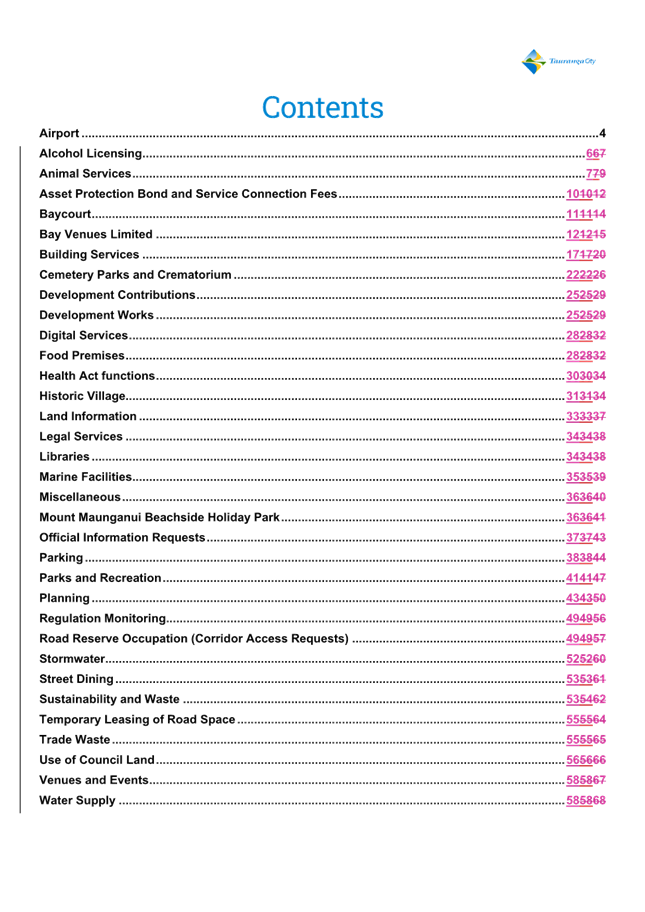

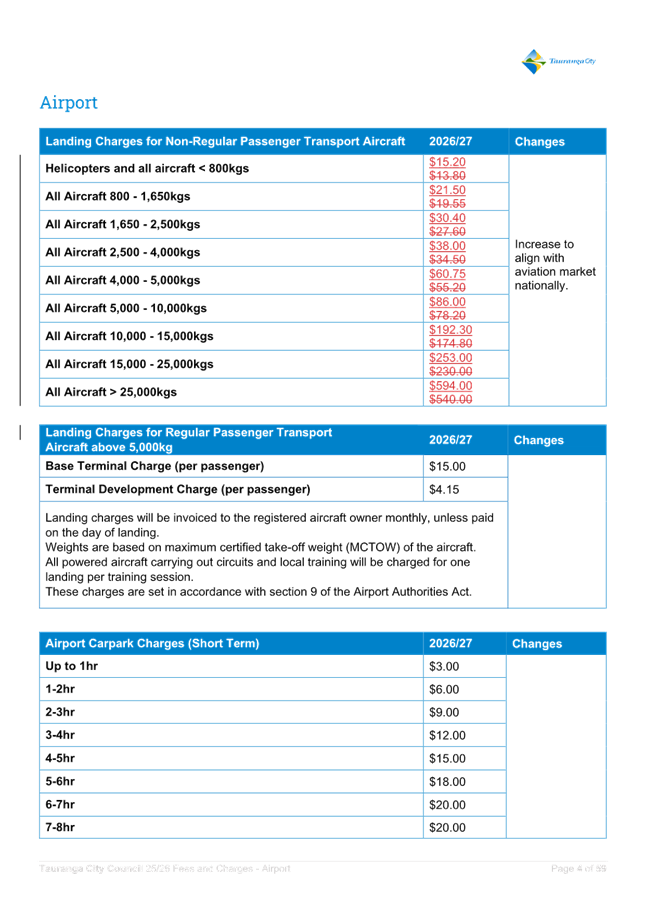
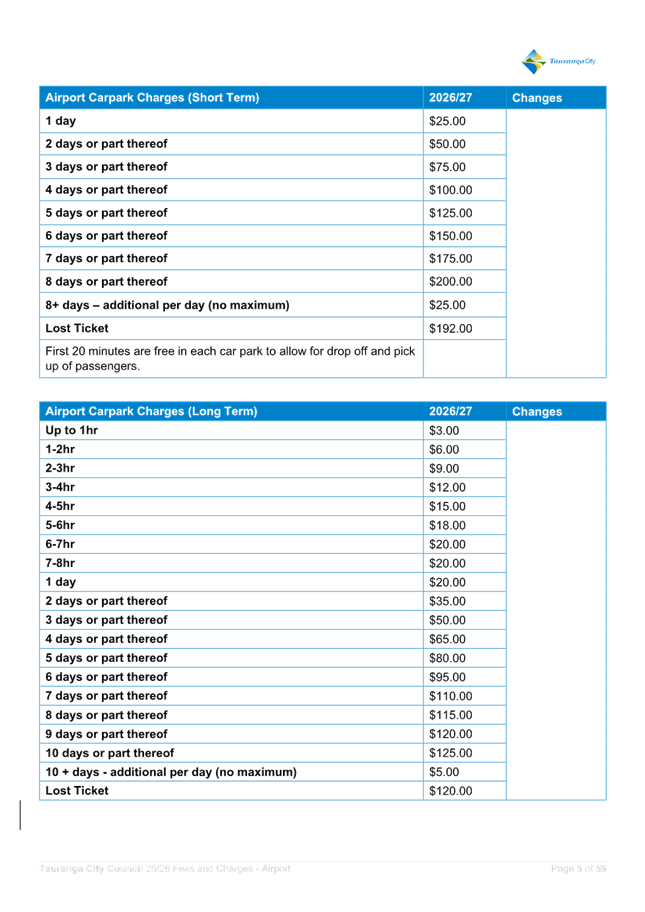
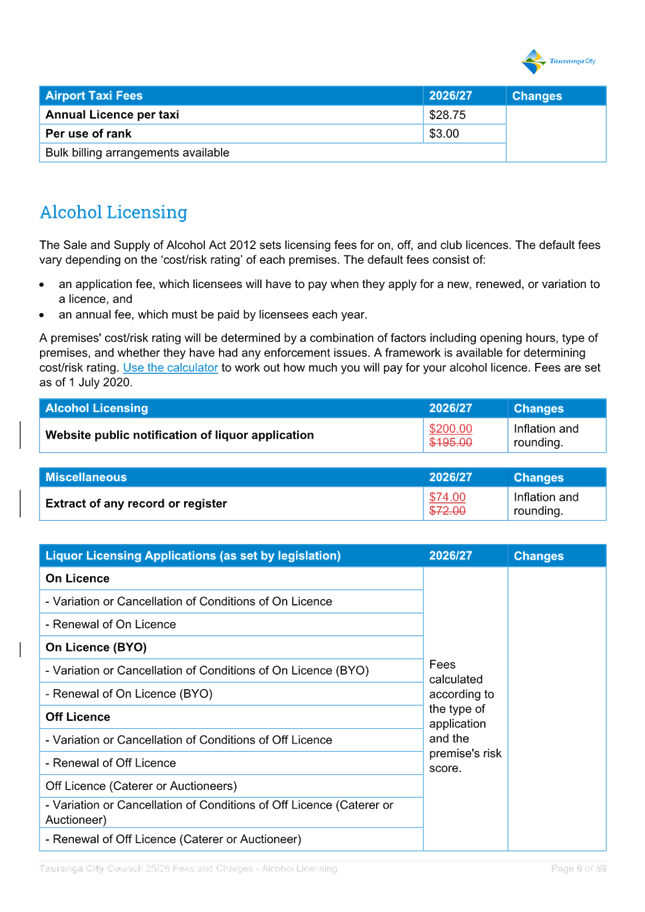
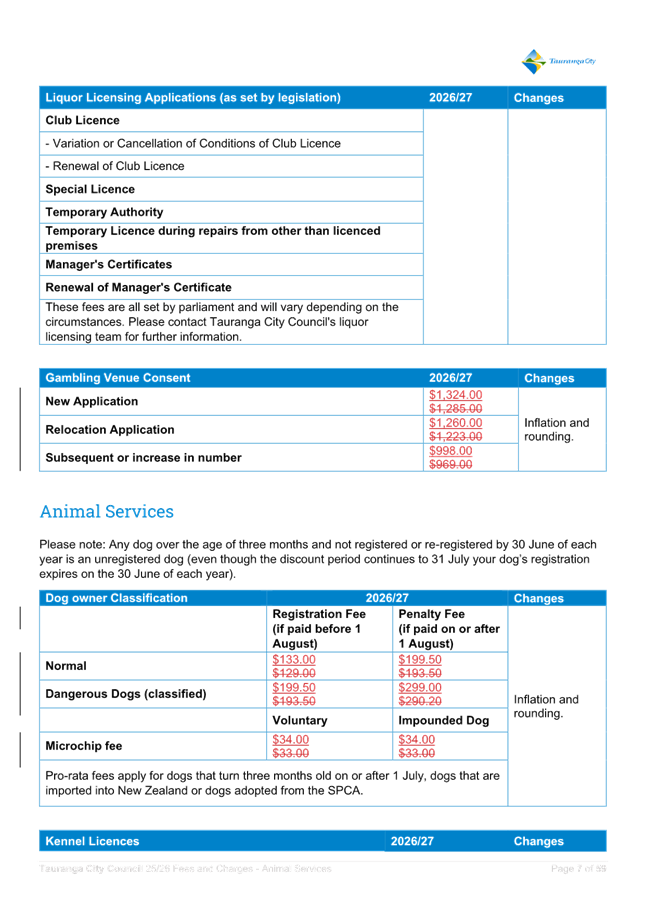
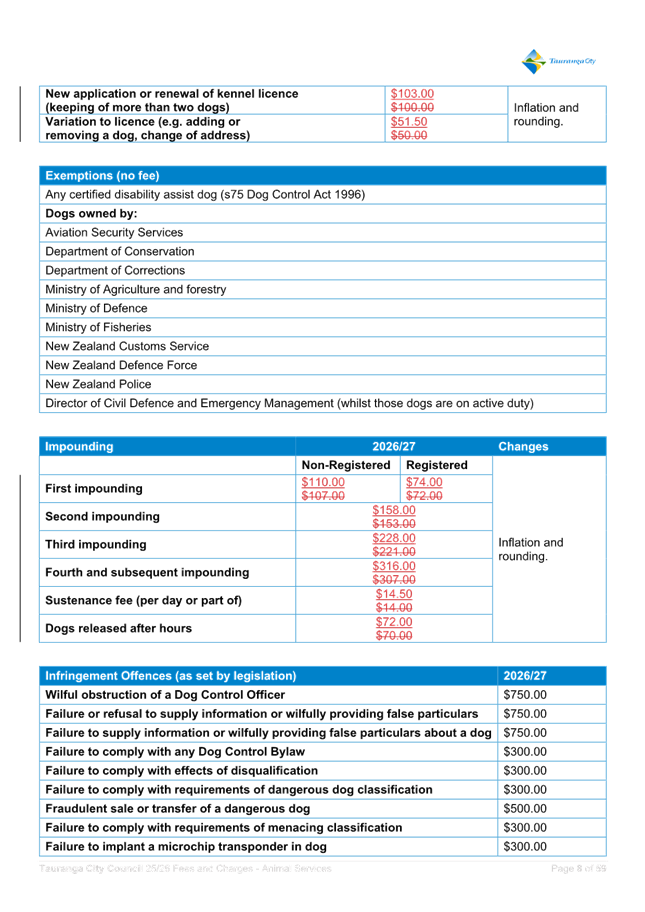
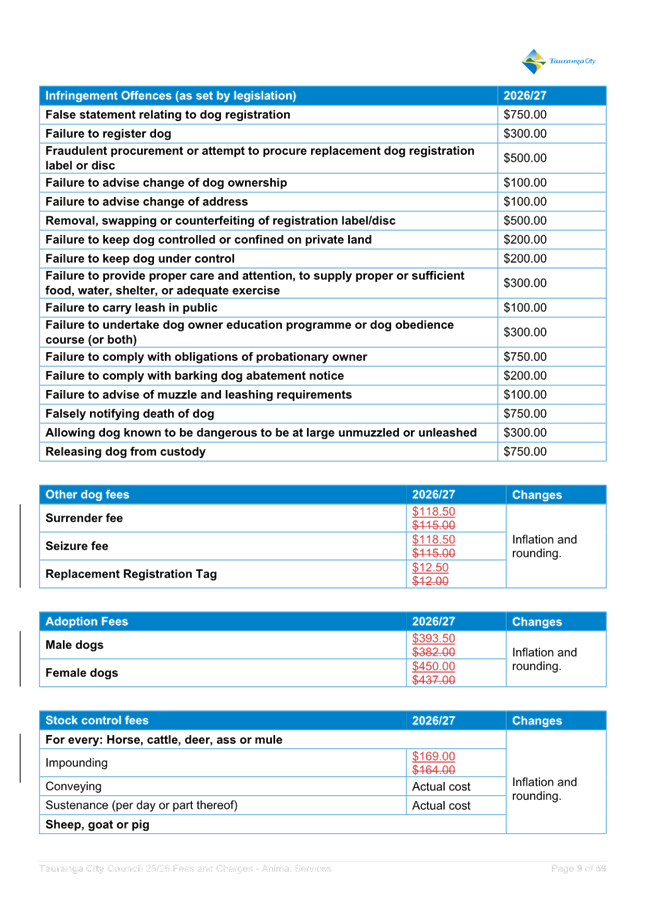
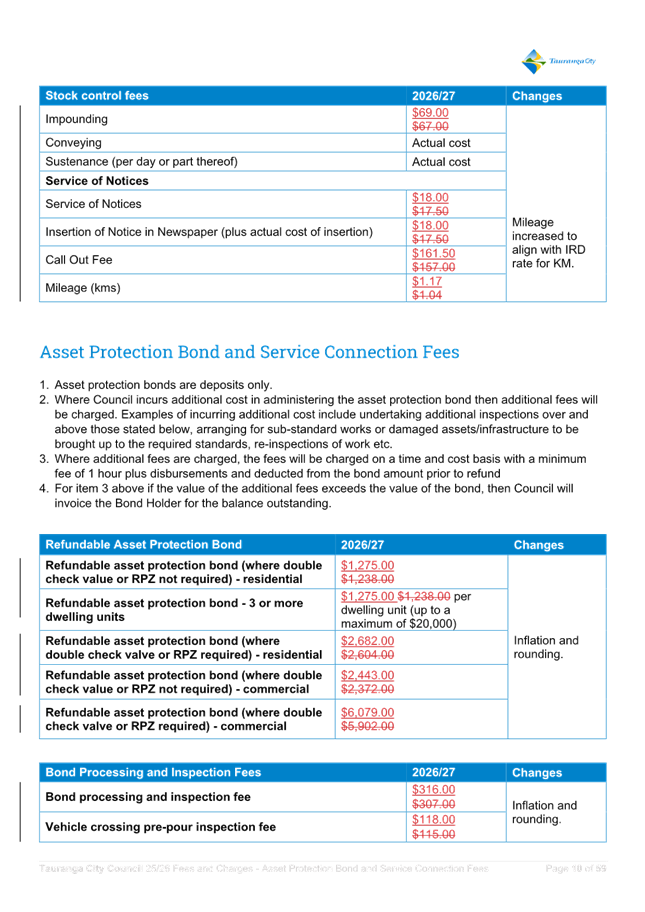
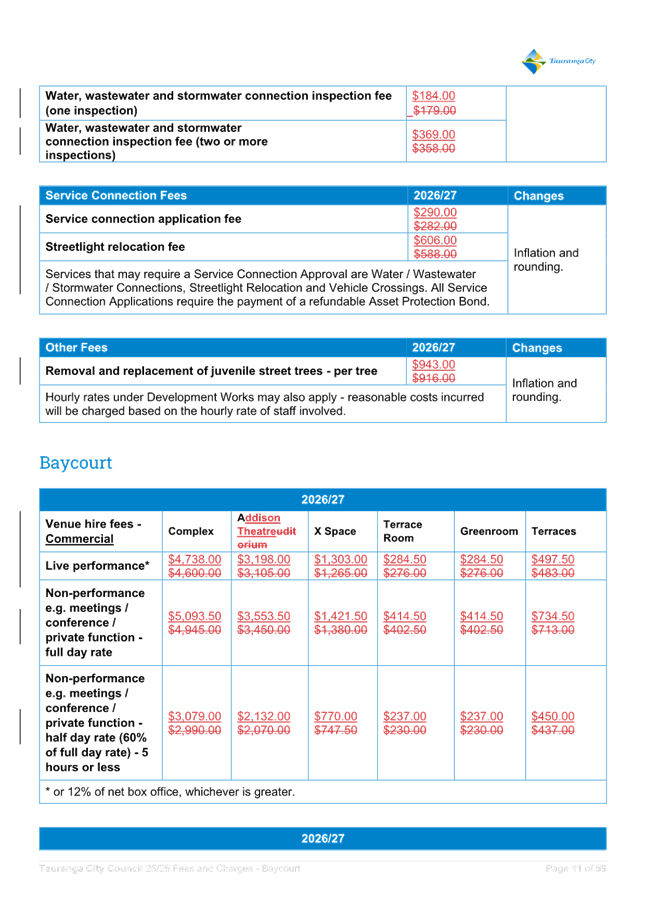
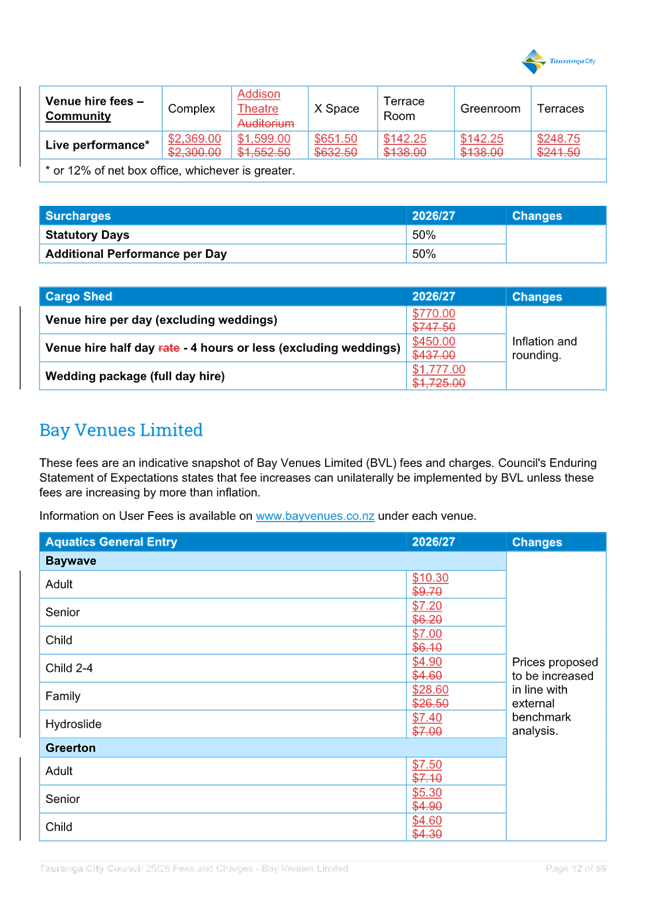
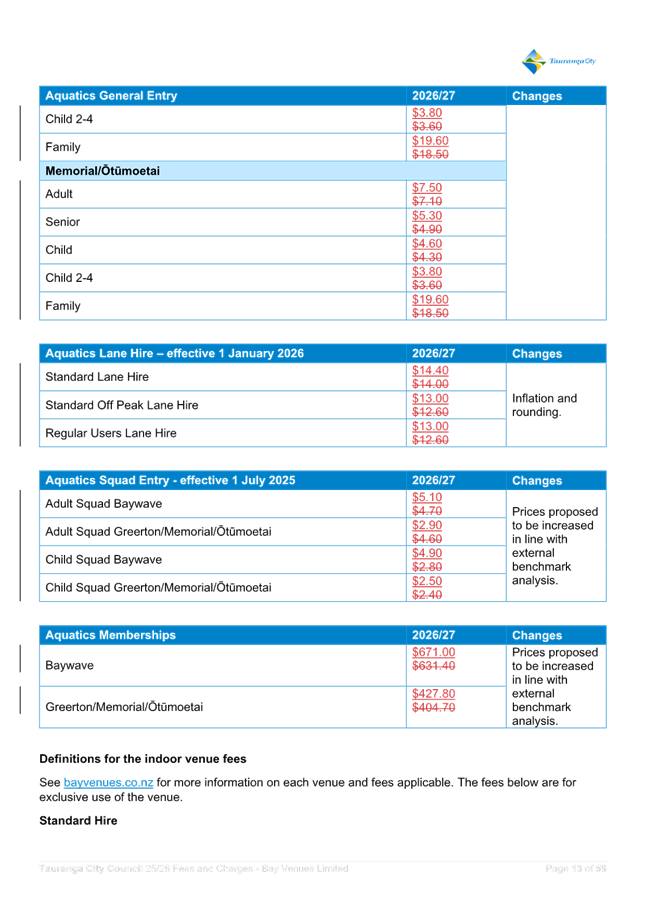
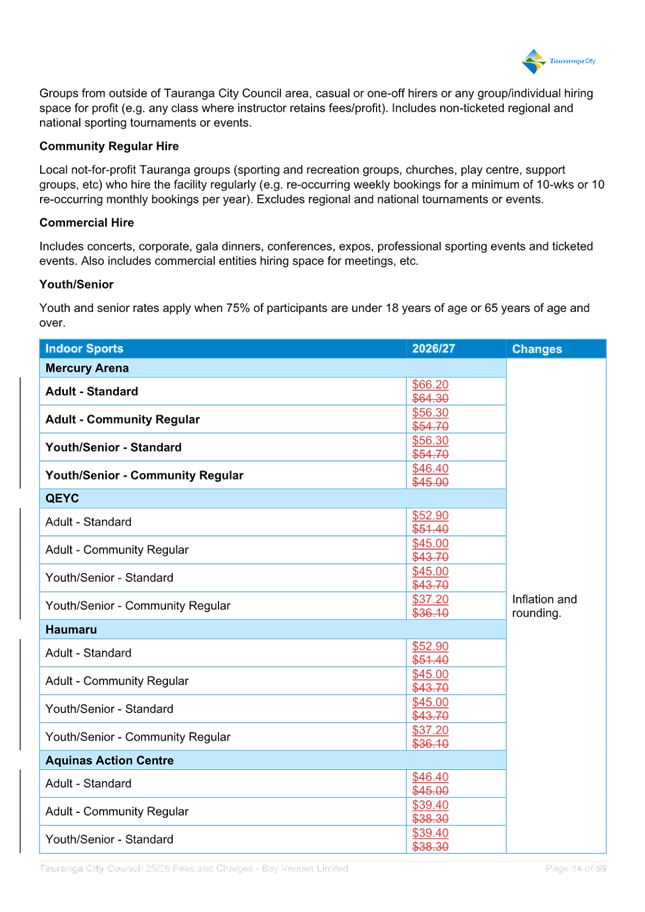
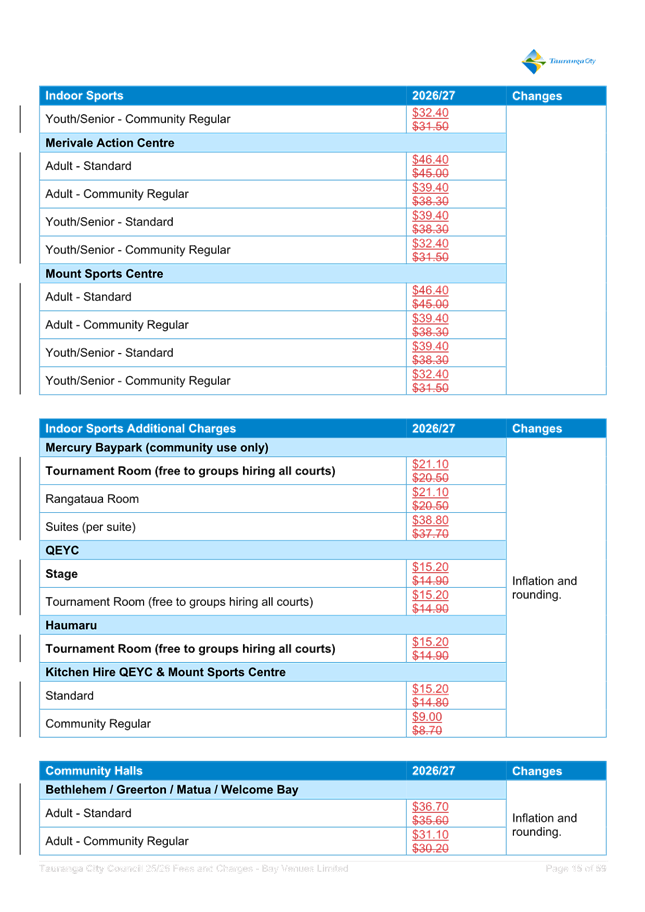
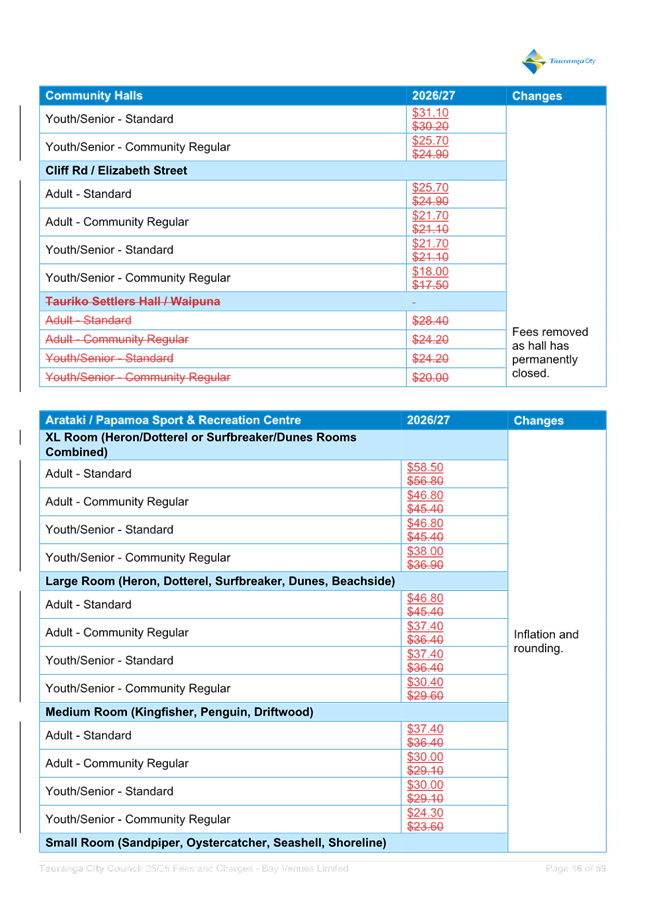
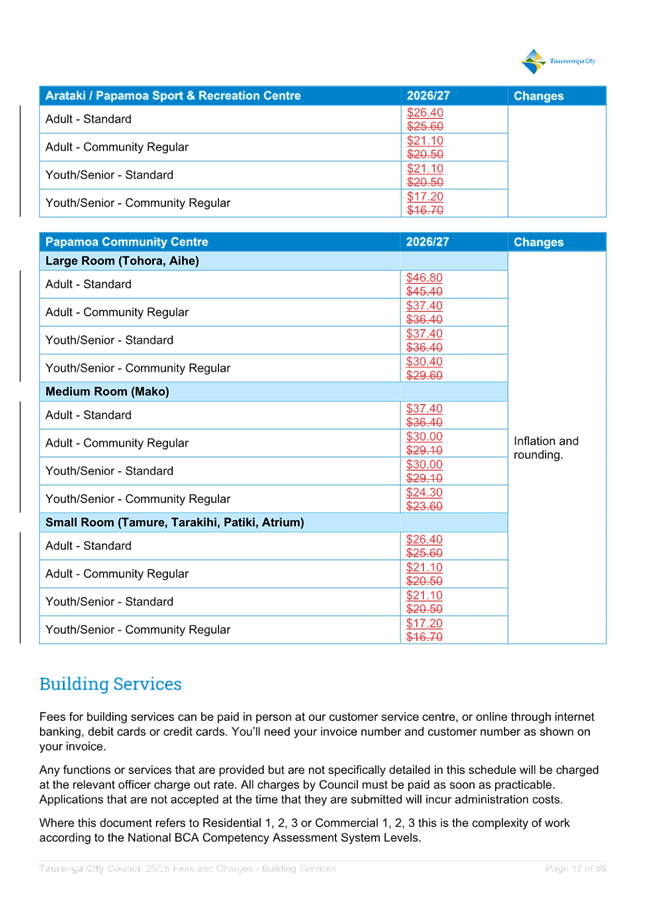
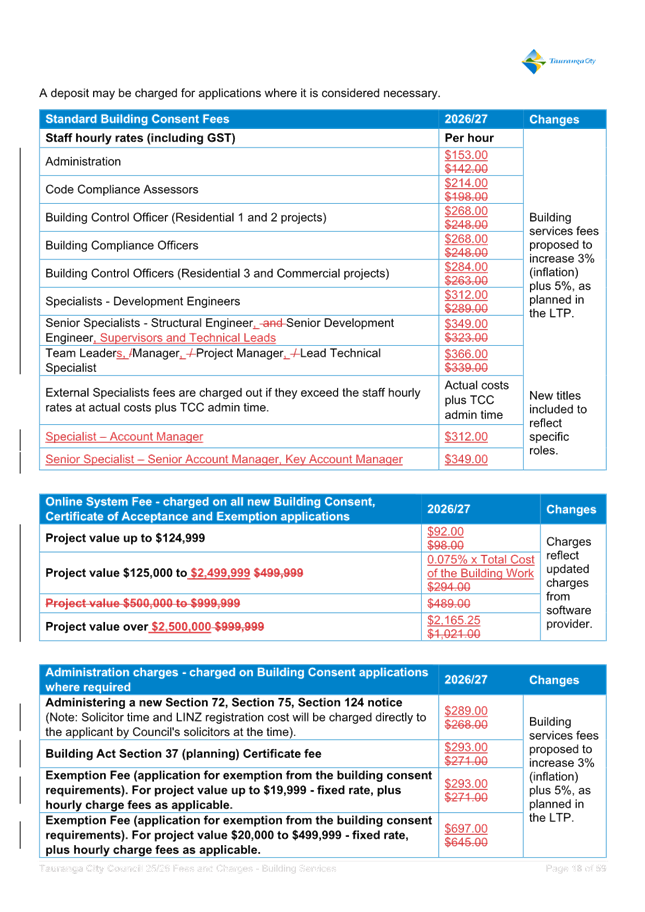
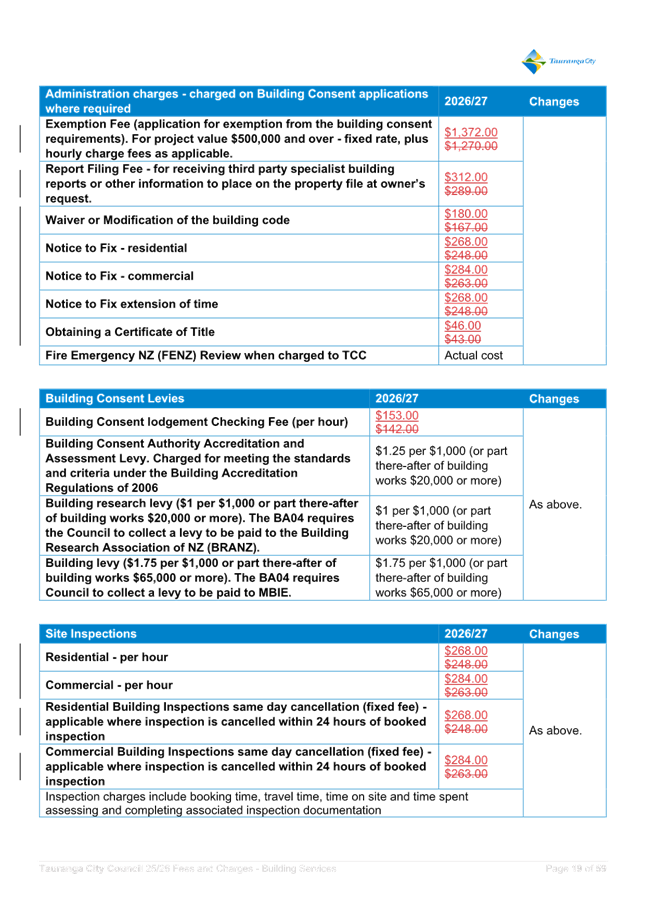
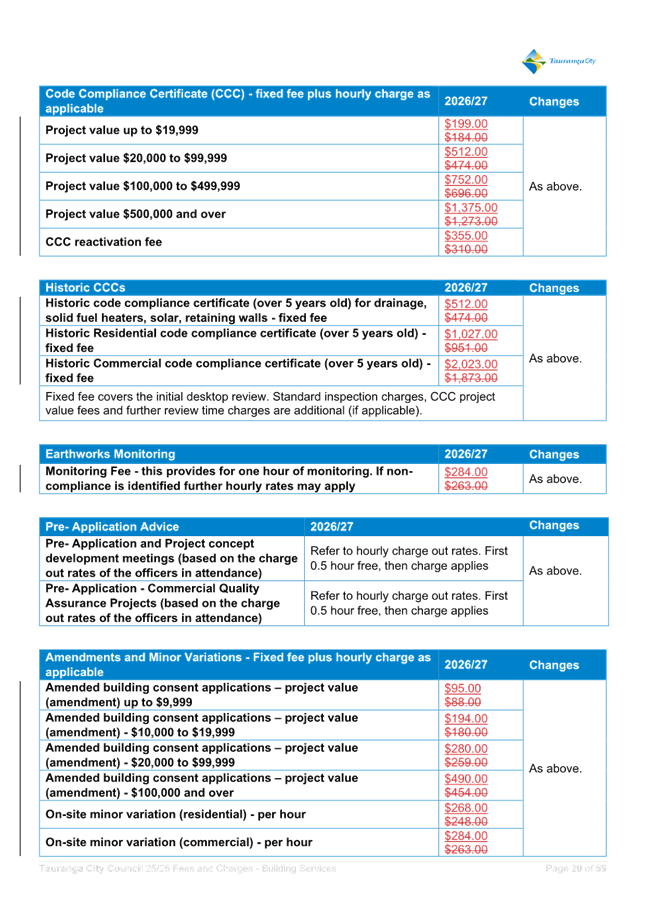
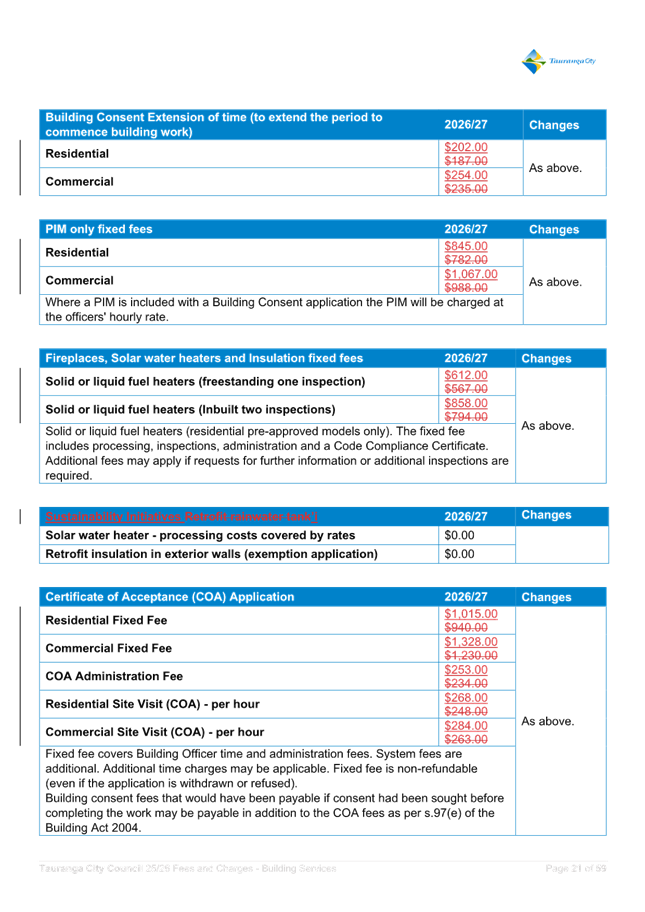
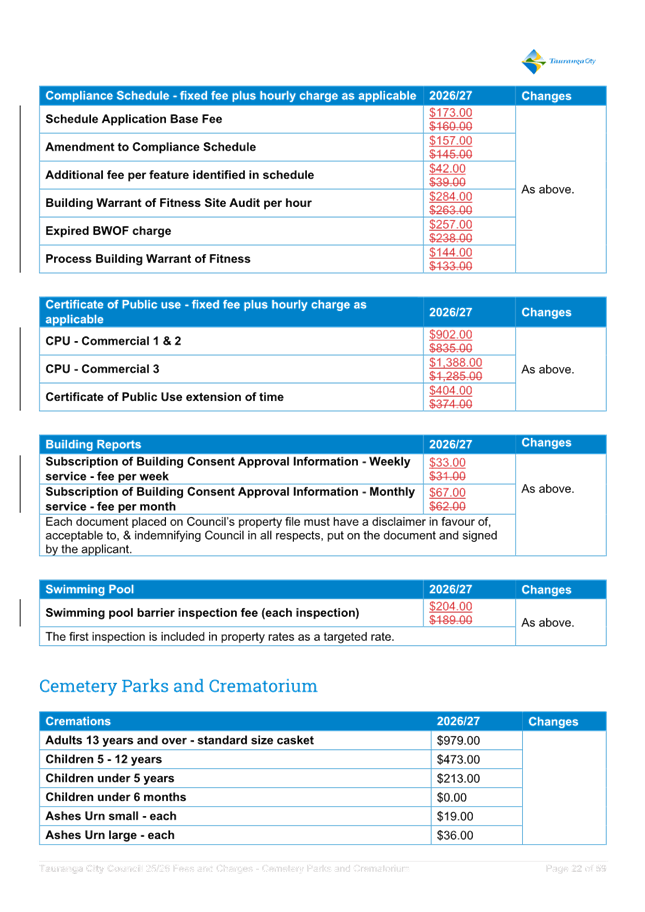
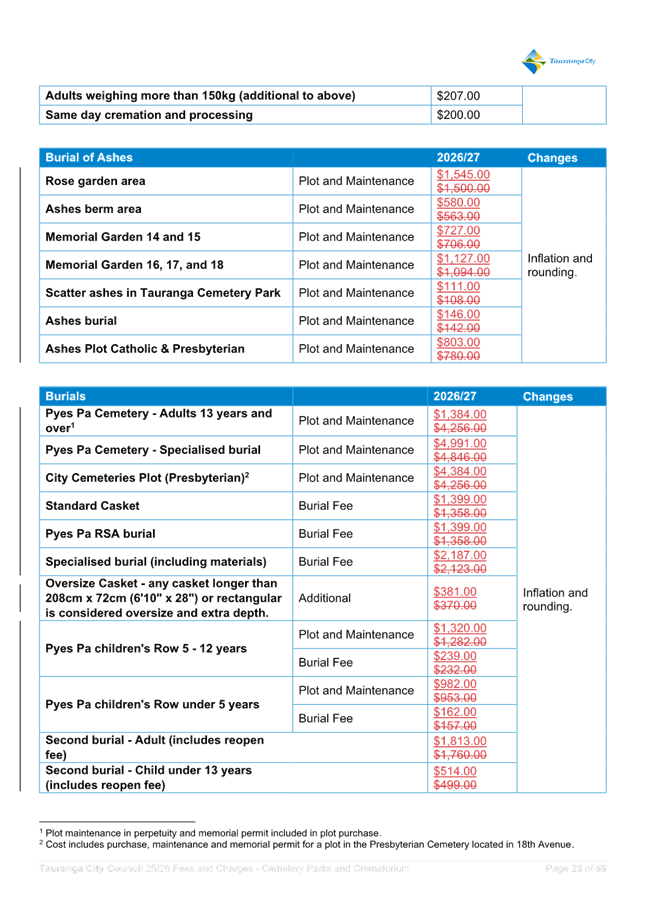
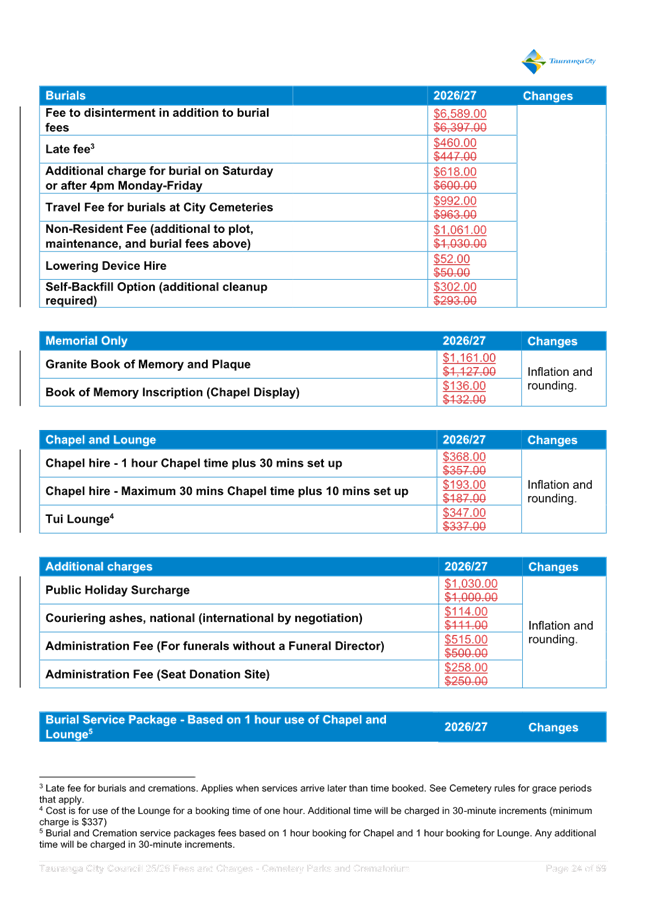
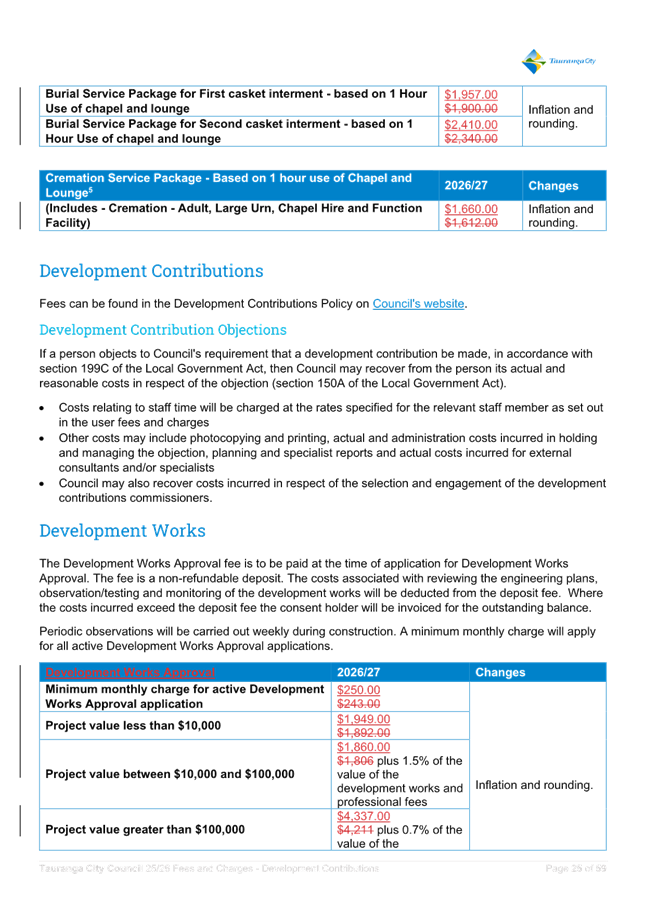
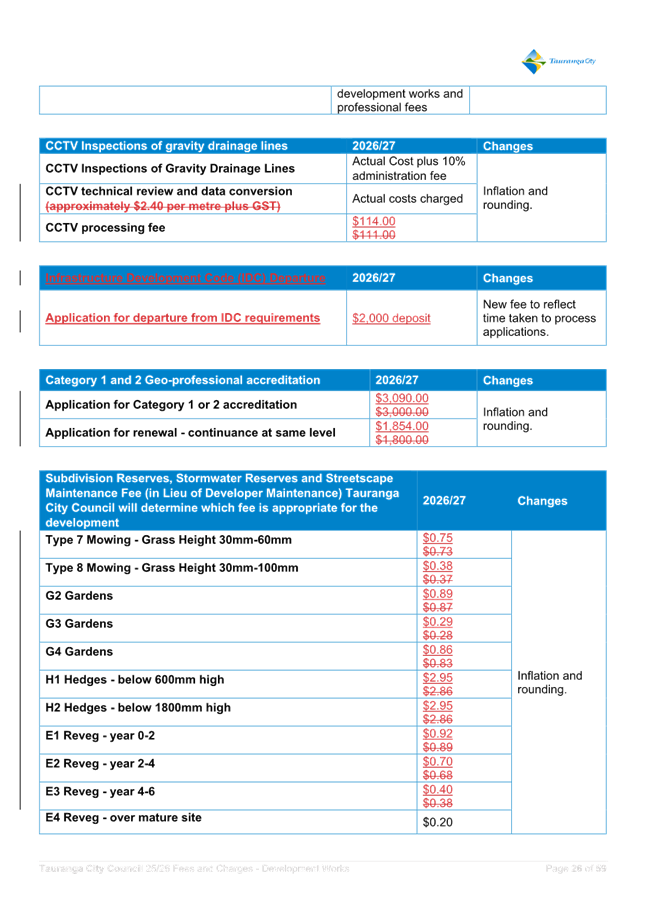
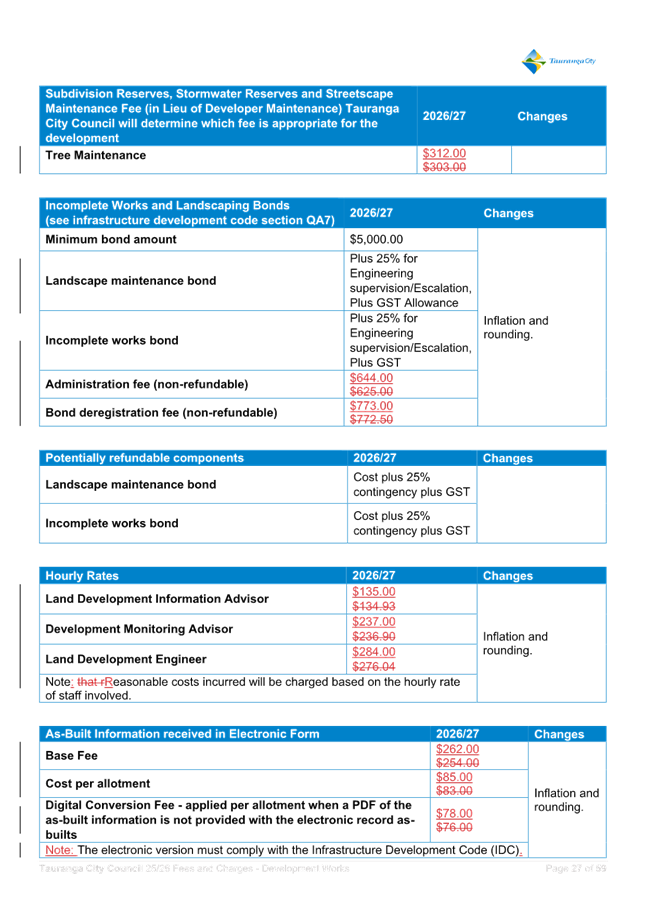
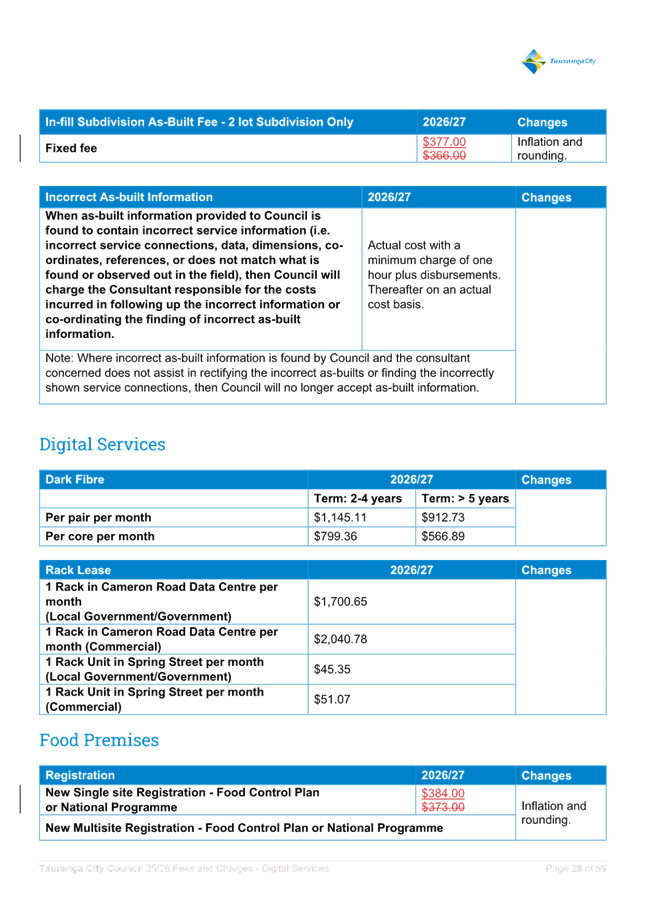
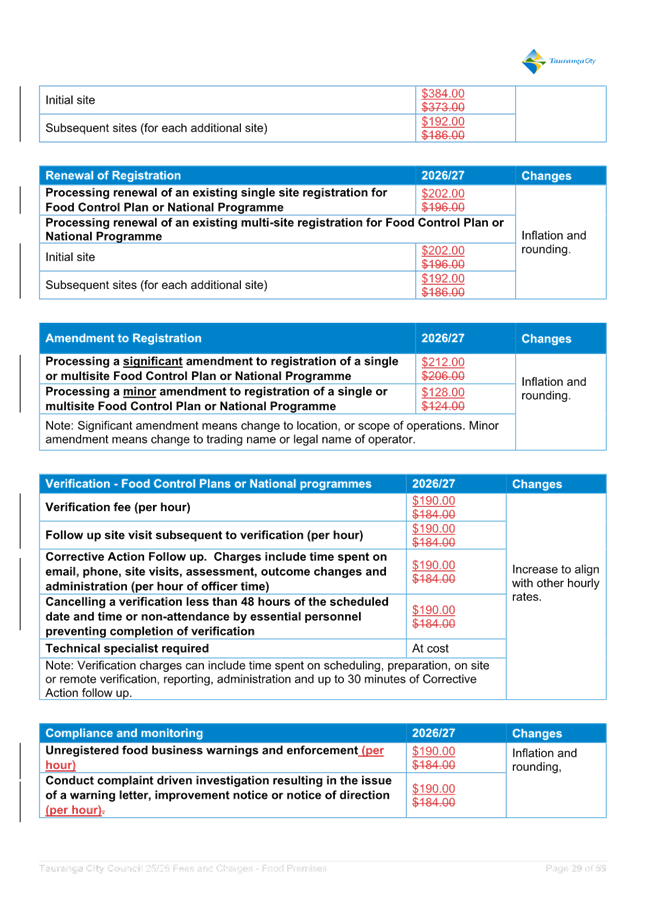
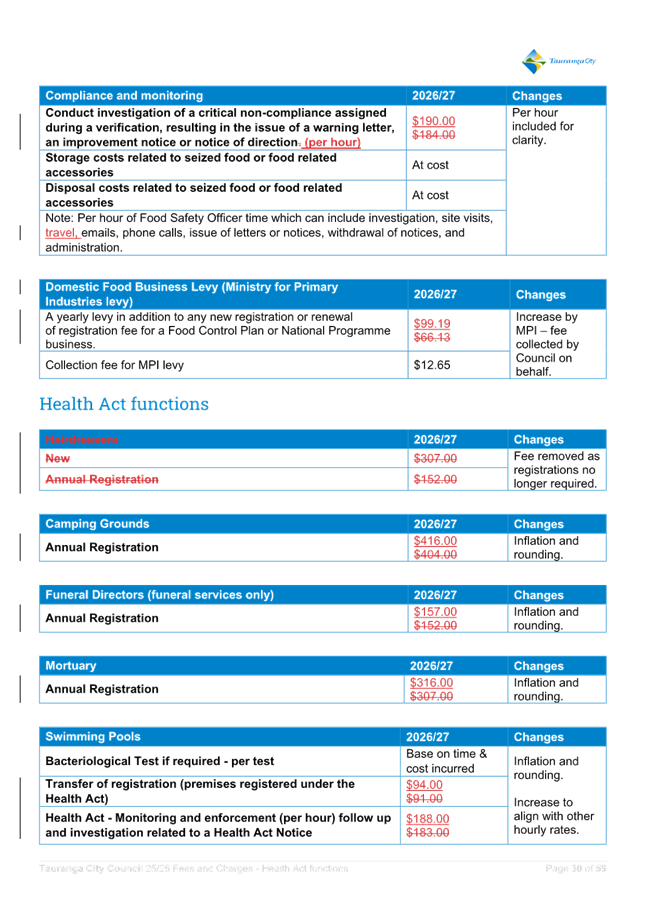
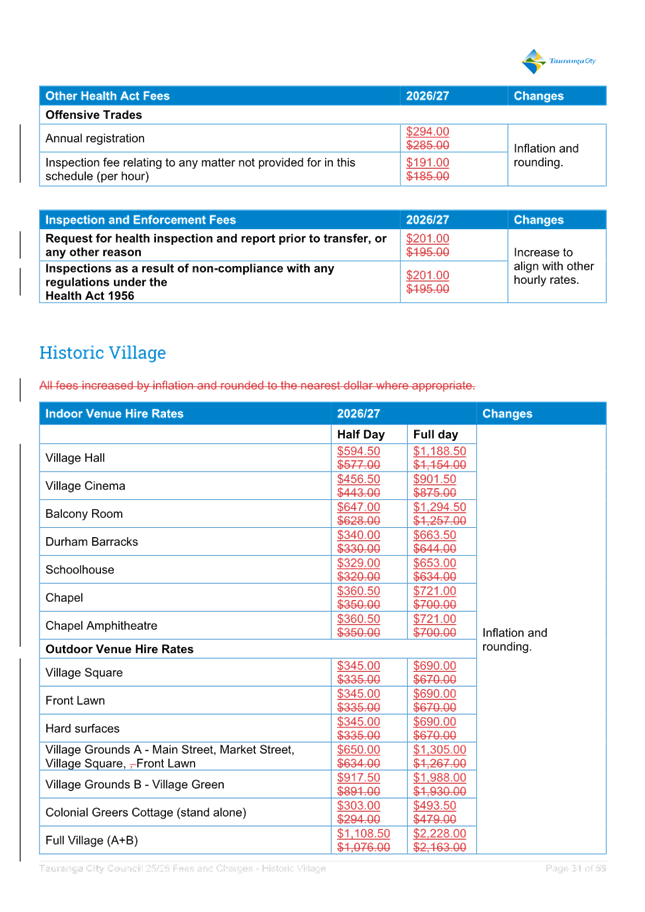
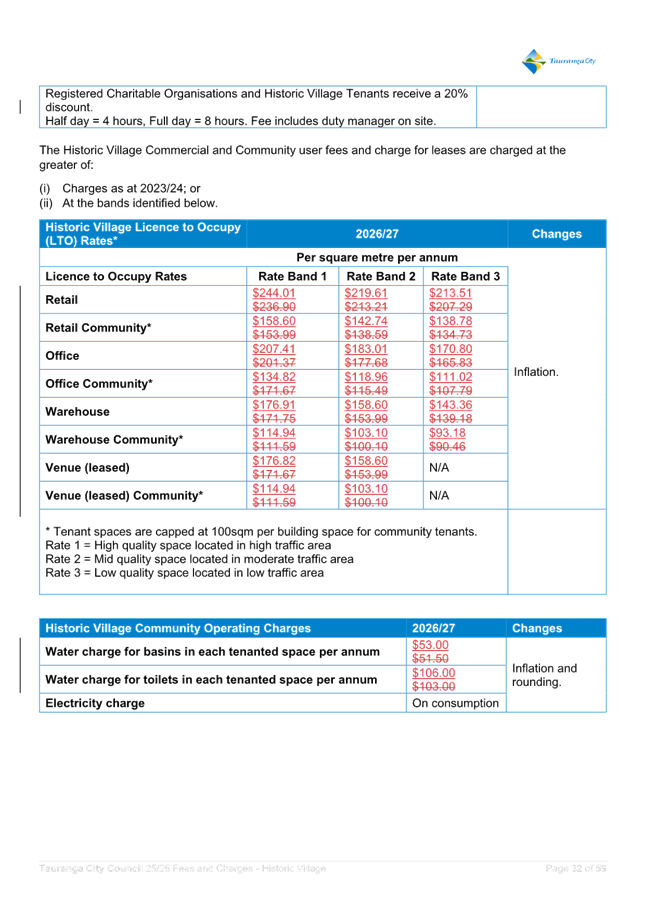
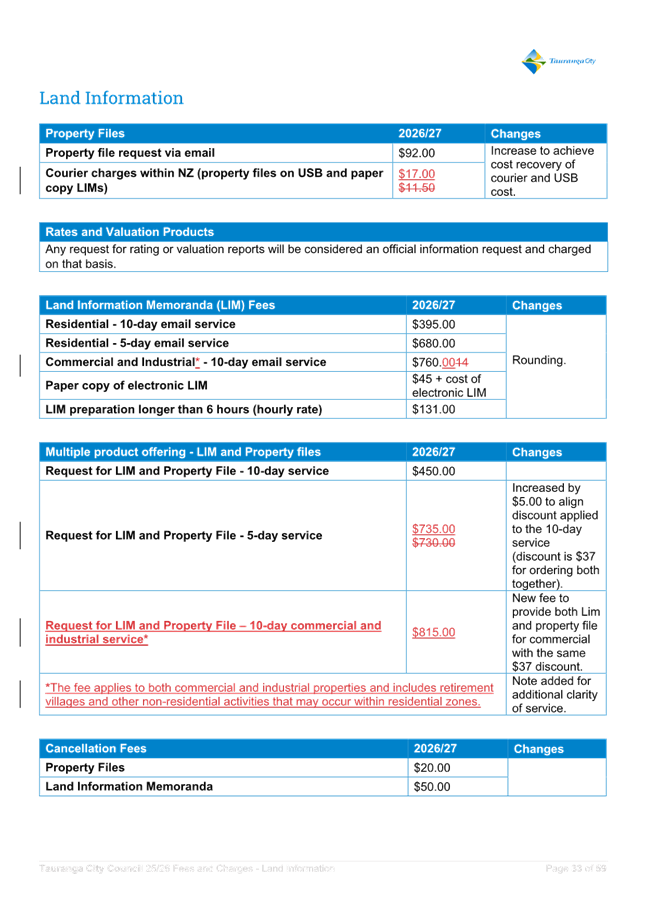
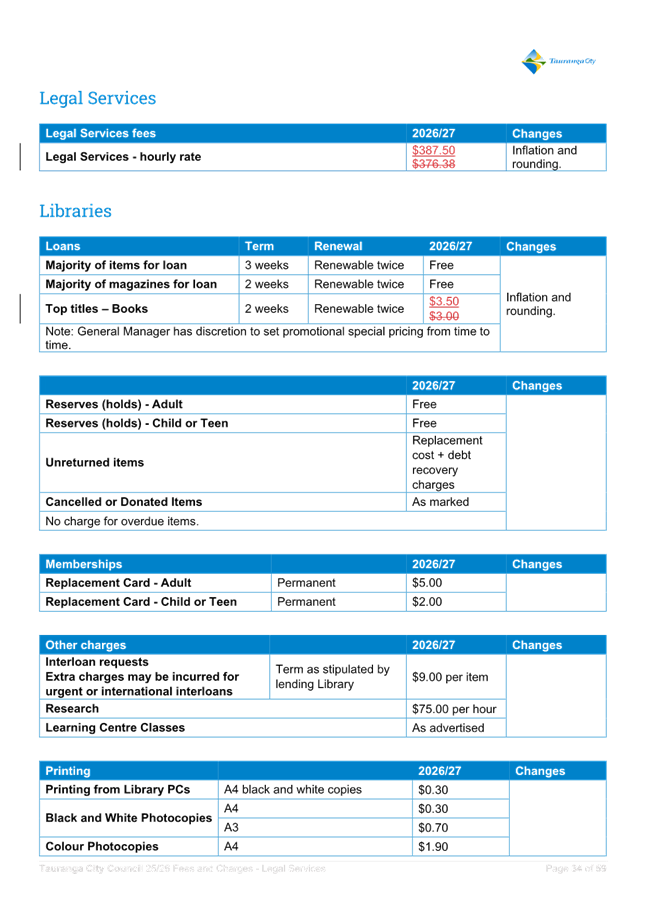
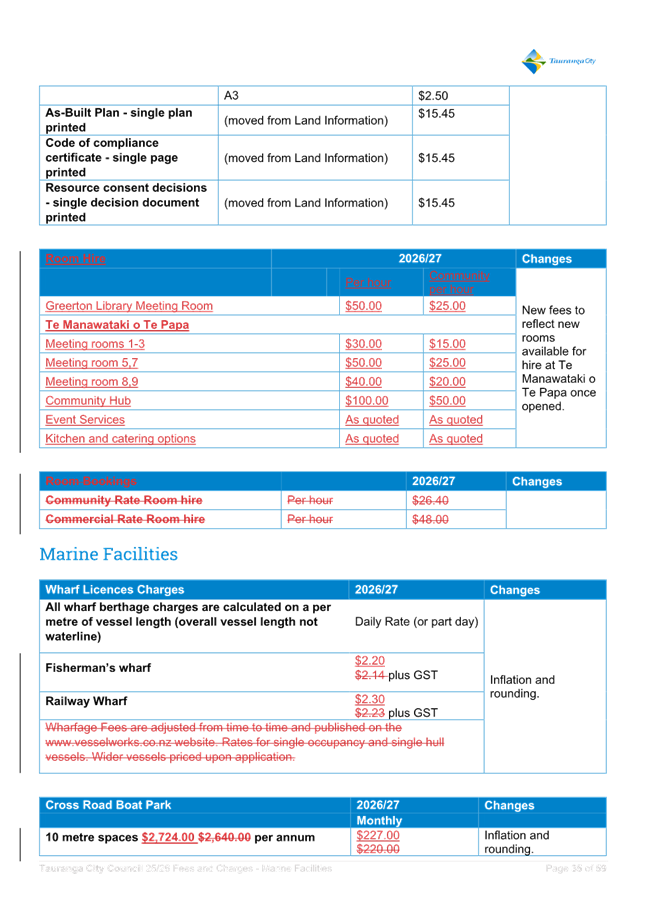
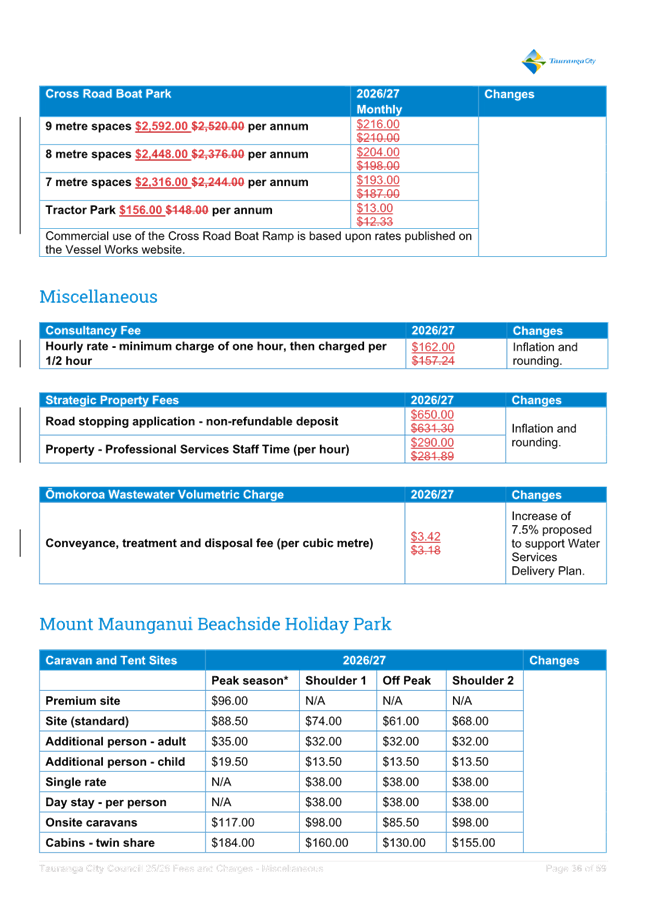
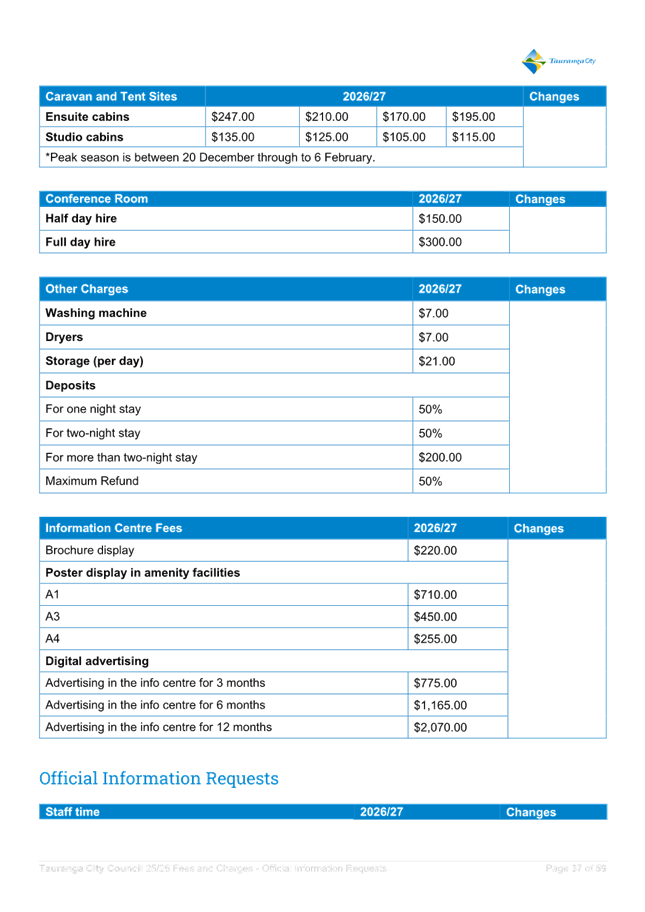
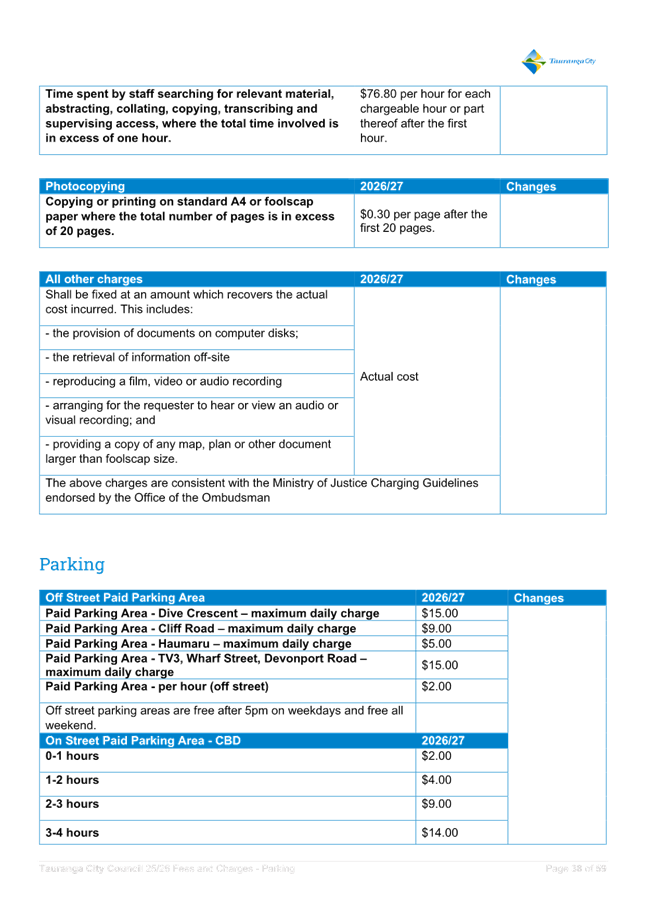
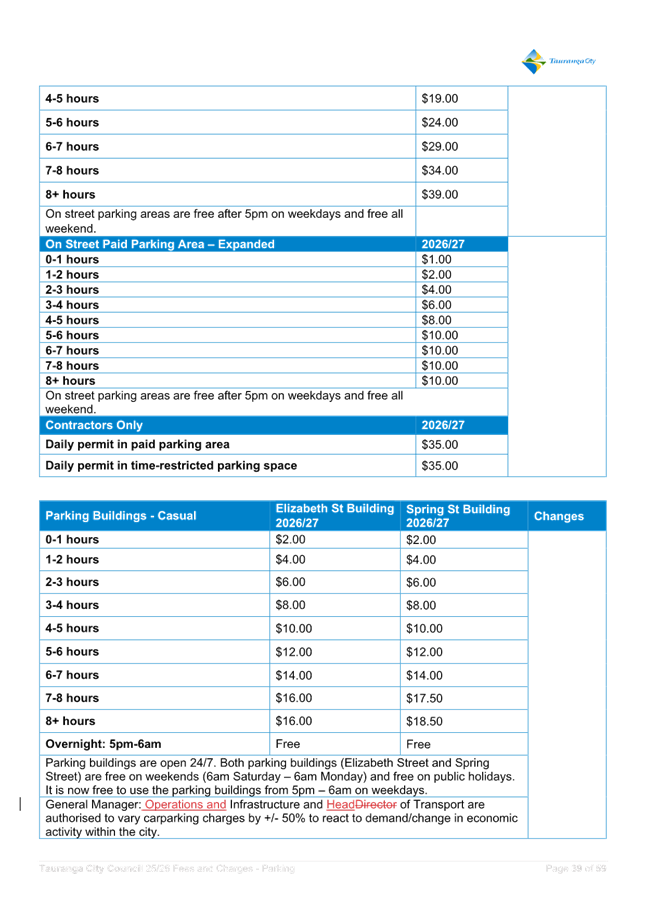
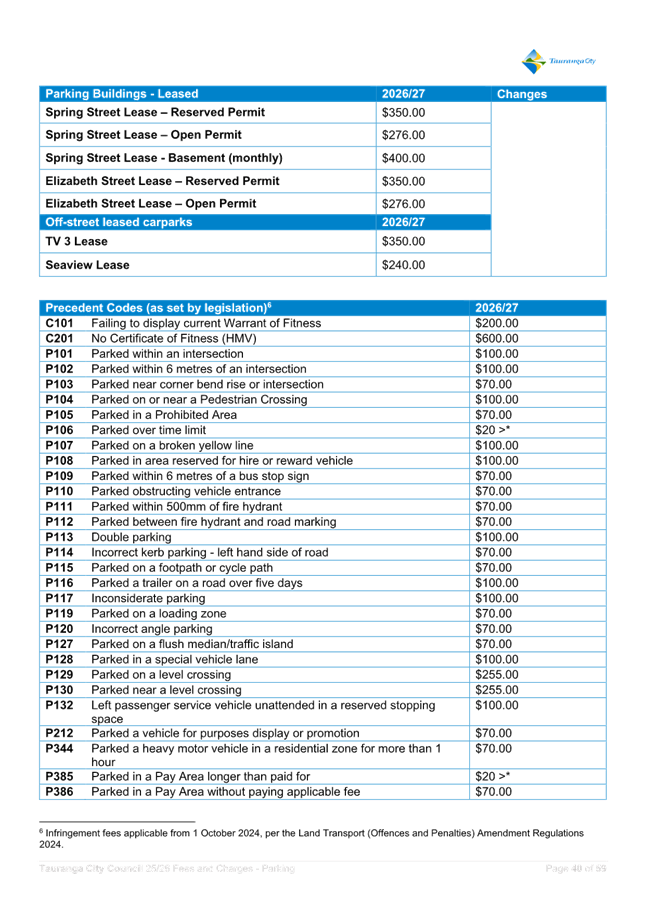
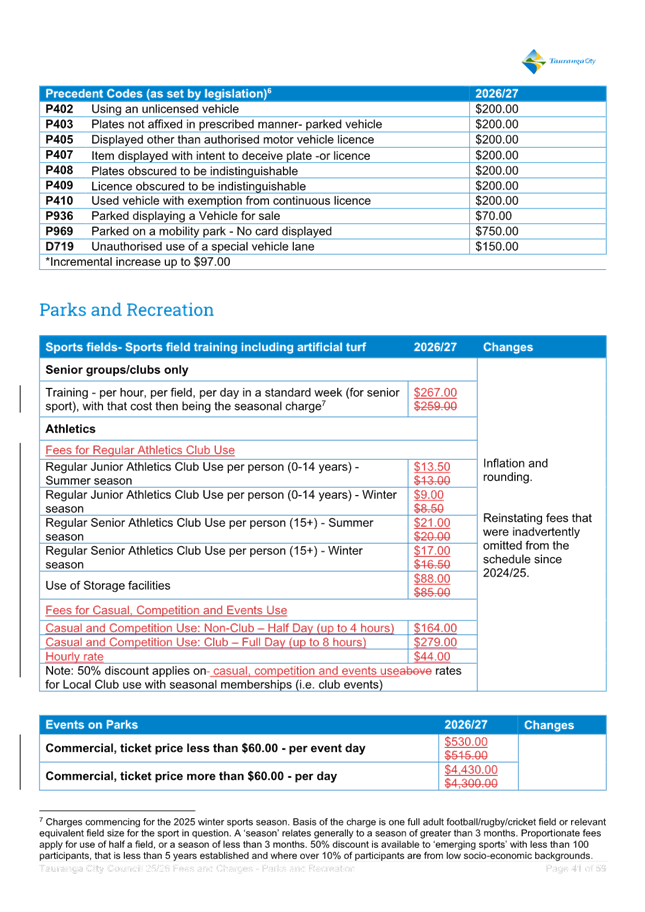
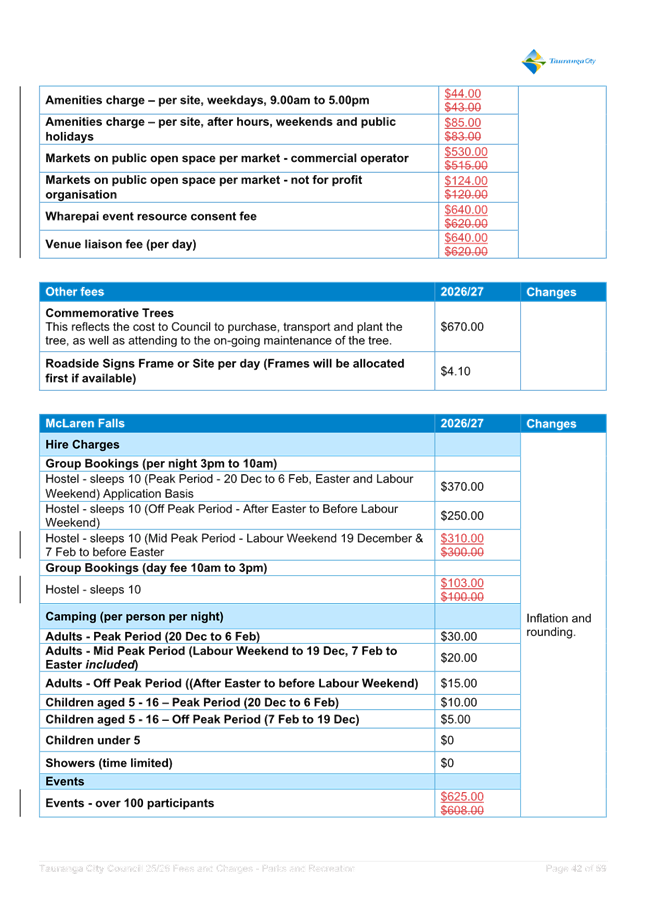
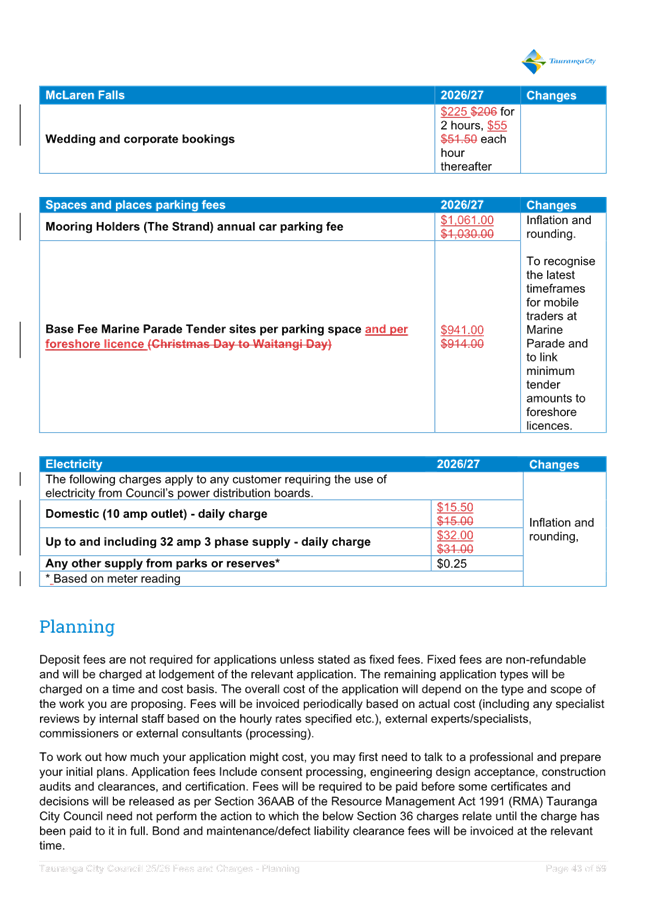
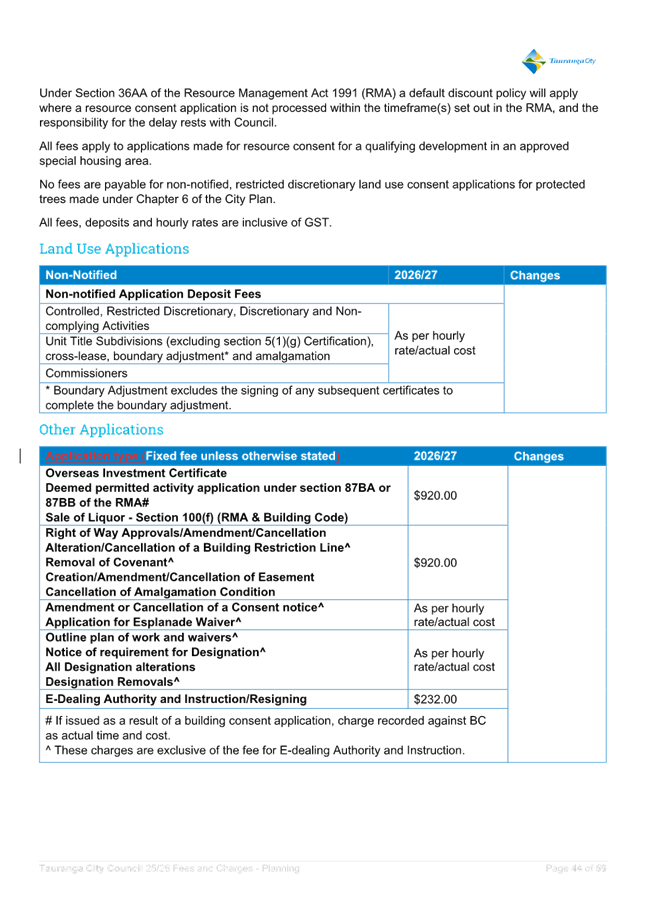
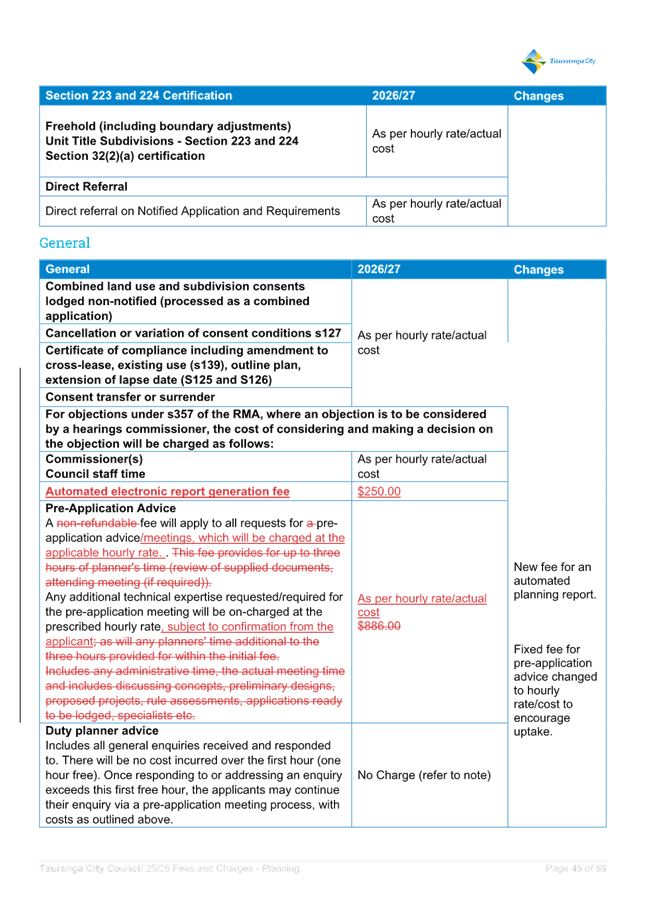
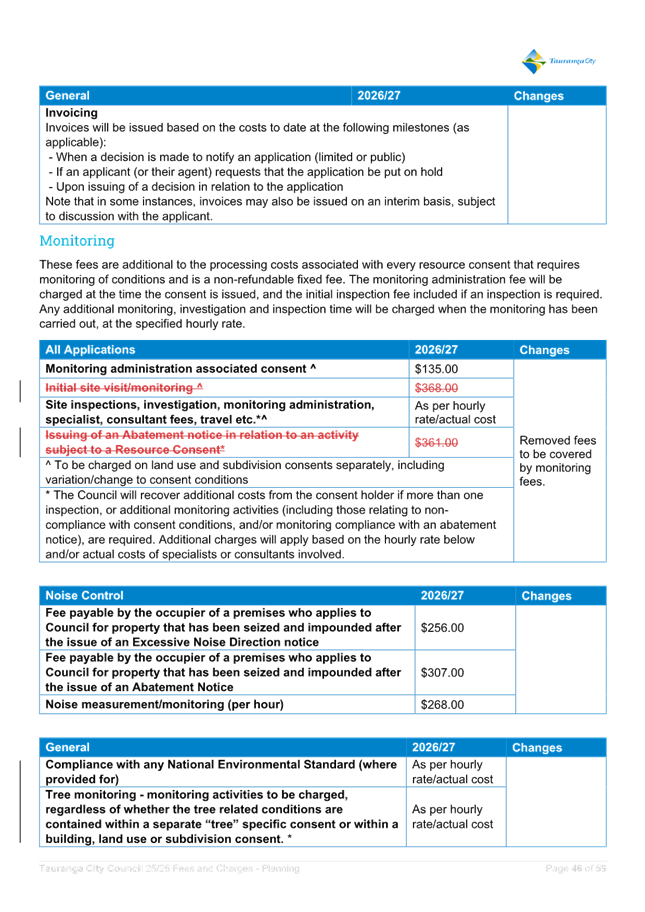
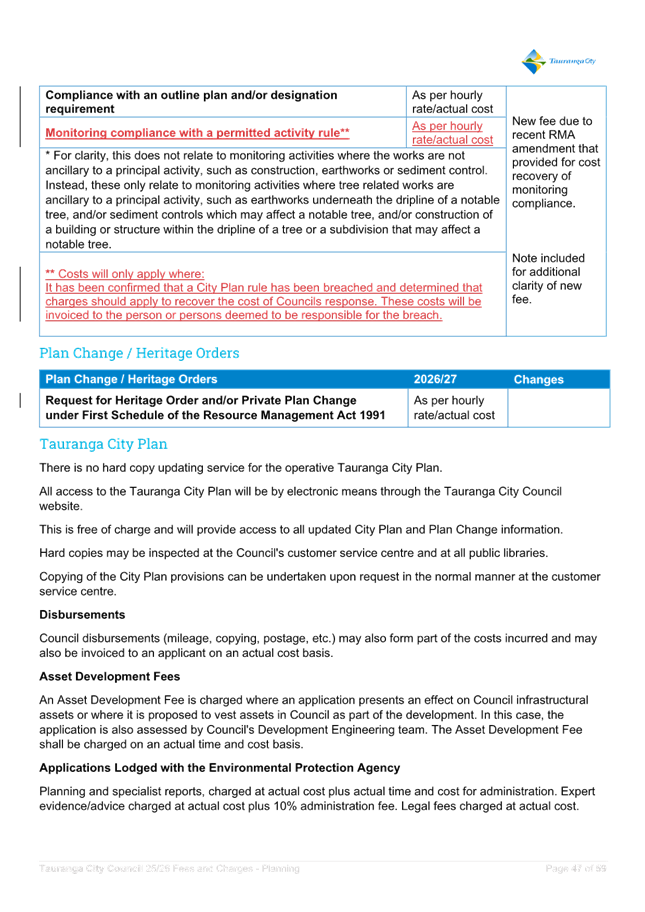
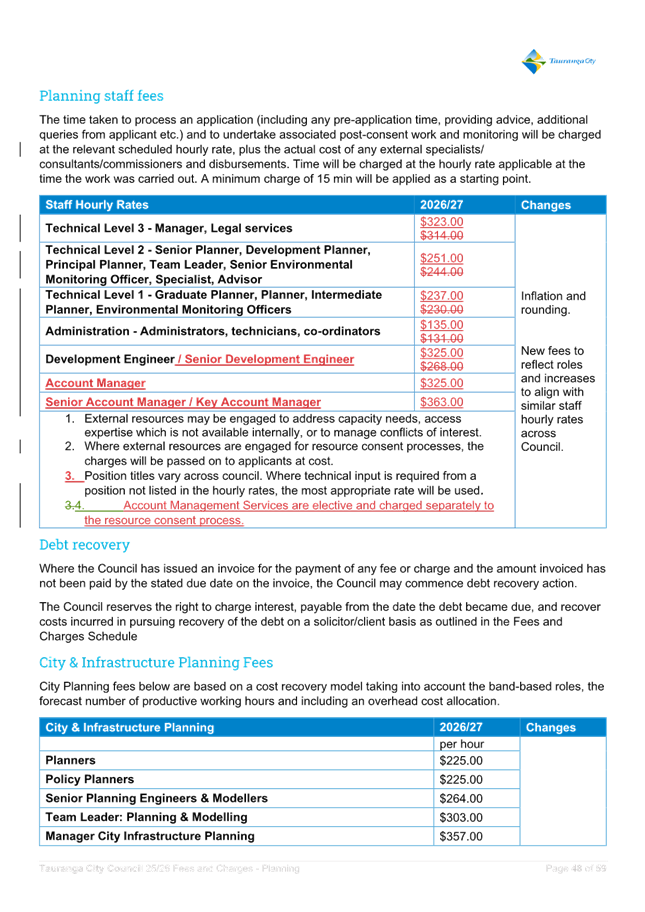
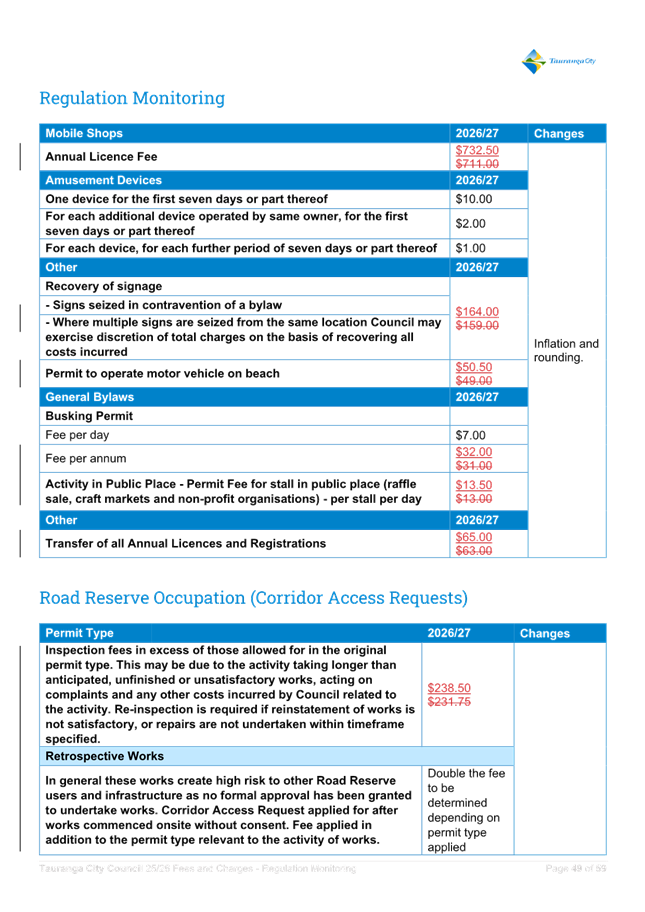
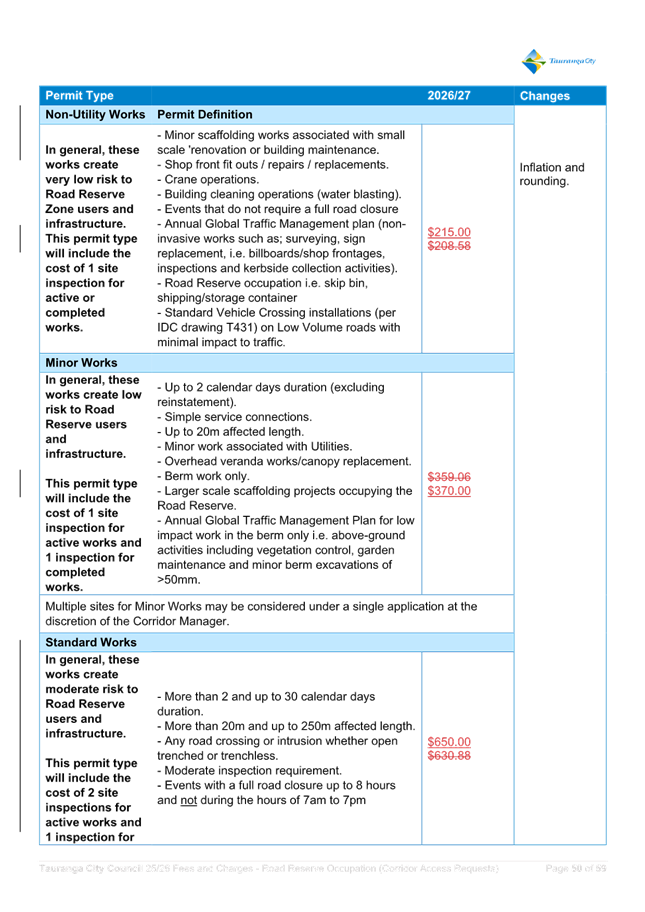
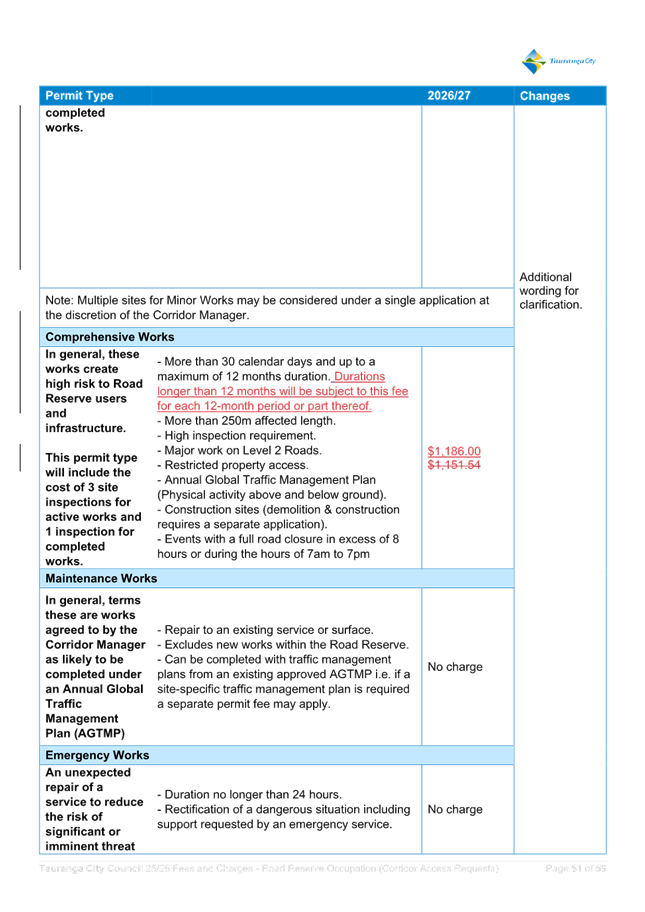
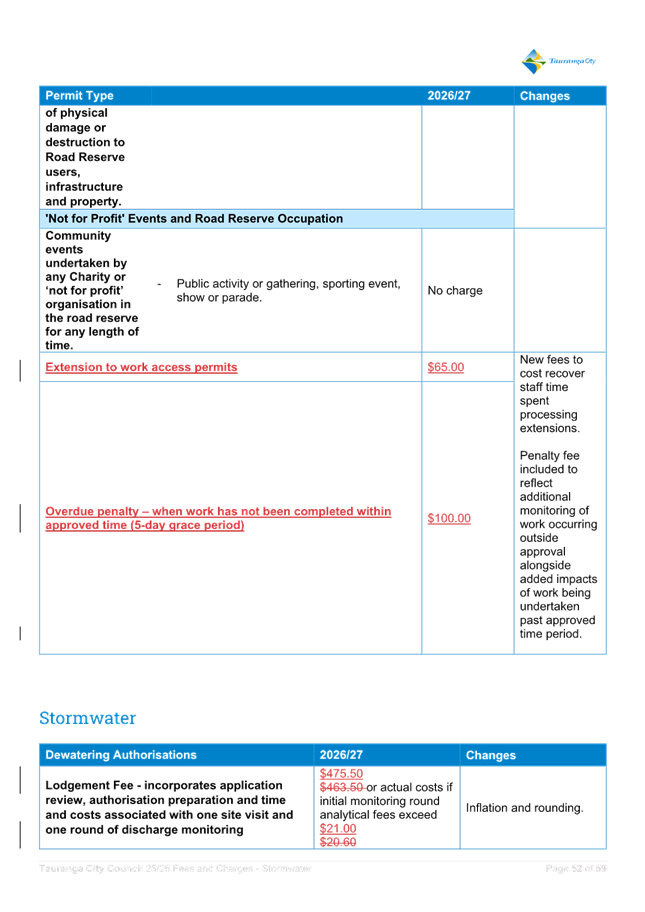
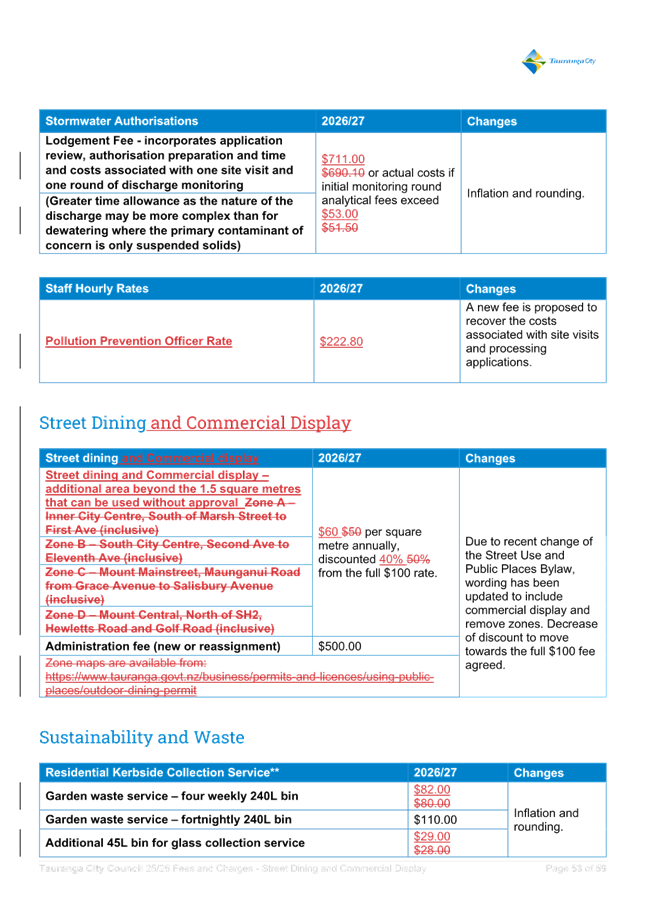
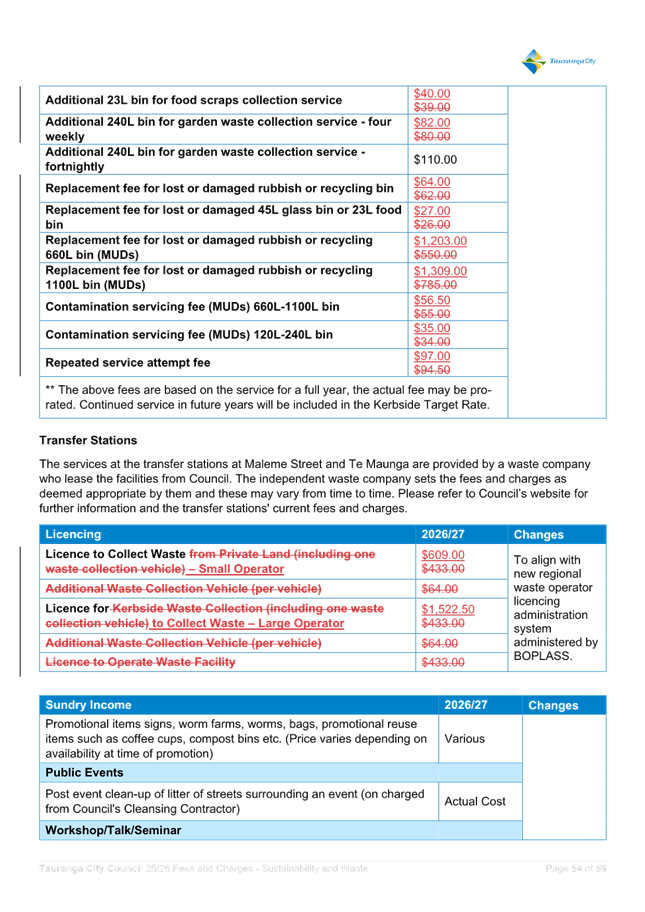
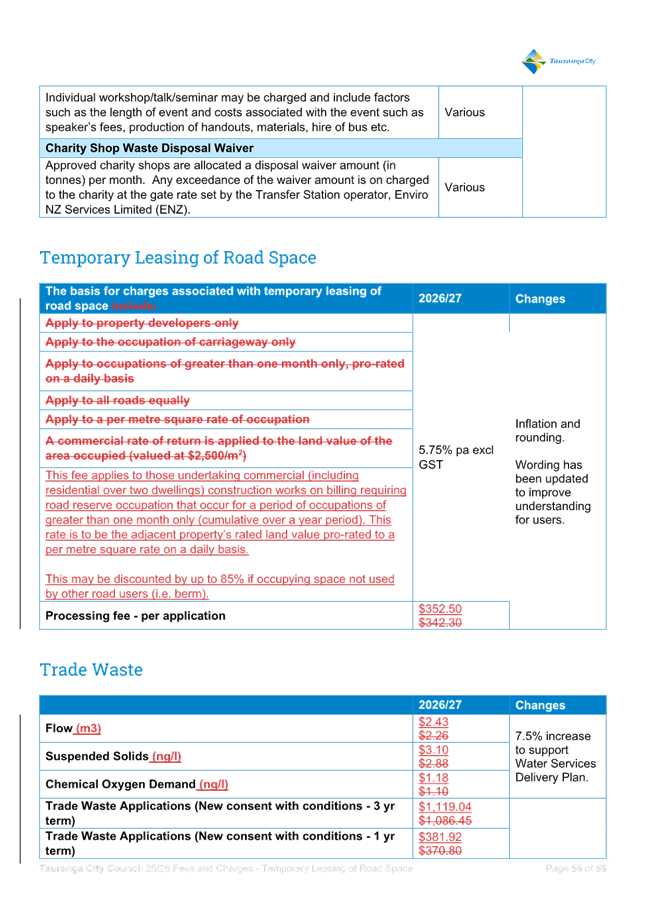
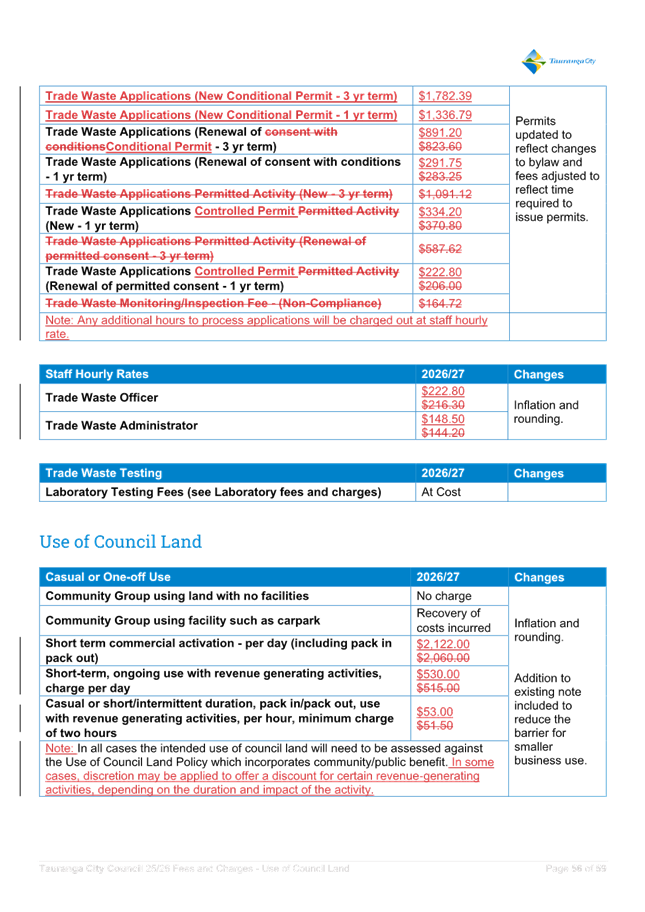
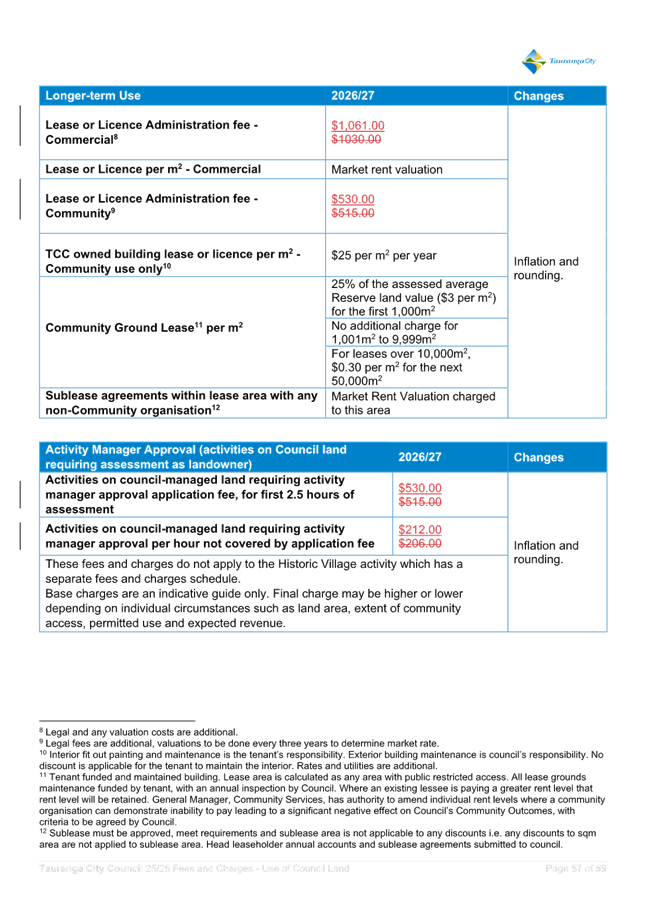
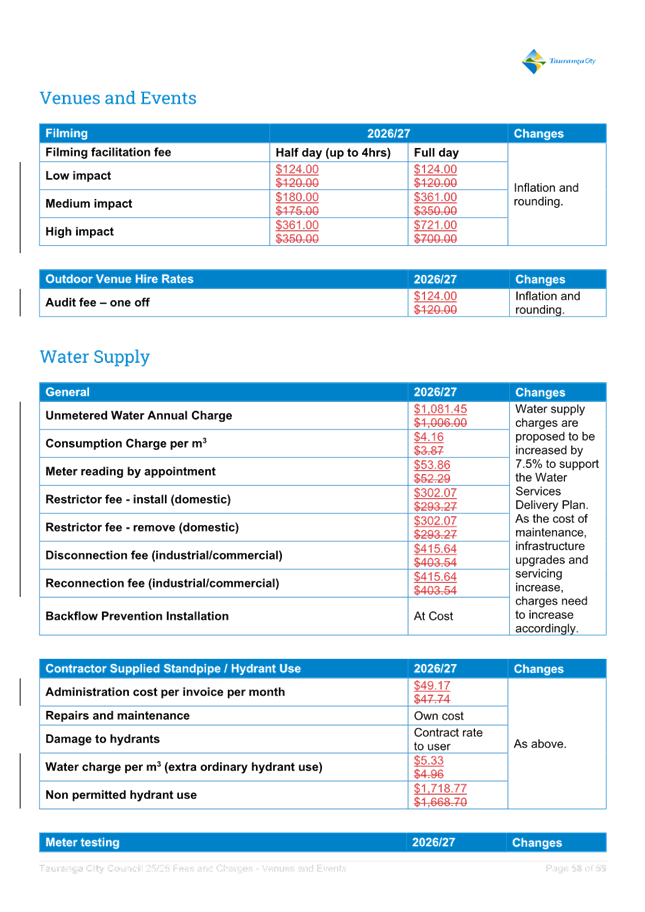
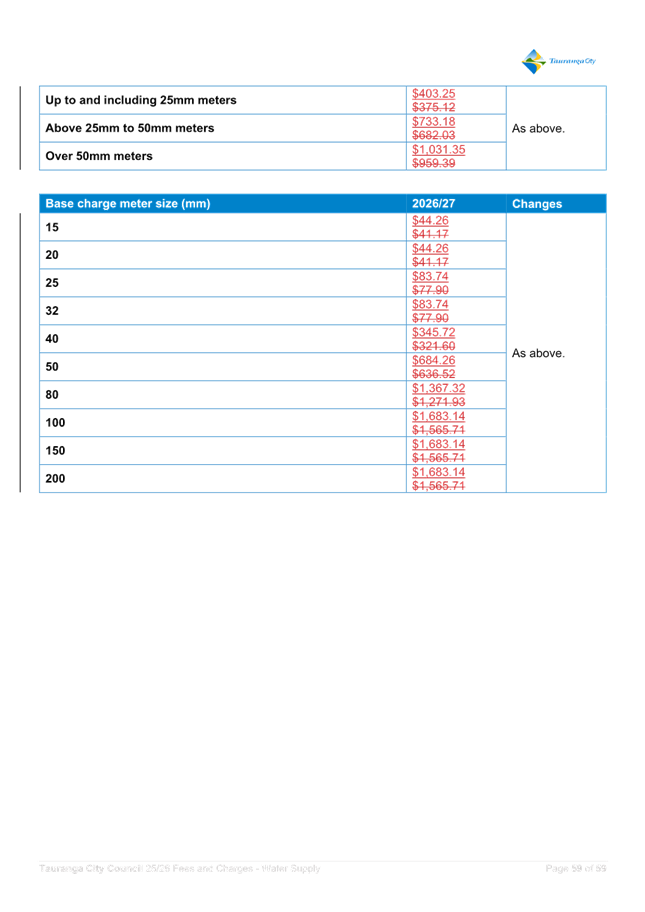
|
Ordinary
Council meeting Agenda
|
24
March 2026
|

|
Ordinary
Council meeting Agenda
|
24
March 2026
|
11.9 Approval of Draft
Development Contributions Policy 2026/27
File
Number: A19859923
Author: Ben
Corbett, Team Leader: Growth Funding
Authoriser: Christine
Jones, General Manager: Strategy, Partnerships & Growth
Purpose of the Report
1. To present the proposed
local and citywide development charges to be included in the draft Development
Contributions Policy 2026/27 (draft DCP).
2. To present the Statement
of Proposal and draft DCP for adoption for the purposes of public consultation.
|
Recommendations
That the Council:
(a) Receives the report
"Approval of Draft Development Contributions Policy 2026/27".
(b) Agrees to incorporate the
proposed updates to local and citywide development contributions in the draft
Development Contributions Policy 2026/27.
(c) Approves the draft
Development Contributions Policy 2026/27 including:
(i) Revision of the
definition of “bedroom” for the purpose of assessing the citywide
development contribution to clarify that second living rooms including
multi-purpose rooms like media rooms or rumpus rooms which are capable of
functioning as a bedroom will be treated as a bedroom;
(ii) A drafting note to clarify
that local development contributions are generally payable for minor
dwellings developed in residential zones; and
(iii) Further detail of the
calculation methodology used for the Tauriko West, Tauriko Business Estate
Stage 4 and Upper Ohauiti catchments.
(d) Adopts the Statement of
Proposal and draft Development Contributions Policy 2026/27 for the purposes
of public consultation.
(e) Delegates authority to the
General Manager: Strategy, Partnerships & Growth to make amendments to
the draft Development Contributions Policy 2026/27 to correct minor errors in
wording or financial information as required.
|
Executive Summary
3. Council uses
development contributions (DCs) to fund a portion of the cost of growth-related
capital expenditure for certain infrastructure projects. DCs are charged
in accordance with the operative Development Contributions Policy (DCP).
4. Tauranga City
Council (TCC) generally updates its DCP annually. The amendments proposed
in the draft Development Contributions Policy 2026/27 (draft DCP, to be
circulated prior to this meeting) are largely aligned with TCC’s Annual
Plan 2026/27 (AP). Further changes may be required to reflect other
Council decisions at this meeting.
5. TCC is proposing to
include a number of changes in its draft DCP. These are to update DCs to
reflect the AP and wording updates to improve the clarity and functionality of
the DCP.
6. The citywide DC is
proposed to increase by 7.3%. A 3-bedroom dwelling currently pays a
charge of $34,823 plus GST and this is proposed to change to $37,349 plus GST
– an increase of $2,526 or 7.3%. The change has been primarily
driven by:
(a) Increase
in cost of capital (+ 3.8%) – this increase is primarily driven by slower
than projected development across the city resulting in higher interest
costs. This increase is net of reduced capital costs associated with
shifting from funding BayPark Arena Extension to Haumaru indoor courts.
(b) Increase in community
infrastructure (1.5%) – this increase is a result of TCC retaining the
Queen Elizabeth Youth Centre indoor court facility and delivering the Haumaru
facility on Cameron Road. Haumaru provides capacity for growth and so is
now partially growth funded in place of the less expensive BayPark Arena
Extension.
(c) Wastewater infrastructure: (+
1%) – this increase is primarily driven by an increase in capital budgets
for electrical upgrades at Te Maunga Wastewater Treatment Plant.
7. The citywide DC
charge for non-residential development is proposed to increase by 8.7%. A
non-residential development will currently pay $7,492 plus GST per 100 square
metres of gross floor area. This is proposed to change to $8,146 which is
an increase of $653 or 8.7%. This is driven by the increases in cost of
capital and wastewater infrastructure described above.
8. The charge for West
Bethlehem (a local DC catchment) is proposed to increase by 6.5%. This
does not reflect an increase in capital expenditure charges. Rather,
charges for this catchment have been subsidised for many years based on
decision made by previous Councils, with the subsidy decreasing each
year.
9. All other DCs are
proposed to stay materially the same as in 2025/26 with no other percentage
movements of 3% or more and most sitting below 1%.
10. Wording changes have been
suggested to improve the readability and efficacy of implementing the DCP or to
provide further detail on how the charges have been calculated. These
are:
(a) Revising the definition of
“bedroom” for the purposes of the citywide DC. The current
definition is causing some difficulty in application for TCC’s DC
Assessors in particular around the treatment of multi-purpose rooms like media
rooms or rumpus rooms.
(b) Clarifying that local DCs are
payable for ‘minor dwellings’ (commonly referred to as granny
flats) in residentially zoned areas in Tauranga.
(c) Setting out more detail as to
how DCs have been calculated in three new local DC catchments (Tauriko West,
TBE Stage 4 and Upper Ohauiti).
11. Council may resolve to make
all, some or none of these changes. It is recommended all be implemented
on the basis this will better ensure developers pay their fair share of
growth-related capital expenditure.
12. The draft DCP and Statement of
Proposal will be published for public consultation from 27 March – 25
April 2026 and Council deliberations will follow thereafter. The final
DCP will return to Council for adoption in June and be operative from 1 July
2026.
discussion
13. The proposed DCs for each
catchment are set out in the draft DCP and in the attached Statement of
Proposal. The draft DCP will be circulated to Council prior to the
meeting as supplementary material.
Proposed changes to
citywide DCs and rationale for change
14. The following tables summarise
the proposed changes to the citywide DC. Charges are shown exclusive of
GST.
|
Catchment
|
2025/26 DC ($)
|
Draft 2026/27 DC
($)
|
Increase /
(decrease) ($)
|
Increase /
(decrease) (%)
|
Unit
|
|
Citywide (residential)
|
34,823
|
37,349
|
2,526
|
7.3%
|
Per 3-bedroom
dwelling
|
|
Citywide
(business activities)
|
7,493
|
8,146
|
653
|
8.7%
|
Per 100 sqm gross
floor area
|
15. The below table summarises the
changes to the residential citywide DC. Further detail regarding the key
drivers of change is included thereafter.
|
Charge
|
Charge per 3-bedroom dwelling ($)
|
Key drivers of change
|
|
2025/26 citywide DC
change
|
34,823
|
|
|
Water supply
|
+159
|
Increase in base costs
has been driven by increased costs for the Cambridge Rd Water
Reservoir.
|
|
Wastewater
|
+347
|
Increase in base costs
has been driven primarily by increases in costs of electrical upgrades at Te
Maunga Wastewater Treatment Plant.
|
|
Reserves
|
+1
|
De minimis changes
|
|
Community
infrastructure
|
+507
|
In 2025 Council
resolved to retain the Queen Elizabeth Youth Centre indoor court facility and
delivered the Haumaru indoor courts. This shifted indoor court funding
from BayPark Arena Extension to the more expensive Haumaru facility.
|
|
Cost of capital
|
+1,358
|
Increase is primarily
driven by lower than forecast development resulting in delayed revenue and
higher debt costs.
|
|
Low demand adjustment
|
+154
|
Standard adjustment to
allow for low demand development (undertaken each year)
|
|
Draft 26/27 citywide
DC
|
37,349
|
|
16. One material change has been
made to funding for the community infrastructure activity. In 2025
Council has resolved to maintain the existing Queen Elizabeth Youth Centre
indoor courts. It had previously been assumed this facility would be demolished
once Haumaru, (the indoor courts located on Cameron Rd), were complete.
With both facilities operating, significantly more capacity has been added to
the indoor court network. Consequently, Haumaru is now projected to
provide for growth in Tauranga at the current level of service until 2032.
17. Council has a long-standing
policy of only charging for one asset of each type at a time.
Consequently, staff are proposing to stop collecting for the BayPark Arena
Extension and start collecting for the growth portion of Haumaru (some
35%). DCs collected towards the Arena Extension will be directed towards
Haumaru. This has resulted in an increase in the charge for indoor courts
per dwelling (from $514 to $1,015) as Haumaru was more expensive to deliver
than the Arena Extension cost estimate.
18. This increase is offset by a
reduction in cost of capital for community infrastructure achieved through
changing funding from the Arena Extension to Haumaru. This is because the
Haumaru facility has been delivered thereby minimising inflation exposure and
is funded over a shorter period which reduces debt servicing costs as compared
to the Arena Extension.
19. Staff note work is underway to
review TCC’s indoor court level of service policy as part of preparing
for the Long-term Plan 2027-37 may have further impacts on DC charges and which
asset is being charge for.
Proposed changes to local DCs
20. The table below summarises the
catchments for which DCs have changed by more than 5%. All charges are
shown exclusive of GST.
|
Catchment
|
2025/26 DC ($)
|
Draft 2026/27 DC
($)
|
Increase /
(decrease) ($)
|
Increase /
(decrease) (%)
|
Unit
|
|
Te
Papa Infill (North)
|
5,911
|
5,318
|
(592)
|
(10%)
|
Per lot
|
|
Te
Papa Infill (South)
|
8,838
|
8,372
|
(466)
|
(5.3%)
|
Per lot
|
|
Wairakei A
|
551,675
|
586,266
|
34,591
|
6.3%
|
Per hectare
|
|
West Bethlehem
(residential)
|
32,813
|
34,945
|
2,132
|
6.5%
|
Per lot
|
|
West Bethlehem
(residential)
|
442,971
|
471,764
|
28,793
|
6.5%
|
Per hectare
|
|
West
Bethlehem (non-residential)
|
635,780
|
677,106
|
41,326
|
6.5%
|
Per hectare
|
Changes to Te Papa Infill local DCs
21. The charges for Te Papa Infill
North and South have both decreased as a result of the decrease in budget for
Cameron Rd Stage 2.
Changes to Wairakei A local DCs
22. The charge for the Wairakei A
catchment has increased primarily as a result of slower development than
originally predicted. This results in TCC incurring more interest on its
growth-related debt than previously assumed. As Wairakei A is a very
small catchment, this change has a relatively large impact on the balance of
developable land.
Changes to West Bethlehem local DCs
23. The capital expenditure budgets
that form the basis of the West Bethlehem charge have not changed materially
since 2025/26. Rather, the DC has increased due to a reduction in subsidy
for this catchment.
24. The West Bethlehem local DC has
had a subsidy applied to it for many years. This subsidy was introduced
to assist in progressing development in this area as Council considered the
charge to be prohibitively high when introduced. The subsidy was
structured to reduce year-on-year causing the DC to increase by 6.5%
annually.
25. Over time, the charge for each
asset class (transport, water supply, etc) will return to the full capital
expenditure budget.
Proposed changes to
DCP wording
26. Staff have proposed a number of
wording changes to improve the readability and efficacy of the DCP. The
key changes are summarised below.
27. The definition of
“bedroom” is being updated. The number of bedrooms in a
dwelling determines the citywide DC charge. There is a substantial
difference between a 3-bedroom DC and a 4+-bedroom DC (approximately
$10,000). Consequently, there is a high incentive for developers to have
their developments treated as having fewer bedrooms. The bedroom
definition was updated last year to improve its clarity but TCC’s DC
Assessor team has identified further improvements to make it clear that each
dwelling will be assumed to have one separable living area with each subsequent
area being treated as a bedroom. This reflects the current intent of the
DCP.
28. The definition of
“household unit” is being updated. In the past the DCP
treated Secondary Independent Dwelling Units (SIDUs, commonly referred to as
“granny flats”) in residential zones as being assessable for
citywide DCs but not local DCs. This treatment was long-standing but did
not fully align to TCC’s ‘growth pays for growth’
principle. Changes to the City Plan through Plan Change 33 (the medium
density residential standards Plan Change) removed the ability to develop a
SIDU in residential zones (but retained them in rural zones). This means
the exclusion for SIDUs in the DCP no longer functions and so the wording is
proposed to be updated to ensure it is clear local DCs are payable for this
type of development.
29. Further detail is proposed to
be added to the local DC calculation methodology for Tauriko West, TBE Stage 4
and Upper Ohauiti to provide more clarity and detail on the land area that the
DC calculation applies to.
STRATEGIC ALIGNMENT
30. This contributes to the
promotion or achievement of the following strategic community outcome(s):
|
Contributes
|
|
We are an inclusive city
|
☐
|
|
We value, protect and enhance the environment
|
☐
|
|
We are a well-planned city that is easy to move
around
|
ü
|
|
We are a city that supports
business and education
|
☐
|
|
We are a vibrant city that embraces
events
|
☐
|
31. A robust, comprehensive and
transparent DCP encourages trust from developers in TCC and assists in their
planning of developments. DCs are a key funding source to deliver
growth-related infrastructure. This enables planned growth to occur in a
manner that is supported by appropriate infrastructure and associated services.
Options Analysis
Option 1: Approve the proposed changes to the draft DCP
26/27 (recommended)
|
Advantages
|
Disadvantages
|
|
· Complies
with legislative requirement to ensure the development contributions policy
aligns with TCC’s Annual Plan
· Ensures
TCC is maximising development contributions revenue using up to date budgets
and finance assumptions
· Ensures
incremental improvements to wording are implemented to strengthen the
efficacy and transparency of the DCP.
|
· Increases
the cost of many development contribution charges which will make development
more expensive overall
|
Option 2: Do not approve some or all of the proposed
changes
32. The advantages and
disadvantages of this approach are inverse to those of option 1.
Financial Considerations
33. The changes proposed to the
operative DCP will provide financial benefits to Council and ratepayers while
ensuring the costs of growth are shared among developers.
34. Funding the growth share of
capital expenditure through development contributions ensures that those who
cause and benefit from growth infrastructure are contributing equitably towards
the associated expenditure and thereby minimises reliance on debt funded by
general rates.
Legal Implications / Risks
35. There are no particular legal
implications or risks associated with the decision to incorporate these changes
into the draft DCP for consultation.
TE AO MĀORI APPROACH
36. The preparation of the DCP is
primarily a regulatory matter determined by the Local Government Act 2002.
37. However, updates to the DCP
have been considered from a Te Ao Maori approach. The following
principles have been considered:
(a) Rangatiratanga –
staff have reached out to local iwi through Te Rangapu to share upcoming
consultation topics and timelines. Staff have offered to work through the
proposed changes to assess the impact for development on Maori Land. Te
Rangapu will have an opportunity to submit on the draft DCP, and submissions will
be considered by Council prior to adoption.
(b) Tumanako – the DCP
generally provides avenues for development of Maori Land which is an aspiration
for some iwi. Increases to DCs make development more expensive and less
achievable in general. This is a particularly acute issue for land that is
more difficult to develop like Maori Land where finance is difficult to secure
and financial returns may be realised over decades.
38. The proposed changes make
development more expensive but also better enable TCC to fund growth and
provide infrastructure that enables growth. This has both a negative and
positive impact for potential development of Maori Land.
Significance
39. The Local Government Act 2002
requires an assessment of the significance of matters, issues, proposals and
decisions in this report against Council’s Significance and Engagement
Policy. Council acknowledges that in some instances a matter, issue,
proposal or decision may have a high degree of importance to individuals,
groups, or agencies affected by the report.
40. In making this assessment,
consideration has been given to the likely impact, and likely consequences for:
(a) the current
and future social, economic, environmental, or cultural well-being of the
district or region
(b) any persons who are likely to be
particularly affected by, or interested in, the matter.
(c) the capacity of the local authority
to perform its role, and the financial and other costs of doing so.
41. In accordance with the
considerations above, criteria and thresholds in the policy, it is considered
that the matter is of medium significance.
ENGAGEMENT
42. While the matter is of
medium significance, TCC is required to follow the special consultation
procedure set out in the Local Government Act 2002. It is proposed
consultation will be undertaken for a month from 27 March – 28 April
2025.
Next Steps
43. Publish draft DCP and open
public consultation.
44. Submission hearings will follow
public consultation.
45. Return to Council with public
consultation feedback and proposed amendments to the draft DCP reflecting
internal and public submissions.
46. Adopt a final DCP for
implementation from 1 July 2026.
Attachments
1. Statement
of Proposal - 2026/27 - A19915182 ⇩ 
2. Draft Development
Contributions Policy 2026/27 - A19917702 ⇩
|
Ordinary
Council meeting Agenda
|
24
March 2026
|
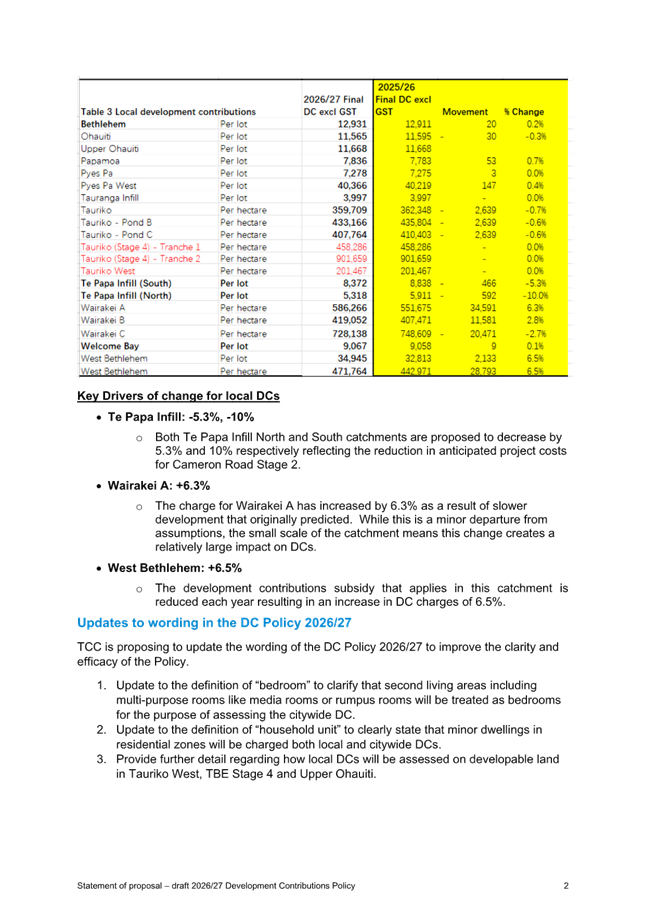
|
Ordinary
Council meeting Agenda
|
24
March 2026
|

|
Ordinary
Council meeting Agenda
|
24
March 2026
|
11.10 Long-term Plan 2027-2037 -
Project Plan
File
Number: A19836770
Author: Josh
Logan, Team Leader: Policy & Corporate Planning
Authoriser: Christine
Jones, General Manager: Strategy, Partnerships & Growth
Please
note that this report contains confidential attachments.
|
Public Excluded Attachment
|
Reason why Public Excluded
|
|
Item 11.10 - Long-term
Plan 2027-2037 - Project Plan - Attachment 4 - Confidential List of emerging
issues for the LTP 2027-2037
|
s7(2)(h) - The
withholding of the information is necessary to enable Council to carry out,
without prejudice or disadvantage, commercial activities.
|
Purpose of the Report
1. This report seeks to meet
one of the Chief Executive’s KPIs set by Council to provide a detailed
timeline for the Long-term Plan 2027-2037 by the end of quarter three in
2025/26.
|
Recommendations
That the Council:
(a) Receives the report
"Long-term Plan 2027-2037 - Project Plan".
(b) Endorses Attachments 3 and 4
(confidential) as the schedule of issues to be considered through the
Long-term Plan 2027-2037. Notes that items will be added to or
removed from the schedule through the Long-Term Plan development process.
(c) Attachment 4 can be
transferred into the open after discussions with affected parties has taken
place.
|
Executive Summary
2. The Long-term Plan
(LTP) is the most significant planning and decision-making process for the
Elected Members for their term of council. It sets out what Tauranga City
Council will do over the next 10 years and how we’ll pay for it. This
includes everything from major infrastructure projects to the services we
provide every day.
3. A new LTP is developed
and adopted every three years by Elected Members, in the middle year of the
normal local government election cycle. Each plan must include a financial
strategy that shows how we’ll manage our finances over the long term.
4. The next LTP is due
for adoption by 30 June 2027.
5. This report and its
attachments provide the Elected Members a high-level overview of the standard
LTP process and a detailed timeline that starts from now and runs through to
June 2027.
Background
6. Council
is required to prepare a long-term plan (“LTP”) every three
years. The purpose[61]
of the LTP is to:
a) describe
the activities of the local authority; and
b) describe
the community outcomes of the local authority’s district or region; and
c) provide
integrated decision-making and co-ordination of the resources of the local
authority; and
d) provide
a long-term focus for the decisions and activities of the local authority; and
e) provide
a basis for accountability of the local authority to the community.
7. The
LTP covers ten years and also incorporates an infrastructure strategy with a
30-year timeframe.
8. The
LTP brings together a large number of processes and topics and requires content
input from all Council activities. Coordinating this, including providing
appropriate content to the Elected Members for direction-setting and
decision-making is a significant task. Some workstreams have been
underway for a few months, others commence later in the process.
9. This
report continues on from the report to Council from 18 November 2025 which
outlined the high-level process that an LTP takes over its creation. This
report can be found at: https://infocouncil.tauranga.govt.nz/Open/2025/11/CO_20251118_AGN_2765_AT.PDF
10. Attachment
1 to this report includes the project plan for the LTP 2027-2037 which
outlines the four phases this LTP will go through in its creation and when
these phases are likely to occur.
11. Attachment
2 gives a high-level month by month breakdown from now till June 2027 of
when each of the content and process pieces of the LTP identified in the 18
November 2025 report are currently scheduled to occur.
12. Attachment 2 also
provides the dates for when all eight workshops relating to the LTP have been
booked with Elected Members from May 2026 to December 2026.
13. Attachment 3 and 4 include
a schedule of issues to be considered through the 2027-37 LTP. The issues
in this staff complied list are over and above the usual approach of Strategy
Stocktake (including AIP review), Asset Management Plan reviews, Activity Area
Plan reviews.
14. The issues identified in the
attached lists are topic specific matters that are likely to progress to issues
and options papers over the course of the development of the LTP. The intent
is that these lists are also a live document that gets updated as issues
are identified.
Statutory Context
15. Legislative issues are
considered in the Background section to this report.
STRATEGIC ALIGNMENT
16. This contributes to the
promotion or achievement of the following strategic community outcome(s):
|
Contributes
|
|
We are an inclusive city
|
ü
|
|
We value, protect and enhance the environment
|
ü
|
|
We are a well-planned city that is easy to move
around
|
ü
|
|
We are a city that supports
business and education
|
ü
|
|
We are a vibrant city that embraces
events
|
ü
|
17. The LTP seeks
to enable Council to achieve its community outcomes.
Options Analysis
18. This report has no options for
Council to consider in this report.
Financial Considerations
19. This report has no financial
implications.
Legal Implications / Risks
20. This report has no other legal
implications or risks.
TE AO MĀORI APPROACH
21. The LTP process does not affect
TCC’s ambitions to align with the Te Ao Māori approach. However,
future funding decisions in the process may have an impact on individual
projects or programmes that are specifically working towards fulfilling the
approach.
CLIMATE IMPACT
22. The LTP process does not affect
TCC’s ambitions to align with the Climate Impact Statement. However,
future funding decisions in the process may have an impact on individual
projects or programmes that are specifically working towards fulfilling this
ambition.
Consultation / Engagement
23. An
engagement approach and programme will be one of the key aspects of the LTP
programme of work.
24. The
Elected Members will be further involved in the development of that approach
and programme over coming months.
25. The
LTP consultation document will be formally consulted on in March/April
2027.
Significance
26. The Local Government Act 2002
requires an assessment of the significance of matters, issues, proposals and
decisions in this report against Council’s Significance and Engagement
Policy. Council acknowledges that in some instances a matter, issue,
proposal or decision may have a high degree of importance to individuals,
groups, or agencies affected by the report.
27. In making this assessment,
consideration has been given to the likely impact, and likely consequences for:
(a) the current
and future social, economic, environmental, or cultural well-being of the
district or region
(b) any persons who are likely to be
particularly affected by, or interested in, the matter.
(c) the capacity of the local authority
to perform its role, and the financial and other costs of doing so.
28. The
matter of the LTP and its contents have a high degree of significance.
However, the decision to receive this report and the project plan (Attachment
1) and outline month by month work programme (Attachment 2) is of low
significance as they are predominantly procedural and work is already underway.
ENGAGEMENT
29. Taking into consideration the
above assessment, that the decision is of low significance, officers are of the
opinion that no further engagement is required prior to Council making a
decision.
Next Steps
30. Work
will continue or commence on each of the phases and workstreams included in
Attachments 1 and 2. Workshops and formal Council and Committee meetings
will be scheduled to bring these LTP workstreams to the Elected Members for
direction-setting and decision-making throughout 2026.
31. Emerging
issues identified in Attachments 3 and 4 will progress to workshops, discussion
papers and/or issues and options papers to Council between now and December
2026.
Attachments
1. Project
Management Plan - 2027-37 Long-term Plan - A19864889 ⇩ 
2. 2026-27
Month by Month View of LTP 2027-37 - A19864886 ⇩
3. List
of emerging issues for the LTP 2027-2037 - A19871457 ⇩
4. Confidential List
of emerging issues for the LTP 2027-2037 - A19872488 - Public Excluded
|
Ordinary
Council meeting Agenda
|
24
March 2026
|
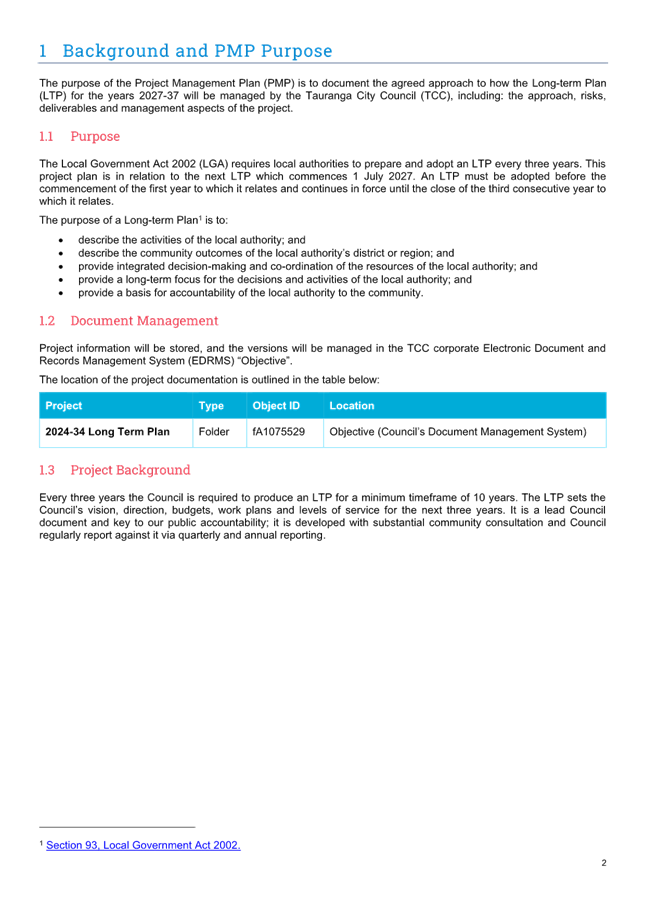
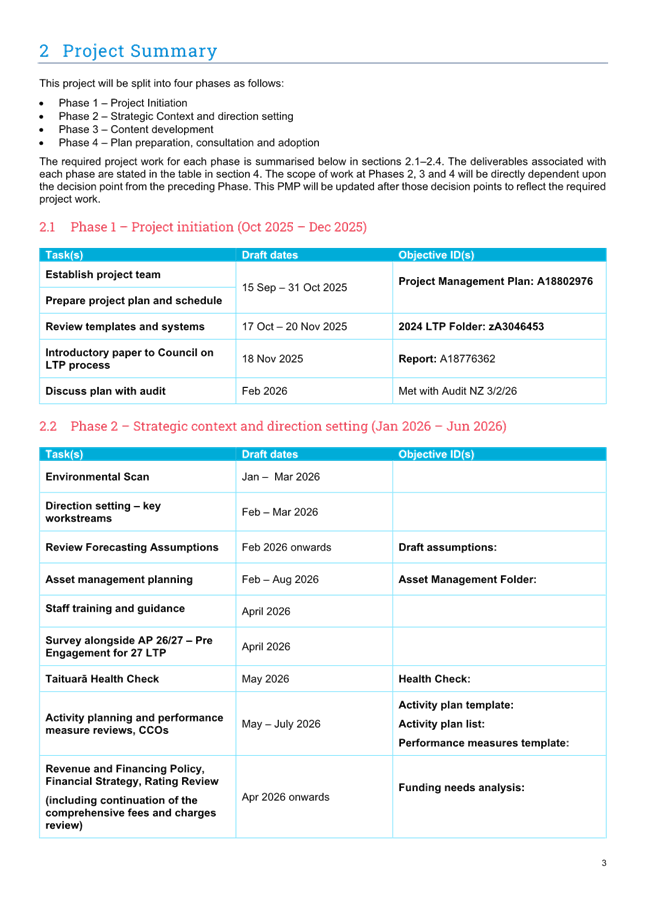
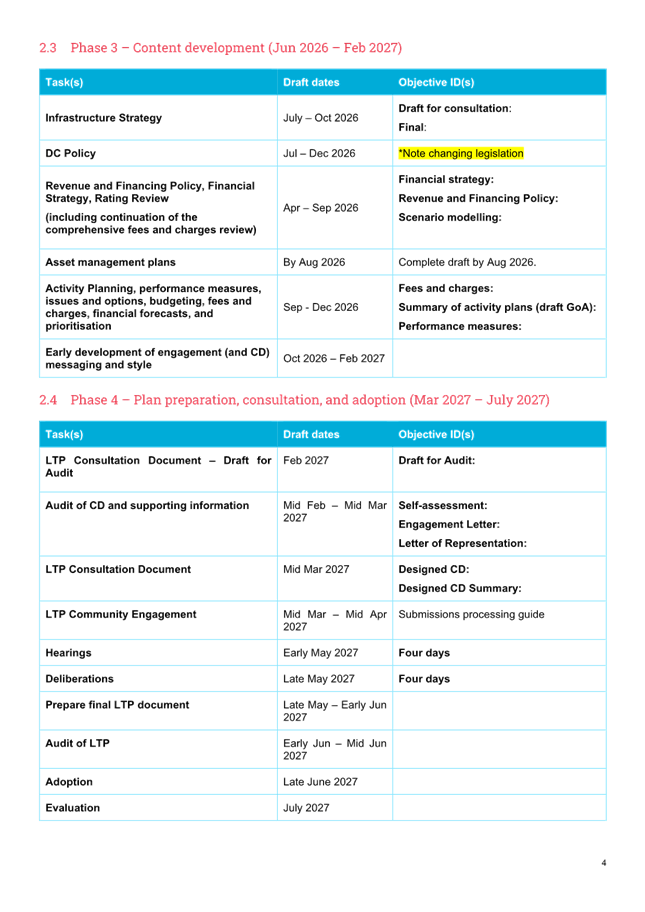
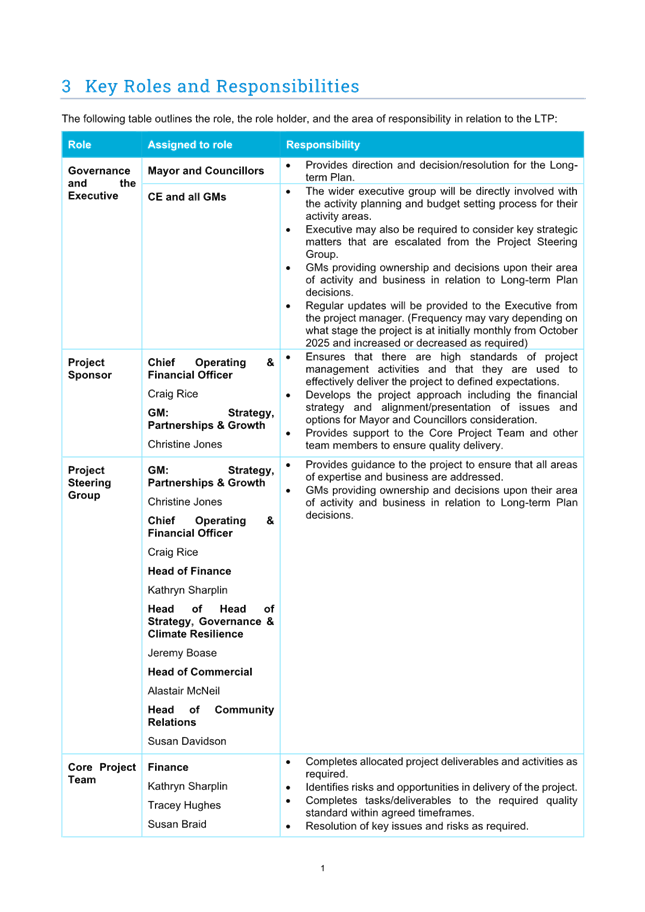
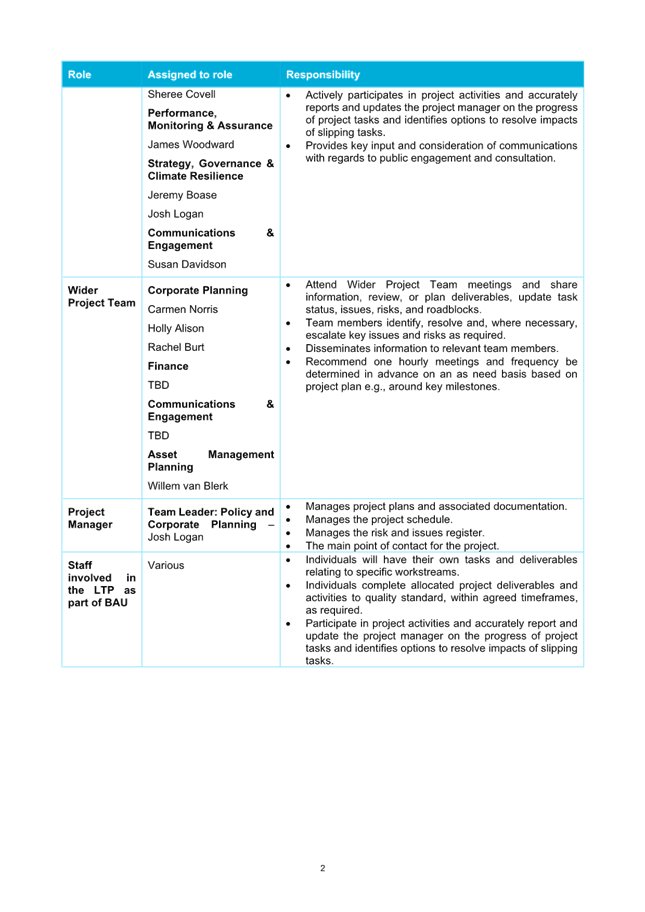
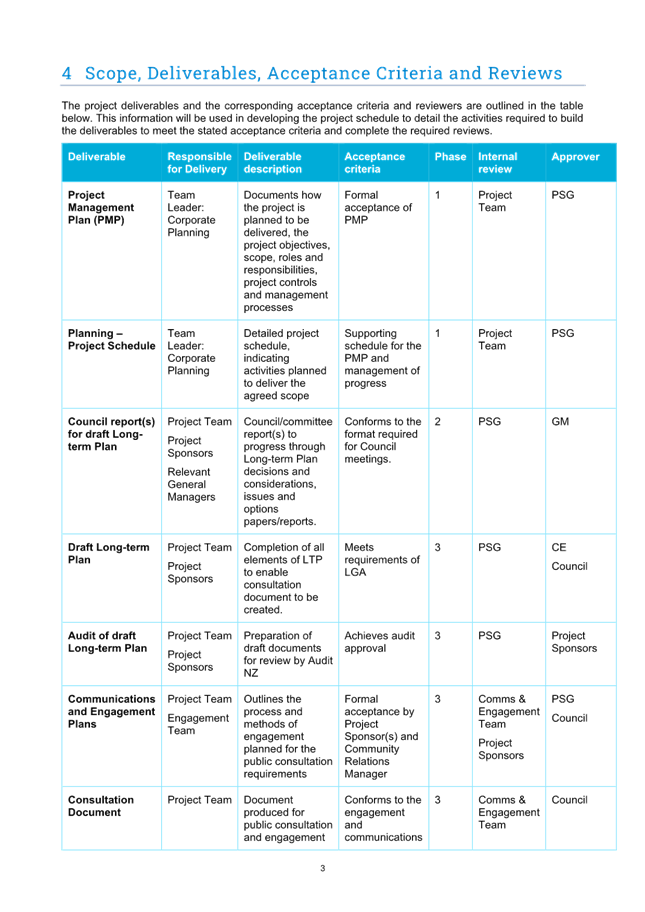
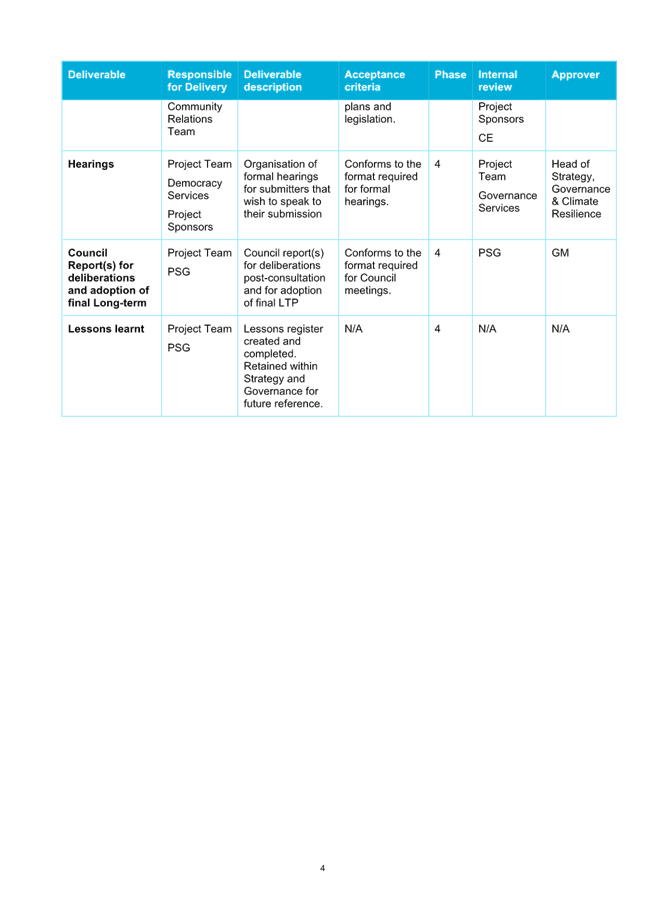
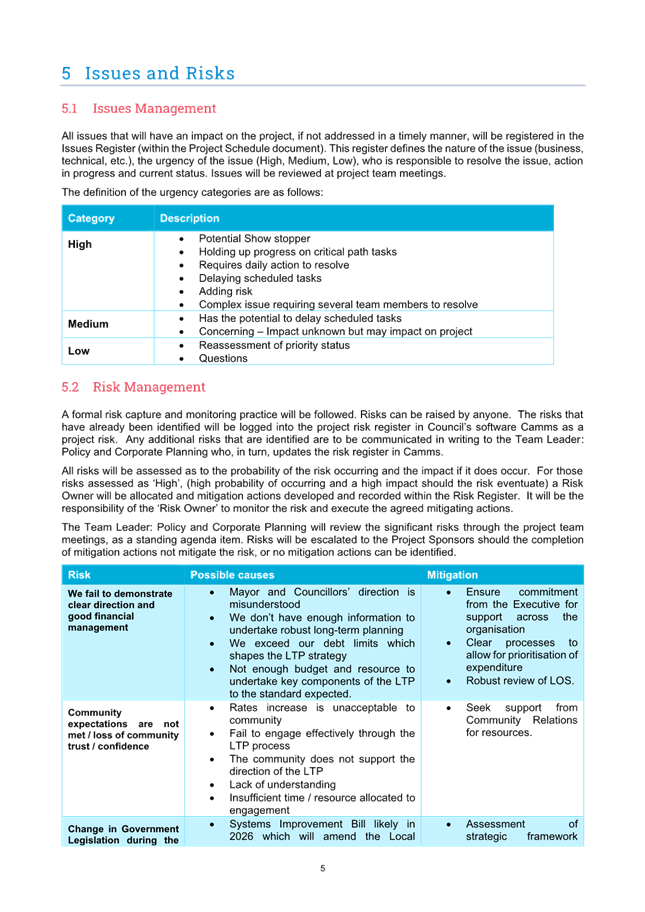
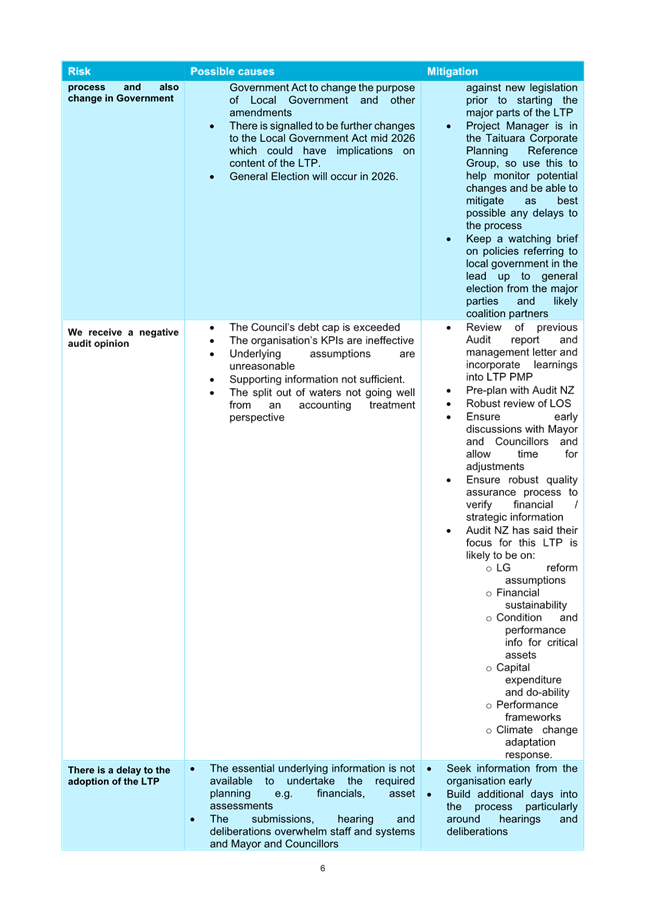

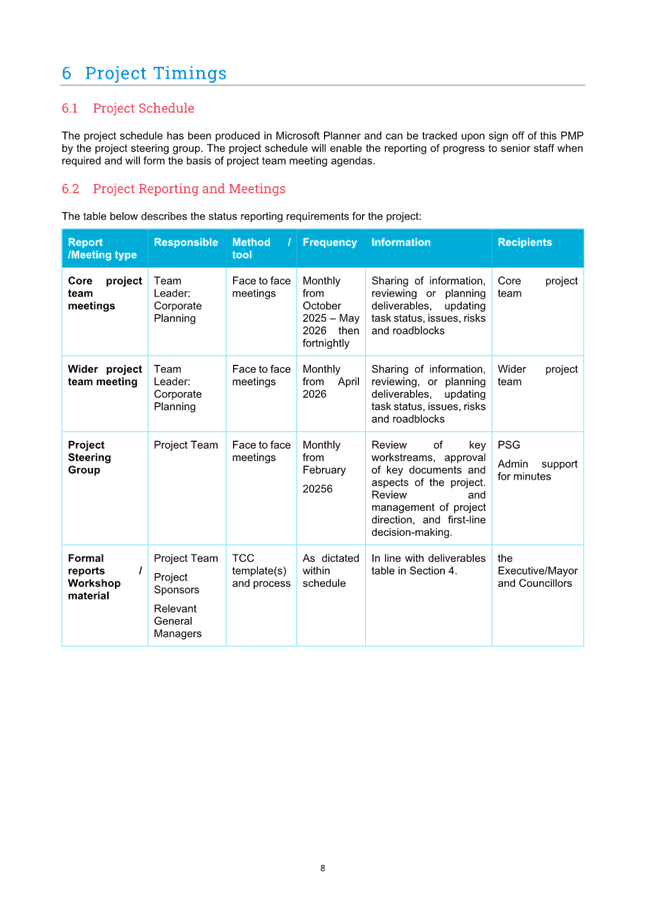
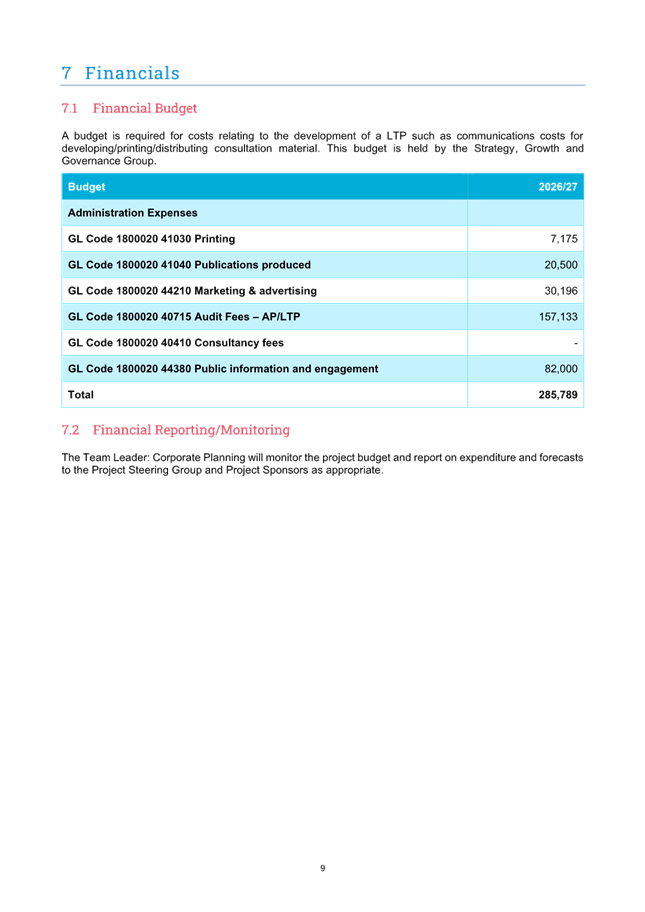

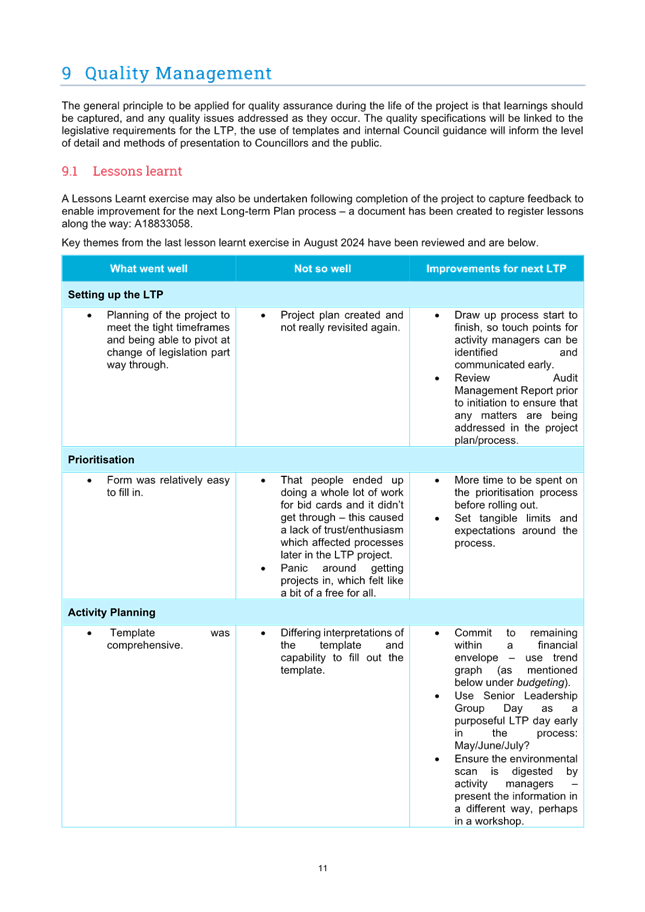
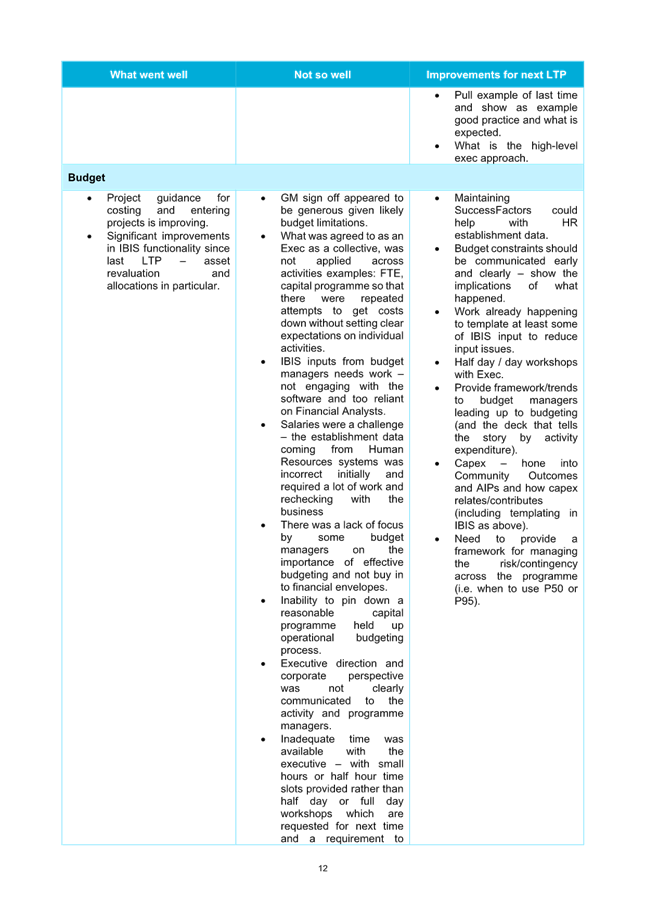
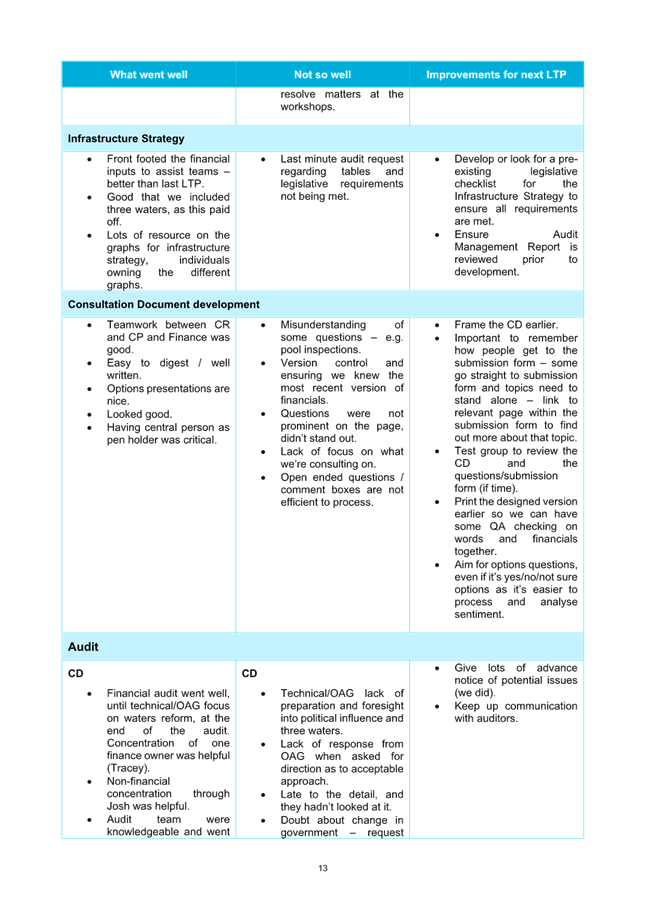
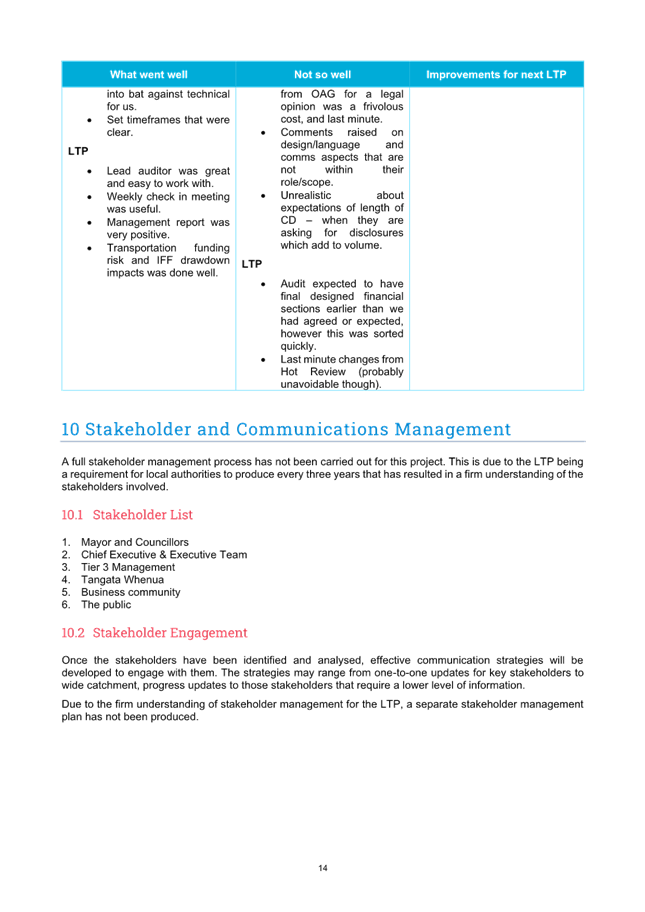
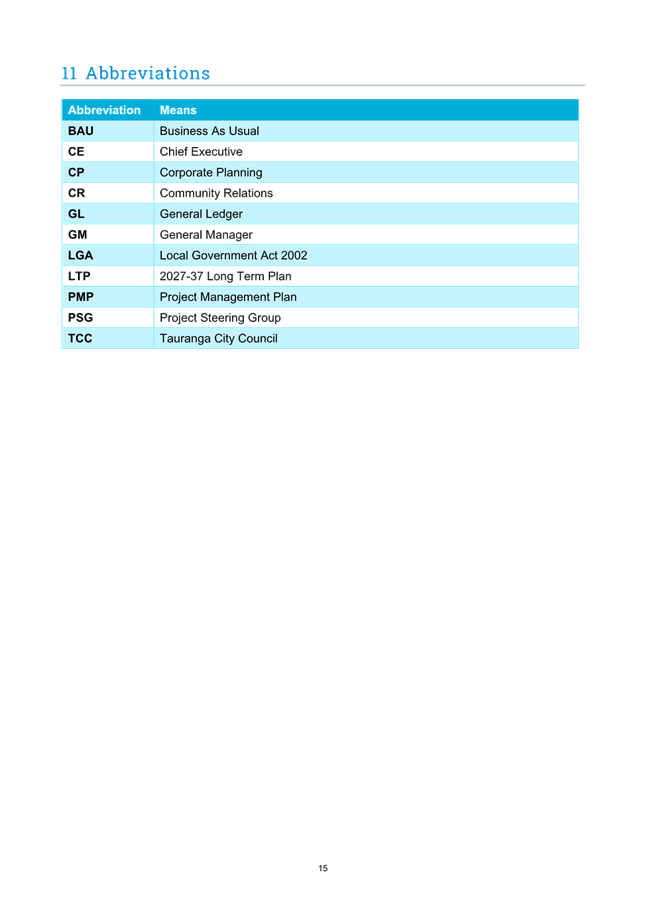
|
Ordinary
Council meeting Agenda
|
24
March 2026
|
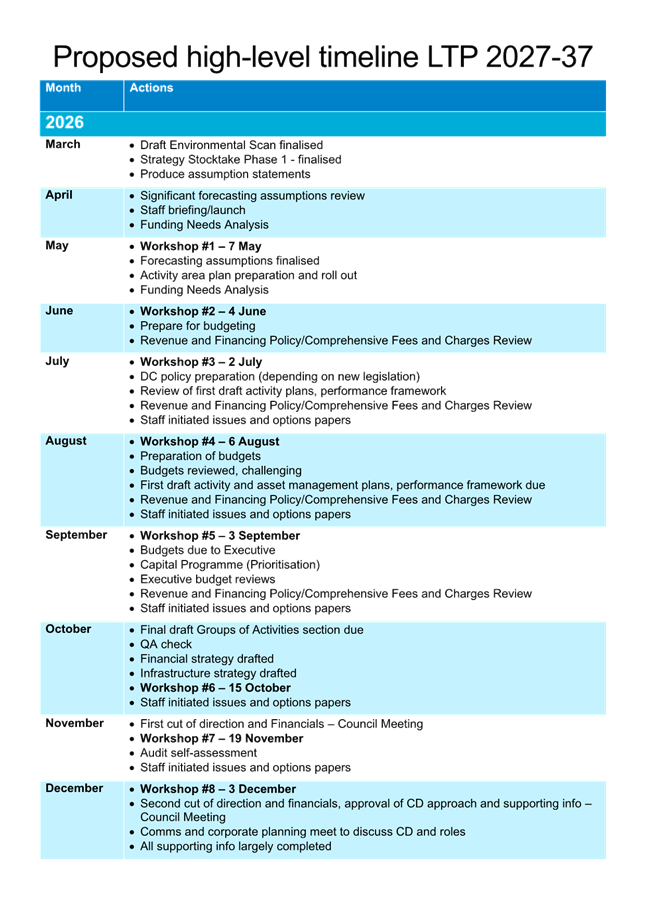
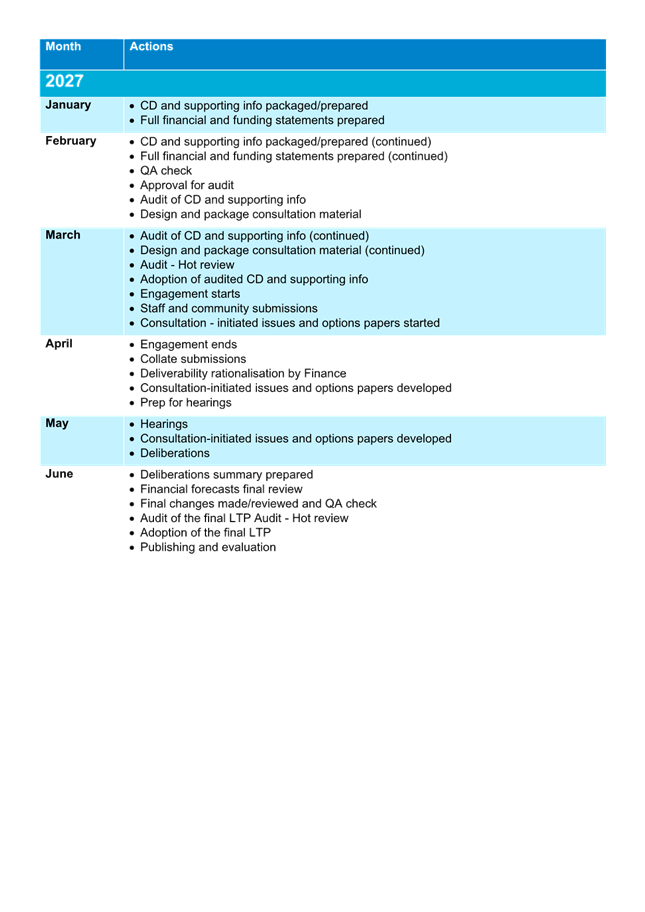
|
Ordinary
Council meeting Agenda
|
24
March 2026
|
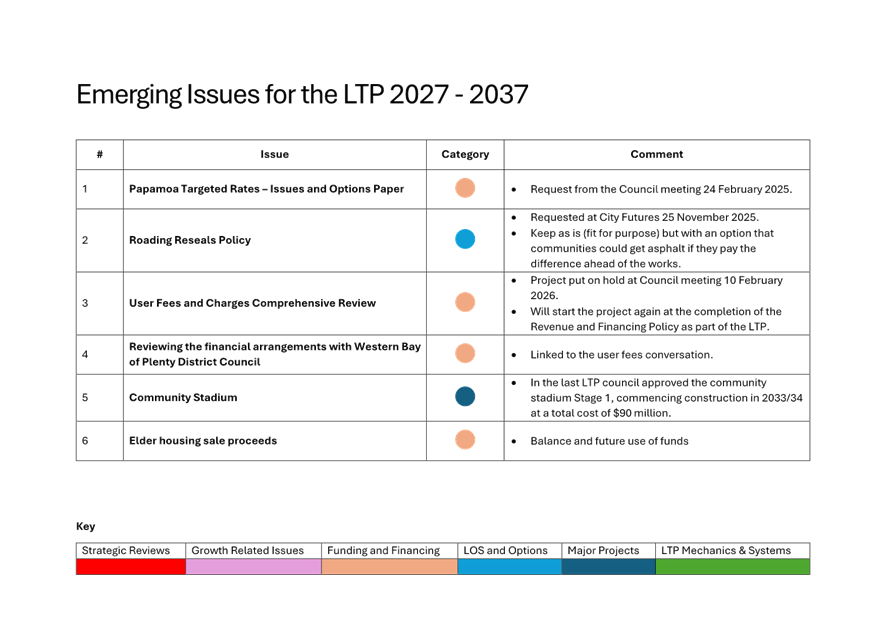
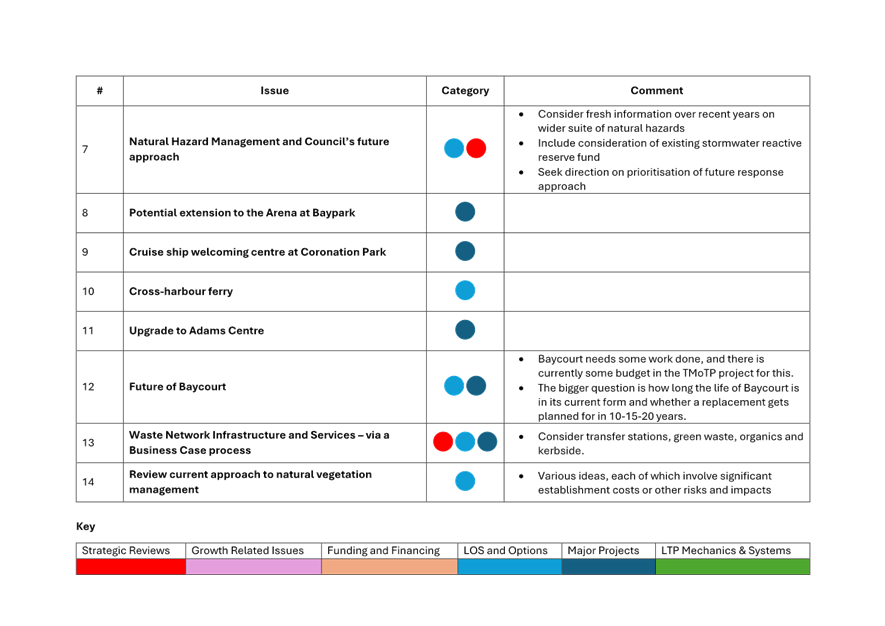
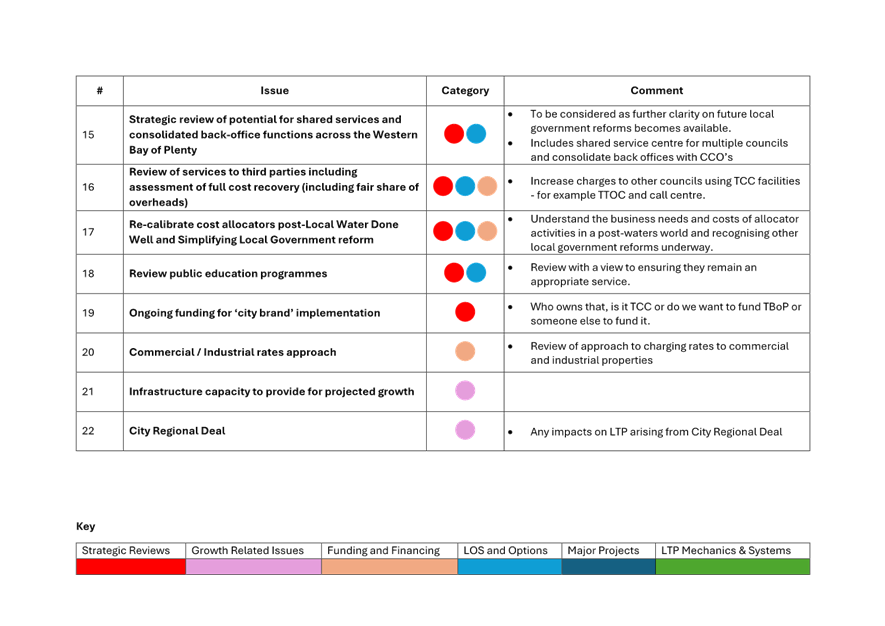
|
Ordinary
Council meeting Agenda
|
24
March 2026
|
11.11 Submission to Bay of Plenty
Regional Council's Long Term Plan Amendment
File
Number: A19923493
Author: Clare
Sullivan, Senior Governance Advisor
Authoriser: Sarah
Holmes, Team Leader: Governance & CCO Support Services
Background
1. The
report accompanying this agenda item, ‘Submission to Bay of Plenty
Regional Council's Long Term Plan Amendment’, will be circulated
separately prior to the meeting.
|
Ordinary
Council meeting Agenda
|
24
March 2026
|
11.12 Transport Resolutions Report
No.60
File
Number: A19813175
Author: Karen
Hay, Team Leader: Engineering Services
Will Hyde, Senior
Transport Engineer
Authoriser: Reneke
van Soest, General Manager: Operations & Infrastructure
Purpose of the Report
1. This
report proposes the introduction, removal or amendment of traffic controls
throughout the city, and seeks a resolution from Council to implement or
formally approve these proposals.
|
Recommendations
That the Council:
(a) Receives the report
"Transport Resolutions Report No.60".
(b) Resolves
to implement the proposed traffic and parking controls for general safety,
operational, or amenity purposes as detailed in Attachment A -
including Attachments 2, 7.1, 7.2, 7.4 ,7.7, 7.8,7.9,7.16, 7.19.
(c) Approves
these changes taking effect on or after 25 March 2026, subject to the
installation of appropriate signs and road markings where necessary.
|
Executive Summary
2. As the city grows
and changes, the demands on the road network also change. Often there can be
conflict between the need to keep traffic lanes clear to enable an efficient
network, the need to provide on-street parking and loading zones to support
nearby activities, restrict parking to improve access and the need for
vulnerable road users such as pedestrians and cyclists to move around the city
safely.
3. Attachment A sets
out changes for general access, parking, safety and operational reasons. Some
of these are requests from the public or other stakeholders for numerous
changes to parking controls which have been assessed to be appropriate.
4. Amendments include
changes to the following attachments to the Traffic & Parking Bylaw (2023):
(a) Attachment 2: One-Way Traffic
(i) A proposal to make part
of Miro Street one-way.
(b) Attachment 7.1: No Parking
Behind Kerb
(i) Extension of existing
part-time restriction outside Mount Maunganui Primary school, to prevent
dangerous parking at school peak times.
(c) Attachment 7.2:
Prohibited Stopping and Standing of Vehicles
(i) Extending or removing
broken yellow lines to improve safety, enhance access, or increase parking
capacity.
(ii) These changes result from
customer requests, capital projects, and resource consent requirements.
(d) Attachment 7.4: Clearway
(i) This is a correction to
an existing clearway restriction.
(e) Attachment 7.7: Mobility
Parking
(i) A retrospective
resolution is required for a mobility space installed under the requirements of
a resource consent; and
(ii) A new mobility parking space
in an area of the City Centre which currently has very limited mobility
parking.
(f) Attachment 7.8: Motorcycle
Parking
(i) Retrospective resolutions
required for existing motorcycle spaces which were required under a resource
consent for the adjacent development.
(ii) Retrospective resolution
required for an existing space serving local retail area.
(g) Attachment 7.9: Parking
Time Restrictions
(i) Retrospective resolutions
required for existing time restrictions implemented as part of Maunganui Road
project.
(ii) Retrospective resolutions
required for existing time restrictions outside a school.
(iii) New resolution for time
restrictions installed under a resource consent.
(iv) Relocation of existing time-limited
parking by mutual consent of adjacent businesses.
(h) Attachment 7.16: Loading Zones
with Time Restriction
(i) Retrospective resolution
to support interim changes in the city centre.
(i) Attachment 7.19: Angle
Parking
(i) New angle parking as part
of the Miro Street project.
Background
5. The Traffic and
Parking Bylaw 2023 includes attachments which list various traffic and parking
restrictions. Council can impose traffic and parking restrictions by Council
resolution.
6. The Council
regularly adds, removes or amends traffic and parking controls to reflect and
support operational and safety needs on the road network.
7. The proposed
amendments in Attachment A are minor changes to parking restrictions across the
city which have arisen through requests from the public, transportation staff,
or other stakeholders.
Statutory Context
8. Land Transport Act
1998, particularly section 22AB, which empowers councils as Road Controlling
Authorities (RCAs) to make bylaws for traffic and parking control.
9. Local Government Act
2002, which outlines the general process for making bylaws, including
consultation and public notification.
10. Land Transport (Road User) Rule
2004 and Traffic Control Devices Rule 2004, which set standards for signage,
markings, and enforcement.
STRATEGIC ALIGNMENT
11. This contributes to the
promotion or achievement of the following strategic community outcome(s):
|
Contributes
|
|
We are an inclusive city
|
ü
|
|
We value, protect and enhance the environment
|
☐
|
|
We are a well-planned city that is easy to move
around
|
ü
|
|
We are a city that supports
business and education
|
ü
|
|
We are a vibrant city that embraces
events
|
ü
|
12. The recommendations address a number of issues affecting safety, access
and/or amenity and contribute to the
safe and efficient operation of the city’s transport network. The
provision of mobility parking enables a more inclusive city by making our
amenities more accessible to less-abled members of our community.
Options Analysis
13. The proposed changes relate to
general operations. The reasons for each proposal are described in Appendix A.
In each case the problem identified is expected to continue if the proposed
amendment is not adopted.
14. The proposals are independent
of each other, and Council may resolve to adopt some, all or none of them.
15. Miro Street one-way: Numerous
options to increase parking while retaining Miro St, including those submitted
by the public were assessed for suitability. Upon assessing key design criteria
and impacts to road users (including additional travel time) implementing a
one-way of Miro St and adding parking is considered the overall optimal option
for Tauranga.
Financial Considerations
16. The signs and markings costs
associated with general operational changes are minor and can be accommodated
within existing project or operational budgets.
Legal Implications / Risks
17. These proposals are required in
order to allow enforcement of changes deemed necessary for safety and amenity
purposes. Council has an obligation to address known safety issues on the road
network.
TE AO MĀORI APPROACH
18. The proposals create safety,
access and/or amenity improvements for our residents and visitors and therefore
align with the principal of manaakitanga. For the major projects, consultation
with hapū was undertaken as part of the project development.
CLIMATE IMPACT
Given
this report relates to regulatory procedure, no climate impact assessment is
made.
Consultation / Engagement
19. Requests
for changes may originate from neighbouring properties or reflect existing
circumstances where consultation is deemed not necessary. Alternatively,
consultation may occur during project delivery, or where property owners
adjacent to the site are informed or consulted prior to implementing any
modifications.
Significance
20. The Local Government Act 2002
requires an assessment of the significance of matters, issues, proposals and
decisions in this report against Council’s Significance and Engagement
Policy. Council acknowledges that in some instances a matter, issue, proposal
or decision may have a high degree of importance to individuals, groups, or
agencies affected by the report.
21. In making this assessment,
consideration has been given to the likely impact, and likely consequences for:
(a) the current
and future social, economic, environmental, or cultural well-being of the
district or region
(b) any persons who are likely to be
particularly affected by, or interested in, the decision.
(c) the capacity of the local authority
to perform its role, and the financial and other costs of doing so.
22. In accordance with the
considerations above, criteria and thresholds in the policy, it is considered
that the decision is of low significance.
For the
changes which are retrospective, these are likely to have a low public interest
as these were previously consulted upon or responded to requests from adjacent
landowners.
ENGAGEMENT
Taking into consideration
the above assessment, that the decision is of low significance, officers are of
the opinion that no further engagement is required prior to Council making a
decision.
Next Steps
23. The bylaw attachments will be
updated in accordance with the resolution and implementation of associated line
marking and signage as appropriate.
24. Adjacent business and residents
to be notified of any restriction changes, prior to implementation.
Attachments
1. Appendix
A - Transport Resolutions Report 60 Proposals - A19833148 ⇩ 
|
Ordinary
Council meeting Agenda
|
24
March 2026
|
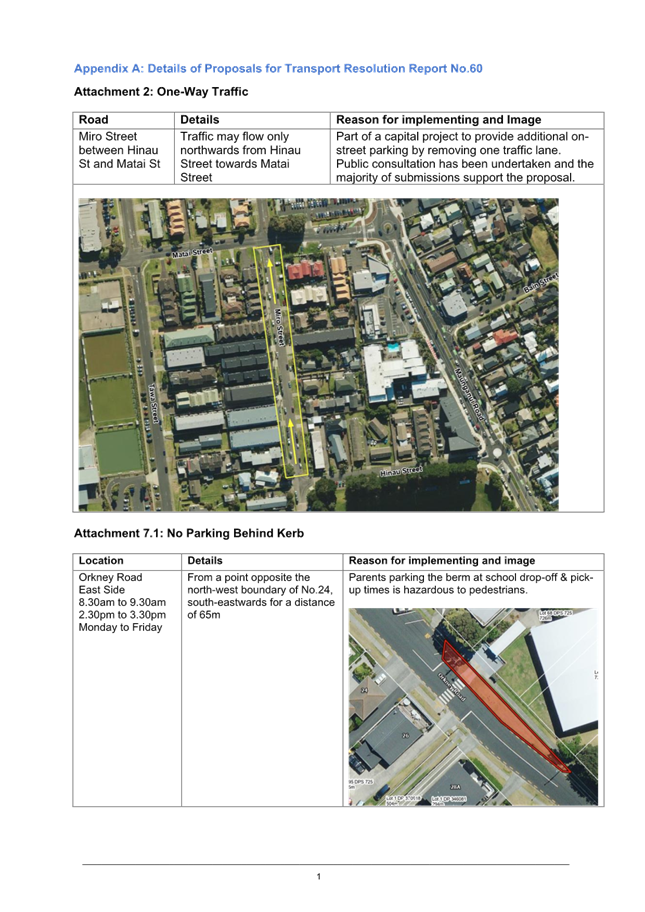
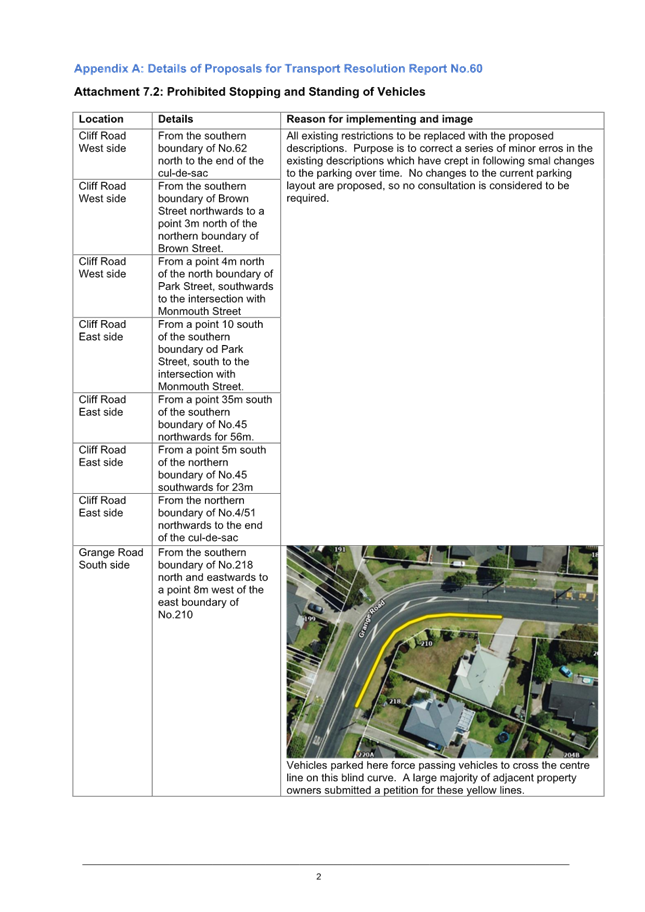
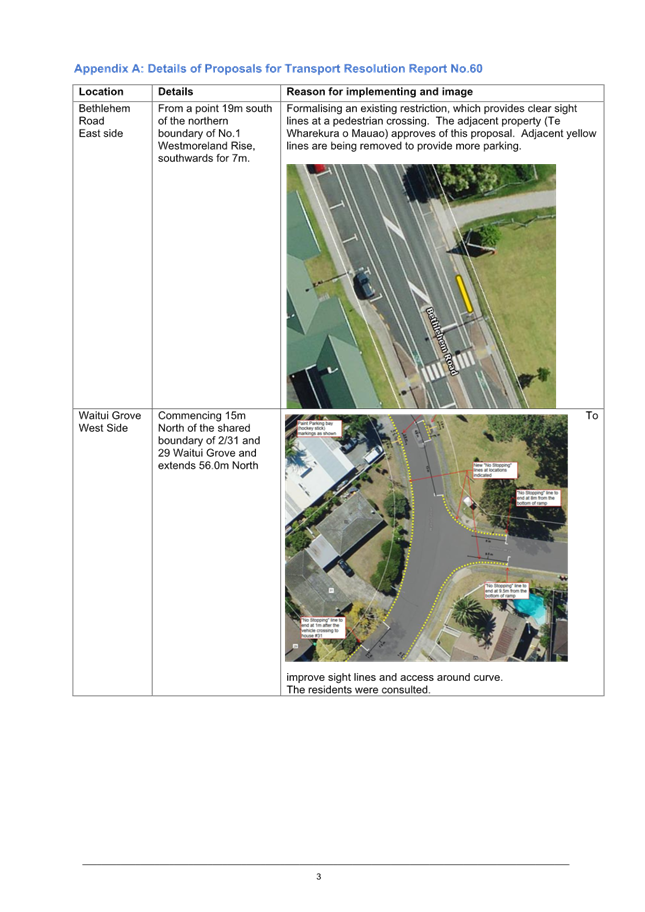
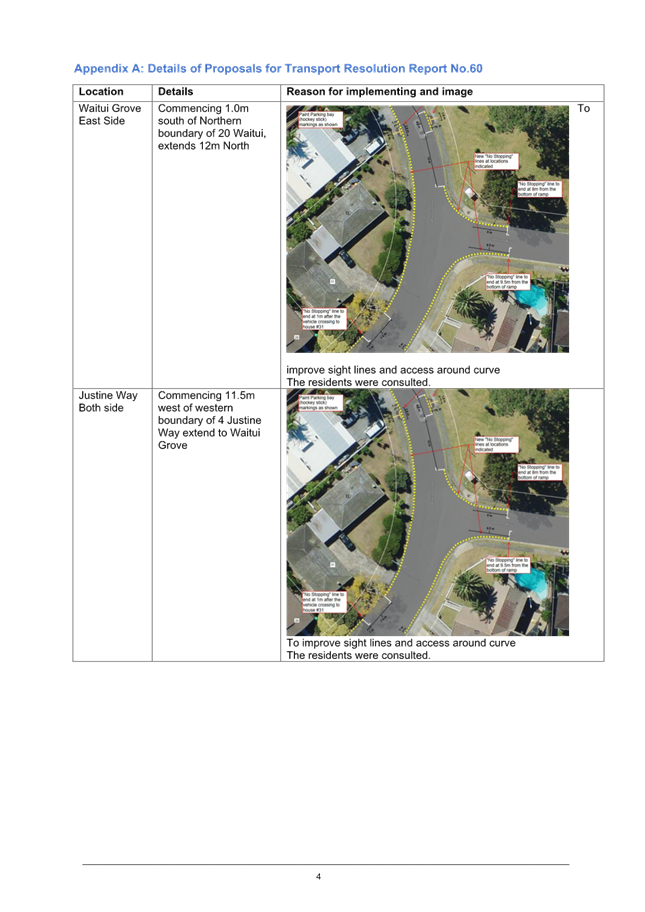
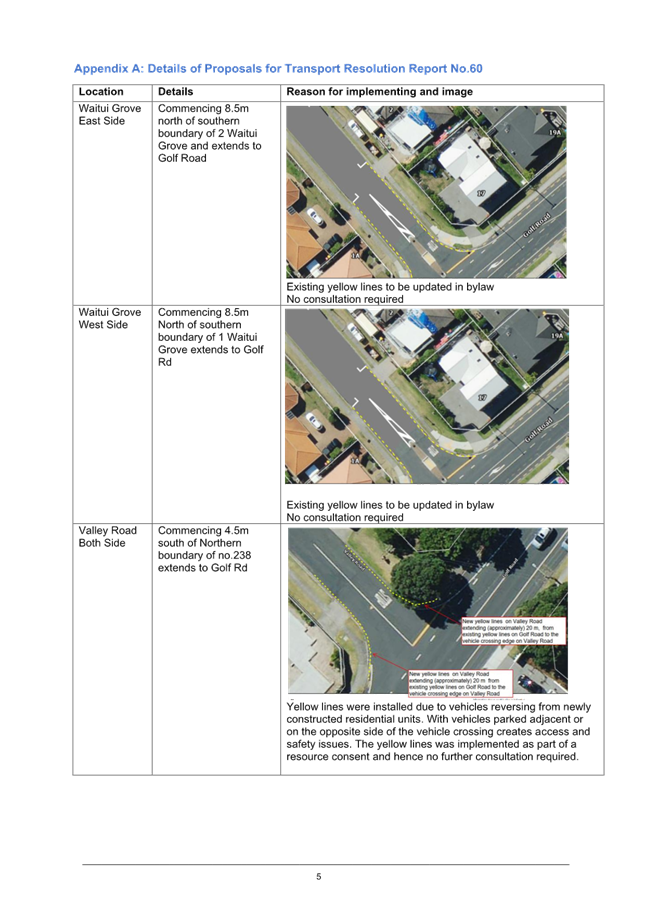
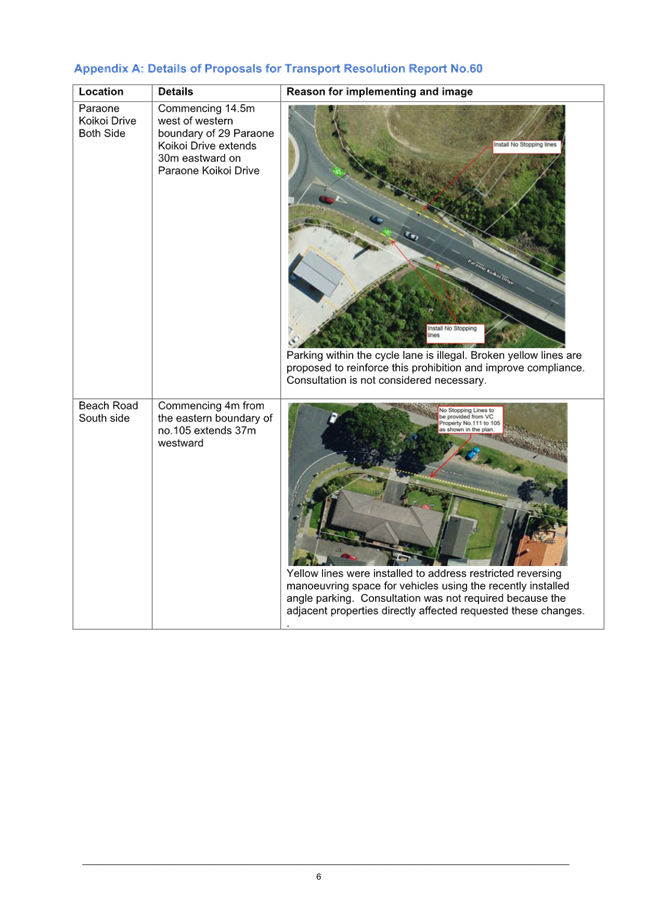
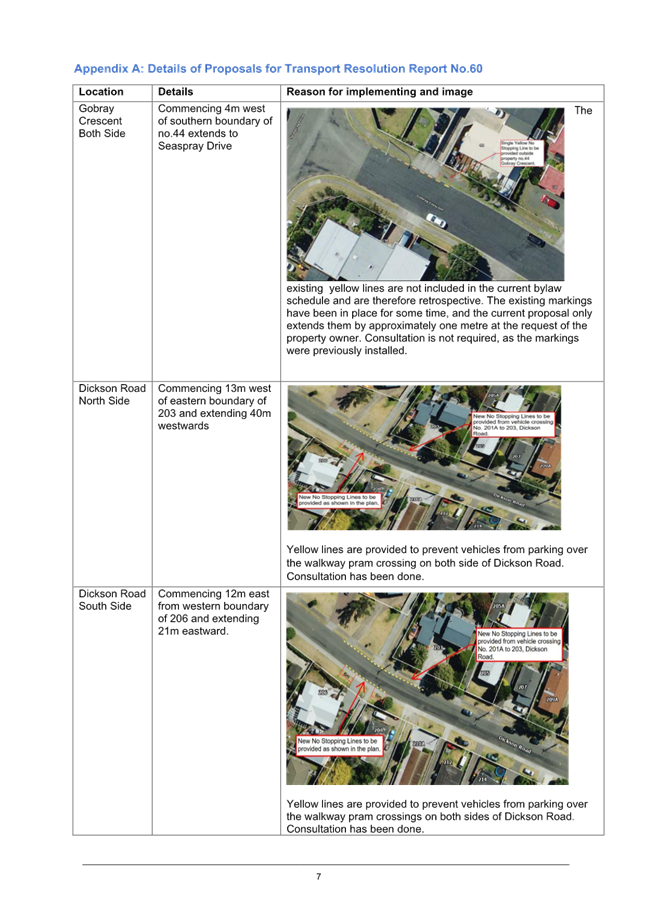
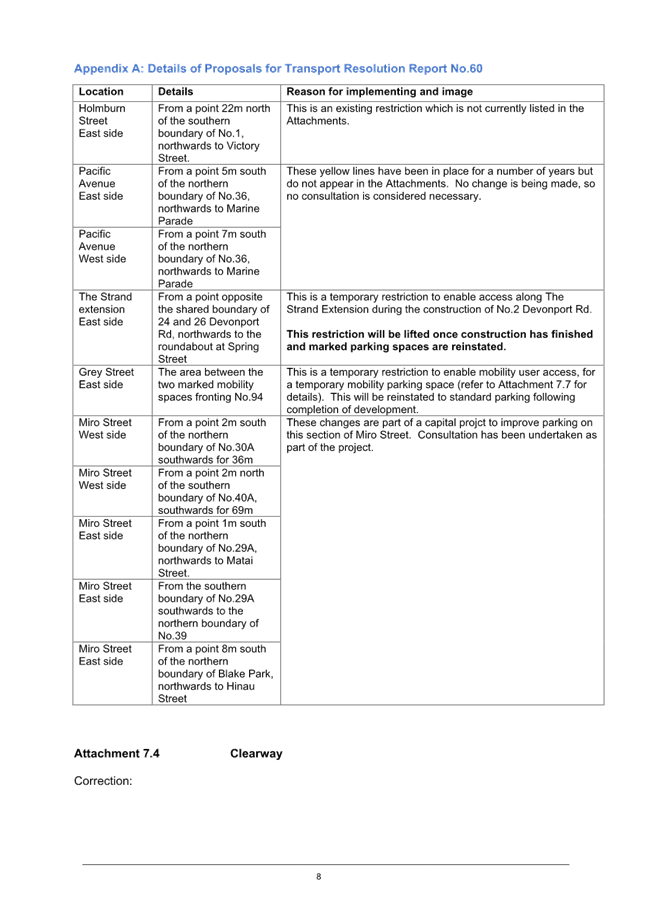
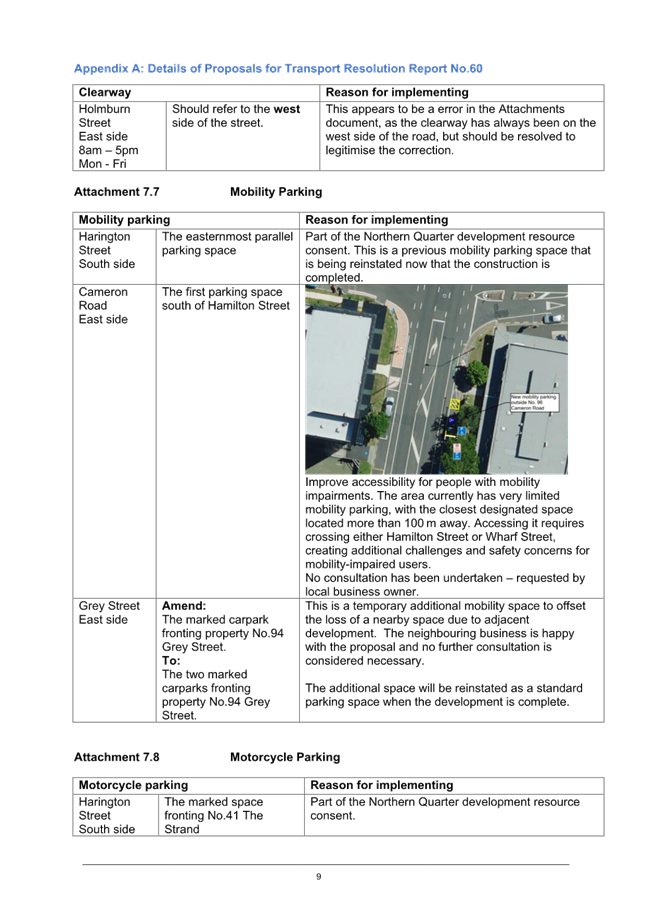
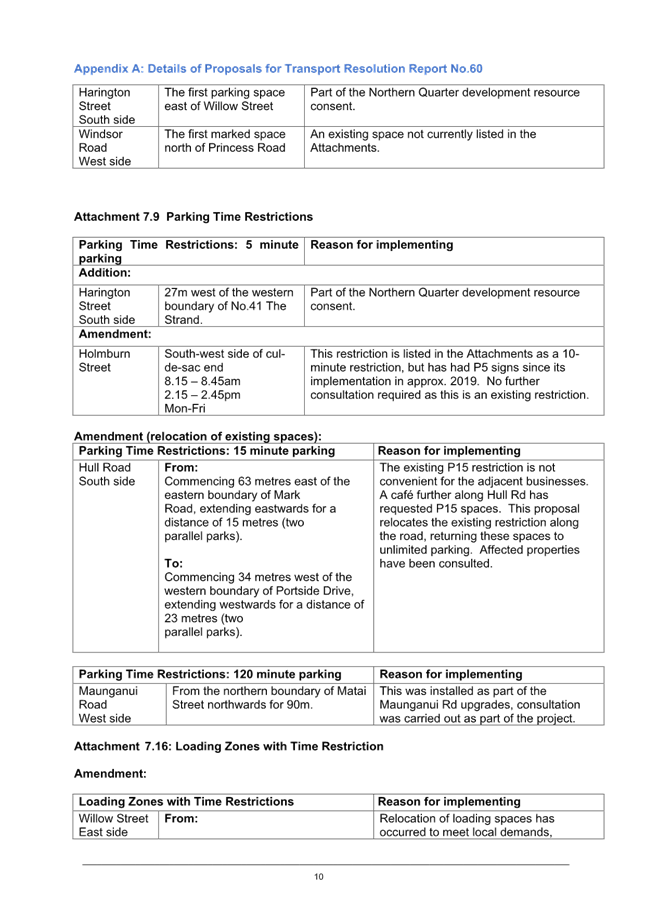
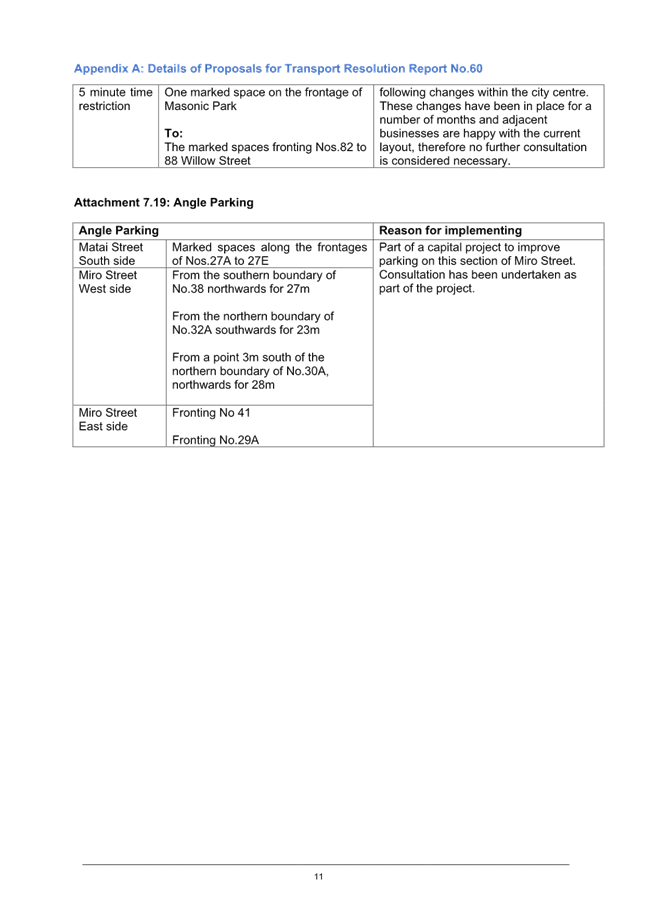
|
Ordinary
Council meeting Agenda
|
24
March 2026
|
11.13 Ōmanawa Falls Reserve name
change
File
Number: A15393616
Author: Ana
Hancock, Team Leader: Design
Authoriser: Reneke
van Soest, General Manager: Operations & Infrastructure
Purpose of the Report
1. To request approval
to rename Ōmanawa Falls Reserve to Te Rere o Ōmanawa in accordance
with Council’s Naming Policy 2020.
|
Recommendations
That the Council:
(a) Receives the report
"Ōmanawa Falls Reserve name change".
(b) Approves
changing the official name for “Ōmanawa Falls Reserve” to
“Te Rere o Ōmanawa”, supported by translation in any
communications.
|
UPDATE SINCE THE LAST MEETING
2. This report was
previously brought to this Council at the 7 October Council meeting. The report
was left to lie on the table as Elected Members requested that Ngāti
Hangarau and Tourism Bay of Plenty be in attendance. Since this meeting Staff
has met with Ngāti Hangarau and Tourism Bay of Plenty and proposed a
refined approach: that renaming Ōmanawa Falls Reserve is supported by a
communications approach that presents the translation of Te Rere o Ōmanawa
alongside the new name as we go through a period of transition.
3. To assist with
Council decision making, this report has been edited to present three options
for the Council to consider: (1) – Rename with a comms approach, (2)
– Dual name, (3) No change to name.
Background
4. The
Ōmanawa Falls Reserve is owned and managed by Tauranga City Council (“Council”)
and lies within Western Bay of Plenty District, and within the
rohe of Ngāti Hangarau.
5. Ōmanawa Falls
Reserve is managed as a Heritage Reserve under the Tauranga Reserves Management
Plan (TRMP), although is not formally classified as a reserve under the
Reserves Act.
6. Council has been
working closely with Ngāti Hangarau on the Ōmanawa Falls Safe Access
project since 2019. The three streams of this project included providing
physically and culturally safe public access to the falls, supporting the
development of a cultural tourism experience and working towards co-management
and/or co-governance. All three streams are guided by the Ōmanawa
Principles (provided in Attachment 1). The Ōmanawa Principles were
developed by Ngāti Hangarau in 2020 with support from Council’s Pou
Takawaenga team and first shared with Council at the 27 October meeting in
2020.
7. The Ōmanawa
Falls Governance Group, made up of Ngāti Hangarau, Tourism Bay of Plenty
and Council recommend that Ōmanawa Falls Reserve is renamed as Te Rere o
Ōmanawa which is supported by the Ōmanawa Principles.
‘Ōmanawa’ translates into English as ‘of the
heart’, and the full name means ‘the waterfall of the heart’.
Strategic / Statutory Context
8. Council adopted a
revised Naming Policy in May 2020. The policy encourages locally significant
Māori names for streets, reserves, community facilities and other public
places in Tauranga and to enable greater visibility of mana whenua connections
to Tauranga. Since adoption of the policy, Council staff have placed greater
emphasis on identifying and promoting historically and culturally significant
names in our public places.
9. Council’s
Naming Policy allows for the renaming of existing reserves where a new name
would better meet the objectives of the policy to promote local identity and
mana whenua connections. Council is responsible for all decisions to approve or
decline requests to rename or dual name existing streets, reserves, community
facilities and other public places.
10. Appropriately recognising known
cultural values is included in the mission statement of the Tauranga Reserve
Management Plan which has management statements for Ōmanawa Falls Reserve.
DISCUSSION
Significance of Ōmanawa Falls to Ngāti
Hangarau
11. The name for the falls existed
before European arrival, the development of the hydro power station and the
creation of the reserve.
12. The Ōmanawa Falls are of
particular importance to Ngāti Hangarau as explained in
‘Significance of Ōmanawa Falls - Excerpts from a statement prepared
by Ngāti Hangarau offered as evidence for the resource consent hearing for
the Ōmanawa Falls project’ (Attachment 2). In summary, Ōmanawa
means of the heart. Unlike some of the other waterfalls in the rohe,
Ōmanawa Falls were a sign of good luck and were a place for fortune
telling and for healing, as such the waterfall and the pool of water below are
recognised by Ngāti Hangarau as wāhi tapu.
13. Ngāti Hangarau have
provided the name Te Rere o Ōmanawa for use on the site signage (as well
as te reo names for viewing platforms and the like). Renaming the Ōmanawa
Falls Reserve to Te Rere o Ōmanawa, and the use of other Mana Whenua names
is supported by the Ōmanawa Principles (Section 2):
2.
WHAKAPAPA: NAMES & NAMING
i)
Restoration of Mana Whenua names at Ōmanawa, acknowledging significant
sites, whenua/waterways and heritage including historic networks, interactions
and relationships.
ii)
Mātauranga ā hapū acknowledged. - Inspiration for names is drawn
from Ngāti Hangarau knowledge base and systems.
iii)
Education to support the uptake of mātauranga ā hapū. - Names,
whakapapa and heritage education will be supported with resource/content
creation onsite at Ōmanawa, online and in the wider community.
Why
renaming is proposed instead of dual naming
14. Renaming the reserve is
proposed for the following reasons:
(a) Ōmanawa Falls was
originally a te reo name which was then anglicised. Renaming Ōmanawa Falls
Reserve to Te Rere o Ōmanawa reverts to the original name however will
continue to be recognisable to the local community as the Ōmanawa name is
retained in both versions.
(b) The Ōmanawa Falls Safe
Access Project has created a space with a strong cultural presence, with
pouwhenua, a tomokanga and palisade fencing. The signage also has a distinctive
cultural presence, with te reo names for each of the three lookouts. Renaming
the reserve to Te Rere o Ōmanawa is in keeping with the look and feel of
the site.
(c) Te Rere o Ōmanawa has
already been in use on site signage, the council webpage and in media releases.
Officially changing the name will formalise this existing use.
(d) The reserve has not had a
long-standing relationship with the community. Up until about 2011 the reserve
and the Falls themselves were not well known with the exception of the
immediate Ōmanawa community and adventurous tourists. The reserve was closed
in January 2016 and reopened on 1 December 2023.
(e) Under the naming policy
(section 5.3.3) dual naming may be preferable in some circumstances to maintain
local identity. In this case it is considered that the local identity for the
reserve as a reserve is not high, as outlined above.
15. The Ōmanawa Falls
Governance Group considers that renaming the reserve supports Mana Whenua
connections and does not diminish local identity.
16. The Naming Policy specifies
that the naming of heritage reserves will reflect the historical significance
of the area. Renaming Ōmanawa Falls Reserve to Te Rere o Ōmanawa is
considered to enhance those historic values.
17. It is proposed that renaming
Ōmanawa Falls Reserve is supported by a communications approach that
presents the translation of Te Rere o Ōmanawa alongside the new name as we
go through a period of transition. For example, in all communications such as
on webpages, social media posts etc the name can be communicated as follows: Te
Rere o Ōmanawa (Ōmanawa Falls Reserve). At the point where there is
wide take up of the name, the translation can be dropped without needing to go
through a formal renaming process. This may only be a few years, or may take a
generation.
18. It was raised in the previous
Council meeting that there were concerns from some in the community about the
proposed name change. To be clear, the proposed name change affects only the
name of the Council owned property. The name of the falls is outside of
Council’s jurisdiction. In order to rename the waterfall, an application
needs to be made to the New Zealand Geographic Board. This would require a
letter of support from the Western Bay District Council. If the NZ Geographic
Board accept the proposal, they will it publicly notify it allowing one month
for the public to make submissions. If approved by the NZ Geographic Board, the
Minister for Land Information makes the final decision.
19. Ngāti Hangarau have
advised that they intend to apply to the New Zealand Geographic Board to rename
the waterfall. The Governance Group has offered to provide a letter
of support to Ngāti Hangarau as part of their application and provide any
other assistance as required. The Council may also wish to lend their
support to Ngāti Hangarau in seeking this name change.
OPTIONS ANALYSIS
20. Three options are presented:
Option
1 (Recommended)
(a) Rename Ōmanawa Falls
Reserve to Te Rere o Ōmanawa, and support with a communications approach
that presents the translation of Te Rere o Ōmanawa alongside the new name.
Option
2
(b) Dual name Ōmanawa Falls
Reserve to Te Rere o Ōmanawa – Ōmanawa Falls Reserve.
Option
3
(c) Do not rename Ōmanawa
Falls Reserve.
|
Options
|
Pros
|
Cons
|
|
Option 1
Rename supported with a
comms approach for translation
|
Best meets Mana Whenua
objectives and addresses Elected Members concerns around causing confusion
for visitors.
Is in alignment with
current signage and approach taken with comms
|
|
|
Option 2
Dual name Ōmanawa
Falls Reserve to Te Rere o Ōmanawa – Ōmanawa Falls Reserve
|
Provides both
names in perpetuity
|
Less desirable for Mana
Whenua
|
|
Option 3
Do not rename
Ōmanawa Falls Reserve
|
|
Does not meet Mana
Whenua objectives
|
significance / Engagement
21. Ngāti Hangarau and Tourism
Bay of Plenty have been engaged in the renaming proposal for Te Rere o
Ōmanawa and provide their full support.
22. Western Bay Council have also
provided a letter of support for the name change which is included in
Attachment 3.
23. Councils Naming Policy was
adopted on 5 May 2020 following a public and stakeholder engagement process.
24. Further consultation and
engagement with the wider public is not required as per clause 5.1.2 of the
Naming Policy:
“In
order to recognise the significance of names provided by mana whenua, Council
does not consult on names proposed by mana whenua for the purposes of obtaining
wider community approval.”
25. Renaming Ōmanawa Falls to
Te Rere o Ōmanawa does not meet the test of significance in the
Significance and Engagement Policy requiring consultation. While it is of
medium significance, due to the reasons outlined in paragraph 14 above,
officers are of the opinion that no further engagement is required prior to
Council making a decision.
Next Steps
26. If approved, the name Te Rere o
Ōmanawa will be formally recognised on supporting documents and records.
The new name will be supported by the translation of the name for the next few
years and as long as required.
27. The Ōmanawa Falls
Governance Group and potentially Council will support Ngāti Hangarau with
their planned application to the New Zealand Geographic Board to officially
rename the waterfall to Te Rere o Ōmanawa.
Attachments
1. Omanawa
Principles - A15459791 ⇩
2. Significance
of Omanawa Falls - Excerpts from Ngati Hangarau Statement - A15459792 ⇩ 
3. Letter of Support
for name change from Western Bay - A18767046 ⇩
|
Ordinary
Council meeting Agenda
|
24
March 2026
|
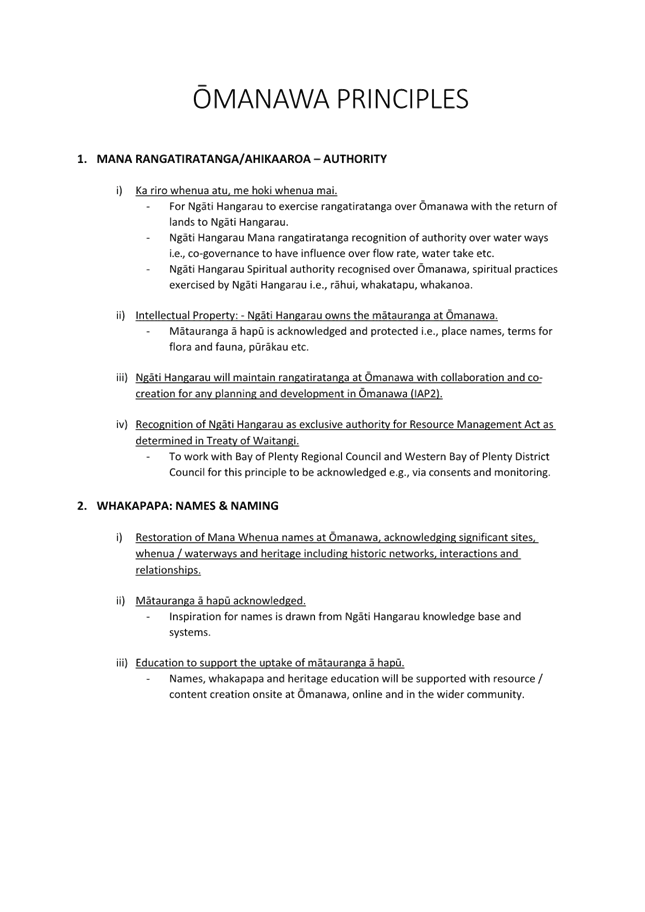
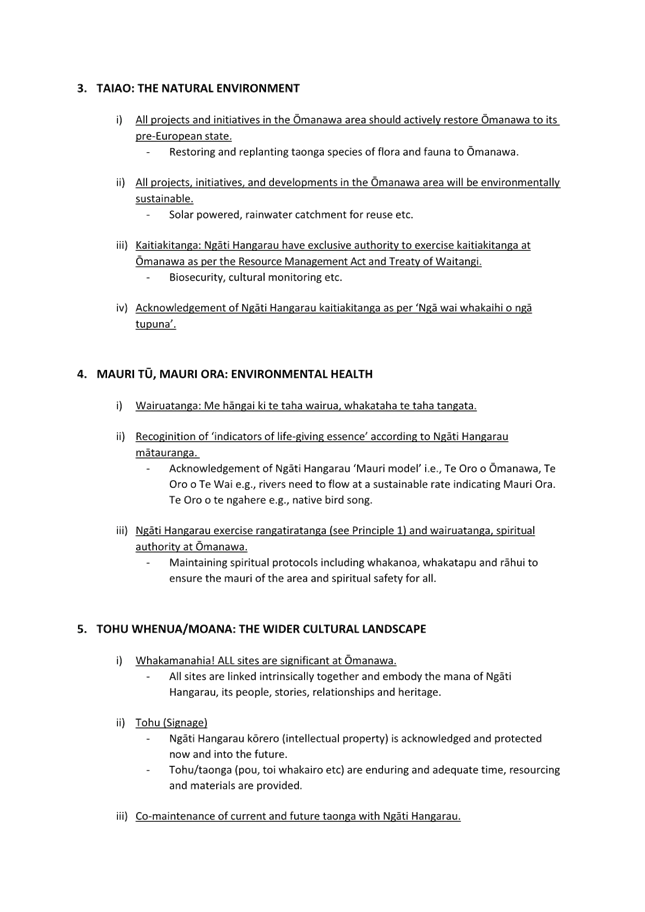
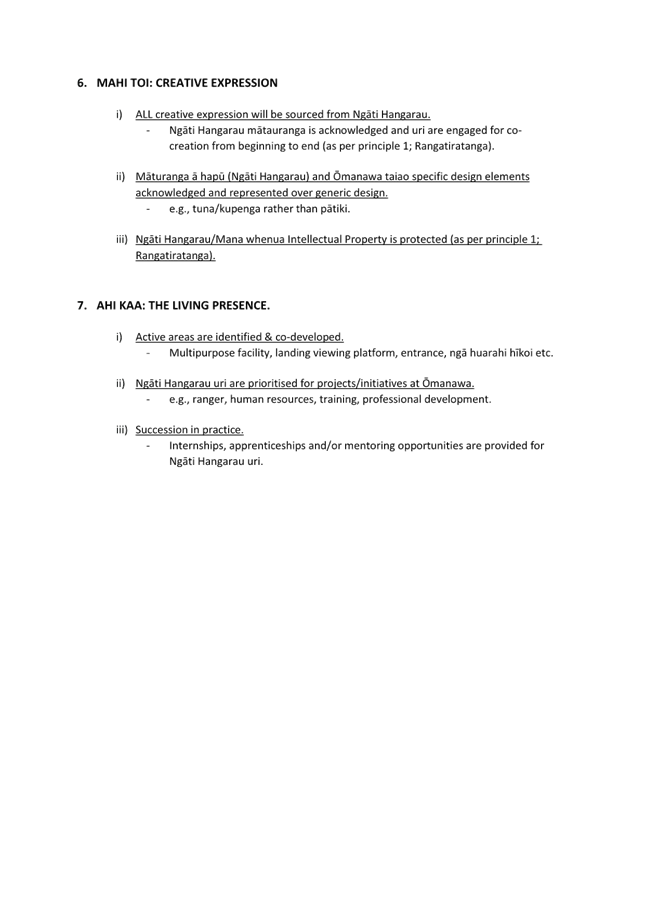
|
Ordinary
Council meeting Agenda
|
24
March 2026
|

|
Ordinary
Council meeting Agenda
|
24
March 2026
|
|
Ordinary Council meeting Agenda
|
24 March 2026
|
12 Discussion
of late items
|
Ordinary Council meeting Agenda
|
24 March 2026
|
13 Public
excluded session
Resolution to exclude
the public
|
Recommendations
That the public be
excluded from the following parts of the proceedings of this meeting.
The general subject
matter of each matter to be considered while the public is excluded, the
reason for passing this resolution in relation to each matter, and the
specific grounds under section 48 of the Local Government Official
Information and Meetings Act 1987 for the passing of this resolution are as
follows:
|
General subject of each matter to be
considered
|
Reason for passing this resolution in
relation to each matter
|
Ground(s) under section 48 for the
passing of this resolution
|
|
13.1 - Public Excluded Minutes of the
Council meeting held on 10 February 2026
|
s7(2)(a) - The withholding of the information is
necessary to protect the privacy of natural persons, including that of
deceased natural persons
|
s48(1)(a) - the public conduct of the relevant
part of the proceedings of the meeting would be likely to result in the
disclosure of information for which good reason for withholding would exist
under section 6 or section 7
|
|
13.2 - Annual Plan 2026/27 - Levels of
Service Options - part 2
|
s7(2)(a) - The withholding of the information is
necessary to protect the privacy of natural persons, including that of
deceased natural persons
s7(2)(i) - The withholding of the information is
necessary to enable Council to carry on, without prejudice or disadvantage,
negotiations (including commercial and industrial negotiations)
|
s48(1)(a) - the public conduct of the relevant
part of the proceedings of the meeting would be likely to result in the
disclosure of information for which good reason for withholding would exist
under section 6 or section 7
|
|
13.3 - Application for development
contributions waiver at Tauriko West
|
s7(2)(i) - The withholding of the information is
necessary to enable Council to carry on, without prejudice or disadvantage,
negotiations (including commercial and industrial negotiations)
|
s48(1)(a) - the public conduct of the relevant
part of the proceedings of the meeting would be likely to result in the
disclosure of information for which good reason for withholding would exist
under section 6 or section 7
|
|
13.4 - Council-Controlled
Organisations - Tourism Bay of Plenty
|
s7(2)(a) - The withholding of the information is
necessary to protect the privacy of natural persons, including that of
deceased natural persons
|
s48(1)(a) - the public conduct of the relevant
part of the proceedings of the meeting would be likely to result in the
disclosure of information for which good reason for withholding would exist
under section 6 or section 7
|
|
13.5 - Regulatory Hearings Panel
Appointments and Terms of Reference
|
s7(2)(a) - The withholding of the information is
necessary to protect the privacy of natural persons, including that of
deceased natural persons
|
s48(1)(a) - the public conduct of the relevant
part of the proceedings of the meeting would be likely to result in the
disclosure of information for which good reason for withholding would exist
under section 6 or section 7
|
|
13.6 - Public Art Framework
|
s7(2)(a) - The withholding of the information is
necessary to protect the privacy of natural persons, including that of
deceased natural persons
s7(2)(b)(ii) - The withholding of the information
is necessary to protect information where the making available of the
information would be likely unreasonably to prejudice the commercial
position of the person who supplied or who is the subject of the information
|
s48(1)(a) - the public conduct of the relevant
part of the proceedings of the meeting would be likely to result in the
disclosure of information for which good reason for withholding would exist
under section 6 or section 7
|
|
Confidential Attachment 1 - 11.1 -
Local Water Done Well - Project Update
|
s7(2)(a) - The withholding of the information is
necessary to protect the privacy of natural persons, including that of
deceased natural persons
s7(2)(i) - The withholding of the information is
necessary to enable Council to carry on, without prejudice or disadvantage,
negotiations (including commercial and industrial negotiations)
|
s48(1)(a) the public conduct of the relevant part
of the proceedings of the meeting would be likely to result in the
disclosure of information for which good reason for withholding would exist
under section 6 or section 7
|
|
Confidential Attachment 1 - 11.3 -
Local Water Done Well - Due Diligence
|
s7(2)(g) - The withholding of the information is
necessary to maintain legal professional privilege
|
s48(1)(a) the public conduct of the relevant part
of the proceedings of the meeting would be likely to result in the
disclosure of information for which good reason for withholding would exist
under section 6 or section 7
|
|
Confidential Attachment 3 - 11.3 -
Local Water Done Well - Due Diligence
|
s7(2)(a) - The withholding of the information is
necessary to protect the privacy of natural persons, including that of
deceased natural persons
|
s48(1)(a) the public conduct of the relevant part
of the proceedings of the meeting would be likely to result in the
disclosure of information for which good reason for withholding would exist
under section 6 or section 7
|
|
Confidential Attachment 5 - 11.4 -
Local Water Done Well - Financial Implications
|
s7(2)(a) - The withholding of the information is
necessary to protect the privacy of natural persons, including that of
deceased natural persons
|
s48(1)(a) the public conduct of the relevant part
of the proceedings of the meeting would be likely to result in the
disclosure of information for which good reason for withholding would exist
under section 6 or section 7
|
|
Confidential Attachment 4 - 11.10 -
Long-term Plan 2027-2037 - Project Plan
|
s7(2)(h) - The withholding of the information is
necessary to enable Council to carry out, without prejudice or
disadvantage, commercial activities
|
s48(1)(a) the public conduct of the relevant part
of the proceedings of the meeting would be likely to result in the
disclosure of information for which good reason for withholding would exist
under section 6 or section 7
|
|
|
Ordinary Council meeting Agenda
|
24 March 2026
|
14 Closing
karakia